 Send
Send Share
Share
 Details

 Download
 Similars
 Diaporama
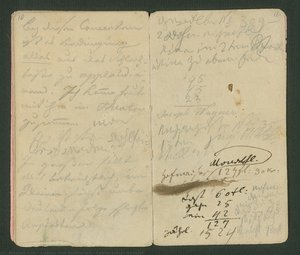
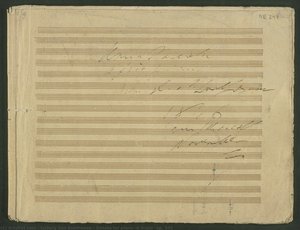
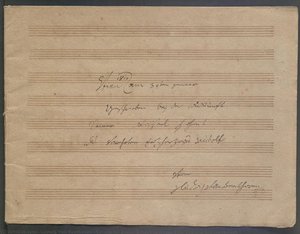
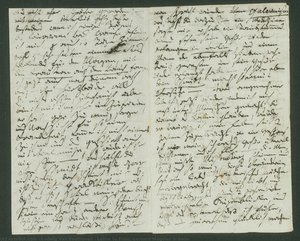
Mass for four solo voices, choir, orchestra and organ (D major) op. 123 (Missa solemnis)


 Read More
Giclée / Art Print
Museum-quality giclée or canvas print with fast production and flexible finish options. ( Buy Hand Made Painting Buy Image)




































Pick from our preset sizes that match the artwork's original proportions.

You may enter your own dimensions to fit a specific frame or space. If your selected size does not match the original image's proportions, we will either crop the artwork or extend the image with a mirrored or solid-fill edge. A digital mockup will be sent for your approval before production begins.
Please note that the on-screen preview does not reflect the actual cropping or extension. Only the mockup will accurately show the final composition.
While custom sizes are available, we recommend selecting a dimension from the predefined list to preserve the original proportions.
Worldwide Delivery () in 2 weeks instead of standard 4/5 weeks. (27 August)

Free Worldwide Express Shipping

High-Quality Linen Canvas

Full Shipping Insurance

Customs Tax Refund Guarantee

True Color Matching Guarantee

60-Day Return Policy (Defects Only)

100% Money-Back Guarantee

Bulk Discount Offer
 Glass option is only available in size under 110 CM

Mass for four solo voices, choir, orchestra and organ (D major) op. 123 (Missa solemnis)
Giclée / Art Print
Reproduction Size
-


Total Price
$ 63
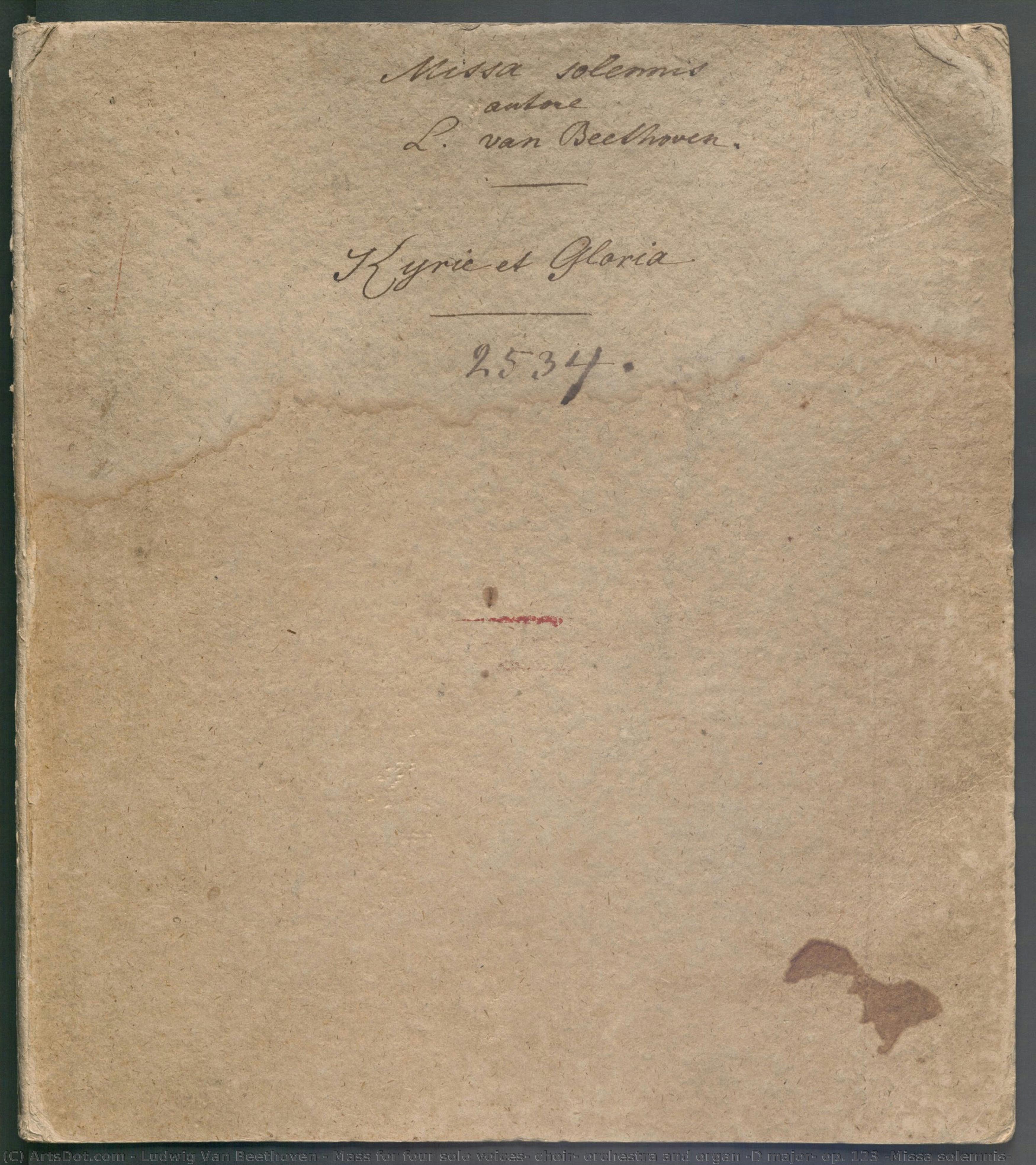
A Testament to Faith and Genius: Beethoven's *Missa Solemnis*
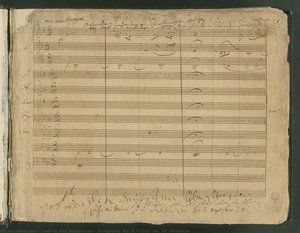
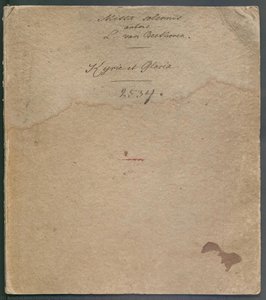
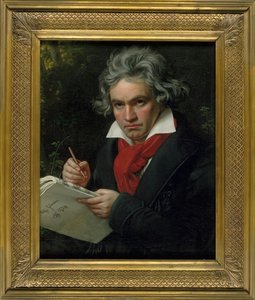
Beethoven’s Missa Solemnis in D major, Op. 123, stands as one of the composer’s most profoundly moving and ambitious works. Completed in 1824, just months before his death, this mass represents a culmination of Beethoven's spiritual explorations and artistic innovations. The painting presented here offers a rare glimpse into the genesis of this monumental piece, capturing not only the musical score but also the artist himself – Ludwig van Beethoven – meticulously sketching within the confines of the Beethoven-Haus in Bonn. This intimate portrait immediately establishes a connection between the creator and his masterpiece, inviting us to contemplate the very process of artistic creation.
The Symphony of Faith: Style and Technique
Created during a period of immense personal struggle for Beethoven – marked by increasing deafness and profound emotional turmoil – the *Missa Solemnis* is characterized by its dramatic contrasts and soaring melodies. The style reflects Beethoven’s late-period aesthetic, moving beyond the clarity of his earlier works towards a more expressive and emotionally charged idiom. The painting itself, a faithful reproduction of the original sketch, showcases Beethoven's meticulous approach to composition. Note the detailed rendering of the musical notation, reflecting the composer's obsessive attention to detail – a hallmark of his genius. The use of pencil on paper allows for a delicate shading and subtle variations in tone, capturing the nuances of the score with remarkable precision. The artist’s hand, visible within the sketch, adds a layer of human connection to this monumental work.
Historical Context: A Composer's Lasting Legacy
1824 marks a pivotal year for Beethoven. He was grappling with profound physical and emotional challenges, yet he persevered in composing works that would cement his place as one of the greatest musical figures in history. The *Missa Solemnis* was initially intended as a commission for the court of Naples, but ultimately remained unfinished due to political circumstances. Despite its incomplete status, it stands as a testament to Beethoven’s unwavering faith and artistic determination. This painting provides a tangible link to this crucial period, allowing us to visualize the creative environment in which one of music's most significant works was conceived. The image is a poignant reminder of Beethoven's relentless pursuit of beauty and truth amidst adversity.
Symbolism and Emotional Impact
The *Missa Solemnis* is deeply imbued with religious symbolism, reflecting Beethoven’s evolving spiritual beliefs. The use of D major, often associated with joy and triumph, contrasts with the somber themes explored in the Requiem Mass. The painting captures this tension, hinting at the composer's internal struggle between hope and despair. The sheer scale of the musical work – encompassing four solo voices, a choir, orchestra, and organ – speaks to Beethoven’s ambition and his desire to create a truly immersive and transcendent experience for the listener. Ultimately, the *Missa Solemnis* is an artwork that resonates with profound emotional power, inviting contemplation on themes of faith, mortality, and the enduring human spirit.
Related Artworks
Artist Biography
early life and musical beginnings
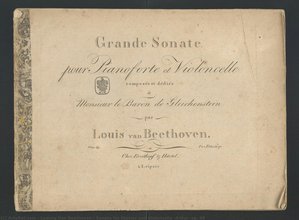
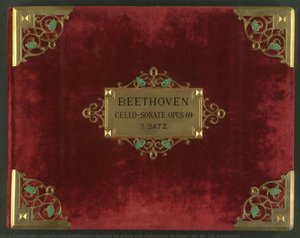
ludwig van beethoven, a renowned german composer and pianist, was born in bonn, germany, in 1770. displaying his musical talent at a young age, he began studying music under various teachers before moving to vienna, where he would spend most of his life.- sonata for piano and violoncello (a major) op. 69, 1st movement (available at ArtsDot.com)
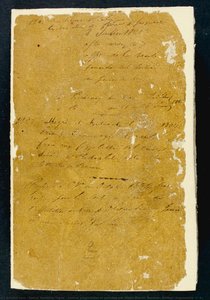
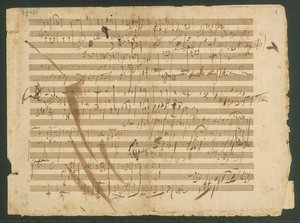
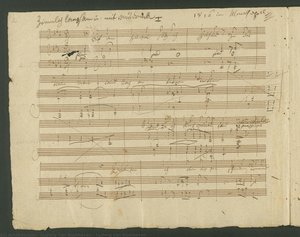
- beethoven's manuscript of the missa solemnis (viewable at wikipedia)
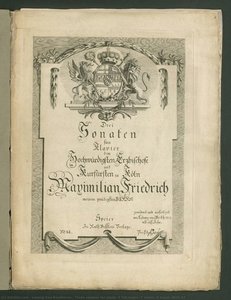
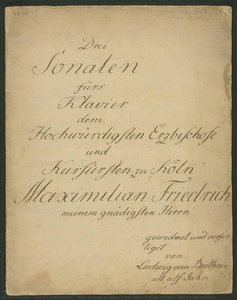
- three opus 1 piano sonatas, patronized by karl alois, prince lichnowsky
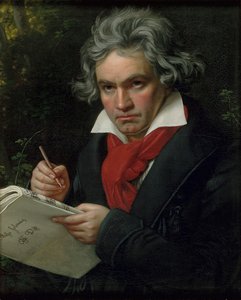
ludwig van beethoven
1770 - 1827 , Germany
Quick Facts
- Artistic Movement Or Style: Classical Romantic
- Artists Or Movements Influenced By This Artist:
- Johannes Brahms
- Robert Schumann
- Artists Who Influenced This Artist:
- Franz Joseph Haydn
- Christian Gottlob Schulze
- Date Of Birth: 1770 Bonn Germany
- Date Of Death: 1827 Vienna Austria
- Full Name: Ludwig van Beethoven
- Nationality: German
- Notable Artworks:
- Moonlight Sonata
- Symphony No 9
- Place Of Birth: Bonn Germany
Related Articles

Baroque Classicism: Reconciling Drama & Order in 17th-Century Art
Explore the captivating world of Baroque Classicism! Discover its history, key artists like Caravaggio & Rubens, and defining characteristics. Expert insights & high-quality reproductions at ArtsDot.
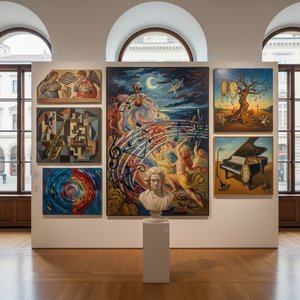
Harmonies on Canvas: Exploring the Visual Representation of Music in Art History
Explore the fascinating history of music's visual representation in art! From ancient symbolism to modern abstraction, discover how artists have captured sound and emotion on canvas. Expert insights & stunning examples.

Baroque Drama: Bringing Opulence & Emotion into Contemporary Interiors
Explore the opulent world of Baroque interior design! Discover key elements, modern applications & how to bring dramatic elegance into your home with 's authentic reproductions.

Baroque Masterpieces: 10 Paintings That Defined an Era |
Journey through the drama & grandeur of Baroque art! Explore 10 masterpieces by Caravaggio, Rembrandt, Rubens & more. Discover stunning oil paintings, rich colors & timeless stories. Find museum-quality reproductions at .

The Dramatic Flourish: Exploring the Baroque Movement's Enduring Legacy in Art History
Explore the dramatic world of Baroque art! Discover iconic artists like Caravaggio & Rubens, defining techniques, and its lasting impact on art history. Expert insights for collectors & enthusiasts at ArtsDot.