 Preview
 Send
Send Share
Share
 Details

 Download
 Similars
 X-Ray
X-Ray Diaporama
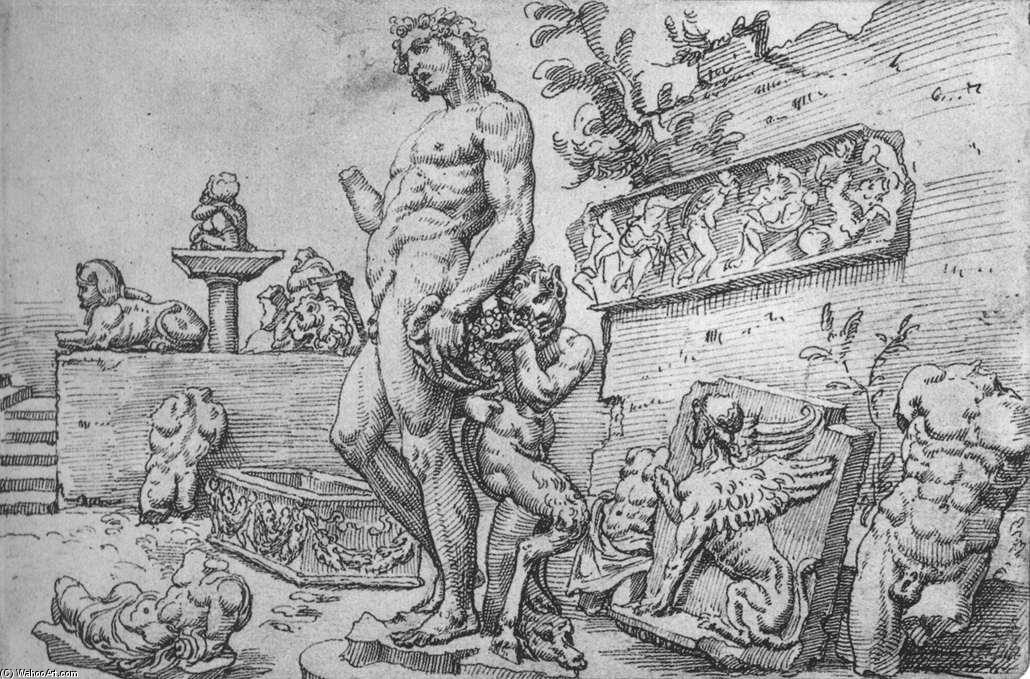
Garden of the Casa Galli


 Read More
Giclée / Art Print
Museum-quality giclée or canvas print with fast production and flexible finish options. ( Buy Hand Made Painting Buy Image)




P118B $10

P118H $10

P118W $10

P438Z $10

P508JH $12

P508YH $12

P805H $10

P805Z $10

P919BZ $10

P919G $10

P919XJ $10

P959ZH $10

P968JZ $12

W106C $8

W218G $10

W218JH $8

W218Y $10

W307PJ $10

W316G $10

W316PJ $8

W316Y $10

W398PJ $8

W4111J $10

W500HY $15

W500JH $15

W692G $12

W849H $8

W940BG $15

W953PJ $8




Pick from our preset sizes that match the artwork's original proportions.

You may enter your own dimensions to fit a specific frame or space. If your selected size does not match the original image's proportions, we will either crop the artwork or extend the image with a mirrored or solid-fill edge. A digital mockup will be sent for your approval before production begins.
Please note that the on-screen preview does not reflect the actual cropping or extension. Only the mockup will accurately show the final composition.
While custom sizes are available, we recommend selecting a dimension from the predefined list to preserve the original proportions.
Worldwide Delivery () in 2 weeks instead of standard 4/5 weeks. (30 August)

Free Worldwide Express Shipping

High-Quality Linen Canvas

Full Shipping Insurance

Customs Tax Refund Guarantee

True Color Matching Guarantee

60-Day Return Policy (Defects Only)

100% Money-Back Guarantee

Bulk Discount Offer
 Glass option is only available in size under 110 CM

Garden of the Casa Galli
Giclée / Art Print
Reproduction Size
-


Total Price
$ 63
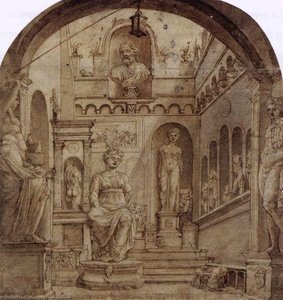
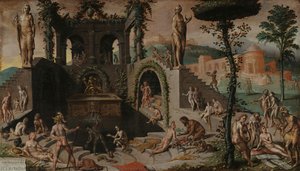
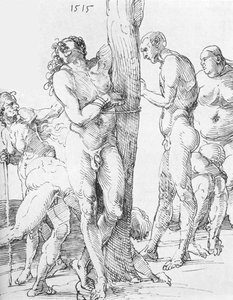
A Garden of Renaissance Grace: Maerten van Heemskerck’s “Garden of the Casa Galli”
Maerten van Heemskerck's "Garden of the Casa Galli," created around 1532-35, isn’t merely a depiction of a classical Italian garden; it’s a meticulously crafted tableau of humanist ideals and artistic mastery. This engraving, now housed in the Web Gallery of Art, offers a profound glimpse into the Renaissance fascination with antiquity, humanism, and the pursuit of harmonious beauty. It transcends simple botanical illustration, becoming a carefully orchestrated meditation on order, proportion, and the idealized representation of man’s relationship with nature.
The scene unfolds within a classically inspired walled enclosure, a deliberate echo of Roman villas and Renaissance gardens. A central, imposing statue—a nude male figure radiating strength and composure—dominates the composition, immediately drawing the eye. This isn't a depiction of raw physicality but rather an embodiment of classical virtue: a celebration of human form in its most balanced and dignified state. Surrounding him are a multitude of smaller statues, fountains, architectural details – columns, niches, and balustrades – all arranged with a deliberate symmetry that speaks to the Renaissance emphasis on mathematical harmony and geometric precision. The figures within the garden itself—a scattering of attendants, musicians, and perhaps even mythological creatures—add layers of narrative complexity, hinting at stories of gods and heroes woven into the fabric of earthly existence.
The Language of Line: Technique and Craftsmanship
Van Heemskerck’s genius lies not just in his subject matter but in his extraordinary technical skill. As an engraving, “Garden of the Casa Galli” is a testament to the painstaking process involved. The artist employed a complex system of lines—fine, closely spaced for creating shadows and texture, bolder and more widely spaced to define forms—to build up tonal values with remarkable subtlety. Hatching and cross-hatching techniques are used extensively, transforming flat surfaces into convincing imitations of stone, marble, foliage, and skin. The meticulous detail is breathtaking; one can almost feel the coolness of the water in the fountain, the rough texture of the stonework, and the warmth of the sun on the figures’ bodies.
The engraving's monochromatic palette—a range of grays from stark white to deep black—further enhances its dramatic effect. The absence of color forces the viewer to focus entirely on the interplay of light and shadow, emphasizing form and volume. Van Heemskerck masterfully utilizes linear perspective, creating a sense of depth that pulls the viewer into the garden’s embrace. The receding walls, diminishing statues, and overlapping figures all contribute to this illusionistic space, making the engraving feel remarkably three-dimensional.
Symbolism and Humanist Ideals
Beyond its technical brilliance, “Garden of the Casa Galli” is rich in symbolic meaning. The central nude figure, reminiscent of classical sculptures like the Doryphoros by Polyclitus, embodies ideals of strength, beauty, and virtue—qualities highly valued during the Renaissance. The garden itself can be interpreted as a microcosm of paradise, a carefully constructed space designed to reflect the order and harmony of the cosmos. The inclusion of mythological figures suggests a connection between earthly beauty and divine inspiration – a core tenet of humanist thought.
Furthermore, the scene reflects the Renaissance fascination with classical antiquity. The garden’s design draws heavily on Roman architectural principles, while the statues themselves are inspired by Greek mythology. Van Heemskerck's work is not simply a record of a beautiful garden; it’s an homage to the wisdom and artistic achievements of the ancient world, demonstrating how these ideals could be reinterpreted and celebrated in the context of the Renaissance.
A Timeless Masterpiece: Reproduction Possibilities
Reproducing “Garden of the Casa Galli” offers a unique opportunity to bring this exquisite artwork into any setting. ArtsDot’s hand-painted reproductions capture the essence of Van Heemskerck's original engraving, faithfully recreating its intricate detail and atmospheric depth. Whether displayed in a formal study or a contemporary living space, this timeless masterpiece will undoubtedly serve as a focal point, sparking conversation and inspiring contemplation. The piece’s inherent elegance and symbolic richness make it an ideal addition to any collection, offering a tangible connection to the artistic legacy of the Renaissance.
Related Artworks


Artist Biography
early life and training
maerten van heemskerck, a prominent dutch portrait and religious painter, was born on june 1, 1498, in the village of heemskerk, north holland. his artistic journey began under the guidance of cornelius willemsz in haarlem, followed by a brief stint in delft with jan lucasz. eventually, he became a pupil of jan van scorel, adopting his teacher's italian-influenced style.career highlights
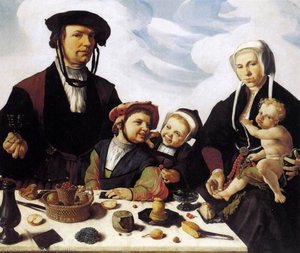
- maerten van heemskerck's work is characterized by its innovative blend of dutch and italian influences, as seen in his famous family portrait, considered the first of its kind in a long line of dutch family paintings.
- his collaboration with antonio da sangallo the younger, battista franco, and francesco de' rossi (il salviati) on the redecoration of the porta san sebastiano in rome, a triumphal arch in honor of charles v, showcases his rapid execution as a scene-painter.
- heemskerck's drawings of classical sculpture and architecture, now preserved in two sketchbooks at the kupferstichkabinett berlin, demonstrate his skill in capturing the essence of italian art.
notable works and legacy
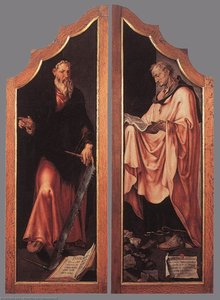
- the donor and saint mary magdalene (view at ArtsDot)
- the virgin and saint john the evangelist (view at ArtsDot)
- samson shattering the pillars of the temple, maarten van heemskerck (view at ArtsDot)
conclusion
maerten van heemskerck's profound impact on the art world is undeniable. his works, now a part of various museum collections, including the rijksmuseum, continue to inspire artists and art enthusiasts alike. to explore more of his masterpieces, visit maerten van heemskerck's page on ArtsDot. for a deeper understanding of his life and works, refer to his biography on wikipedia.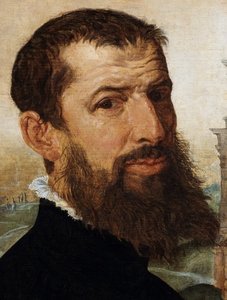
maerten van heemskerck
1498 - 1574
Quick Facts
- Artistic Movement Or Style: Mannerism
- Artists Who Influenced This Artist:
- Jan van Scorel
- Antonio da Sangallo the Younger
- Date Of Birth: June 1, 1498
- Date Of Death: October 1, 1574
- Full Name: Maerten Jacobsz van Heemskerck
- Nationality: Dutch
- Notable Artworks:
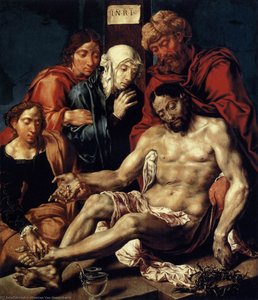
- Lamentation on the Dead Christ
- Pieter Jan Foppeszoon and his Family
- Christ as the Man of Sorrows
- Place Of Birth: Heemskerk, Netherlands
Related Articles

Bronze Sculptures That Defined Art History | ArtsDot
Journey through art history with our Top 10 bronze sculptures! Explore masterpieces by Rodin, Michelangelo & more. Discover stories behind iconic statues and find museum-quality reproductions for your home decor at ArtsDot.com.

The Enduring Form: Exploring Themes & Techniques in Sculpture Across Historical Periods
Explore the rich history of sculpture from ancient masterpieces to contemporary innovations. Discover key techniques, influential artists & investment potential for discerning art collectors.

Bronze Age to Modern Masters: 10 Sculptures That Redefined Art | ArtsDot
Journey through art history with 10 legendary bronze sculptures – from Michelangelo's David to Rodin’s Thinker. Explore the stories, techniques & timeless beauty of these masterpieces. Find museum-quality reproductions & elevate your home decor on ArtsDot.com.
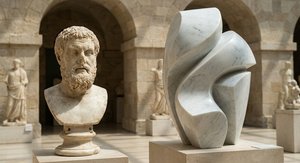
The Enduring Allure of Marble in Art History: From Classical Sculpture to Modern Abstraction
Explore the captivating history of marble sculpture from ancient Greece to modern art. Discover renowned artists like Canova & Michelangelo, carving techniques, and investment insights at ArtsDot.
The Enduring Form: Sculpture Across History, Technique & Emotional Resonance
Explore the rich history of sculpture with ArtsDot. Discover key techniques, influential artists & investment potential for discerning collectors. Expert insights into valuing and collecting timeless masterpieces.