 Preview
 Send
Send Share
Share
 Details

 Download
 Similars
 X-Ray
X-Ray Diaporama
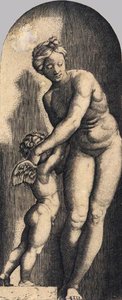
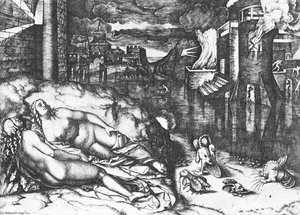
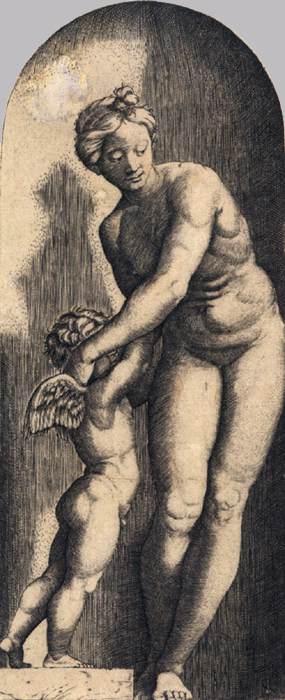
Venus and Cupid
 Engraving
- WallArt
- High Renaissance
 1512
1512 203.0 x 83.0 cm
 Metropolitan Museum of Art
 Read More
Hand Made Oil Reproduction
Hand-painted oil on canvas in your size and frame, made to order by our artists. ( Buy Print Buy Image)




P118B $10

P118H $10

P118W $10

P438Z $10

P508JH $12

P508YH $12

P805H $10

P805Z $10

P919BZ $10

P919G $10

P919XJ $10

P959ZH $10

P968JZ $12

W106C $8

W218G $10

W218JH $8

W218Y $10

W307PJ $10

W316G $10

W316PJ $8

W316Y $10

W398PJ $8

W4111J $10

W500HY $15

W500JH $15

W692G $12

W849H $8

W940BG $15

W953PJ $8




Pick from our preset sizes that match the artwork's original proportions.

You may enter your own dimensions to fit a specific frame or space. If your selected size does not match the original image's proportions, we will either crop the artwork or extend the painting with additional hand-painted elements. A digital mockup will be sent for your approval before production begins.
Please note that the on-screen preview does not reflect the actual cropping or extension. Only the mockup will accurately show the final composition.
While custom sizes are available, we recommend selecting a dimension from the predefined list to preserve the original proportions.
After order, ArtsDot.com team will email client for instructions and provide a mockup preview
Worldwide Delivery () in 3/4 weeks instead of standard 5 weeks. (16 August). No compromise on quality.

Free Worldwide Express Shipping

High-Quality Linen Canvas

Full Shipping Insurance

Customs Tax Refund Guarantee

True Color Matching Guarantee

60-Day Return Policy (Defects Only)

100% Money-Back Guarantee

Bulk Discount Offer
 Glass option is only available in size under 110 CM

Venus and Cupid
Reproduction Medium
Reproduction Size
-


Total Price
$ 263
Artwork Description
The Echoes of Raphael: Marcantonio Raimondi’s “Venus and Cupid”
Within the hushed galleries of museums and the intimate spaces of collectors' homes, certain prints transcend mere reproductions; they become windows into a bygone era, whispering tales of artistic patronage, technical innovation, and enduring beauty. Marcantonio Raimondi’s “Venus and Cupid,” created around 1500-27, stands as a prime example – a meticulously crafted engraving that not only captures the essence of Raphael’s vision but also reveals the intricate processes and evolving aesthetic sensibilities of Renaissance printmaking.
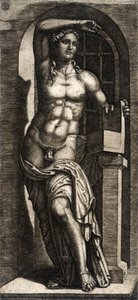
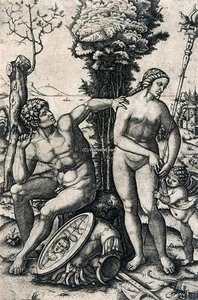
At first glance, the image presents a scene of serene intimacy: Venus, the goddess of love, stands gracefully within a shadowed niche, her gaze directed towards Cupid, her son, who playfully pushes a flaming torch toward her. The composition is deceptively simple, yet imbued with a profound sense of classical harmony and emotional resonance. Raimondi’s skill lies not just in his ability to faithfully reproduce Raphael's design – a commission that cemented Raimondi’s reputation as one of the foremost engravers of his time – but also in his subtle refinements and masterful execution. The figures are rendered with an exquisite attention to detail, from the delicate folds of Venus’ drapery to the mischievous expression on Cupid’s face. Notice particularly the way light plays across their forms, creating a sense of depth and volume that belies the limitations of the engraving medium.
A Technical Masterpiece: The Art of Engraving
Raimondi's achievement is all the more remarkable considering the demanding nature of engraving during this period. Unlike painting or sculpture, where artists directly manipulate materials to create form and texture, engravers worked on a metal plate – typically copper – using sharp tools to incise lines that would later be inked and transferred onto paper. The process was laborious and required immense precision, patience, and an understanding of how ink behaved on the surface of the metal. Raimondi’s work demonstrates a deep mastery of these techniques. He employed a complex system of burin strokes – delicate cuts made with a pointed tool – to build up layers of tone and texture, creating subtle gradations of light and shadow that give the image its remarkable realism. The intricate detailing in the drapery, for instance, is achieved through countless tiny lines, each carefully controlled to mimic the way fabric folds and drapes in reality.
Furthermore, Raimondi’s engraving showcases a sophisticated understanding of perspective and composition. He skillfully utilizes atmospheric perspective – creating the illusion of depth by making distant objects appear paler and less detailed – to draw the viewer's eye into the scene. The use of chiaroscuro—the dramatic contrast between light and dark—further enhances the sense of three-dimensionality, emphasizing the figures’ forms and adding a powerful emotional impact.
Symbolism and Renaissance Ideals
Beyond its technical brilliance, “Venus and Cupid” is rich in symbolic meaning. The scene itself draws upon classical mythology, referencing the legendary love affair between Venus and Mars – a union that represented not only romantic passion but also the fundamental forces of creation and fertility. Cupid’s torch, symbolizing ardent desire, playfully directed towards Venus, suggests the generative power of love and its ability to inspire both beauty and conflict. The setting within a niche—a small, enclosed space—creates a sense of intimacy and seclusion, further emphasizing the private nature of their relationship.
The work also reflects broader Renaissance ideals – particularly the revival of interest in classical antiquity and the celebration of human beauty and virtue. Raphael’s original design, itself inspired by classical models, embodies these values through its idealized depiction of Venus and Cupid. Raimondi's engraving serves as a powerful testament to the enduring legacy of the High Renaissance and its profound influence on Western art.
A Timeless Reproduction: Bringing Beauty Home
Today, reproductions of “Venus and Cupid” are treasured by collectors and interior designers alike. The original engraving, housed in prestigious museums worldwide, offers a glimpse into a pivotal moment in artistic history. However, high-quality hand-printed reproductions capture the essence of Raimondi’s masterpiece – its exquisite detail, subtle tonal variations, and profound emotional resonance – with remarkable fidelity. Whether adorning a formal salon or a more casual living space, this image continues to evoke a sense of timeless beauty, romantic allure, and the enduring power of art.
Related Artworks
Artist Biography
Marcantonio Raimondi: The Florentine Echo in Venetian Printmaking
Marcantonio Raimondi (c. 1480 – c. 1534) stands as a pivotal figure in the burgeoning world of Renaissance printmaking, particularly celebrated for his masterful depictions of mythological narratives and Raphael’s compositions. Born in Arzignano, Italy, Raimondi's artistic journey unfolded against the backdrop of a period marked by intense intellectual exchange between Florence and Venice – exchanges that profoundly shaped his stylistic sensibilities and technical prowess. While biographical details remain scarce, scholarly consensus points to him as one of the earliest printmakers whose oeuvre demonstrates a sustained engagement with innovative engraving techniques and a deep appreciation for the aesthetic ideals championed by contemporaries like Albrecht Dürer.- Early Life & Training: Precise information regarding Raimondi’s formative years is elusive, yet he emerged from Arzignano as a skilled craftsman—likely trained in niello engraving, a technique involving inlaying precious metals into engraved metal surfaces—a practice that has been debated by art historians like Arthur Mayger Hind.
- The Florentine Influence: Raimondi’s artistic development was undeniably influenced by the vibrant Florentine printmaking scene of his time. He absorbed stylistic elements from artists such as Francia and Andrea Mantegna, mirroring the humanist spirit prevalent in Florence during Raphael's ascendancy.
- Dürer’s Legacy & Technique: The arrival of Albrecht Dürer in Bologna in 1506 served as a catalyst for Raimondi’s artistic evolution. Dürer’s groundbreaking engravings captivated Italian printmakers, prompting them to emulate his meticulous draughtsmanship and pioneering use of tonal shading—a technique that Raimondi skillfully adopted into his own prints.
A Flourishing Career: Engravings from 1505-1511
Between 1505 and 1511, Raimondi produced approximately eighty engravings, showcasing an astonishing breadth of subject matter—ranging from classical mythology to biblical scenes and portraits of prominent figures. His early works demonstrate a remarkable fusion of Florentine and Venetian artistic traditions, reflecting the dynamic cultural landscape of the era. Notably, he meticulously studied Dürer’s prints, particularly “Adam and Eve,” incorporating elements of Dürer's compositional approach and tonal rendering into his own engravings. This collaborative spirit extended beyond stylistic imitation; Raimondi actively engaged in discussions with Michelangelo and Dürer themselves, fostering a vibrant intellectual environment that fueled artistic innovation.- Mythological Narratives: Raimondi’s engravings frequently revisited classical myths—such as “Pyramus and Thisbe” and “Jason and Medea”—transforming them into visually arresting narratives imbued with symbolic resonance.
- Religious Imagery: He produced numerous prints depicting scenes from the Bible, demonstrating a profound understanding of Christian iconography and artistic conventions.
Copying Dürer & The Venetian Copyright Debate
Raimondi’s unwavering dedication to mastering Dürer's technique extended beyond stylistic emulation; he undertook ambitious projects replicating Dürer’s monumental woodcut series, “The Life of the Virgin,” a practice commonplace among printmakers at the time. However, Raimondi’s endeavors distinguished him from many of his peers by securing legal protection for his original compositions—a landmark case in the nascent history of intellectual property law that challenged prevailing notions regarding artistic authorship and copyright. The Venetian government recognized Dürer's monogram as protected intellectual property, establishing a precedent for safeguarding artists’ rights against unauthorized reproductions.Concluding Significance: Raimondi’s Enduring Influence
Marcantonio Raimondi’s contribution to Renaissance printmaking transcends mere stylistic imitation; he embodies the spirit of artistic innovation and collaborative inquiry that characterized the era. His engravings continue to inspire admiration for their technical brilliance, compositional sophistication, and evocative portrayal of human experience—solidifying his place as one of the foremost printmakers of his time and a crucial link between Florentine humanist ideals and Venetian artistic dynamism. He remains an exemplar of how artists can engage with the legacy of their predecessors while forging their own distinctive artistic voice.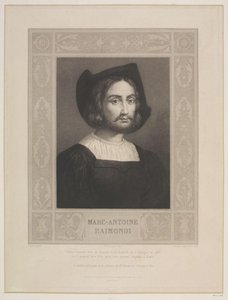
Marcantonio Raimondi
1480 - 1534 , Italy
Quick Facts
- Artistic Movement Or Style: Renaissance art
- Artists Or Movements Influenced By This Artist: ['Dürer']
- Artists Who Influenced This Artist: ['Dürer']
- Date Of Birth: c. 1480/82
- Date Of Death: c. 1534
- Full Name: Marcantonio Raimondi
- Nationality: Italian
- Notable Artworks:
- Massacre of the Innocents
- Martyrdom of St Lawrence
- The Vision of St Helena
- Place Of Birth: Arzignano, Italy
Related Articles

Raphael's Masterpieces: 25 Iconic Paintings & Renaissance Art for Your Home
Explore 25 breathtaking Raphael paintings! Journey through the Italian Renaissance with masterpieces like 'School of Athens' & iconic Madonnas. Find museum-quality art reproductions and elevate your home decor on ArtsDot.com.
Engraving: A Historical Survey of Technique, Artistic Expression & Enduring Legacy
Explore the rich history of engraving with ArtsDot. Discover techniques, iconic artists like Dürer & Callot, collecting tips, and expert guidance for preserving your art investment. Learn about intaglio printing & more!
Engraving's Golden Age: 10 Masterpieces That Redefined Art | ArtsDot
Journey through art history with our Top 10 Legendary Engravings! Explore masterpieces by Dürer, Rembrandt & Goya. Discover the stories behind these iconic prints and find museum-quality reproductions for your home at ArtsDot.com.

The Intricate World of Engraving: A Historical Survey of Technique, Artistic Expression & Enduring Legacy
Explore the rich history of engraving with ArtsDot. Discover techniques, iconic artists like Dürer & Callot, collecting tips, and expert guidance for preserving your art investment. Learn about intaglio printing & more!
Echoes of Olympus: Mythological Narratives in Western Art Through the Ages
Explore the captivating history of mythological narratives in Western art! From ancient Greece to modern masterpieces, discover iconic artworks & symbolism. Expert analysis and high-quality reproductions at ArtsDot.