 Preview
 Send
Send Share
Share
 Details

 Download
 Similars
 X-Ray
X-Ray Diaporama
View of
 Modernism
 1928
1928- Modern
 60.0 x 52.0 cm
 Boschi Di Stefano House Museum
 Read More
Hand Made Oil Reproduction
Hand-painted oil on canvas in your size and frame, made to order by our artists. ( Buy Print Buy Image)




P118B $10

P118H $10

P118W $10

P438Z $10

P508JH $12

P508YH $12

P805H $10

P805Z $10

P919BZ $10

P919G $10

P919XJ $10

P959ZH $10

P968JZ $12

W106C $8

W218G $10

W218JH $8

W218Y $10

W307PJ $10

W316G $10

W316PJ $8

W316Y $10

W398PJ $8

W4111J $10

W500HY $15

W500JH $15

W692G $12

W849H $8

W940BG $15

W953PJ $8




Pick from our preset sizes that match the artwork's original proportions.

You may enter your own dimensions to fit a specific frame or space. If your selected size does not match the original image's proportions, we will either crop the artwork or extend the painting with additional hand-painted elements. A digital mockup will be sent for your approval before production begins.
Please note that the on-screen preview does not reflect the actual cropping or extension. Only the mockup will accurately show the final composition.
While custom sizes are available, we recommend selecting a dimension from the predefined list to preserve the original proportions.
After order, ArtsDot.com team will email client for instructions and provide a mockup preview
Worldwide Delivery () in 3/4 weeks instead of standard 5 weeks. (18 August). No compromise on quality.

Free Worldwide Express Shipping

High-Quality Linen Canvas

Full Shipping Insurance

Customs Tax Refund Guarantee

True Color Matching Guarantee

60-Day Return Policy (Defects Only)

100% Money-Back Guarantee

Bulk Discount Offer
 Glass option is only available in size under 110 CM

View of
Reproduction Medium
Reproduction Size
-


Total Price
$ 263
Artwork Description
A Quiet Moment Captured in Time
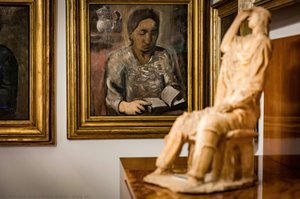
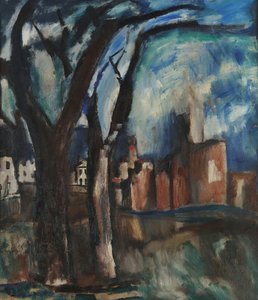
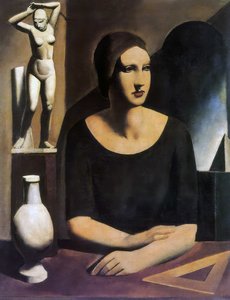
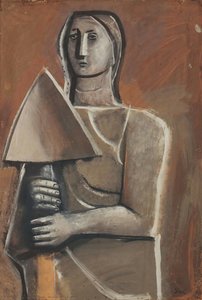
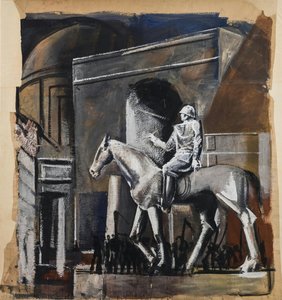
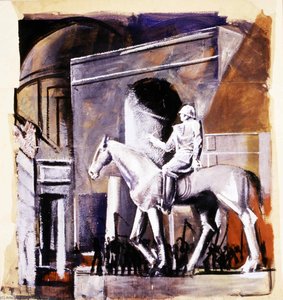
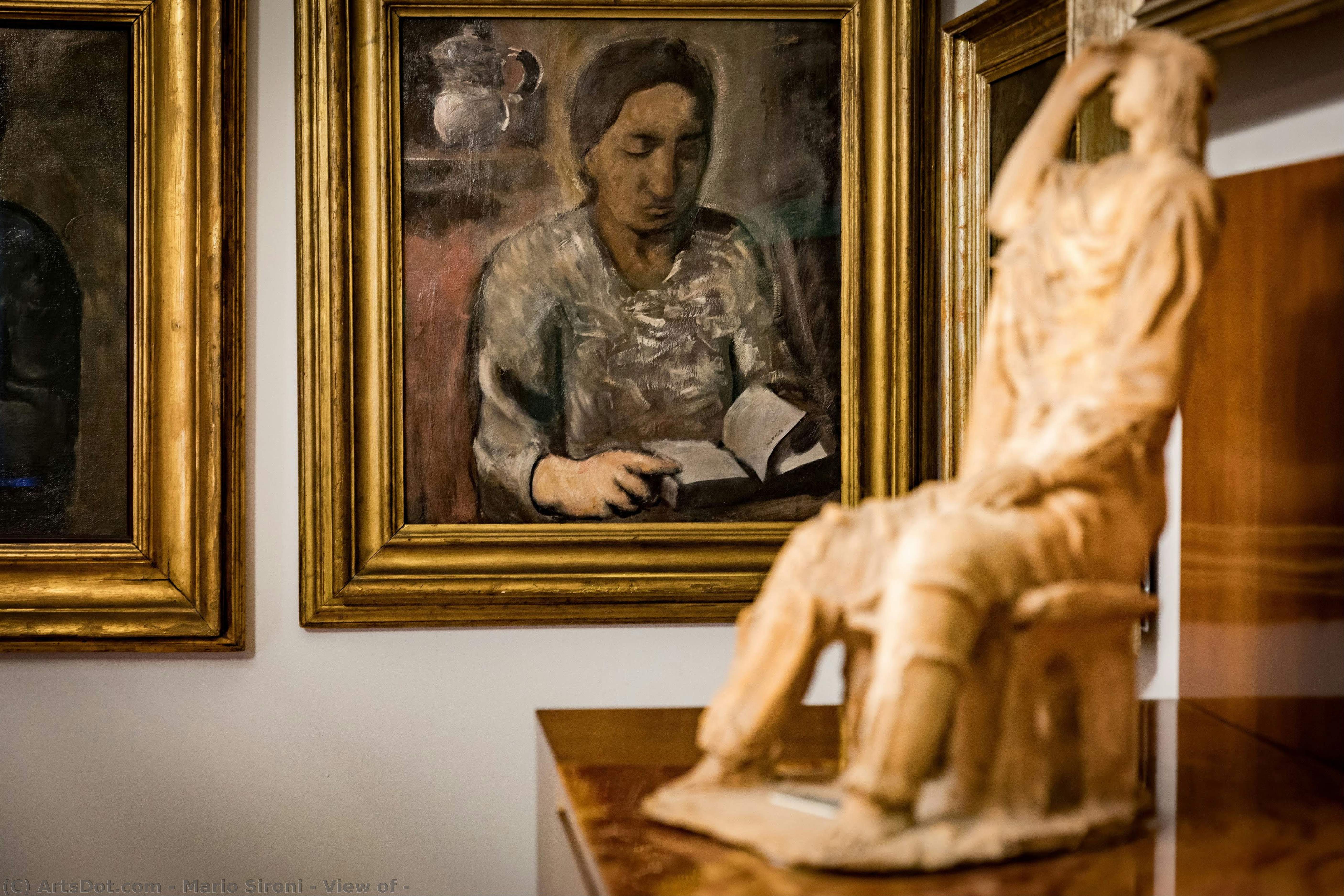
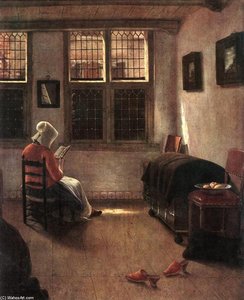
In the soft, contemplative atmosphere of Mario Sironi’s 1928 masterpiece, View of, we are invited into a sanctuary of stillness and intellectual pursuit. The painting presents a tender, intimate scene where a woman sits ensconced in the quietude of reading, her focus entirely absorbed by the pages before her. This central figure serves as an anchor for the composition, embodying a sense of profound peace that transcends the mere depiction of a room. Surrounding her, the subtle presence of two other figures—one standing nearby and another receding into the background—suggests a shared domesticity, a moment where life slows down to accommodate the weight of thought and literature. The setting, reminiscent of a cozy living space or a private study, is rendered with a warmth that makes the viewer feel less like an observer and more like a silent guest in this peaceful gathering.
The composition is masterfully balanced, utilizing the arrangement of furniture and figures to guide the eye through a narrative of relaxation and connection. A dining table sits near the heart of the scene, its presence hinting at the communal rhythms of daily life, while the placement of chairs suggests an invitation to linger. Sironi, a titan of Italian modernism, employs a technique that bridges the gap between the luminous, separated strokes of his early Divisionist training and a more structured, monumental approach. In this work, there is a palpable sense of weight and volume; the figures and objects possess a sculptural quality that gives the scene a lasting, enduring presence. The interplay of light and shadow does not merely illuminate the room but breathes life into the textures of fabric, wood, and paper, creating a sensory experience that feels both tangible and dreamlike.
The Soul of Modernity and Tradition
To understand this painting is to understand the complex evolution of Mario Sironi. Created in 1928, a period of significant transition in European art, the work reflects a departure from the frenetic energy of Futurism toward a more grounded, emotive realism. While Sironi once experimented with the speed and dynamism of the Futurist movement, this piece showcases his mastery of a more contemplative aesthetic. There is an underlying symbolism in the act of reading—a pursuit of knowledge and interiority that stands in stark contrast to the external noise of the modernizing world. The painting captures a fleeting moment of human connection to ideas, rendered with a permanence that only a master of form can achieve.
For the discerning collector or interior designer, this reproduction offers more than just a visual ornament; it provides an emotional anchor for any space. Its muted palette and balanced composition make it an exquisite addition to a sophisticated study, a library, or a refined living area where one seeks to cultivate an atmosphere of elegance and introspection. The artwork possesses the rare ability to command attention through its subtlety, acting as a window into a bygone era of grace and quiet dignity. Bringing this piece into a home is an act of preserving a moment of stillness, allowing the timeless beauty of Sironi’s vision to inspire daily moments of reflection and peace.
Related Artworks
Artist Biography
Mario Sironi: A Life in Modern Italian Art
Early Life and Education
- Born May 12, 1885, in Sassari, Sardinia, Italy.
- His father was an engineer, and his maternal grandfather, Ignazio Villa, was a respected architect and sculptor – providing early artistic exposure.
- Initially studied engineering at the University of Rome but abandoned it in 1903 following a nervous breakdown. This marked a turning point towards art.
- Began formal artistic training at the Scuola Libera del Nudo of the Accademia di Belle Arti di Roma, where he met his first significant teacher, Giacomo Balla.
Artistic Development and Influences
- Early work was heavily influenced by Divisionism, a technique emphasizing separated colors to create luminosity – exemplified in works like “The Student.”
- Briefly experimented with Futurism around 1914, exhibiting at the Galleria Sprovieri in Rome. However, he quickly moved beyond its focus on speed and dynamism.
- A pivotal shift occurred after WWI, developing a style characterized by massive, immobile forms and geometric shapes. This was influenced by his wartime experiences and a growing sense of isolation.
- Key influences included Giacomo Balla (early training), Giorgio de Chirico & Carlo Carrà (metaphysical painting’s impact on form), and elements of Neoclassicism and Primitivist Classicism.
The Novecento Italiano and Mature Style
- In 1922, Sironi became a founding member of the Novecento Italiano movement – a return to order in post-war European art, emphasizing clarity and tradition.
- His mature style is marked by:
- Emphasis on geometric shapes and simplified forms.
- A deliberately ungainly aesthetic in later works.
- Themes of solitude, alienation, and the human condition.
- Exploration of industrial landscapes and working-class life.
- Notable works from this period include “Venere” (1921-1923) and “Solitudine” (“Solitude,” 1925).
Political Affiliations and Later Life
- Sironi was a supporter of Benito Mussolini and contributed extensively to Fascist publications with over 1700 cartoons.
- He believed in the integration of art and architecture, seeking to create monumental works for public spaces – reflecting the ideals of the Fascist regime.
- Following WWII, his association with Fascism led to a decline in his popularity and critical acclaim.
- He largely withdrew from public life, continuing to paint in relative isolation until his death.
Major Achievements and Historical Significance
- Sironi’s work represents a significant contribution to Italian Modernism, bridging the gap between Futurism and later artistic developments.
- His exploration of themes like solitude and alienation resonated with the anxieties of the 20th century.
- Despite the controversies surrounding his political affiliations, his art has been featured in major exhibitions internationally, including at the Centre Georges Pompidou (1981) and the Royal Academy, London (1989).
- Died August 13, 1961, in Milan.
- His legacy lies in his unique stylistic synthesis and his powerful depictions of the human condition within a rapidly changing world.
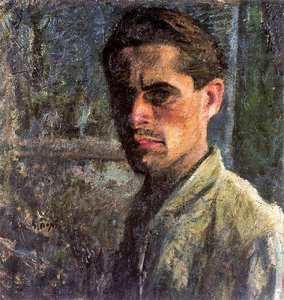
Mario Sironi
1885 - 1961 , Italy
Quick Facts
- Birth Date: 1885-05-12
- Birth Place: Sassari, Italy
- Death Date: 1961-08-13
- Influenced By: ['Giacomo Balla']
- Movement:
- Futurism
- Novecento Italiano
- Modernism
- Name: Mario Sironi
- Nationality: Italian
- Notable Works:
- La Lampada (1919)
- Venere (1921-1923)
- Solitudine (1925)
Related Articles
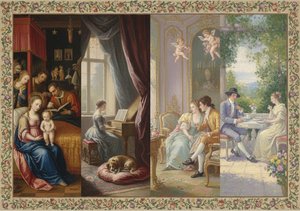
Intimate Interiors: Domestic Life & Artistic Representation from Renaissance to Impressionism
Explore the evolution of domestic life in Western art from the Renaissance to Impressionism. Discover symbolism, realism & artistic techniques shaping intimate interior scenes. Learn more with ArtsDot.
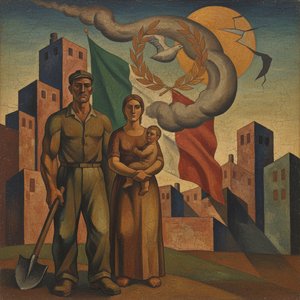
Mario Sironi: A Poetic of Modern Italian Identity Through Symbolism & Social Commentary
Explore the profound works of Mario Sironi, a key figure in Italian Modernism. Discover his evolution from Futurism to Metaphysical painting and his powerful social commentary. Learn about his legacy at ArtsDot.

The Interior Gaze: Exploring Representations of Domestic Space in Art History
Explore the fascinating history of domestic interiors in art! From Dutch Masters to Impressionism, discover how artists captured home life & social meaning. Expert analysis and insights at ArtsDot.
Harmonizing Contrasts: Integrating Abstract Art into Classic Interiors for Timeless Modernity
Elevate your classic home with abstract art! Discover expert tips for seamlessly blending modern pieces into timeless interiors. Find the perfect artwork & design advice at ArtsDot.
Intimate Interiors & Poetic Ambiguity: Exploring the Vision of Jean-Édouard Vuillard
Discover the captivating world of Jean-Édouard Vuillard, a key figure of the Nabis movement. Explore his intimate interiors, unique style & lasting influence on modern art. Learn more at ArtsDot.