 Preview
 Send
Send Share
Share
 Details

 Download
 Similars
 X-Ray
X-Ray Diaporama
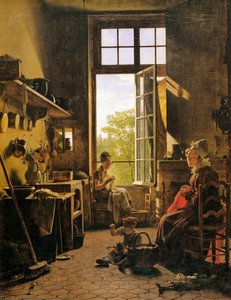
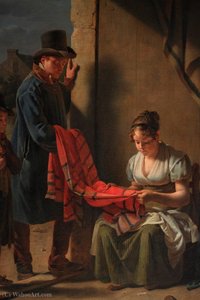
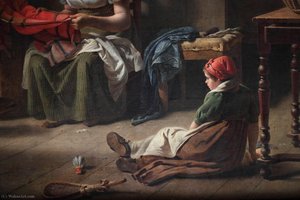
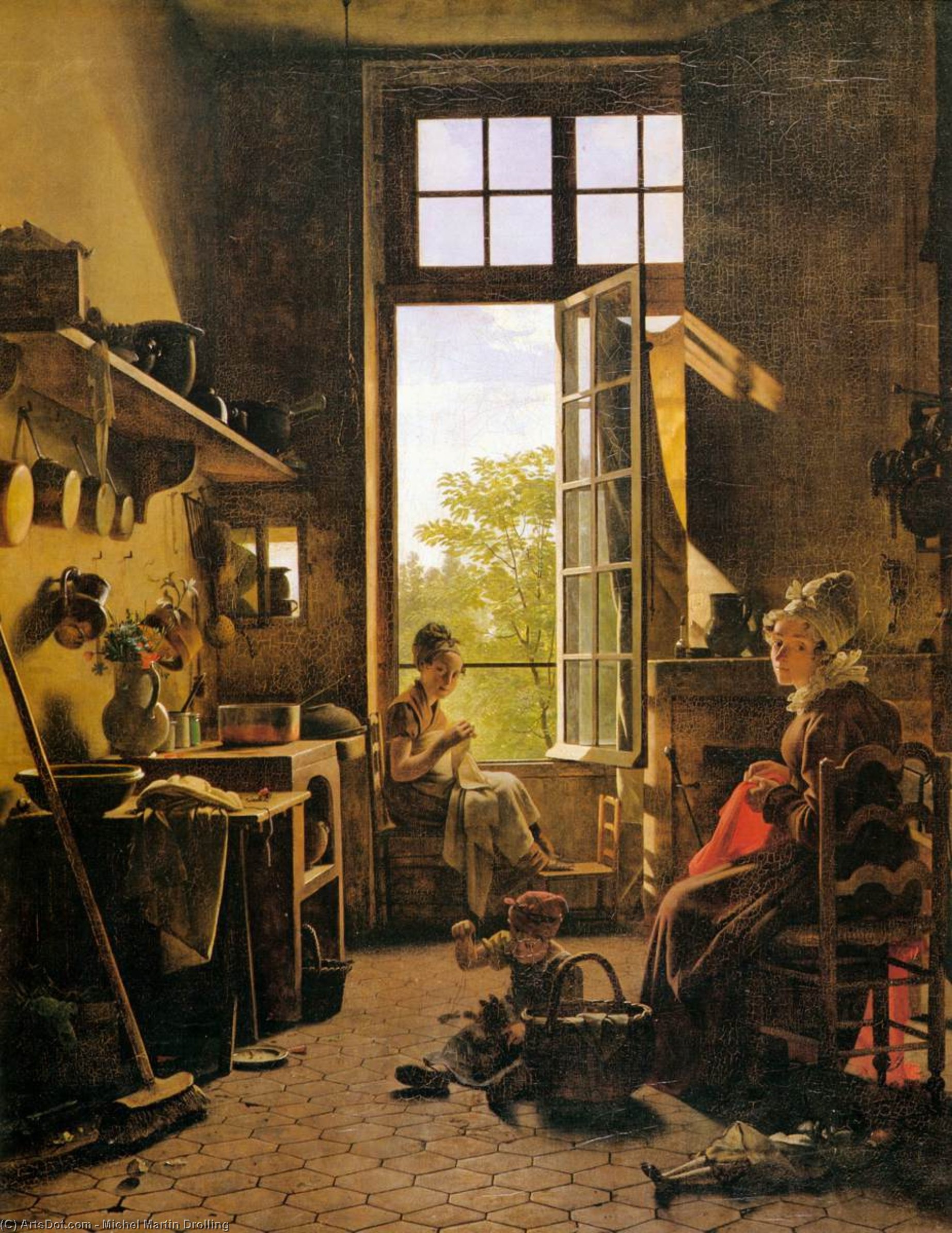
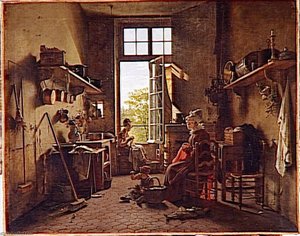
Interior of a Kitchen (detail)


 Read More
Hand Made Oil Reproduction
Hand-painted oil on canvas in your size and frame, made to order by our artists. ( Buy Print Buy Image)




P118B $10

P118H $10

P118W $10

P438Z $10

P508JH $12

P508YH $12

P805H $10

P805Z $10

P919BZ $10

P919G $10

P919XJ $10

P959ZH $10

P968JZ $12

W106C $8

W218G $10

W218JH $8

W218Y $10

W307PJ $10

W316G $10

W316PJ $8

W316Y $10

W398PJ $8

W4111J $10

W500HY $15

W500JH $15

W692G $12

W849H $8

W940BG $15

W953PJ $8




Pick from our preset sizes that match the artwork's original proportions.

You may enter your own dimensions to fit a specific frame or space. If your selected size does not match the original image's proportions, we will either crop the artwork or extend the painting with additional hand-painted elements. A digital mockup will be sent for your approval before production begins.
Please note that the on-screen preview does not reflect the actual cropping or extension. Only the mockup will accurately show the final composition.
While custom sizes are available, we recommend selecting a dimension from the predefined list to preserve the original proportions.
After order, ArtsDot.com team will email client for instructions and provide a mockup preview
Worldwide Delivery () in 3/4 weeks instead of standard 5 weeks. (16 August). No compromise on quality.

Free Worldwide Express Shipping

High-Quality Linen Canvas

Full Shipping Insurance

Customs Tax Refund Guarantee

True Color Matching Guarantee

60-Day Return Policy (Defects Only)

100% Money-Back Guarantee

Bulk Discount Offer
 Glass option is only available in size under 110 CM

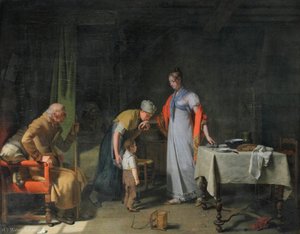
Interior of a Kitchen (detail)
Reproduction Medium
Reproduction Size
-


Total Price
$ 263
Artwork Description
Michel Martin Drolling’s “Interior of a Kitchen”: A Window Into Parisian Domestic Life
The painting "Interior of a Kitchen" by Michel Martin Drolling, completed in 1815, offers more than just a glimpse into the everyday routines of a Parisian household; it embodies the core tenets of Neoclassical art—clarity, restraint, and an unwavering devotion to classical ideals. Examining this meticulously crafted artwork reveals layers of artistic innovation alongside a profound reflection on societal values during the Romantic era’s nascent influence.A Study in Composition and Light
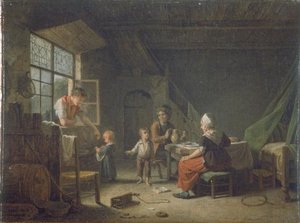
Drolling's masterful compositional choices immediately establish a sense of order amidst apparent informality. The central table dominates the scene, anchoring the eye while simultaneously framing three women engaged in conversation—a deliberate gesture harkening back to idealized depictions of female companionship prevalent in Roman art. Diagonal lines created by the chair and the woman’s posture contribute to dynamism without disrupting the overall equilibrium. Crucially, Drolling employs diffused natural light filtering through a window, casting gentle shadows that illuminate the figures and objects within the kitchen—a technique characteristic of Neoclassical painters who sought to emulate the luminosity of frescoes adorning Roman villas. This careful manipulation of light underscores the painting’s aspiration for beauty rooted in rational observation.Technique: Precision and Detail
Drolling's meticulous attention to detail is evident throughout “Interior of a Kitchen.” The artist employs smooth, blended brushstrokes—a hallmark of Neoclassical technique—to render textures with remarkable accuracy. From the polished surface of the dining table to the folds of fabric draped over chairs, Drolling meticulously captures realistic representations. Furthermore, he skillfully portrays individual facial expressions and gestures, conveying subtle nuances of emotion that enrich the narrative dimension of the artwork. The artist’s dedication to achieving visual fidelity speaks volumes about his commitment to upholding classical standards of artistic excellence.Historical Context: Romanticism's Emerging Presence
Despite its adherence to Neoclassical principles, “Interior of a Kitchen” subtly anticipates the stylistic developments of Romantic art—which would soon prioritize emotion and imagination over strict formalism. The depiction of domestic tranquility contrasts with the turbulent political landscape of post-Napoleonic France, where anxieties about social upheaval simmered beneath the surface. However, Drolling avoids overtly sentimentalizing the scene; instead, he presents a dignified portrayal of familial life imbued with humanist values—a testament to the enduring appeal of classical ideals even as Romantic sensibilities gained prominence.Symbolism: Domestic Harmony and Female Virtue
The painting’s symbolism reinforces its overarching message about domestic harmony and female virtue. The women seated at the table represent idealized femininity, embodying qualities such as compassion, intellect, and social grace—values celebrated in Neoclassical art as emblems of moral rectitude. The objects scattered throughout the kitchen—bottles, bowls, and a chair—serve as visual reminders of everyday life but also symbolize abundance and comfort. Ultimately, “Interior of a Kitchen” transcends mere representation; it aspires to elevate the viewer’s consciousness toward noble aspirations for beauty and goodness—a legacy that continues to inspire admiration centuries later.Related Artworks
Artist Biography
Michel Martin Drolling: A Life in Neoclassical Art
Early Life and Education
Michel Martin Drolling was born on March 7, 1786, in Paris, France. He came from an artistic family; his father, Martin Drolling, was also a painter. This familial influence sparked young Michel’s interest in art, and he began his training under his father's supervision. In 1806, he furthered his education by studying with the renowned Neoclassical artist Jacques-Louis David, a pivotal moment that shaped his artistic trajectory.The Prix de Rome and Early Career
Drolling’s talent quickly became apparent, culminating in his winning of the prestigious Prix de Rome in 1810. This award granted him a scholarship to study at the French Academy in Rome. His winning submission was “The Wrath of Achilles,” demonstrating his mastery of classical themes and techniques. After completing his studies in Rome, he returned to Paris and began establishing himself as a painter.Artistic Style and Major Works
Drolling’s paintings are characterized by the hallmarks of Neoclassicism: theatricality, bright colors, dramatic contrasts of light and shadow, and meticulous attention to detail. He excelled in both historical painting and portraiture. Some of his most significant works include:- “The Death of Abel” (1817) – This work brought him considerable recognition after its exhibition at the Salon.
- “The Lord Descends to Earth to Establish his Empire and Spread his Good Deeds” – A large-scale ceiling painting for the Room of Illustrious Men at the Louvre.
- “The States-General of Tours” (1836) and “The Convention of Alexandria” (1837) – Both commissioned for the Museum of History in the Palace of Versailles.
- “Jesus Among the Doctors” (1840) – Created for the Church of Our-Lady-of-Loretto in Paris.
Recognition and Influence
Drolling’s talent was widely acknowledged, leading to his election as a member of the Académie des Beaux-Arts in 1837. He was subsequently appointed a professor at the École Nationale Supérieure des Beaux-Arts, where he shared his knowledge and expertise with aspiring artists. His students included notable figures such as Paul Baudry, Jules Breton, Roger Fenton, and many others.Historical Significance and Legacy
Michel Martin Drolling represents a key figure in the transition from Neoclassicism to later 19th-century artistic styles. While firmly rooted in classical principles, his work also foreshadows some of the dramatic flair that would characterize Romanticism. His large-scale historical paintings contributed significantly to the visual narrative of French history and national identity during a period of political and social change. He died in Paris on January 9, 1851, leaving behind a legacy of skillfully executed and historically significant artworks.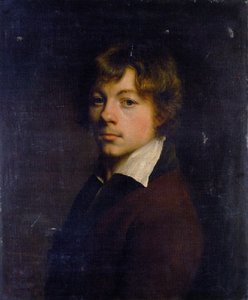
Michel Martin Drolling
1786 - 1851 , France
Quick Facts
- Birth Date: 1786
- Birth Place: Paris, France
- Death Date: 1851
- Influenced:
- Paul Baudry
- Victor Biennourry
- Jules Breton
- Theodor Aman
- Roger Fenton
- Influenced By: Jacques-Louis David
- Movement: Neoclassicism
- Name: Michel Martin Drolling
- Nationality: French
- Notable Works:
- The Wrath of Achilles
- Death of Abel
- Lord Descends to Earth
- States-General of Tours
- Convention of Alexandria
- Jesus Among the Doctors
Related Articles
Charles Le Brun: Master of French Baroque Classicism & His Enduring Legacy
Explore the life & art of Charles Le Brun, master of French Baroque Classicism. Discover his royal commissions, influence on Versailles, and enduring legacy through detailed analysis & stunning artworks.
Jacques-Louis David: Neoclassical Ideals & Revolutionary Witness
Explore the life & art of Jacques-Louis David, leading Neoclassical painter of the French Revolution. Discover iconic works like 'The Death of Marat' and his lasting impact on art history. Expert analysis & high-quality reproductions at ArtsDot.

Angelica Kauffmann: Neoclassical Visionary & Shaping Artistic Identity
Explore the life & art of Angelica Kauffmann, a pioneering Neoclassical painter. Discover her influence on the Royal Academy, portraiture techniques, and legacy as a champion for women artists in 18th-century Europe.
Neoclassical Art: 10 Masterpieces That Shaped History |
Explore 10 defining Neoclassical masterpieces by David, Ingres & Canova. Discover the history, symbolism & artistry behind these iconic paintings and sculptures. Find museum-quality art reproductions at – elevate your home with timeless beauty.
Simon Vouet: A Baroque Master's Journey from Italian Influence to French Classicism
Explore the life & art of Simon Vouet, a pivotal French Baroque painter who introduced Italian styles to France. Discover his masterpieces and lasting influence on 17th-century art.