 Preview
 Send
Send Share
Share
 Details

 Download
 Similars
 X-Ray
X-Ray Diaporama
Board game:Candy Land


 Read More
Giclée / Art Print
Museum-quality giclée or canvas print with fast production and flexible finish options. ( Buy Hand Made Painting Buy Image)




P118B $10

P118H $10

P118W $10

P438Z $10

P508JH $12

P508YH $12

P805H $10

P805Z $10

P919BZ $10

P919G $10

P919XJ $10

P959ZH $10

P968JZ $12

W106C $8

W218G $10

W218JH $8

W218Y $10

W307PJ $10

W316G $10

W316PJ $8

W316Y $10

W398PJ $8

W4111J $10

W500HY $15

W500JH $15

W692G $12

W849H $8

W940BG $15

W953PJ $8




Pick from our preset sizes that match the artwork's original proportions.

You may enter your own dimensions to fit a specific frame or space. If your selected size does not match the original image's proportions, we will either crop the artwork or extend the image with a mirrored or solid-fill edge. A digital mockup will be sent for your approval before production begins.
Please note that the on-screen preview does not reflect the actual cropping or extension. Only the mockup will accurately show the final composition.
While custom sizes are available, we recommend selecting a dimension from the predefined list to preserve the original proportions.
Worldwide Delivery () in 2 weeks instead of standard 4/5 weeks. (17 August)

Free Worldwide Express Shipping

High-Quality Linen Canvas

Full Shipping Insurance

Customs Tax Refund Guarantee

True Color Matching Guarantee

60-Day Return Policy (Defects Only)

100% Money-Back Guarantee

Bulk Discount Offer
 Glass option is only available in size under 110 CM

Board game:Candy Land
Giclée / Art Print
Reproduction Size
-


Total Price
$ 63
Collectible Description
A Journey Through Sugar and Nostalgia
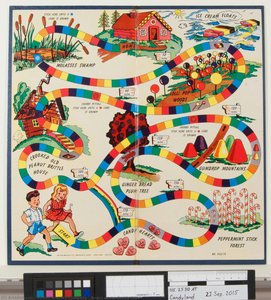
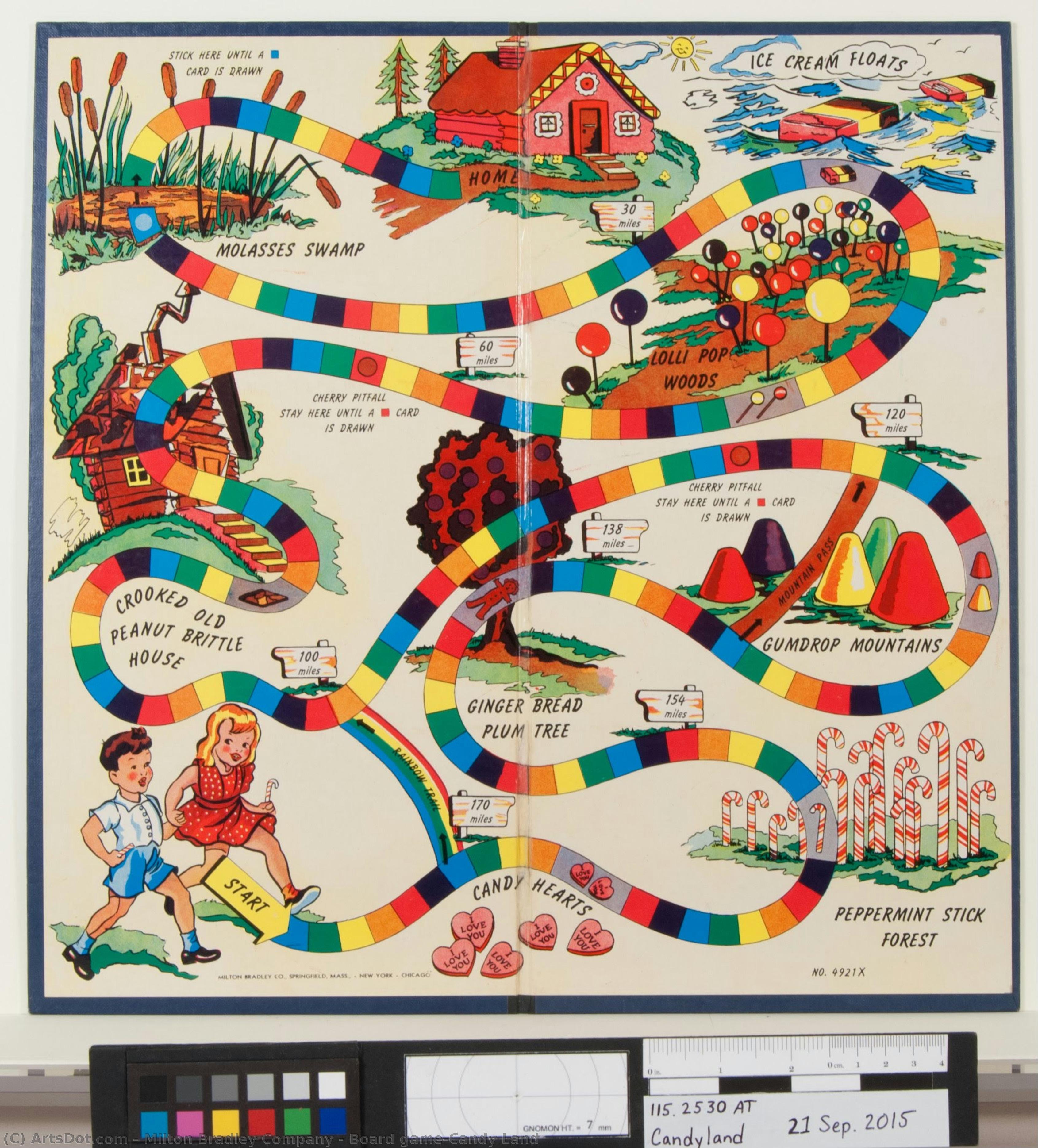
In the realm of mid-century Americana, few images evoke as much pure, unadulterated joy as the 1955 illustration for the classic board game, Candy Land. This vibrant piece of commercial art serves as a window into a whimsical universe where the landscape is composed entirely of confectionery delights. As one’s eyes wander across the winding path, they encounter the sugary peaks of Gumdrop Mountains, the viscous depths of Molasses Swamp, and the enchanting shadows of Lollipop Woods. The composition is masterfully centered, drawing the viewer into a rhythmic progression of color and shape that mimics the very movement of the game itself. At the threshold of this adventure, a small boy and girl stand at the start, their wide-eyed anticipation serving as an invitation for the viewer to embark on a journey through a dreamscape of sweetness.
The artistic technique employed in this vintage masterpiece is characteristic of the mid-20th century screen-printing aesthetic, defined by bold, graphic lines and a palette of saturated, primary colors. There is a charming simplicity to the forms; geometric circles define the stepping stones, while stylized rectangles create the architecture of a candy-coated world. The textures are intentionally flat and matte, reminiscent of classic lithography, which lends the piece an authentic, nostalgic patina. This lack of complex shading or realistic depth does not diminish the work; rather, it enhances its pop-art qualities, creating a high-contrast visual experience that is both striking and easy to digest. For the collector, this flatness offers a clean, modern appeal that integrates seamlessly into contemporary decor.
The Heart of Resilience and Design
Beyond its sugary surface lies a profound historical narrative rooted in human resilience. The origins of Candy Land are unexpectedly poignant, born from the mind of Eleanor Abbott in 1945 as a way to provide solace to children recovering from the ravages of polio. This context imbues the bright colors and cheerful characters with a deeper emotional weight; the game was designed as a safe, indoor sanctuary—a place where the harsh realities of illness could be replaced by the magic of a sugar-coated odyssey. When the Milton Bradley Company acquired the rights in 1949, they preserved this spirit of innocent escapism, refining the visual language to appeal to a generation of children seeking wonder within the safety of their homes.
For interior designers and art enthusiasts, a high-quality reproduction of this piece offers more than just a splash of color; it provides a conversation starter that bridges the gap between historical significance and playful modernism. The symbolism of the path—a continuous, winding journey through obstacles toward a sweet destination—resonates on a universal level. Whether placed in a nursery to inspire imagination or featured in a creative studio to evoke mid-century charm, this artwork brings an atmosphere of optimism and warmth. It is a testament to the power of design to transform even the most difficult historical moments into a lasting legacy of joy and colorful adventure.
Related Artworks



Artist Biography
The Unexpected Canvas: Milton Bradley Company and the Rise of Board Game Art
It’s a curious entry in the annals of art history – a company synonymous not with oils or marble, but with *board games*. Yet, to dismiss the Milton Bradley Company as merely a manufacturer is to overlook its profound impact on American visual culture. Founded in 1860 by Milton Bradley himself, initially as a lithographer producing portraits and greeting cards, the company’s trajectory shifted dramatically towards entertainment, ultimately establishing it as a pioneer in the art of game design and illustration. This wasn't simply about creating diversions; it was about crafting worlds, evoking emotions, and telling stories through increasingly sophisticated visual means. Bradley, a former lithographer, understood the power of imagery long before the advent of mass marketing. His early success stemmed from accurately reproducing portraits, but his entrepreneurial spirit quickly recognized a broader potential for printed art – one that engaged audiences directly rather than passively observing.From Portraits to Pastimes: The Evolution of an Aesthetic
The transition from portraiture to board games wasn’t immediate. Bradley initially experimented with “The Checkered Game of Life,” inspired by a similar British game, but it was his own innovations that truly propelled the company forward. He recognized the need for visually appealing and engaging designs to capture the public's imagination. Early games featured relatively simple illustrations, often employing Victorian-era aesthetics – detailed landscapes, idealized figures, and ornate borders. However, as the company grew, so too did its artistic ambitions. The late 19th and early 20th centuries saw a blossoming of illustration styles, and Milton Bradley actively sought out talented artists to bring their games to life. Artists like George Bertie DeWitt became integral to the company’s success, imbuing titles such as “Game of Life” with a sense of narrative charm and aspirational imagery. The focus shifted from mere gameplay to creating an *experience*, where the artwork played a crucial role in shaping player expectations and emotional investment.Influences and Innovations: A Reflection of American Society
The art within Milton Bradley games wasn’t created in a vacuum. It was deeply reflective of the evolving social landscape of America. The late 19th century saw a rise in middle-class leisure activities, and board games catered directly to this burgeoning market. Themes of homeownership, career advancement, and family values were frequently depicted, mirroring the aspirations of the American public. The artwork often romanticized these ideals – idyllic suburban scenes, successful professionals, and happy families enjoying domestic bliss. Furthermore, the company embraced new printing technologies, allowing for more vibrant colors, detailed illustrations, and increasingly complex game boards. This technical innovation directly influenced the artistic possibilities, enabling artists to create richer, more immersive worlds within their designs. The influence of popular illustration styles – from the realism of Norman Rockwell to the Art Deco movement – can be seen in various games produced throughout the company’s history.Major Achievements and Lasting Legacy
While many games achieved popularity, “The Game of Life” remains Milton Bradley's most enduring legacy. Its iconic game board, constantly updated over the decades to reflect changing societal norms, has become a cultural touchstone. The artwork itself has undergone numerous transformations, yet it consistently embodies the American dream – the pursuit of happiness, financial security, and family fulfillment. Beyond “The Game of Life,” titles like "Clue" (originally known as "Cluedo") demonstrated the company’s ability to create compelling narratives through visual design, establishing a genre of mystery board games that continues to thrive today. Milton Bradley Company didn't just sell games; they sold aspirations and fantasies. The impact extends beyond entertainment. The company fostered a generation of illustrators and designers, contributing significantly to the development of American graphic art. Their work shaped not only how people played but also how they perceived their own lives and possibilities.Historical Significance: More Than Just Child’s Play
The historical significance of Milton Bradley Company lies in its democratization of art. While fine art remained largely inaccessible to the masses, board game illustrations brought visually engaging imagery into homes across America. These games provided a shared cultural experience, fostering family bonding and social interaction.- They reflected societal values and aspirations.
- They showcased the talents of numerous artists.
- They pioneered innovative printing techniques.

Quick Facts
- Artistic Movement Or Style: Board Game Design
- Date Of Death: Living
- Full Name: Milton Bradley Company
- Notable Artworks:
- The Checkered Game of Life
- Game of Authors
- Uncle Sam's Tour Around the World
Related Articles
Beyond Pixels and Play: The Aesthetic and Identity Significance of Gaming Art for the Modern Collector
Explore the rising world of gaming art! Discover why collectors are investing in vintage games & interactive experiences. Expert insights on value, trends & cultural significance.
Pixelated Prestige: Exploring Scarcity, Value, and Cultural Impact in Limited Edition Gaming Paintings
Explore the world of limited edition gaming paintings! Discover investment strategies, artist insights & preservation tips for collectors. Trusted expertise in rare video game art.
Pixel & Palette: Exploring the Artistic Craftsmanship of Hand-Painted Game Universes and the Artists Who Bring Them to Life
Explore the artistry of hand-painted game universes! Discover techniques, artists & history behind this unique style. Expert insights for collectors & developers.

From Pixels to Pavement: How Gaming Aesthetics Are Shaping Pop Culture
Explore the exciting convergence of gaming aesthetics and pop culture! Discover how video games are influencing fashion, streetwear, art & more. Stay ahead of the trends with .
Bridging Realities: Exploring Aesthetic Crossovers Between Video Game Universes and Fine Art Traditions
Explore the fascinating intersection of video game aesthetics & fine art traditions. Discover how gaming influences design, collect iconic art reproductions, and elevate your space with expert guidance from ArtsDot.