

 Preview
 Send
Send Share
Share
 Details

 Download
 Similars
 X-Ray
X-Ray Diaporama
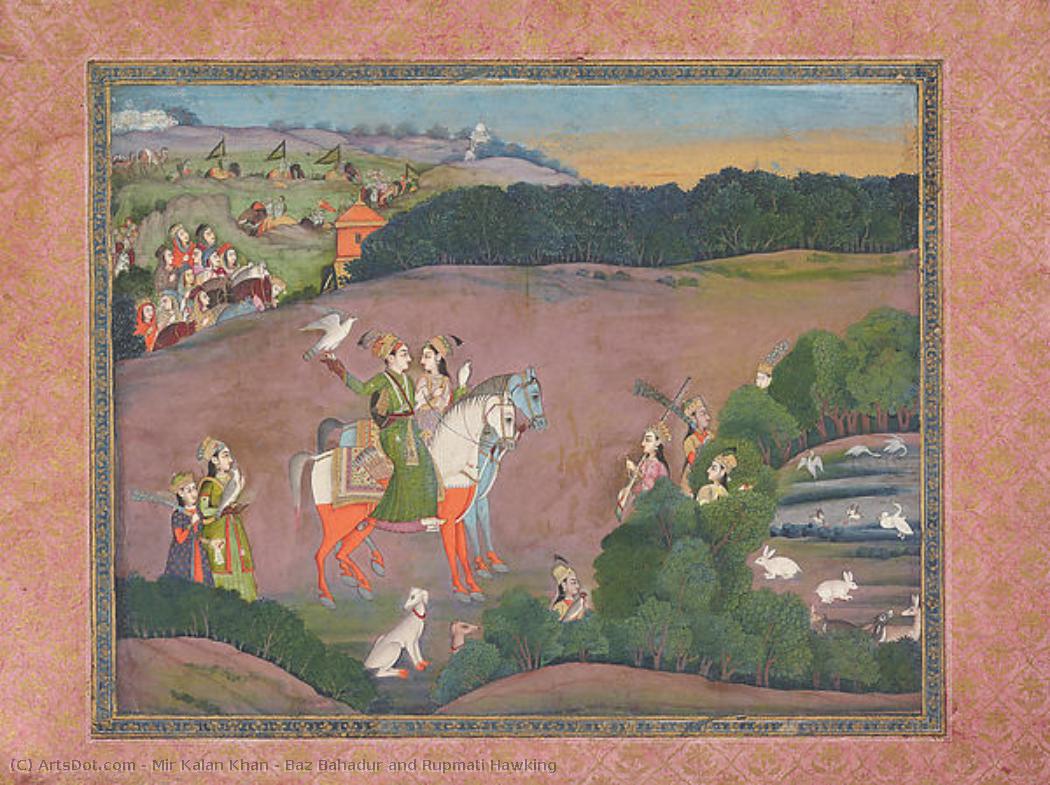
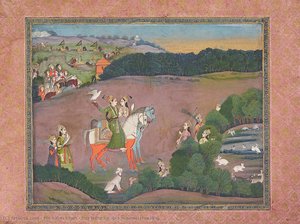
Baz Bahadur and Rupmati Hawking
 Mughal Painting
 1740
1740 21.0 x 27.0 cm
 Read More
Giclée / Art Print
Museum-quality giclée or canvas print with fast production and flexible finish options. ( Buy Hand Made Painting Buy Image)




































Pick from our preset sizes that match the artwork's original proportions.

You may enter your own dimensions to fit a specific frame or space. If your selected size does not match the original image's proportions, we will either crop the artwork or extend the image with a mirrored or solid-fill edge. A digital mockup will be sent for your approval before production begins.
Please note that the on-screen preview does not reflect the actual cropping or extension. Only the mockup will accurately show the final composition.
While custom sizes are available, we recommend selecting a dimension from the predefined list to preserve the original proportions.
Worldwide Delivery () in 2 weeks instead of standard 4/5 weeks. (21 August)

Free Worldwide Express Shipping

High-Quality Linen Canvas

Full Shipping Insurance

Customs Tax Refund Guarantee

True Color Matching Guarantee

60-Day Return Policy (Defects Only)

100% Money-Back Guarantee

Bulk Discount Offer
 Glass option is only available in size under 110 CM

Baz Bahadur and Rupmati Hawking
Giclée / Art Print
Reproduction Size
-


Total Price
$ 63
Collectible Description
Related Artworks

Artist Biography
Mir Kalan Khan: Bridging East and West in Mughal Painting
Mir Kalan Khan (c. 1730 – present) stands as a pivotal figure within the twilight years of Mughal artistic tradition, marking a fascinating intersection between indigenous Indian aesthetics and burgeoning European artistic sensibilities. Born in New Delhi during the reign of Muhammad Shah Durrani, he emerged as a prodigious talent at the court of Delhi and subsequently served Shuja’ al-Dawla, Nawab of Awadh – positions that afforded him unparalleled access to royal patronage and propelled his career into prominence. His distinctive style is characterized by expansive panoramas rendered with remarkable tonal depth, occasionally reaching startling vibrancy thanks to his daring experimentation with color palettes. Unlike many of his contemporaries who adhered strictly to established conventions, Khan boldly incorporated elements derived from Western art practices, notably perspective and chiaroscuro—techniques championed by artists like Rembrandt and Caravaggio—into his compositions. This stylistic fusion speaks volumes about the intellectual currents circulating within Mughal circles during this period, reflecting a desire for innovation and engagement with global artistic trends. Khan’s oeuvre comprises numerous paintings depicting royal figures engaged in ceremonial activities, landscapes imbued with dramatic grandeur, and depictions of military processions showcasing impressive detail and dynamism. The painting “Baz Bahadur and Rupmati Hawking” exemplifies his mastery of composition and tonal range, capturing the romantic narrative of a Mughal prince and princess observing hawks circling above. As noted by art historians, Khan’s work demonstrates "a daring use of color," highlighting his commitment to pushing artistic boundaries. Furthermore, his contribution extends beyond mere stylistic imitation; he skillfully blended traditional Indian iconography with Western compositional principles, resulting in artworks that resonate with both cultural heritage and contemporary artistic ideals. The painting “Raj Singh on a Terrace Enjoying a View of Royal Barges and Military Formations Beyond” showcases this harmonious blend, presenting a meticulously crafted scene reflecting the grandeur of Mughal rule. The artist’s legacy resides not only in his individual masterpieces but also in his role as a catalyst for stylistic evolution within Indian art. He is considered one of the most important artists of the late Mughal period, solidifying his place among the luminaries who shaped the artistic landscape of 18th-century India. His influence continues to inspire artists today, demonstrating the enduring power of artistic innovation and cross-cultural dialogue.- Notable Works: Baz Bahadur & Rupmati Hawking, Raj Singh on a Terrace Enjoying a View of Royal Barges and Military Formations Beyond, The Stallion Kitab
- Style: European Influenced Painting; Panoramic Composition; Dramatic Tonality
- Court Patronage: Muhammad Shah Durrani (Delhi); Shuja’ al-Dawla (Awadh)
mir kalan khan
India
Quick Facts
- Artistic Movement Or Style: Late Mughal
- Full Name: mir kalan khan
- Nationality: Indian
- Notable Artworks:
- Baz Bahadur and Rupmati Hawking
- Raj Singh on a Terrace Enjoying a View of Royal Barges and Military Formations Beyond
- The Stallion Kitab
- Place Of Birth: New Delhi, India
Related Articles
Raja Ravi Varma: Bridging Tradition & Modernity in 19th-Century Indian Art
Explore the life & art of Raja Ravi Varma, a pioneer who fused European techniques with Indian iconography. Discover his iconic paintings, lasting legacy, and influence on modern Indian art at ArtsDot.
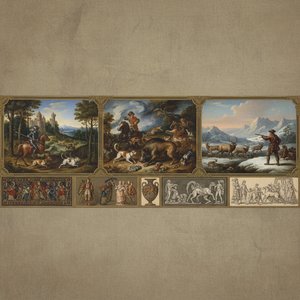
The Pursuit of Power & Prestige: Hunting Scenes in Western Art
Explore the rich history of hunting scenes in Western art, from royal pursuits to powerful allegories. Discover masterpieces & expert insights for discerning collectors. ArtsDot offers museum-quality reproductions.
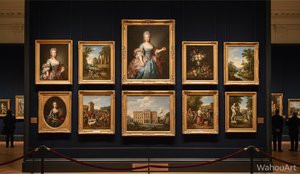
18th Century Masters: 10 Artworks That Define an Era | ArtsDot
Journey through 18th century art! Explore 10 iconic paintings – from Rococo elegance to Neoclassical grandeur. Discover Fragonard, David & more. Find museum-quality reproductions and elevate your home decor on ArtsDot.com.
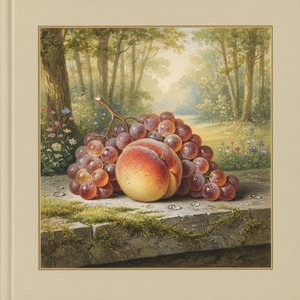
William Henry Hunt: Luminosity & Detail in Early 19th-Century Watercolour Painting
Explore the captivating watercolour paintings of William Henry Hunt (1790-1864). Discover his mastery of naturalistic detail, luminous technique & influence on 19th-century art. Learn about collecting Hunt's work and its enduring value.
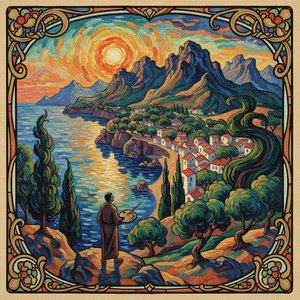
Joaquim Mir: A Catalan Visionary – Exploring Symbolism, Landscape & Modernist Aesthetic
Explore the captivating world of Joaquim Mir, a pivotal Catalan Modernisme painter. Discover his vibrant landscapes, symbolic depth & lasting influence on Spanish art history. Learn more at ArtsDot.

