 Preview
 Send
Send Share
Share
 Details

 Download
 Similars
 X-Ray
X-Ray Diaporama
Louis XIII Kneeling


 Read More
Hand Made Oil Reproduction
Hand-painted oil on canvas in your size and frame, made to order by our artists. ( Buy Print Buy Image)




P118B $10

P118H $10

P118W $10

P438Z $10

P508JH $12

P508YH $12

P805H $10

P805Z $10

P919BZ $10

P919G $10

P919XJ $10

P959ZH $10

P968JZ $12

W106C $8

W218G $10

W218JH $8

W218Y $10

W307PJ $10

W316G $10

W316PJ $8

W316Y $10

W398PJ $8

W4111J $10

W500HY $15

W500JH $15

W692G $12

W849H $8

W940BG $15

W953PJ $8




Pick from our preset sizes that match the artwork's original proportions.

You may enter your own dimensions to fit a specific frame or space. If your selected size does not match the original image's proportions, we will either crop the artwork or extend the painting with additional hand-painted elements. A digital mockup will be sent for your approval before production begins.
Please note that the on-screen preview does not reflect the actual cropping or extension. Only the mockup will accurately show the final composition.
While custom sizes are available, we recommend selecting a dimension from the predefined list to preserve the original proportions.
After order, ArtsDot.com team will email client for instructions and provide a mockup preview
Worldwide Delivery () in 3/4 weeks instead of standard 5 weeks. (17 August). No compromise on quality.

Free Worldwide Express Shipping

High-Quality Linen Canvas

Full Shipping Insurance

Customs Tax Refund Guarantee

True Color Matching Guarantee

60-Day Return Policy (Defects Only)

100% Money-Back Guarantee

Bulk Discount Offer
 Glass option is only available in size under 110 CM

Louis XIII Kneeling
Reproduction Medium
Reproduction Size
-


Total Price
$ 263
Artwork Description
The Majesty of a King: Unveiling Louis XIII Kneeling
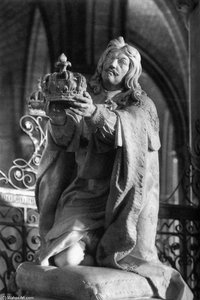
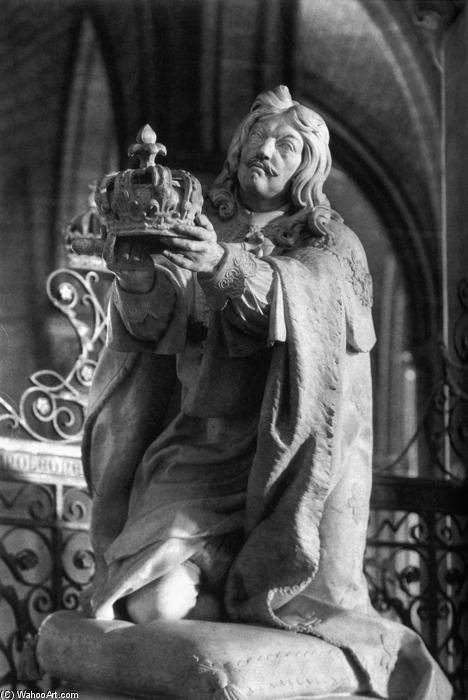
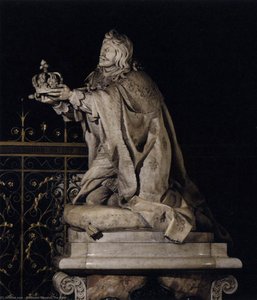
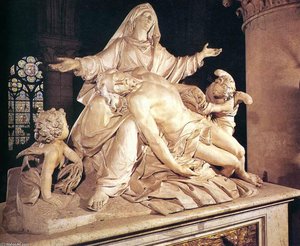
Before us stands an arresting image, a testament to the skill and ambition of 18th-century French sculpture – a meticulously rendered marble depiction of Louis XIII kneeling. More than just a portrait, this work embodies the grandeur of the Bourbon monarchy, steeped in symbolism and executed with a profound understanding of Baroque aesthetics. The photograph captures not merely a king, but an embodiment of power, piety, and the weighty responsibilities of rule. The composition is strikingly centered, drawing the viewer’s eye immediately to the figure of Louis XIII, whose posture exudes both solemnity and regal authority. The low angle subtly elevates his status, reinforcing the sense of his importance within the scene.
The choice of marble itself speaks volumes about the piece's intended impact. Marble, prized for its luminosity and ability to capture intricate detail, was a material reserved for the most significant works of art. Nicolas Coustou’s masterful manipulation of this medium reveals an extraordinary command of texture – the smooth polish of the figure contrasts sharply with the subtly rougher areas where shadows fall, creating a dynamic interplay of light and dark that brings the sculpture to life. The drapery, rendered with astonishing realism, flows around Louis XIII's form, suggesting both movement and stillness, reflecting the duality inherent in his role as king.
A Royal Portrait Rooted in Tradition
Created in 1712, this kneeling figure emerged from a rich artistic tradition. Nicolas Coustou, a sculptor deeply connected to Lyon’s artisan heritage, was trained within a family of skilled craftspeople and later benefited from the tutelage of Charles Antoine Coysevox, a leading figure at the Académie Royale de Peinture et de Sculpture in Paris. This lineage instilled in him a respect for classical forms while simultaneously allowing him to embrace the dramatic flourishes characteristic of Baroque sculpture. The work directly references earlier pietàs – depictions of Mary holding the body of Christ – adapting this established motif to portray Louis XIII as a figure of reverence and submission.
The historical context is crucial to understanding the piece’s significance. Louis XIII, reigning from 1610 to 1643, navigated a period of immense political and religious upheaval in France. His reign witnessed the intensification of the Wars of Religion and the rise of Cardinal Richelieu, who exerted considerable influence over the monarchy. The act of kneeling itself carries profound symbolic weight – it represents humility before God, acknowledging his divine authority. The inclusion of the crown further emphasizes Louis XIII’s position as both a temporal and spiritual leader.
Symbolism and Emotional Resonance
Beyond its historical context, “Louis XIII Kneeling” is rich in symbolic meaning. The posture conveys not just obedience but also a sense of vulnerability – a recognition of the burdens of leadership. The carefully rendered facial expression suggests contemplation and perhaps even regret, hinting at the challenges faced by the king during his reign. The setting, likely within a church or palace chamber, reinforces this atmosphere of solemnity and reverence. The overall effect is one of quiet dignity and profound emotional depth.
Nicolas Coustou’s ability to capture such nuanced emotion through marble is truly remarkable. The sculpture invites viewers to contemplate the complexities of power, faith, and human experience – a timeless testament to the enduring legacy of French Baroque art. It remains a powerful image, offering a glimpse into the heart of a pivotal era in French history.
Related Artworks
Artist Biography
A Legacy in Stone: The Life and Art of Nicolas Coustou
Nicolas Coustou, a name synonymous with the grandeur of French Baroque sculpture, emerged from the artistic heart of Lyon in 1658. His journey was one deeply interwoven with family, patronage, and an unwavering dedication to mastering his craft. Born into a lineage of artisans—his father, François Coustou, being a skilled woodcarver—the young Nicolas received his earliest training within the intimate setting of his family’s workshop. This foundational experience instilled in him not only technical proficiency but also a profound respect for the transformative power of artistic creation. A pivotal moment arrived with his relocation to Paris at the age of eighteen, where he entered the studio of his maternal uncle, the esteemed sculptor Charles Antoine Coysevox. Coysevox, then president of the newly established Académie royale de peinture et de sculpture, provided Coustou with access to the epicenter of French artistic innovation and a rigorous academic framework that would shape his future trajectory. This familial connection proved invaluable, opening doors to commissions and fostering an environment conducive to growth.Rome and the Synthesis of Classical Ideals
Coustou’s burgeoning talent did not go unnoticed. In 1681, he was awarded the prestigious Colbert Prize—the Prix de Rome—a distinction that granted him a four-year sojourn at the French Academy in Rome. This period proved transformative. Immersed in the world of classical antiquity, Coustou meticulously studied the masterpieces of Michelangelo and Algardi, absorbing their distinct approaches to form and expression. He sought not merely to imitate these masters but to synthesize their strengths—Michelangelo’s dynamic energy and Algardi’s refined classicism—into a style uniquely his own. The Roman experience instilled in him a deep appreciation for anatomical accuracy, dramatic composition, and the power of sculpture to convey narrative and emotion. It was here that Coustou began to forge the artistic identity that would define his career, blending Baroque exuberance with the timeless elegance of classical ideals.Royal Commissions and Collaborative Triumph
Upon his return to France, Coustou quickly established himself as a leading sculptor of the era. From 1700 onwards, he embarked on an extended period of collaboration with Coysevox, working on ambitious projects at the palaces of Marly and Versailles—symbols of royal power and artistic magnificence. These commissions demanded not only exceptional technical skill but also an ability to translate the opulent vision of Louis XIV into tangible form. Coustou’s contributions to these grand residences were significant, encompassing allegorical figures, mythological scenes, and portrait busts that adorned the palace gardens and interiors. He rose through the ranks of the Académie royale de peinture et de sculpture, eventually becoming rector and chancellor, solidifying his position as a central figure in the French art world. His collaborative spirit extended to his younger brother, Guillaume Coustou, also a renowned sculptor; their partnership often blurred the lines of authorship, resulting in works that showcased a harmonious blend of individual talents. Notable examples include *Apollo pursuing Daphne*, a dynamic group embodying the Baroque pursuit of emotional intensity and dramatic movement.Enduring Masterpieces and Lasting Influence
Despite the ravages of time and the destruction wrought by the French Revolution, several of Coustou’s masterpieces continue to inspire awe and admiration. *La Seine et la Marne*, a captivating allegorical sculpture representing two vital French rivers, stands as a testament to his ability to imbue stone with life and movement. The monumental *Descent from the Cross*, located behind the choir altar of Notre Dame de Paris, showcases his dramatic flair and technical prowess. *Le Passage du Rhin*, a bas-relief housed in the Louvre, demonstrates his skill in narrative sculpture, capturing a pivotal moment in French history with compelling detail. His portraits of Julius Caesar and Louis XV, also residing in the Louvre, reveal his ability to capture both physical likeness and regal authority. Nicolas Coustou’s legacy extends beyond these individual works; he played a crucial role in shaping the aesthetic landscape of Baroque sculpture in France, leaving an indelible mark on generations of artists who followed. He died in Paris on May 1st, 1733, having secured his place as one of the most celebrated sculptors of his time—a master whose artistry continues to resonate with viewers centuries later.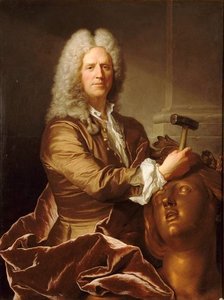
Nicolas Coustou
1658 - 1733 , France
Quick Facts
- Artistic Movement Or Style: Baroque
- Artists Who Influenced This Artist:
- Michelangelo
- Algardi
- Date Of Birth: Jan 9, 1658
- Date Of Death: May 1, 1733
- Full Name: Nicolas Coustou
- Nationality: French
- Notable Artworks:
- La Seine et la Marne
- Descent from the Cross
- Apollo pursuing Daphne
- Le Passage du Rhin
- Place Of Birth: Lyon, France
Related Articles
Simon Vouet: A Baroque Master's Journey from Italian Influence to French Classicism
Explore the life & art of Simon Vouet, a pivotal French Baroque painter who introduced Italian styles to France. Discover his masterpieces and lasting influence on 17th-century art.
The Enduring Legacy of Marble: A Comprehensive Exploration of Technique, Symbolism & Artistic Expression
Explore the rich history of marble sculpture from antiquity to the Renaissance! Discover key techniques, influential artists & enduring themes in classical art. Expert insights for collectors and enthusiasts at ArtsDot.
Charles Le Brun: Master of French Baroque Classicism & His Enduring Legacy
Explore the life & art of Charles Le Brun, master of French Baroque Classicism. Discover his royal commissions, influence on Versailles, and enduring legacy through detailed analysis & stunning artworks.

Bronze Sculptures That Defined Art History | ArtsDot
Journey through art history with our Top 10 bronze sculptures! Explore masterpieces by Rodin, Michelangelo & more. Discover stories behind iconic statues and find museum-quality reproductions for your home decor at ArtsDot.com.

Theatricality & Triumph: Baroque Drama in Painting & Sculpture
Explore the dramatic world of Baroque art! Discover its history, defining characteristics, & lasting influence on painting & sculpture. Expert insights into Caravaggio, Zurbarán, and Bernini – plus high-quality reproductions at ArtsDot.