 Preview
 Send
Send Share
Share
 Details

 Download
 Similars
 X-Ray
X-Ray Diaporama
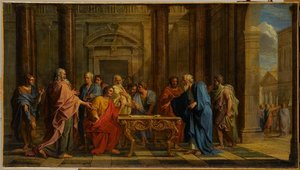
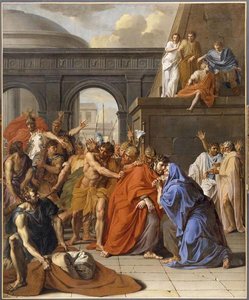
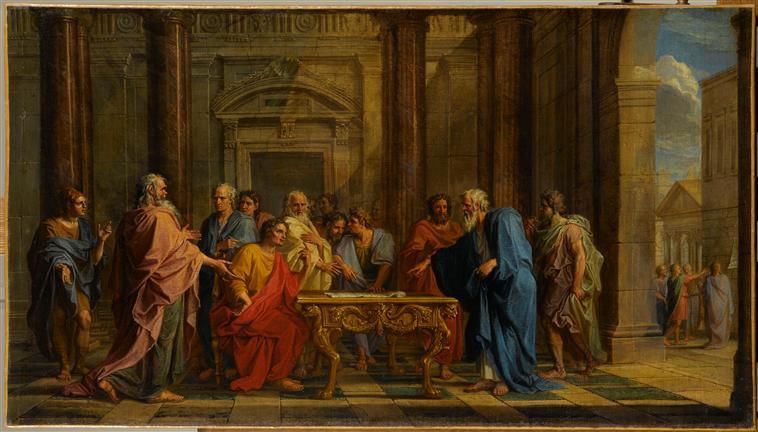
SOLON SOUTENANT LA JUSTICE DE SES LOIS CONTRE LES OBJECTIONS DES ATHENIENS


 Read More
Hand Made Oil Reproduction
Hand-painted oil on canvas in your size and frame, made to order by our artists. ( Buy Print Buy Image)




P118B $10

P118H $10

P118W $10

P438Z $10

P508JH $12

P508YH $12

P805H $10

P805Z $10

P919BZ $10

P919G $10

P919XJ $10

P959ZH $10

P968JZ $12

W106C $8

W218G $10

W218JH $8

W218Y $10

W307PJ $10

W316G $10

W316PJ $8

W316Y $10

W398PJ $8

W4111J $10

W500HY $15

W500JH $15

W692G $12

W849H $8

W940BG $15

W953PJ $8




Pick from our preset sizes that match the artwork's original proportions.

You may enter your own dimensions to fit a specific frame or space. If your selected size does not match the original image's proportions, we will either crop the artwork or extend the painting with additional hand-painted elements. A digital mockup will be sent for your approval before production begins.
Please note that the on-screen preview does not reflect the actual cropping or extension. Only the mockup will accurately show the final composition.
While custom sizes are available, we recommend selecting a dimension from the predefined list to preserve the original proportions.
After order, ArtsDot.com team will email client for instructions and provide a mockup preview
Worldwide Delivery () in 3/4 weeks instead of standard 5 weeks. (30 August). No compromise on quality.

Free Worldwide Express Shipping

High-Quality Linen Canvas

Full Shipping Insurance

Customs Tax Refund Guarantee

True Color Matching Guarantee

60-Day Return Policy (Defects Only)

100% Money-Back Guarantee

Bulk Discount Offer
 Glass option is only available in size under 110 CM

SOLON SOUTENANT LA JUSTICE DE SES LOIS CONTRE LES OBJECTIONS DES ATHENIENS
Reproduction Medium
Reproduction Size
-


Total Price
$ 263
Solon’s Steadfast Defense: A Window into Athenian Justice
Noël Nicolas Coypel's "Solon Soutenant la Justice de Ses Lois Contre les Objections des Athéniens" is more than a mere historical painting; it’s a vibrant tableau of intellectual confrontation, a carefully constructed argument rendered in the rich hues and dramatic lighting characteristic of 17th-century French Baroque. The scene unfolds within an imagined interior space – likely a public forum or perhaps even a grand courtroom – dominated by the imposing figure of Solon, the legendary Athenian lawgiver, standing resolutely at a table laden with scrolls and tablets. He’s not delivering a fiery speech; rather, his posture exudes quiet authority, a deliberate calm that underscores the weight of his words and the gravity of the debate he's presiding over.
Coypel masterfully employs a pyramidal composition, drawing the viewer’s eye directly to Solon at its apex. The surrounding figures – a diverse group of Athenian citizens, their faces etched with varying degrees of skepticism, curiosity, and outright opposition – are arranged in a carefully orchestrated manner, creating a sense of dynamic tension. Notice how Coypel subtly uses light and shadow to highlight Solon’s figure, emphasizing his importance as the central point of contention. The muted tones of the background contribute to this effect, allowing Solon's form to dominate the visual field.
A Portrait of an Era: Contextualizing Athenian Law
To truly appreciate "Solon Soutenant la Justice de Ses Lois Contre les Objections des Athéniens," one must understand the historical context in which it was created. Solon’s reforms, enacted around 593 BCE, represented a radical shift in Athenian society – a move away from aristocratic privilege and towards a more equitable system of governance. His laws addressed issues of debt, land ownership, and citizenship, fundamentally altering the social fabric of Athens. Coypel's painting captures this pivotal moment, immortalizing Solon’s struggle to defend his progressive ideals against the entrenched interests of the old guard.
The choice of subject matter itself is significant. Athenian democracy was a notoriously volatile system, prone to factionalism and passionate debate. Solon’s role as mediator – a figure tasked with balancing competing viewpoints – highlights the inherent challenges of maintaining order and justice within a democratic society. Coypel doesn't simply depict a legal argument; he portrays the very essence of political discourse, capturing the complexities of persuasion, opposition, and ultimately, compromise.
The Brushstroke and its Meaning: A Baroque Masterpiece
Coypel’s artistic technique is deeply rooted in the traditions of French Baroque painting. His meticulous attention to detail – evident in the rendering of the figures' clothing, the architectural elements of the setting, and even the texture of the scrolls – speaks to his rigorous training under Noël Coypel and Antoine Coypel. The use of *chiaroscuro*—the dramatic contrast between light and shadow—is particularly effective in creating a sense of depth and drama, drawing the viewer into the scene.
The painting’s palette is restrained yet sophisticated, dominated by earthy tones – browns, ochres, and grays – punctuated by flashes of color. This muted approach allows the figures to stand out against the background, while also conveying a sense of solemnity and gravitas. The artist's skill in capturing human expression—the furrowed brows of dissenters, the unwavering gaze of Solon—adds another layer of emotional resonance to the work.
Symbolism and Emotional Resonance
Beyond its historical and artistic merits, "Solon Soutenant la Justice de Ses Lois Contre les Objections des Athéniens" is rich in symbolism. The scrolls represent the laws themselves – the foundation upon which Athenian society was built. Solon’s posture—his hand raised in a gesture of authority—suggests his commitment to upholding justice, even in the face of opposition. The diverse group of Athenians surrounding him symbolizes the varied perspectives within a democratic society, highlighting the challenges of achieving consensus.
Ultimately, Coypel's painting is a powerful meditation on the nature of law, governance, and the enduring struggle for justice. It’s a timeless image that continues to resonate with viewers today, reminding us of the importance of reasoned debate, critical thinking, and the pursuit of a more equitable world. Reproductions of this captivating artwork offer a remarkable opportunity to bring this pivotal moment in Athenian history into your home or office, serving as a constant reminder of the values upon which democratic societies are built.
Related Artworks
Artist Biography
A Legacy Forged in Classical Light: The Life and Art of Noël Nicolas Coypel
Noël Nicolas Coypel, a name often whispered alongside that of his revered predecessor, Nicolas Poussin, was a pivotal figure in 17th-century French painting. Born on December 25, 1628, in the heart of Paris, Coypel’s artistic journey wasn't one of immediate acclaim but rather a gradual ascent shaped by familial encouragement and a deep immersion in the classical tradition. His father, though an artist himself, lacked substantial success, yet he provided young Noël with the initial spark—a passion for painting that would ultimately define his life. This early exposure, however, proved to be more than just foundational; it instilled within Coypel a determination to not only master the craft but also to elevate its standing through rigorous study and dedication.Early Training and the Influence of Poussin
Coypel’s formative years were significantly influenced by his fascination with the works of Nicolas Poussin, a towering figure whose emphasis on order, clarity, and classical subject matter resonated deeply with the young artist. This admiration wasn't merely passive; Coypel actively sought to understand and emulate Poussin’s techniques, meticulously studying his compositions, color palettes, and approach to form. A crucial step in his development came with his employment by Charles Errard, a prominent decorator tasked with creating numerous paintings for the Louvre Palace. This commission provided invaluable practical experience and allowed Coypel to hone his skills while contributing to one of France’s most prestigious artistic projects. He also benefited from tutelage under Noël Quillerier, another respected painter who further refined his understanding of classical principles and compositional balance.A Career Defined by Institutional Roles and Grand Commissions
Coypel's career unfolded with a series of increasingly prominent roles within the French art establishment. In 1672, he was appointed director of the prestigious French Academy in Rome—a position that afforded him four years to immerse himself in the artistic heart of Europe and further cultivate his classical sensibilities. This appointment wasn’t simply an honor; it signified a recognition of his talent and potential as a leader within the art world. Upon his return to France, Coypel ascended to become director of the Academy of Painting, where he dedicated himself to fostering the next generation of artists and upholding the standards of academic excellence. Among his most celebrated achievements was his work on large-scale decorative projects, including paintings for the Louvre and other significant Parisian institutions. His *Martyrdom of Saint James in Notre Dame* stands as a testament to his mastery of classical themes, dramatic composition, and technical skill—a powerful depiction that encapsulates the elegance and grandeur characteristic of his style.Family Legacy and Enduring Impact
The Coypel name became synonymous with artistic talent, extending beyond Noël Nicolas himself. His sons, Antoine and Noël-Nicolas Coypel, followed in their father’s footsteps, establishing themselves as accomplished painters and contributing to the continuation of the family legacy. This familial dedication highlights the importance of artistic training within the Coypel household and the enduring influence of Noël Nicolas's example. Beyond his own prolific output, Coypel played a vital role in shaping the French art scene during a period of significant change. His emphasis on classical principles, combined with a refined sense of elegance, left an indelible mark on numerous artists who followed. He wasn’t merely a painter; he was a teacher, an administrator, and a champion of artistic excellence whose influence continues to be felt today. To explore the breadth of his work, including masterpieces like *The Martyrdom of Saint James*, visit resources such as ArtsDot.com, where a comprehensive collection of his paintings awaits discovery. His art remains a powerful reminder of the enduring beauty and timeless appeal of classical painting.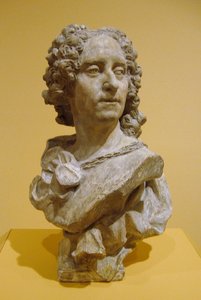
noel nicolas coypel
1628 - 1707 , France
Quick Facts
- Artistic Movement Or Style: Classical Painting
- Artists Who Influenced This Artist: ['Nicolas Poussin']
- Date Of Birth: December 25, 1628
- Date Of Death: 1707
- Full Name: Noël Nicolas Coypel
- Nationality: French
- Notable Artworks: ['Martyrdom of St James']
- Place Of Birth: Paris, France
Related Articles
Embodying the Polis: Civic Virtue as Subject & Symbol in Western Art
Explore the fascinating history of civic virtue in Western art! From ancient Greece to the French Revolution, discover how artists depicted ideals of citizenship, duty & republicanism. Expert analysis at ArtsDot.
The Enduring Legacy of Classicism: Principles, Evolution & Influence in Western Art
Explore the enduring legacy of Classicism in Western art! Discover its historical context, key principles, iconic masterpieces & lasting influence. Learn about Renaissance and Neoclassical movements with ArtsDot.
The Enduring Legacy of Classical Style: Form, Narrative & Influence in Art
Explore the enduring legacy of classical art – from ancient Greece & Rome to Neoclassicism. Discover key artists, philosophical roots & build a timeless collection with ArtsDot's expert guidance.
The Enduring Echo of Antiquity: Classical Ideals in Art from Renaissance to Modernism
Explore the lasting impact of classical ideals on art from the Renaissance to Modernism. Discover key movements, iconic artists & find museum-quality reproductions at ArtsDot.
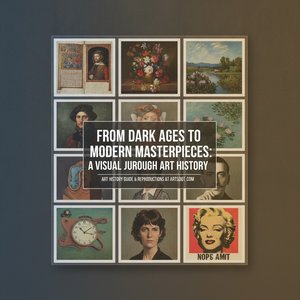
A Journey Through Art History: From the Dark Ages to Modern Masterpieces
Embark on a visual journey through art history, from the timeless ideals of Ancient Greece to the bold innovations of Modernism. Discover how legendary eras shape our aesthetic today and learn to curate your own space with museum-quality masterpieces.