 Preview
 Send
Send Share
Share
 Details

 Download
 Similars
 X-Ray
X-Ray Diaporama
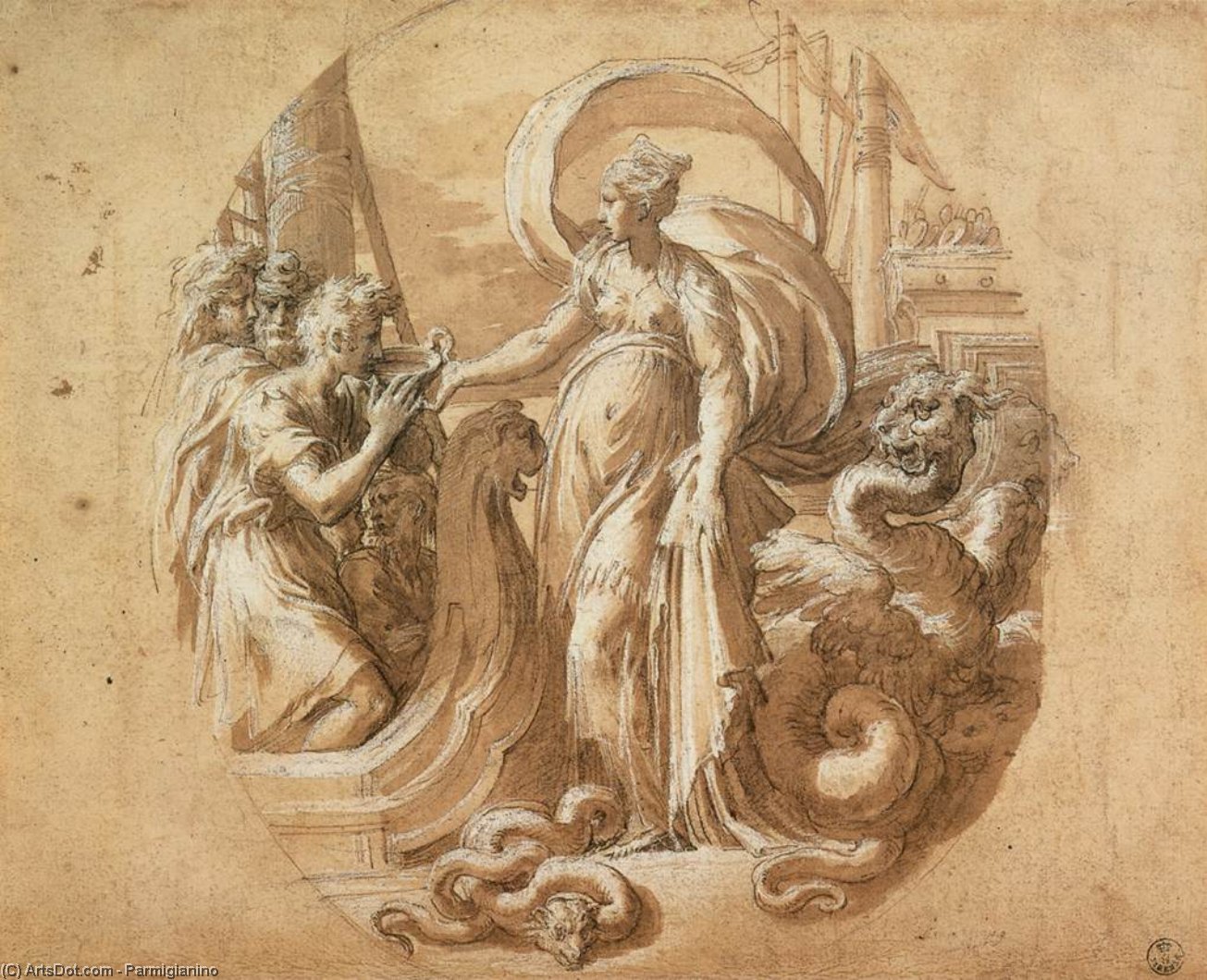
Circe and the Companions of Ulysses
 Acrylic On Canvas
- WallArt
- Mannerist Painting
 1527
1527 230.0 x 279.0 cm
 Galleria degli Uffizi
 Read More
Hand Made Oil Reproduction
Hand-painted oil on canvas in your size and frame, made to order by our artists. ( Buy Print Buy Image)




P118B $10

P118H $10

P118W $10

P438Z $10

P508JH $12

P508YH $12

P805H $10

P805Z $10

P919BZ $10

P919G $10

P919XJ $10

P959ZH $10

P968JZ $12

W106C $8

W218G $10

W218JH $8

W218Y $10

W307PJ $10

W316G $10

W316PJ $8

W316Y $10

W398PJ $8

W4111J $10

W500HY $15

W500JH $15

W692G $12

W849H $8

W940BG $15

W953PJ $8




Pick from our preset sizes that match the artwork's original proportions.

You may enter your own dimensions to fit a specific frame or space. If your selected size does not match the original image's proportions, we will either crop the artwork or extend the painting with additional hand-painted elements. A digital mockup will be sent for your approval before production begins.
Please note that the on-screen preview does not reflect the actual cropping or extension. Only the mockup will accurately show the final composition.
While custom sizes are available, we recommend selecting a dimension from the predefined list to preserve the original proportions.
After order, ArtsDot.com team will email client for instructions and provide a mockup preview
Worldwide Delivery () in 3/4 weeks instead of standard 5 weeks. (16 August). No compromise on quality.

Free Worldwide Express Shipping

High-Quality Linen Canvas

Full Shipping Insurance

Customs Tax Refund Guarantee

True Color Matching Guarantee

60-Day Return Policy (Defects Only)

100% Money-Back Guarantee

Bulk Discount Offer
 Glass option is only available in size under 110 CM

Circe and the Companions of Ulysses
Reproduction Medium
Reproduction Size
-


Total Price
$ 263
Artwork Description
A Dance with Myth and Mystery: Parmigianino’s “Circe and the Companions of Ulysses”
Girolamo Francesco Maria Mazzola, better known as Parmigianino, was a pivotal figure in the transition from the High Renaissance to Mannerism – an artistic movement characterized by its deliberate departure from classical ideals, favoring elongated forms, complex compositions, and a heightened sense of drama. His 1527 painting, “Circe and the Companions of Ulysses,” exemplifies this shift perfectly, offering a glimpse into a world where beauty is both alluring and unsettling, where magic intertwines with human desire, and where the familiar narratives of Homer’s Odyssey are reinterpreted through a distinctly Mannerist lens. The work isn't merely a depiction of a single episode; it’s an exploration of power, transformation, and the seductive allure of the unknown.
The scene unfolds within a richly imagined interior – likely a palace or opulent dwelling – dominated by a central figure: Circe, the enchantress. She is not portrayed as a monstrous hag, but rather as a woman of captivating beauty, her gaze intense and knowing. Her serpentine necklace, a potent symbol of transformation and wisdom, wraps around her neck, immediately drawing the viewer’s attention and hinting at the magical forces she wields. Surrounding her are several figures – Odysseus's men, transformed into swine by Circe’s spell – rendered with a remarkable degree of detail and subtly unsettling realism. The contrast between their bestial forms and the elegant, almost frozen poses of Circe and her companions creates a palpable tension, highlighting the destructive power of enchantment.
Mannerist Techniques: A Study in Illusion and Distortion
Parmigianino’s mastery lies not just in his subject matter but also in his innovative use of Mannerist techniques. The painting is characterized by an exquisite attention to detail – from the intricate folds of the drapery to the subtle nuances of expression on each figure's face. However, this meticulousness is juxtaposed with deliberate distortions and exaggerations. Figures are elongated, their limbs stretched and contorted in ways that defy natural proportions. This distortion isn’t random; it serves to heighten the emotional impact of the scene, creating a sense of unease and disorientation. The use of *chiaroscuro* – the dramatic contrast between light and shadow – further amplifies this effect, plunging certain areas into darkness while bathing others in an ethereal glow.
The artist’s choice of medium—black pencil, pen and brown ink on white paper—contributes significantly to the painting's overall atmosphere. The delicate lines of the drawing create a sense of fragility and vulnerability, while the rich browns add depth and texture. Parmigianino was one of the first Italian painters to experiment with printmaking, and this skill is evident in his meticulous rendering of detail and his ability to capture subtle tonal variations. The choice of white paper also allows for a luminous quality, enhancing the painting’s overall elegance.
Symbolism and Mythological Resonance
“Circe and the Companions of Ulysses” is steeped in symbolism, drawing heavily from Homer's epic poem but offering a distinctly Mannerist interpretation. Circe represents not just enchantment but also temptation, transformation, and the blurring of boundaries between reality and illusion. The swine-like figures symbolize the loss of humanity, the dangers of succumbing to desire, and the consequences of straying from the path of righteousness. The serpent necklace itself is a potent symbol of wisdom, knowledge, and the ability to shape reality – qualities that Circe embodies.
Furthermore, the painting resonates with broader mythological themes—the power of women, the allure of the unknown, and the struggle between order and chaos. It’s a meditation on the transformative nature of experience, suggesting that even seemingly destructive forces can lead to profound change. The composition invites viewers to contemplate not just the story depicted but also the deeper questions it raises about human nature and the complexities of the world.
A Timeless Masterpiece: Reproduction and Interpretation
“Circe and the Companions of Ulysses” remains a captivating work of art, admired for its technical brilliance, evocative imagery, and profound psychological depth. Reproductions offer an accessible way to experience this masterpiece, allowing viewers to appreciate Parmigianino’s artistry in their own homes or offices. When selecting a reproduction, consider the quality of the print – archival materials are essential for preserving the artwork's vibrancy and longevity. Beyond its aesthetic appeal, “Circe and the Companions of Ulysses” serves as a reminder of the enduring power of myth and the timeless fascination with the mysteries of the human psyche.
Related Artworks

Artist Biography
A Refined Sensibility: The Life and Art of Parmigianino
Girolamo Francesco Maria Mazzola, known to history as Parmigianino – “the little one from Parma” – emerged during the High Renaissance, yet swiftly became a defining figure of the burgeoning Mannerist style. Born in Parma on January 11, 1503, his early life was marked by familial loss; his father, Filippo Mazzola, died when Girolamo was just two years old. Raised by his uncles, Michele and Pier Ilario, both modestly skilled artists themselves, the young Parmigianino received his initial artistic training within this familial circle. This foundation, however, proved merely a springboard for an exceptional talent that would soon eclipse even his mentors. By the astonishing age of eighteen, he had already completed the Bardi Altarpiece, a work demonstrating a maturity and sophistication far beyond his years, signaling the arrival of a truly remarkable artist.Florence, Rome, and the Shaping of a Mannerist Vision
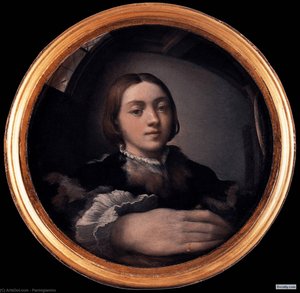
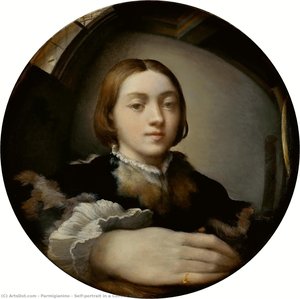
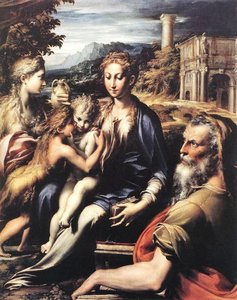
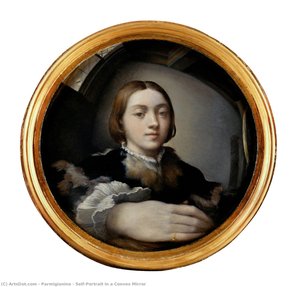
Parmigianino’s artistic journey led him to Florence around 1524, where he absorbed the influence of masters like Raphael and Leonardo da Vinci, though he quickly began to forge his own distinct path. He presented Pope Clement VII with three paintings, including a striking self-portrait in a convex mirror – a testament to his technical skill and burgeoning self-awareness. This act secured commissions in Rome, but the city’s artistic landscape was soon disrupted by the tumultuous Sack of 1527. Forced to flee, Parmigianino sought refuge in Bologna, where he painted one of his most celebrated works, the *Holy Family*. It was during this period that his signature style truly crystallized: elongated forms, graceful poses, and a refined sensuality became hallmarks of his art. He wasn’t merely depicting reality; he was reimagining it through a lens of elegance and idealized beauty. This departure from the High Renaissance's emphasis on naturalism marked him as a key innovator of Mannerism, an artistic movement characterized by its artificiality, sophistication, and deliberate distortion of classical forms.Masterpieces of Elongation and Grace
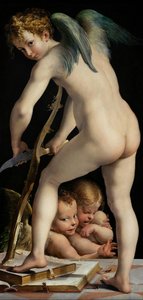
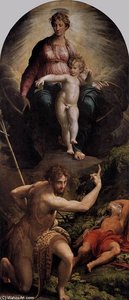
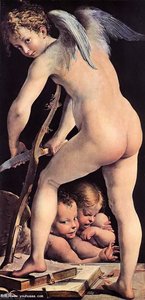
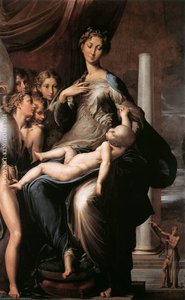
Parmigianino’s legacy rests upon a relatively small but profoundly influential body of work. The *Madonna with the Long Neck* (1534) remains perhaps his most iconic creation. Its unsettling yet captivating composition, featuring figures with elongated necks and limbs, challenges conventional notions of beauty and proportion. This deliberate distortion isn't simply stylistic; it conveys a sense of spiritual yearning and otherworldly grace. Similarly, *Vision of Saint Jerome* (1527), completed during his time in Rome, showcases his mastery of anatomy and perspective, while simultaneously embracing the Mannerist penchant for dramatic compositions and emotional intensity. Beyond these celebrated paintings, Parmigianino’s drawings reveal an extraordinary level of skill and sensitivity. His studies of figures, drapery, and architectural elements demonstrate a meticulous attention to detail and a profound understanding of form. Even his lesser-known works, such as *Bow-Carving Amor*, display the same refined sensibility and technical virtuosity that define his oeuvre.A Legacy Interrupted: Parmigianino’s Final Years
Tragically, Parmigianino's promising career was cut short by his untimely death in Casalmaggiore in 1540 at the age of thirty-seven. The circumstances surrounding his demise remain somewhat mysterious; some accounts suggest he succumbed to a fever, while others hint at complications from a fall. Despite his brief life, Parmigianino left an indelible mark on Italian Renaissance art. He stands as one of the most important representatives of Mannerism, influencing generations of artists with his elegant style and innovative approach to form and composition. His work continues to captivate viewers today, offering a glimpse into a world where beauty is not merely observed but actively created – a testament to the enduring power of artistic vision. The frescoes he left unfinished in Parma and Fontanellato serve as poignant reminders of what might have been, yet even in their incomplete state, they reveal the brilliance of a master whose legacy continues to resonate through the centuries.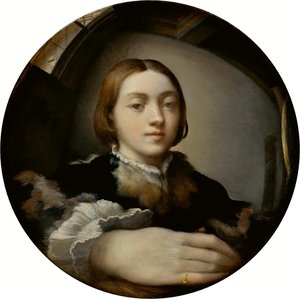
Parmigianino
1503 - 1540 , Italy
Quick Facts
- Artistic Movement Or Style: Mannerism
- Artists Or Movements Influenced By This Artist: ['Italian Renaissance art']
- Artists Who Influenced This Artist:
- Correggio
- Raphael
- Date Of Birth: January 11, 1503
- Date Of Death: 1540
- Full Name: Girolamo Francesco Maria Mazzola
- Nationality: Italian
- Notable Artworks:
- Madonna with the Long Neck
- Vision of Saint Jerome
- Self-Portrait in a Convex Mirror
- Holy Family
- The Circumcision
- Bow-carving Amor
- Place Of Birth: Parma, Italy
Related Articles
Mannerism's Masters: 10 Artworks That Redefined Renaissance Style | ArtsDot
Explore 10 defining Mannerism masterpieces – from Pontormo to El Greco. Discover the stories behind these Renaissance paintings, their unique style & symbolism. Find museum-quality art reproductions at ArtsDot.com and elevate your home decor.
Mannerism: Bridging Renaissance Harmony & Baroque Drama – A Study of Style & Affectation
Explore the fascinating world of Mannerism! Discover its key characteristics, pioneering artists like Pontormo & Bronzino, and its pivotal role in bridging Renaissance harmony to Baroque drama. A comprehensive guide for art enthusiasts.
Renaissance Mannerism: Style, Subtlety & the Transition from Harmony to Artifice
Explore the captivating world of Renaissance Mannerism! Discover its key characteristics, pioneering artists like Pontormo & Bronzino, and its pivotal role in art history. Expert insights & museum-quality reproductions at ArtsDot.
Federico Barocci: A Master of Emotive Spirituality & the Transition from Mannerism
Explore the captivating world of Federico Barocci, a pivotal figure bridging Mannerism & Baroque art. Discover his emotive spirituality, innovative techniques, and lasting influence on Italian Renaissance painting.
Giulio Romano: A Master of Mannerism & the Palazzo Te Legacy
Explore the revolutionary art of Giulio Romano, master of Mannerism & architect of Palazzo Te. Discover his influence, investment potential, and stunning frescoes – a guide for discerning collectors.