 Preview
 Send
Send Share
Share
 Details

 Download
 Similars
 X-Ray
X-Ray Diaporama
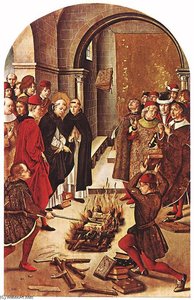
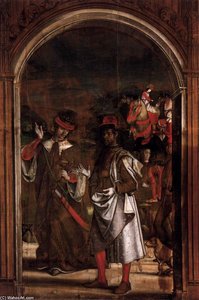
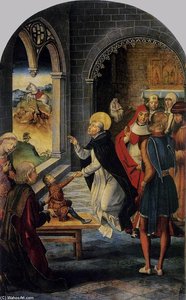
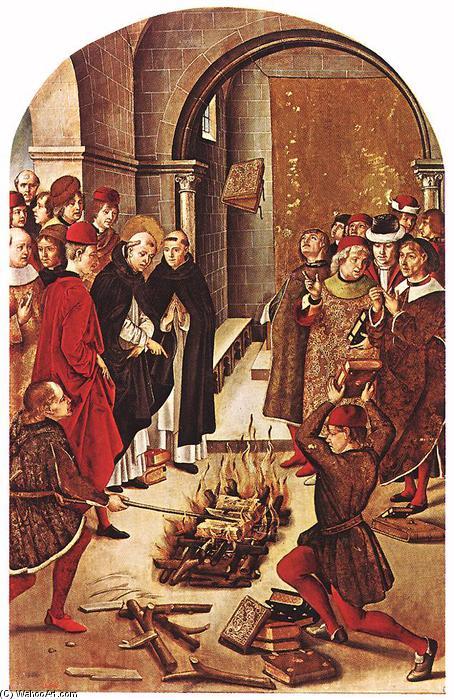
St Dominic and the Albigenses
 Tempera On Panel
- Italian Renaissance
 1495
1495- Renaissance
 122.0 x 83.0 cm
 Museo del Prado
 Read More
Hand Made Oil Reproduction
Hand-painted oil on canvas in your size and frame, made to order by our artists. ( Buy Print Buy Image)




P118B $10

P118H $10

P118W $10

P438Z $10

P508JH $12

P508YH $12

P805H $10

P805Z $10

P919BZ $10

P919G $10

P919XJ $10

P959ZH $10

P968JZ $12

W106C $8

W218G $10

W218JH $8

W218Y $10

W307PJ $10

W316G $10

W316PJ $8

W316Y $10

W398PJ $8

W4111J $10

W500HY $15

W500JH $15

W692G $12

W849H $8

W940BG $15

W953PJ $8




Pick from our preset sizes that match the artwork's original proportions.

You may enter your own dimensions to fit a specific frame or space. If your selected size does not match the original image's proportions, we will either crop the artwork or extend the painting with additional hand-painted elements. A digital mockup will be sent for your approval before production begins.
Please note that the on-screen preview does not reflect the actual cropping or extension. Only the mockup will accurately show the final composition.
While custom sizes are available, we recommend selecting a dimension from the predefined list to preserve the original proportions.
After order, ArtsDot.com team will email client for instructions and provide a mockup preview
Worldwide Delivery () in 3/4 weeks instead of standard 5 weeks. (27 August). No compromise on quality.

Free Worldwide Express Shipping

High-Quality Linen Canvas

Full Shipping Insurance

Customs Tax Refund Guarantee

True Color Matching Guarantee

60-Day Return Policy (Defects Only)

100% Money-Back Guarantee

Bulk Discount Offer
 Glass option is only available in size under 110 CM

St Dominic and the Albigenses
Reproduction Medium
Reproduction Size
-


Total Price
$ 263
Artwork Description
A Dialogue Across Centuries: Unveiling Berruguete's Vision
To stand before Pedro Berruguete’s "St Dominic and the Albigenses" is to step across the threshold of time, into a moment charged with intellectual fervor and spiritual gravity. This masterpiece, painted in 1495, is not merely a depiction of figures gathered around a fire; it is a vibrant testament to the pivotal cultural shift occurring in late medieval Spain—the delicate, yet powerful, transition from the solemnity of the Gothic age toward the burgeoning light of the Renaissance. The scene immediately draws the eye into the foreground, where St Dominic, resplendent in his distinctive red robe, commands attention as he engages in profound discourse with a learned companion whose hands rest upon an open book. This interaction forms the very heart of the painting’s narrative energy.
Mastery in Tempera: Technique and Atmosphere
The technical brilliance evident in this work is breathtaking. Executed in tempera on panel, Berruguete employed a medium that allowed for both luminous detail and rich, saturated color. Observe how the pigments interact with the light, giving depth to the folds of drapery and lending an almost palpable texture to the architectural setting behind the figures. The background, framed by classical arches and columns, suggests a scholarly or sacred space—a perfect crucible for theological debate. Berruguete masterfully balances the intense focus on the central dialogue against this structured backdrop, creating a composition that feels both contained and expansive, inviting the viewer to lean in and listen.
Symbolism of Scholarship and Faith
The symbolism woven throughout "St Dominic and the Albigenses" speaks eloquently to the era's intellectual currents. St Dominic himself represents the enduring power of doctrine and spiritual guidance. The book upon which one figure rests their hand is more than just an object; it symbolizes accumulated knowledge, scripture, and the pursuit of truth through study. The gathering around the fire suggests both illumination—the literal light source and the metaphorical enlightenment of understanding—and community. It captures that vital moment when profound ideas are exchanged under the watchful gaze of faith.
A Timeless Echo for Modern Spaces
For those who seek to infuse a space with the gravitas of history, or who desire an artwork that speaks eloquently of learning and spiritual depth, this piece offers unparalleled resonance. The rich palette, dominated by the striking red against cooler architectural tones, provides immediate visual drama. Owning a reproduction of this work allows one to bring home not just paint on panel, but a narrative moment—a dialogue between enduring wisdom and human curiosity. It serves as a magnificent focal point for libraries, studies, or grand halls, whispering tales of scholars and saints across the centuries.
Related Artworks
![Legend Of St Francis - [23] - St Francis Mourned By St Clare — Giotto Di Bondone, Gothic](/media/artworks/images-thumb/17/1c/171c284c41dc3ef8bca83e51c1e1e531.jpg)
Artist Biography
Pedro Berruguete: Bridging Gothic Legacy and Renaissance Dawn
Pedro Berruguete (c. 1450 – 1504) stands as a pivotal figure in Spanish art history, marking the crucial transition between the solemn grandeur of Gothic painting and the burgeoning optimism of the Italian Renaissance. Born in Paredes de Nava, Castile, his exact birth year remains elusive, shrouded in the vagueness characteristic of artists whose lives were documented sparsely during their time. His lineage traced back to noble families, providing him with a foundation for artistic pursuits that would ultimately reshape the visual landscape of Spain. Despite the lack of definitive biographical details—a frustrating impediment for art historians—Berruguete’s oeuvre speaks volumes about his profound understanding and masterful execution of stylistic innovations. He emerged from the shadow of Gothic tradition, absorbing its expressive fervor and meticulous detail, yet simultaneously embracing the humanist ideals and geometric precision championed by Florentine masters like Brunelleschi and Donatello. This duality is palpable in his paintings, where stylized figures coexist with carefully rendered drapery and architectural elements—a hallmark of the emerging Renaissance aesthetic. His artistic journey gained momentum during a period marked by religious upheaval; Berruguete’s most celebrated works depict scenes from the early Inquisition, capturing the anxieties and moral dilemmas of the era with unflinching realism. Simultaneously, he produced breathtaking retablo panels for Castilian churches, demonstrating his technical prowess and ability to convey profound spiritual narratives. These commissions solidified his reputation as a leading artist of his time and cemented his place within the artistic canon. The speculation surrounding Berruguete’s travels to Italy in 1480 is particularly intriguing. Evidence suggests he spent time at Federico III da Montefeltro's court in Urbino, immersing himself in the vibrant artistic environment fostered by Lorenzo de Medici’s patronage. While attribution remains debated—with Justus van Gent also active in Urbino during that period—the influence of Italian Renaissance artists undoubtedly permeated Berruguete’s thinking and technique. He returned to Spain in 1482, establishing studios in Toledo and Ávila, where he continued to refine his style and produce monumental artworks. Perhaps most importantly, Berruguete is recognized as the father of Alonso Berruguete (c. 1475–1561), arguably Spain’s greatest sculptor during the Renaissance. This familial connection further elevates Berruguete's significance—his son’s sculptural achievements served as a testament to his artistic legacy and established a powerful tradition within Spanish art. The distinction between “Pedro” and “Alonso” reflects the broader cultural shift occurring in Spain, where older masters nurtured younger talents, propelling artistic innovation forward. The attribution of Berruguete's paintings remains challenging due to the absence of signatures and comprehensive documentation. However, stylistic analysis—coupled with circumstantial evidence—has convincingly linked him to numerous masterpieces, including “David,” “Ezekiel,” and “Salomon.” These works exemplify his distinctive approach: a careful balance between Gothic solemnity and Renaissance dynamism, characterized by expressive drapery, monumental scale, and meticulous attention to detail. Berruguete’s contribution to Spanish art is undeniable—he stands as a beacon of artistic transition, embodying the spirit of a nation embracing new horizons while honoring its venerable past.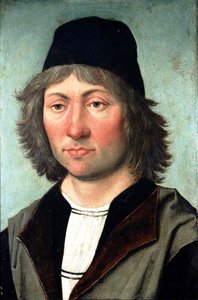
Pedro Berruguete
1450 - 1504 , Spain
Quick Facts
- Artistic Movement Or Style: Transition between Gothic & Renaissance
- Artists Or Movements Influenced By This Artist: ['']
- Artists Who Influenced This Artist: ['']
- Date Of Birth: c. 1450
- Date Of Death: 1504
- Full Name: Pedro Berruguete
- Nationality: Spanish
- Notable Artworks:
- David
- Ezekiel
- Salomon
- Place Of Birth: Paredes de Nava, Spain
Related Articles

El Greco's Masterpieces: Explore 25 Iconic Paintings & Spiritual Visions | ArtsDot
Journey through El Greco's 25 most iconic paintings! Explore the spiritual depth & dramatic beauty of this Spanish Renaissance master. Discover art history, techniques & find museum-quality reproductions for your home at ArtsDot.com.
Prado Masterpieces: Explore 25 Iconic Artworks & Bring Spanish Beauty Home
Journey through 25 Prado Museum masterpieces! Explore Velázquez, Goya & El Greco's iconic Spanish art. Discover the stories behind these timeless paintings and find museum-quality reproductions for your home at ArtsDot.com.
The Golden Age Reforged: Dramatic Realism & Religious Zeal in Spanish Baroque Art
Explore the dramatic world of Spanish Baroque art! Discover masters like Zurbarán & the powerful influence of religious zeal on painting techniques – a guide for collectors and enthusiasts.
Rafael de Penagos: A Study in Spanish Portraiture & Artistic Identity
Explore the life & art of Rafael de Penagos, a leading Spanish Art Deco illustrator. Discover his iconic 'Penagos Woman', commercial work, and lasting legacy. Learn about this pivotal figure in 20th-century Spanish art history.
José Gutiérrez Solana: A Chronicle of Spanish Society Through Expressionist Vision
Explore the captivating world of José Gutiérrez Solana, a pivotal Spanish Expressionist painter. Discover his haunting depictions of early 20th-century Spain, influenced by Goya & El Greco. Learn about his key works and lasting legacy.