 Preview
 Send
Send Share
Share
 Details

 Download
 Similars
 X-Ray
X-Ray Diaporama
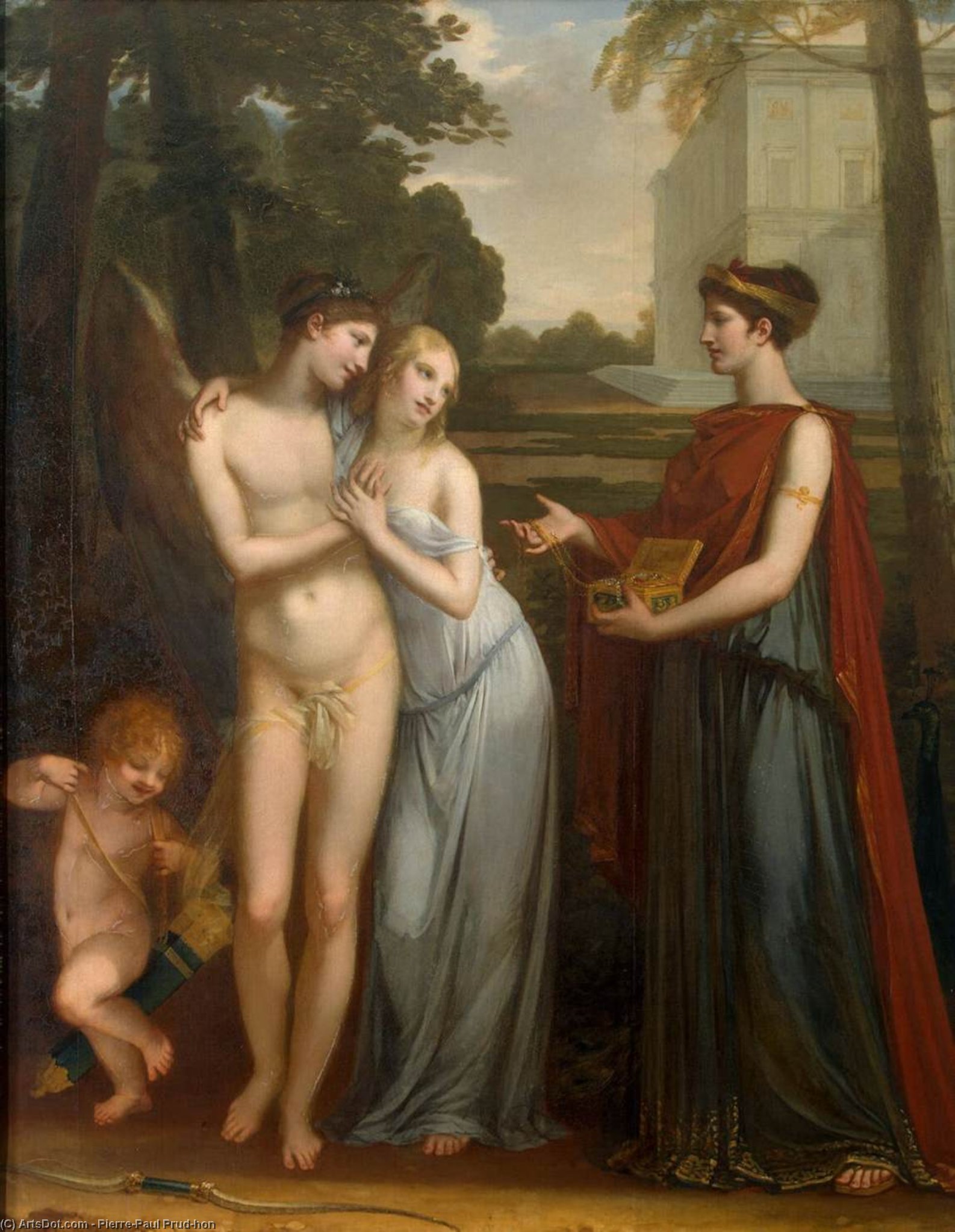
Innocence Preferring Love to Wealth
 Oil On Panel
- WallArt
- Romantic Sensibility
 1804
1804- 19th Century
 243.0 x 194.0 cm
 Hermitage Museum
 Read More
Hand Made Oil Reproduction
Hand-painted oil on canvas in your size and frame, made to order by our artists. ( Buy Print Buy Image)




P118B $10

P118H $10

P118W $10

P438Z $10

P508JH $12

P508YH $12

P805H $10

P805Z $10

P919BZ $10

P919G $10

P919XJ $10

P959ZH $10

P968JZ $12

W106C $8

W218G $10

W218JH $8

W218Y $10

W307PJ $10

W316G $10

W316PJ $8

W316Y $10

W398PJ $8

W4111J $10

W500HY $15

W500JH $15

W692G $12

W849H $8

W940BG $15

W953PJ $8




Pick from our preset sizes that match the artwork's original proportions.

You may enter your own dimensions to fit a specific frame or space. If your selected size does not match the original image's proportions, we will either crop the artwork or extend the painting with additional hand-painted elements. A digital mockup will be sent for your approval before production begins.
Please note that the on-screen preview does not reflect the actual cropping or extension. Only the mockup will accurately show the final composition.
While custom sizes are available, we recommend selecting a dimension from the predefined list to preserve the original proportions.
After order, ArtsDot.com team will email client for instructions and provide a mockup preview
Worldwide Delivery () in 3/4 weeks instead of standard 5 weeks. (30 August). No compromise on quality.

Free Worldwide Express Shipping

High-Quality Linen Canvas

Full Shipping Insurance

Customs Tax Refund Guarantee

True Color Matching Guarantee

60-Day Return Policy (Defects Only)

100% Money-Back Guarantee

Bulk Discount Offer
 Glass option is only available in size under 110 CM

Innocence Preferring Love to Wealth
Reproduction Medium
Reproduction Size
-


Total Price
$ 263
A Poetic Tug-of-War Between Virtue and Desire
In the delicate interplay of light and shadow that defines Pierre-Paul Prud’hon's 1804 masterpiece, “Innocence Preferring Love to Wealth,” we encounter a profound meditation on the human condition. This captivating allegorical work serves as a bridge between the disciplined restraint of Neoclassicism and the burgeoning emotional depth of the Romantic era. At its heart, the painting captures a pivotal moment of moral contemplation: a young woman, personifying Innocence, stands at a crossroads of the soul. While she physically embraces Love—manifested as a tender Cupid—her gaze betrays a subtle, wistful longing toward the glittering allure of Riches. It is a scene that transcends its era, speaking directly to the timeless struggle between spiritual fulfillment and material temptation.
The composition is a masterclass in chiaroscuro, a technique where Prud’hon employs dramatic contrasts between light and dark to sculpt his figures with breathtaking three-dimensionality. The luminous skin of Innocence seems to glow from within, creating an ethereal presence that commands the viewer's attention, while the deeper shadows provide a sense of mystery and gravity. This interplay of light does more than just define form; it directs the emotional narrative, guiding our eyes from the purity of the central figure toward the opulent, shadowed world of material wealth. The collaboration between Prud’hon and his talented student and partner, Constance Mayer, adds an extra layer of technical brilliance, resulting in a surface where meticulous detail meets soft, atmospheric grace.
Symbolic Resonance and Allegorical Depth
Every element within this frame is imbued with profound symbolic meaning, designed to provoke thought in the viewer. The central figure of Innocence acts as the moral compass of the piece, her embrace of Cupid signifying a devotion to genuine affection and spiritual truth. Yet, the painting does not present a simple victory of virtue; rather, it explores the complexity of temptation. To one side, a woman draped in luxurious Grecian robes offers a chest overflowing with golden baubles, representing the seductive power of wealth. The presence of an angel figure on the periphery serves as a silent sentinel of divine grace, reminding us of the moral guidance that exists even amidst earthly distractions.
For the discerning collector or interior designer, this artwork offers much more than mere decoration; it provides a focal point of intellectual and emotional substance. The painting’s ability to balance heavy symbolic themes with an aesthetic of extreme elegance makes it a versatile choice for sophisticated spaces. Whether placed in a library, a formal salon, or a curated gallery setting, a high-quality reproduction of this piece brings with it an aura of classical wisdom and romantic beauty. It invites conversation, prompting guests to reflect on their own values and the delicate balance required to navigate a world filled with both enduring love and fleeting riches.
Related Artworks
Artist Biography
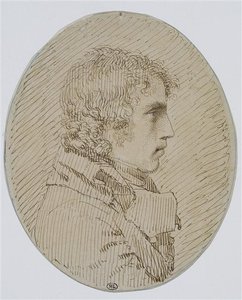
Pierre-Paul Prud'hon: A Life in Art
- Born: Cluny, France (1758)
- Died: 1823
- Nationality: French
Pierre-Paul Prud’hon was a pivotal figure in French art, bridging the transition from Neoclassicism to Romanticism. Born in Cluny, Saône-et-Loire, France, his artistic journey reflects the changing aesthetic landscape of late 18th and early 19th century Europe. He is celebrated for both his allegorical paintings and portraits, demonstrating a mastery of chiaroscuro and realism that captivated audiences and influenced subsequent generations.
Early Life and Training
- Provincial Beginnings: Prud’hon received his initial artistic training in the French provinces.
- Dijon Scholarship: In 1774, he secured a municipal scholarship to attend the École de Dessin in Dijon, marking a significant step towards formal artistic education.
- Rome and Neoclassical Influences: He traveled to Rome in 1784, where he immersed himself in the study of classical art, particularly admiring the works of Canova and Correggio. This period profoundly shaped his early style, imbuing it with a sense of elegance and idealized form characteristic of Neoclassicism.
Artistic Career and Royal Patronage
- Revolutionary Allegories: Prud’hon's work gained prominence during the French Revolution, producing vignettes, book illustrations, and allegorical paintings that resonated with republican ideals.
- Napoleon's Court Painter: His talent attracted the attention of Napoleon Bonaparte, who commissioned him to paint portraits of both Joséphine de Beauharnais and Marie-Louise d’Autriche. The portrait of Joséphine, in particular, depicted her not as an empress but as a captivating woman, fueling speculation about a possible romantic relationship between the artist and the former queen.
- Bridging Styles: Prud'hon skillfully navigated the evolving artistic trends of his time, incorporating elements of both Neoclassicism and Romanticism into his work. While maintaining a classical foundation in composition and form, he infused his paintings with emotional depth and dramatic lighting that foreshadowed the Romantic movement.
Major Works and Artistic Legacy
- Madame Georges Anthony and Her Two Sons (1796): An early example of his portraiture skills, showcasing a refined elegance.
- The Soul Breaking the Links Holding it to the Earth: A powerful allegorical work demonstrating his ability to convey complex emotions through symbolic imagery.
- The Dream of Happiness: A poignant exploration of human aspirations and desires.
- Crucifixion (1822): Commissioned for St. Etienne's Cathedral in Metz, now housed in the Louvre, this work is considered one of his most significant achievements.
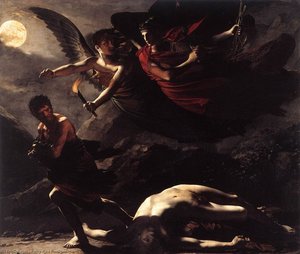
- Justice and Divine Vengeance Pursuing Crime: A monumental masterpiece that anticipates the dramatic intensity of Géricault’s *The Raft of the Medusa*.
Influence and Historical Significance
Prud'hon exerted a considerable influence on subsequent generations of French artists. His mastery of chiaroscuro, his ability to imbue portraits with psychological depth, and his synthesis of Neoclassical and Romantic styles made him a highly respected figure in the art world. Artists such as Théodore Géricault and Eugène Delacroix acknowledged his impact, drawing inspiration from his dramatic compositions and emotional expressiveness. Stendhal, Millet, and Baudelaire also recognized Prud'hon’s artistic merit, further solidifying his place in French cultural history.
Pierre-Paul Prud'hon
1758 - 1823 , France
Quick Facts
- Artistic Movement Or Style: Neoclassicism & Romanticism
- Artists Or Movements Influenced By This Artist:
- Théodore Géricault
- Delacroix
- Artists Who Influenced This Artist:
- Antonio Canova
- Leonardo da Vinci
- Correggio
- Date Of Birth: April 4, 1758
- Date Of Death: February 16, 1823
- Full Name: Pierre-Paul Prud'hon
- Nationality: French
- Notable Artworks:
- Madame Georges Anthony and her sons
- The Soul Breaking the Links
- The Dream of Happiness
- Crucifixion
- Justice and Divine Vengeance
- Place Of Birth: Cluny, France
Related Articles
Romantic Realism's Finest: 10 Masterpieces for Your Home | ArtsDot
Explore 10 defining masterpieces of Romantic Realism! Discover Courbet, Millet & Daumier's powerful paintings—capturing emotion and social realities. Find museum-quality reproductions for your home at ArtsDot.com.
Romantic Masterpieces: 10 Artworks to Stir Your Soul |
Fall in love with art! Explore 10 iconic romantic paintings – from Renaissance classics to Impressionist masterpieces. Discover the stories behind artists like Monet & Klimt, and find museum-quality reproductions for your home at .

The Enduring Legacy of Oil on Canvas: Technique, History & Aesthetic Impact
Explore the rich history & techniques of oil painting – from Renaissance masters to Impressionism. Discover pigments, layering methods, and why this timeless medium endures. Expert insights for artists & art enthusiasts.
Émile Jean Horace Vernet: Romantic Realism & Depicting 19th-Century Life
Explore the life & art of Émile Jean Horace Vernet, a master of Romantic Realism. Discover his captivating battle scenes, portraits, and Orientalist works – a window into 19th-century France. Learn about his techniques & enduring legacy.
Paul Huet: Capturing the Essence of French Romanticism Through Light and Landscape
Explore the captivating world of Paul Huet (1803-1869), a master of French Romantic landscape painting. Discover his influence on Barbizon & Impressionism, and browse high-quality reproductions at ArtsDot.