 Preview
 Send
Send Share
Share
 Details

 Download
 Similars
 X-Ray
X-Ray Diaporama
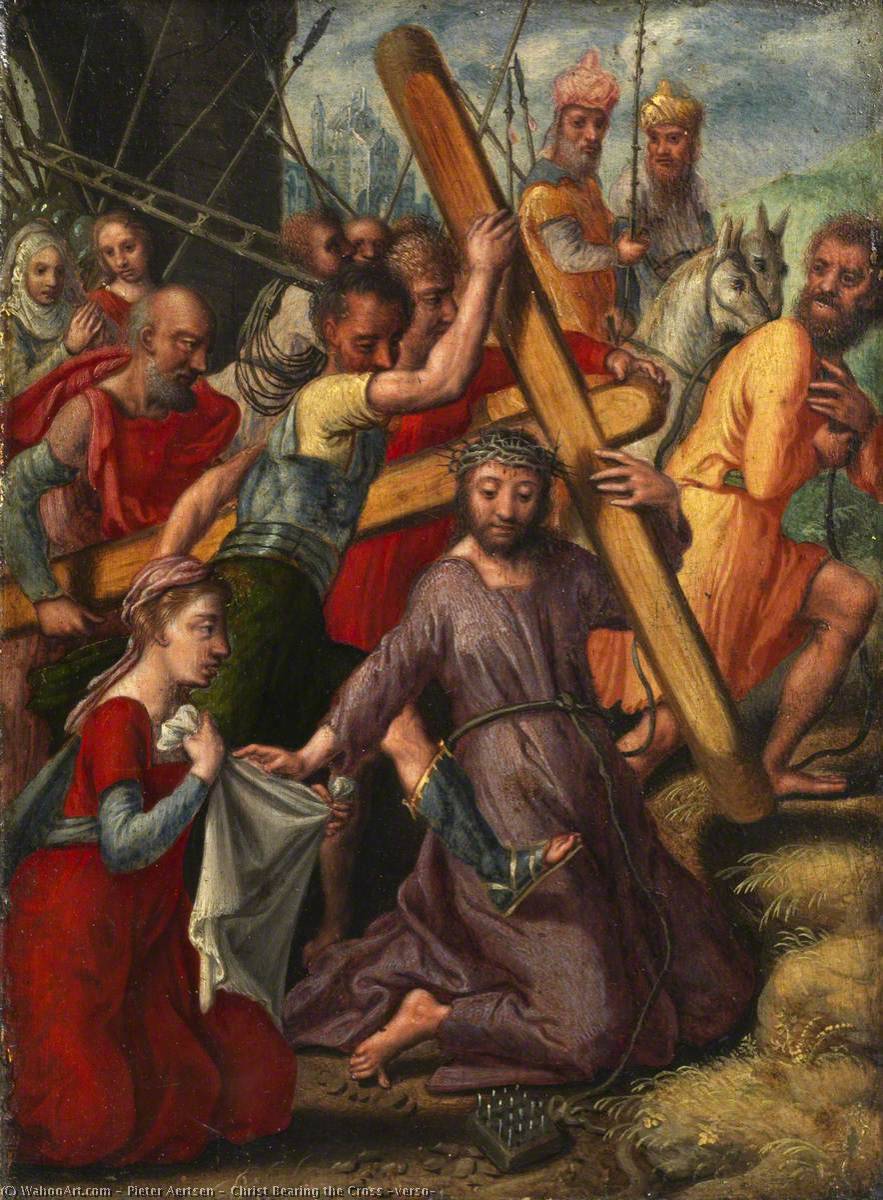
Christ Bearing the Cross (verso)
 Northern Mannerism
 1530
1530- Renaissance
 17.0 x 12.0 cm
 Courtauld Gallery
 Read More
Hand Made Oil Reproduction
Hand-painted oil on canvas in your size and frame, made to order by our artists. ( Buy Print Buy Image)




P118B $10

P118H $10

P118W $10

P438Z $10

P508JH $12

P508YH $12

P805H $10

P805Z $10

P919BZ $10

P919G $10

P919XJ $10

P959ZH $10

P968JZ $12

W106C $8

W218G $10

W218JH $8

W218Y $10

W307PJ $10

W316G $10

W316PJ $8

W316Y $10

W398PJ $8

W4111J $10

W500HY $15

W500JH $15

W692G $12

W849H $8

W940BG $15

W953PJ $8




Pick from our preset sizes that match the artwork's original proportions.

You may enter your own dimensions to fit a specific frame or space. If your selected size does not match the original image's proportions, we will either crop the artwork or extend the painting with additional hand-painted elements. A digital mockup will be sent for your approval before production begins.
Please note that the on-screen preview does not reflect the actual cropping or extension. Only the mockup will accurately show the final composition.
While custom sizes are available, we recommend selecting a dimension from the predefined list to preserve the original proportions.
After order, ArtsDot.com team will email client for instructions and provide a mockup preview
Worldwide Delivery () in 3/4 weeks instead of standard 5 weeks. (24 August). No compromise on quality.

Free Worldwide Express Shipping

High-Quality Linen Canvas

Full Shipping Insurance

Customs Tax Refund Guarantee

True Color Matching Guarantee

60-Day Return Policy (Defects Only)

100% Money-Back Guarantee

Bulk Discount Offer
 Glass option is only available in size under 110 CM

Christ Bearing the Cross (verso)
Reproduction Medium
Reproduction Size
-


Total Price
$ 263
Artwork Description
A Vision of Devotion: The Sacred Drama of Pieter Aertsen
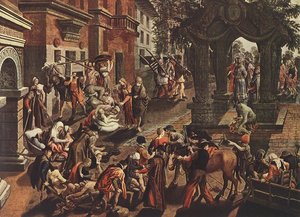
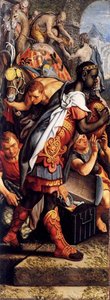
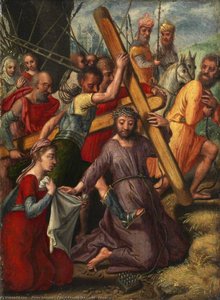
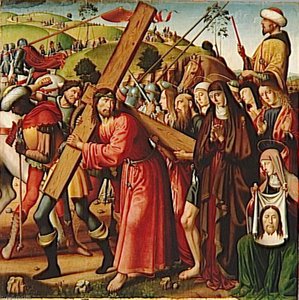
In the quiet intimacy of Christ Bearing the Cross (verso), we are invited into a moment of profound theological and human tension. Created around 1530 by the master Pieter Aertsen, this work serves as a breathtaking window into the mid-16th century, a period where the spiritual weight of the Northern Renaissance began to merge with a burgeoning interest in narrative realism. The painting captures the harrowing journey toward Calvary, presenting not just a historical event, but a visceral experience of suffering and witness. As the eye wanders through the composition, one is struck by the dense, atmospheric arrangement of figures that surround the central figure of Christ, creating a sense of claustrophobia and inescapable destiny.
Aertsen, a pioneer who would later become renowned for elevating domestic scenes to the level of high art, demonstrates here his early mastery of complex storytelling. The scene is populated by a diverse cast: soldiers whose presence suggests the cold authority of the state, and bystanders whose expressions range from detached curiosity to profound grief. The inclusion of horses—one positioned near the upper left and another toward the right—adds a layer of historical movement, suggesting the chaotic energy of a military procession or a significant public spectacle. This interplay between the divine tragedy and the mundane reality of the crowd is a hallmark of Aertsen’s ability to weave the sacred into the fabric of the temporal world.
Symbolism and the Art of Narrative Depth
Beyond the immediate depiction of the Passion, the painting is rich with symbolic nuances that reward the contemplative viewer. One of the most intriguing elements is the presence of an umbrella within the middle ground; while seemingly a practical object for shelter, in the context of such a heavy narrative, it can be interpreted as a poignant symbol of protection or the fleeting nature of earthly comfort amidst divine sacrifice. The very title, noting the verso nature of the work, hints at the layered complexity often found in Aertsen’s compositions, where every shadow and every secondary figure serves to deepen the central theme of endurance.
The technique employed is a testament to the Flemish tradition, characterized by an incredible attention to minute detail that brings the textures of cloth, metal, and skin to life. Even within its modest dimensions of 17 x 12 cm, the painting achieves a monumental emotional scale. For the collector or the interior designer, this piece offers more than mere decoration; it provides a focal point of intellectual and spiritual gravity. A high-quality reproduction of this work allows the dramatic chiaroscuro and the intricate, crowded composition to command attention in any curated space, serving as a conversation piece that bridges the gap between historical reverence and contemporary aesthetic appreciation.
To possess a reproduction of such a significant era is to hold a fragment of the Northern Renaissance. It is an invitation to reflect on the human condition—the intersection of cruelty and compassion, of the monumental and the minute. Whether placed in a private study or a grand gallery, Christ Bearing the Cross (verso) continues to resonate with a timeless power, reminding us of the enduring strength found within the most harrowing of human journeys.
Related Artworks
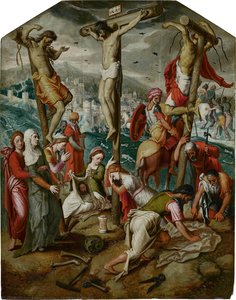
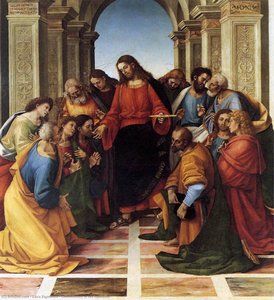
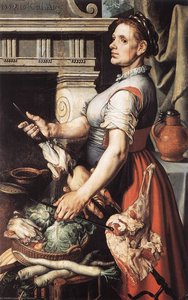
Artist Biography
Pieter Aertsen: The Architect of Domestic Narrative
Pieter Aertsen, a name often whispered in the halls of art history, stands as a pivotal figure bridging the gap between Northern Mannerism and the burgeoning realism of the Dutch Golden Age. Born in Amsterdam around 1508 and tragically dying in the same city in 1575, Aertsen’s legacy isn't defined by grand religious commissions or heroic portraits, but rather by his revolutionary approach to genre painting – a deliberate elevation of everyday life, imbued with layers of symbolism and narrative depth. He wasn’t merely depicting scenes; he was constructing miniature worlds, inviting viewers into a complex tapestry of human experience.
Aertsen's early training under Allaert Claesz provided him with a solid foundation in traditional Flemish techniques. However, it was his relocation to Antwerp, the vibrant heart of artistic innovation during the mid-16th century, that truly shaped his distinctive style. Antwerp’s bustling atmosphere, its diverse population, and its position as a crossroads of European trade fostered an environment ripe for experimentation – a stark contrast to the more rigidly defined religious conventions of the time. Here, he joined the esteemed Guild of Saint Luke, earning the moniker “Langhe Peter,” or Tall Peter, reflecting his imposing stature, a detail often incorporated into his portraits.
The Invention of Monumental Genre
Aertsen’s most significant contribution to art lies in his pioneering work – the creation of what is now recognized as monumental genre scenes. Unlike earlier depictions of domestic life that were relegated to smaller, secondary spaces within religious compositions, Aertsen placed everyday activities—market scenes, butcher shops, still lifes— squarely at the forefront of his canvases. This wasn’t simply a shift in subject matter; it represented a fundamental change in artistic priorities. He deliberately blurred the lines between different genres – still life, landscape, and narrative – creating complex compositions that demanded active engagement from the viewer.
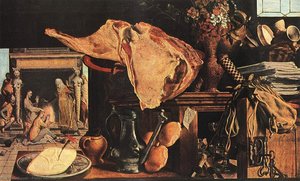
His most famous example, the *Butcher's Shop with the Flight into Egypt* (1551), exemplifies this revolutionary approach. The scene is dominated by a meticulously rendered butcher’s stall overflowing with meat, vegetables, and tools – an astonishingly detailed still life that immediately grabs the viewer’s attention. Yet, subtly interwoven within this seemingly mundane setting are elements of biblical narrative: the Holy Family fleeing into Egypt, depicted in miniature on a small panel above the counter. This layering of realities—the tangible world of commerce juxtaposed with the spiritual realm of faith – became a hallmark of Aertsen's work and profoundly influenced generations of artists to come.
Symbolism and the Language of Objects
Aertsen’s scenes are not merely visually arresting; they are rich in symbolic meaning. Each object, each gesture, carries weight and contributes to a larger narrative or moral commentary. The arrangement of items within a still life, for instance, could represent earthly pleasures versus spiritual rewards, wealth versus poverty, or even the fleeting nature of time. The *Butcher’s Shop* is particularly laden with symbolism: the abundance of food represents worldly prosperity, while the presence of oysters and mussels – associated with lust – serves as a cautionary tale.
Furthermore, Aertsen drew inspiration from earlier artists like Joachim Patinir, who had pioneered the use of landscape elements within religious scenes to create atmospheric depth and visual interest. Aertsen adopted this technique, integrating miniature landscapes—a church window, a pastoral scene—into his genre compositions, further expanding the scope of his narratives and inviting viewers to contemplate multiple realities simultaneously.
Influence and Legacy
Pieter Aertsen’s influence on subsequent generations of artists is undeniable. His innovative approach to genre painting paved the way for the rise of Dutch still life as a distinct artistic genre, influencing figures like Jan Sanders van Hemessen and, crucially, his son, Pieter Pietersz the Elder. Aertsen's emphasis on realistic detail, combined with his masterful use of symbolism and narrative layering, set a precedent for later artists who sought to capture the complexities of everyday life.
Even more remarkably, Aertsen’s work anticipated developments in Italian painting. The Renaissance humanist Hadrianus Junius (Adriaen de Jonghe) compared Aertsen to Peiraikos, an ancient Greek painter celebrated for his ability to depict ordinary subjects with extraordinary realism and symbolic depth. This comparison underscored Aertsen's pioneering role in challenging traditional artistic conventions and elevating the status of genre painting.
Despite the destruction of many of his works during the iconoclasm of the Beeldenstorm (the Protestant Reformation’s icon-smashing movement) in Amsterdam, Aertsen’s legacy endures. His paintings continue to fascinate art historians and viewers alike, offering a glimpse into a world where the mundane becomes profound and everyday life is transformed into a rich tapestry of meaning.
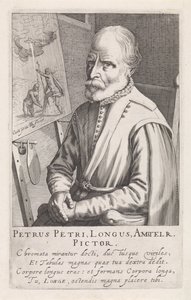
Pieter Aertsen
1508 - 1575 , Netherlands
Quick Facts
- Artistic Movement Or Style: Northern Mannerism
- Artists Or Movements Influenced By This Artist:
- Joachim Patinir
- Flemish Baroque
- Artists Who Influenced This Artist: ['Allaert Claesz']
- Date Of Birth: 1508, Amsterdam
- Date Of Death: 1575, Amsterdam
- Full Name: Pieter Aertsen
- Nationality: Dutch
- Notable Artworks:
- Butcher's Shop (Uppsala)
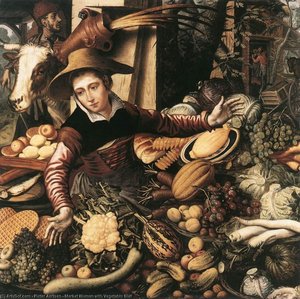
- Market Woman...
- Various altarpieces
- Place Of Birth: Amsterdam, Netherlands
Related Articles
Scenes of Daily Life: A Comprehensive Exploration of Genre Painting Through History
Explore the rich history of genre painting! Discover Dutch Masters & European artists who captured everyday life with stunning realism. Learn about symbolism, techniques & lasting influence.
David Teniers II: Master of Flemish Genre & Social Commentary
Explore the captivating world of David Teniers II, a leading Flemish Baroque painter renowned for his lively genre scenes & insightful social commentary. Discover his masterpieces and legacy with ArtsDot.
Pieter Bruegel the Elder: A Master of Genre, Landscape & Social Commentary
Explore the life & art of Pieter Bruegel the Elder, a pivotal figure of the Renaissance. Discover his groundbreaking genre scenes, symbolic landscapes, and lasting influence on art history. Learn more at ArtsDot.
Echoes of Daily Life: Genre Painting & Societal Values Through the Ages
Explore the captivating world of genre painting! Discover Dutch Masters like Ostade & de Hooch, hidden symbolism, and social commentary in art history. Shop museum-quality reproductions at ArtsDot.
Jacob Jordaens: Baroque Dynamism & Genre Innovation of the Antwerp School
Discover Jacob Jordaens, a leading Flemish Baroque painter renowned for his dynamic compositions & realistic genre scenes. Explore his life, art, and lasting influence with ArtsDot.