 Preview
 Send
Send Share
Share
 Details

 Download
 Similars
 X-Ray
X-Ray Diaporama
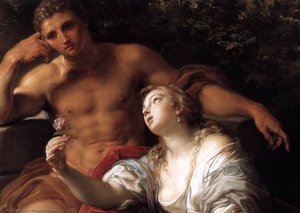
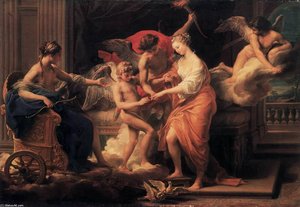
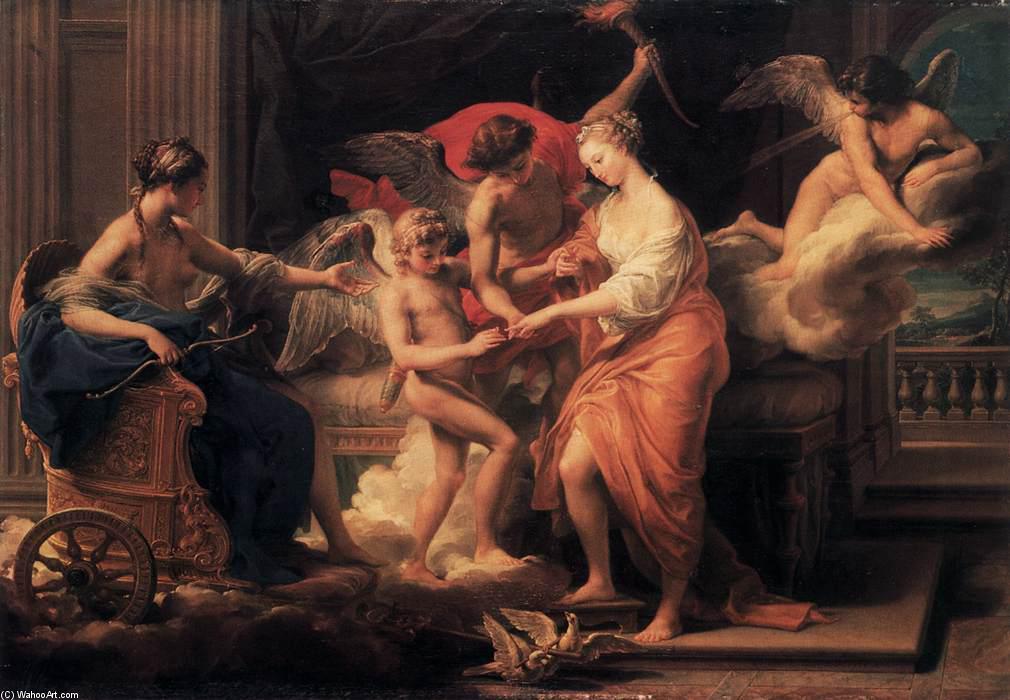
The Marriage of Cupid and Psyche
 Oil On Canvas
- WallArt
- Baroque Classicism
 1756
1756 183.0 x 118.0 cm
 Staatliche Museen
 Read More
Hand Made Oil Reproduction
Hand-painted oil on canvas in your size and frame, made to order by our artists. ( Buy Print Buy Image)




P118B $10

P118H $10

P118W $10

P438Z $10

P508JH $12

P508YH $12

P805H $10

P805Z $10

P919BZ $10

P919G $10

P919XJ $10

P959ZH $10

P968JZ $12

W106C $8

W218G $10

W218JH $8

W218Y $10

W307PJ $10

W316G $10

W316PJ $8

W316Y $10

W398PJ $8

W4111J $10

W500HY $15

W500JH $15

W692G $12

W849H $8

W940BG $15

W953PJ $8




Pick from our preset sizes that match the artwork's original proportions.

You may enter your own dimensions to fit a specific frame or space. If your selected size does not match the original image's proportions, we will either crop the artwork or extend the painting with additional hand-painted elements. A digital mockup will be sent for your approval before production begins.
Please note that the on-screen preview does not reflect the actual cropping or extension. Only the mockup will accurately show the final composition.
While custom sizes are available, we recommend selecting a dimension from the predefined list to preserve the original proportions.
After order, ArtsDot.com team will email client for instructions and provide a mockup preview
Worldwide Delivery () in 3/4 weeks instead of standard 5 weeks. (16 August). No compromise on quality.

Free Worldwide Express Shipping

High-Quality Linen Canvas

Full Shipping Insurance

Customs Tax Refund Guarantee

True Color Matching Guarantee

60-Day Return Policy (Defects Only)

100% Money-Back Guarantee

Bulk Discount Offer
 Glass option is only available in size under 110 CM

The Marriage of Cupid and Psyche
Reproduction Medium
Reproduction Size
-


Total Price
$ 263
Artwork Description
Pompeo Batoni’s Enchanting Tale of Love and Resilience: The Marriage of Cupid and Psyche
The Marriage of Cupid and Psyche by Pompeo Batoni stands as a testament to the Baroque painter's masterful blend of classical ideals and emotional depth, capturing a pivotal moment in Greek mythology with breathtaking precision. Completed in 1756, this monumental canvas resides within the Gemäldegalerie Berlin, offering visitors an unparalleled glimpse into the artistic sensibilities of Enlightenment Rome. Batoni’s reputation rested on his ability to portray aristocratic subjects with dignity and grace—a skill he brilliantly demonstrated here, securing commissions from wealthy patrons eager for opulent depictions of mythological narratives.A Symphony of Color and Composition
Batoni's technique is characterized by a luminous palette achieved through meticulous layering of glazes – a hallmark of Bolognese Classicism that Batoni adopted as his own. The painting’s dominant hues—warm reds, golds, and creams—create an atmosphere of radiant warmth and celebratory grandeur. Observe how Batoni skillfully employs pyramidal composition, anchoring the central figures of Cupid and Psyche amidst a richly ornamented Roman interior. This architectural framing directs the viewer's gaze upwards, emphasizing the divine intervention that orchestrates their union. The artist’s meticulous attention to detail extends beyond mere representation; he imbues every element—from the drapery folds to the delicate floral garlands—with palpable texture and vibrancy.Mythological Narrative Illuminated
The artwork recounts the legendary romance between Cupid, god of love, and Psyche, a mortal princess renowned for her beauty and virtue. Driven by jealousy fueled by Venus, Aphrodite, Psyche’s mother, Zeus intervenes to protect his daughter's happiness, orchestrating a series of trials designed to test Psyche’s devotion. Batoni portrays Cupid and Psyche exchanging rings—a symbolic gesture signifying their unbreakable bond—under the watchful gaze of angelic figures representing divine benevolence. The inclusion of Zephyr and Flora – gods of wind and flowers respectively – underscores the fecundity and promise inherent in marriage, mirroring the blossoming relationship between the lovers.Classical Influences and Artistic Legacy
Batoni’s artistic vision drew heavily from the stylistic precepts established by Renaissance masters like Raphael and Nicolas Poussin. He skillfully emulated Raphael's harmonious proportions and idealized figures, reflecting the humanist ideals prevalent during his time. Furthermore, Batoni’s penchant for dramatic lighting—a technique championed by Claude Lorrain—creates a theatrical effect that amplifies the emotional resonance of the scene. This masterful execution solidified Batoni’s position as a precursor to Neoclassicism, influencing subsequent generations of artists who sought to recapture the grandeur and clarity of antiquity.A Timeless Reflection on Love's Triumph
“The Marriage of Cupid and Psyche” transcends mere visual representation; it embodies an enduring exploration of themes such as love, perseverance, and divine grace. Batoni’s ability to convey profound emotion through subtle gestures and expressive facial expressions elevates the painting beyond a simple retelling of myth—it becomes a meditation on the transformative power of devotion and the ultimate victory of goodness over adversity. Its continued presence in prestigious museums like the Gemäldegalerie Berlin ensures that Batoni's masterpiece continues to inspire awe and admiration for centuries to come.Related Artworks
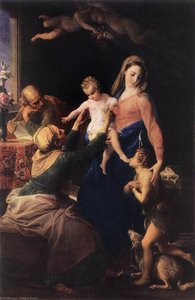
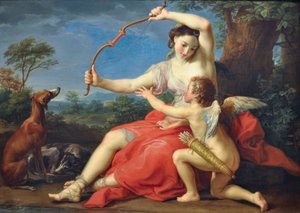
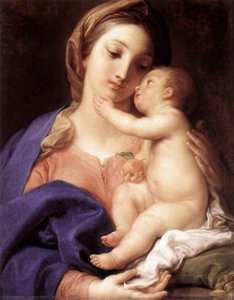
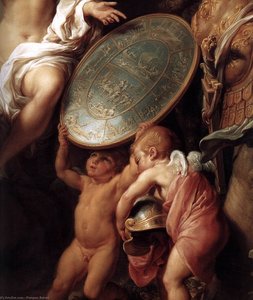
Artist Biography
Early Life and Training
- Born: Lucca, Italy (1708)
- Died: 1787
- Pompeo Batoni moved to Rome in 1727.
- He apprenticed with Agostino Masucci, Sebastiano Conca, and/or Francesco Imperiali.
- His first independent commission came as a result of rains that struck Rome in April 1732.
- The painting "The Ecstasy of Saint Catherine of Siena" illustrates his academic refinement of the late-Baroque style.
Artistic Style and Influences
- Batoni's style drew inspiration from classical antiquity, French Rococo, Bolognese Classicism, and artists such as Nicolas Poussin, Claude Lorrain, and especially Raphael.
- He is considered a precursor of Neoclassicism.
- His work can be found in various museums, including the Pinacoteca di Brera in Milan, Italy.
Notable Works and Commissions
- Virgin and Child with Saints
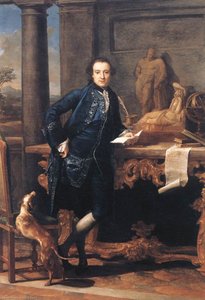
- A Knight in Rome: Charles Cecil Roberts – A celebrated portrait of a British traveler set against Roman ruins.
- The Triumph of Venice
- Numerous altarpieces for churches in Italy, such as the Museum Duomo in Siena.
- He was in high demand for portraits, particularly by British travelers on the Grand Tour who commissioned standing portraits within antique settings.
Development and Historical Significance
- Batoni became a highly fashionable painter in Rome after his rival, Anton Raphael Mengs, departed for Spain in 1761.
- He befriended Winckelmann and aimed to restrain classicism in his painting.
- His portraits captured the spirit of the Grand Tour era, reflecting the fascination with classical antiquity among European elites.
- Batoni’s ability to blend Baroque techniques with emerging Neoclassical ideals positioned him as a transitional figure in Italian art history.
Legacy
- Pompeo Batoni passed away on February 4, 1787, in Rome.
- He left behind a legacy as one of the most renowned Italian painters of his time.
- His work continues to be admired for its technical skill, elegant compositions, and insightful portrayals of individuals within their historical context.
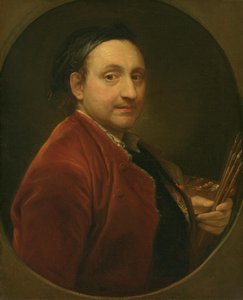
Pompeo Batoni
1708 - 1787 , Italy
Quick Facts
- Artistic Movement Or Style: Neoclassicism
- Artists Who Influenced This Artist:
- Nicolas Poussin
- Claude Lorrain
- Raphael
- Date Of Birth: 1708
- Date Of Death: 1787
- Full Name: Pompeo Batoni
- Nationality: Italian
- Notable Artworks:
- Virgin and Child with Saints
- A Knight in Rome
- The Triumph of Venice
- Place Of Birth (City And Country): Lucca, Italy
Related Articles
Romantic Realism's Finest: 10 Masterpieces for Your Home | ArtsDot
Explore 10 defining masterpieces of Romantic Realism! Discover Courbet, Millet & Daumier's powerful paintings—capturing emotion and social realities. Find museum-quality reproductions for your home at ArtsDot.com.
Echoes of Olympus: Mythological Narratives in Western Art Through the Ages
Explore the captivating history of mythological narratives in Western art! From ancient Greece to modern masterpieces, discover iconic artworks & symbolism. Expert analysis and high-quality reproductions at ArtsDot.

Romantic Landscapes: 10 Masterpieces for Your Home | ArtsDot
Journey through 10 Romantic landscape masterpieces by Friedrich, Turner & Cole. Explore emotional art, sublime nature scenes & iconic 19th-century paintings. Find museum-quality reproductions for your home at ArtsDot.com – discover the full collection online!
Romantic Masterpieces: 10 Artworks for a Timeless Home Decor Aesthetic
Fall in love with art! Explore 10 iconic romantic paintings – from Monet & Bouguereau to Fragonard. Discover the stories behind these masterpieces and find museum-quality reproductions for your home decor at .

Romantic Masterpieces: 10 Artworks to Stir Your Soul |
Fall in love with art! Explore 10 iconic romantic paintings – from Renaissance classics to Impressionist masterpieces. Discover the stories behind artists like Monet & Klimt, and find museum-quality reproductions for your home at .