 Preview
 Send
Send Share
Share
 Details

 Download
 Similars
 X-Ray
X-Ray Diaporama
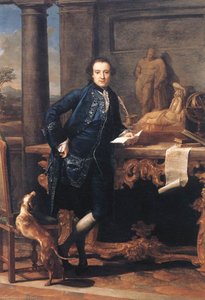
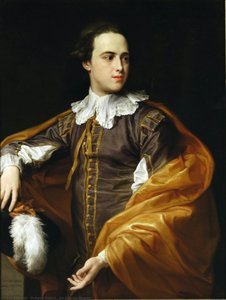
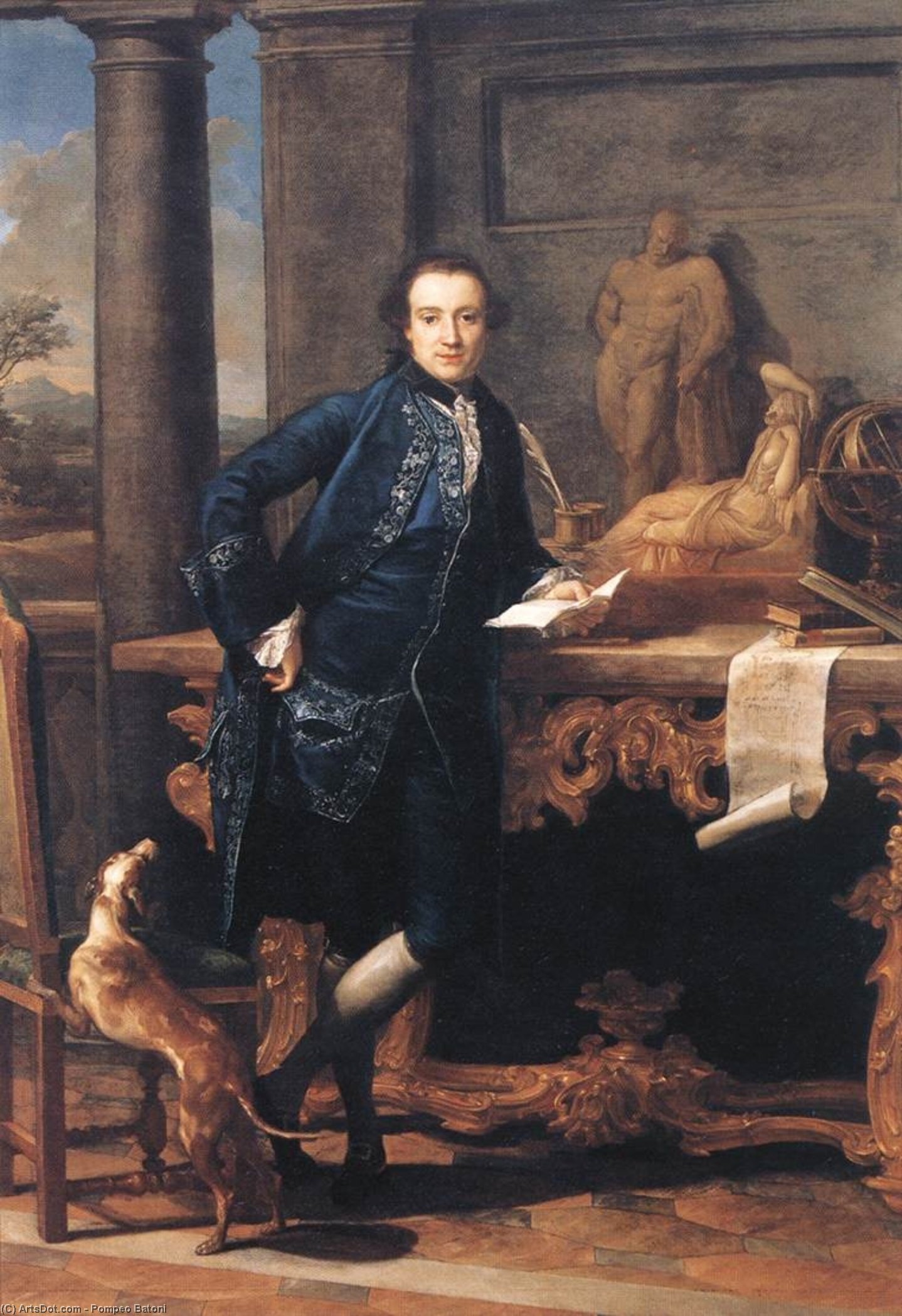
Portrait of Charles Crowle
 Acrylic On Canvas
- WallArt
- Late Baroque
 1761
1761 248.0 x 172.0 cm
 The Louvre
 Read More
Hand Made Oil Reproduction
Hand-painted oil on canvas in your size and frame, made to order by our artists. ( Buy Print Buy Image)




P118B $10

P118H $10

P118W $10

P438Z $10

P508JH $12

P508YH $12

P805H $10

P805Z $10

P919BZ $10

P919G $10

P919XJ $10

P959ZH $10

P968JZ $12

W106C $8

W218G $10

W218JH $8

W218Y $10

W307PJ $10

W316G $10

W316PJ $8

W316Y $10

W398PJ $8

W4111J $10

W500HY $15

W500JH $15

W692G $12

W849H $8

W940BG $15

W953PJ $8




Pick from our preset sizes that match the artwork's original proportions.

You may enter your own dimensions to fit a specific frame or space. If your selected size does not match the original image's proportions, we will either crop the artwork or extend the painting with additional hand-painted elements. A digital mockup will be sent for your approval before production begins.
Please note that the on-screen preview does not reflect the actual cropping or extension. Only the mockup will accurately show the final composition.
While custom sizes are available, we recommend selecting a dimension from the predefined list to preserve the original proportions.
After order, ArtsDot.com team will email client for instructions and provide a mockup preview
Worldwide Delivery () in 3/4 weeks instead of standard 5 weeks. (23 August). No compromise on quality.

Free Worldwide Express Shipping

High-Quality Linen Canvas

Full Shipping Insurance

Customs Tax Refund Guarantee

True Color Matching Guarantee

60-Day Return Policy (Defects Only)

100% Money-Back Guarantee

Bulk Discount Offer
 Glass option is only available in size under 110 CM

Portrait of Charles Crowle
Reproduction Medium
Reproduction Size
-


Total Price
$ 263
Artwork Description
A Roman Portrait Steeped in Classical Ideals: Pompeo Batoni’s “Portrait of Charles Crowle”
Pompeo Batoni's "Portrait of Charles Crowle," completed in 1761, stands as a quintessential example of Bolognese Classicism—a transitional style that deftly blended the grandeur of Baroque ornamentation with the austere elegance championed by Neoclassical artists. Commissioned by British lawyer Charles Cecil Roberts during his Grand Tour of Rome, this painting transcends mere likeness; it embodies the aspirations and intellectual pursuits of its sitter against the backdrop of Roman ruins, reflecting a burgeoning fascination with antiquity.
- Subject Matter: The portrait depicts Charles Crowle, a prominent figure in British legal circles, posed thoughtfully beside a desk adorned with scholarly texts and papers. This deliberate arrangement underscores Roberts’s intellectual engagement with the artistic and philosophical currents of Rome – a city increasingly viewed as the cradle of Western civilization.
- Style & Technique: Batoni employed a masterful technique characterized by soft sfumato—a subtle blending of tones—creating an ethereal glow that softens the contours of Crowle’s face and drapery. The artist skillfully utilized chiaroscuro, manipulating light and shadow to sculpt form and convey depth, mirroring the dramatic compositions favored by Nicolas Poussin and Claude Lorrain.
- Historical Context: Painted during the Enlightenment, “Portrait of Charles Crowle” reflects the broader cultural preoccupation with reason and observation. The inclusion of Roman ruins serves as a visual reminder of classical ideals – harmony, proportion, and moral virtue – values that Batoni sought to revive in his art.
- Symbolism: Beyond its formal beauty, the painting carries symbolic weight. The desk symbolizes intellectual pursuits and erudition, while the dog—a common motif in Baroque portraiture—represents loyalty and fidelity. These elements contribute to a nuanced portrayal of Crowle’s character and status.
Exploring Batoni's Artistic Influences
Batoni’s artistic vision drew heavily from the stylistic precedents established by Raphael, whose idealized depictions of human figures profoundly impacted Bolognese painters. He absorbed the grandeur and theatricality of Nicolas Poussin and Claude Lorrain, artists who perfected the art of landscape painting and imbued their canvases with moral allegory. However, Batoni distinguished himself as a precursor to Neoclassicism—a movement that rejected Baroque excess in favor of clarity, restraint, and adherence to classical forms.
A Legacy Preserved: Batoni’s Work Today
“Portrait of Charles Crowle” resides prominently within the Pinacoteca di Brera in Milan, Italy, ensuring its enduring presence as a masterpiece of Bolognese Classicism. Its luminous palette and meticulous attention to detail continue to inspire admiration among art historians and collectors alike—a testament to Batoni’s ability to capture not only physical likeness but also the spirit of his time.
- Further Research: For a deeper understanding of Batoni's oeuvre, consider visiting Portrait of Charles Crowle by BATONI, Pompeo and exploring Pompeo Batoni in our artists’ database.
Related Artworks
Artist Biography
Early Life and Training
- Born: Lucca, Italy (1708)
- Died: 1787
- Pompeo Batoni moved to Rome in 1727.
- He apprenticed with Agostino Masucci, Sebastiano Conca, and/or Francesco Imperiali.
- His first independent commission came as a result of rains that struck Rome in April 1732.
- The painting "The Ecstasy of Saint Catherine of Siena" illustrates his academic refinement of the late-Baroque style.
Artistic Style and Influences
- Batoni's style drew inspiration from classical antiquity, French Rococo, Bolognese Classicism, and artists such as Nicolas Poussin, Claude Lorrain, and especially Raphael.
- He is considered a precursor of Neoclassicism.
- His work can be found in various museums, including the Pinacoteca di Brera in Milan, Italy.
Notable Works and Commissions
- Virgin and Child with Saints
- A Knight in Rome: Charles Cecil Roberts – A celebrated portrait of a British traveler set against Roman ruins.
- The Triumph of Venice
- Numerous altarpieces for churches in Italy, such as the Museum Duomo in Siena.
- He was in high demand for portraits, particularly by British travelers on the Grand Tour who commissioned standing portraits within antique settings.
Development and Historical Significance
- Batoni became a highly fashionable painter in Rome after his rival, Anton Raphael Mengs, departed for Spain in 1761.
- He befriended Winckelmann and aimed to restrain classicism in his painting.
- His portraits captured the spirit of the Grand Tour era, reflecting the fascination with classical antiquity among European elites.
- Batoni’s ability to blend Baroque techniques with emerging Neoclassical ideals positioned him as a transitional figure in Italian art history.
Legacy
- Pompeo Batoni passed away on February 4, 1787, in Rome.
- He left behind a legacy as one of the most renowned Italian painters of his time.
- His work continues to be admired for its technical skill, elegant compositions, and insightful portrayals of individuals within their historical context.
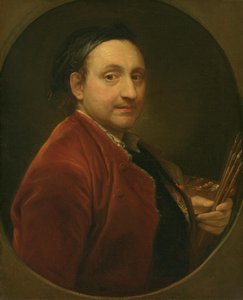
Pompeo Batoni
1708 - 1787 , Italy
Quick Facts
- Artistic Movement Or Style: Neoclassicism
- Artists Who Influenced This Artist:
- Nicolas Poussin
- Claude Lorrain
- Raphael
- Date Of Birth: 1708
- Date Of Death: 1787
- Full Name: Pompeo Batoni
- Nationality: Italian
- Notable Artworks:
- Virgin and Child with Saints
- A Knight in Rome
- The Triumph of Venice
- Place Of Birth (City And Country): Lucca, Italy
Related Articles
The Grandeur of Baroque Portraiture: Power, Emotion & Artistic Innovation
Explore the grandeur of Baroque portraiture! Discover Rubens, Van Dyck & the masters of 17th-century art. Uncover symbolism, techniques & lasting influence. Expert insights for collectors and enthusiasts.

Baroque Masterpieces: 10 Paintings That Defined an Era |
Journey through the drama & grandeur of Baroque art! Explore 10 masterpieces by Caravaggio, Rembrandt, Rubens & more. Discover stunning oil paintings, rich colors & timeless stories. Find museum-quality reproductions at .

Baroque Drama: Bringing Opulence & Emotion into Contemporary Interiors
Explore the opulent world of Baroque interior design! Discover key elements, modern applications & how to bring dramatic elegance into your home with 's authentic reproductions.

The Dramatic Flourish: Exploring the Baroque Movement's Enduring Legacy in Art History
Explore the dramatic world of Baroque art! Discover iconic artists like Caravaggio & Rubens, defining techniques, and its lasting impact on art history. Expert insights for collectors & enthusiasts at ArtsDot.
Charles-André van Loo: A Study in Rococo Portraiture & the French Court's Artistic Dynamics
Explore the elegant world of Charles-André van Loo, a master of Rococo portraiture at the French court. Discover his life, techniques, and enduring influence on 18th-century art. Hand-painted reproductions available.