 Preview
 Send
Send Share
Share
 Details

 Download
 Similars
 X-Ray
X-Ray Diaporama
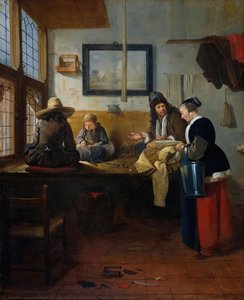
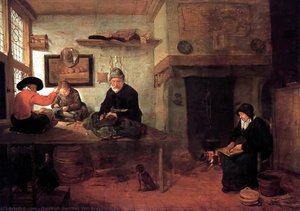
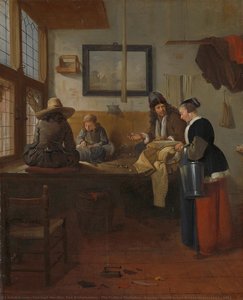
Tailor's Workshop
 Oil On Canvas
- WallArt
- Baroque Genre Painting
 1661
1661- Early Modern
 66.0 x 53.0 cm
 Rijksmuseum
 Read More
Hand Made Oil Reproduction
Hand-painted oil on canvas in your size and frame, made to order by our artists. ( Buy Print Buy Image)




P118B $10

P118H $10

P118W $10

P438Z $10

P508JH $12

P508YH $12

P805H $10

P805Z $10

P919BZ $10

P919G $10

P919XJ $10

P959ZH $10

P968JZ $12

W106C $8

W218G $10

W218JH $8

W218Y $10

W307PJ $10

W316G $10

W316PJ $8

W316Y $10

W398PJ $8

W4111J $10

W500HY $15

W500JH $15

W692G $12

W849H $8

W940BG $15

W953PJ $8




Pick from our preset sizes that match the artwork's original proportions.

You may enter your own dimensions to fit a specific frame or space. If your selected size does not match the original image's proportions, we will either crop the artwork or extend the painting with additional hand-painted elements. A digital mockup will be sent for your approval before production begins.
Please note that the on-screen preview does not reflect the actual cropping or extension. Only the mockup will accurately show the final composition.
While custom sizes are available, we recommend selecting a dimension from the predefined list to preserve the original proportions.
After order, ArtsDot.com team will email client for instructions and provide a mockup preview
Worldwide Delivery () in 3/4 weeks instead of standard 5 weeks. (25 August). No compromise on quality.

Free Worldwide Express Shipping

High-Quality Linen Canvas

Full Shipping Insurance

Customs Tax Refund Guarantee

True Color Matching Guarantee

60-Day Return Policy (Defects Only)

100% Money-Back Guarantee

Bulk Discount Offer
 Glass option is only available in size under 110 CM

Tailor's Workshop
Reproduction Medium
Reproduction Size
-


Total Price
$ 263
Artwork Description
A Glimpse into the Heart of Craftsmanship
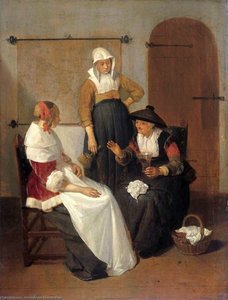
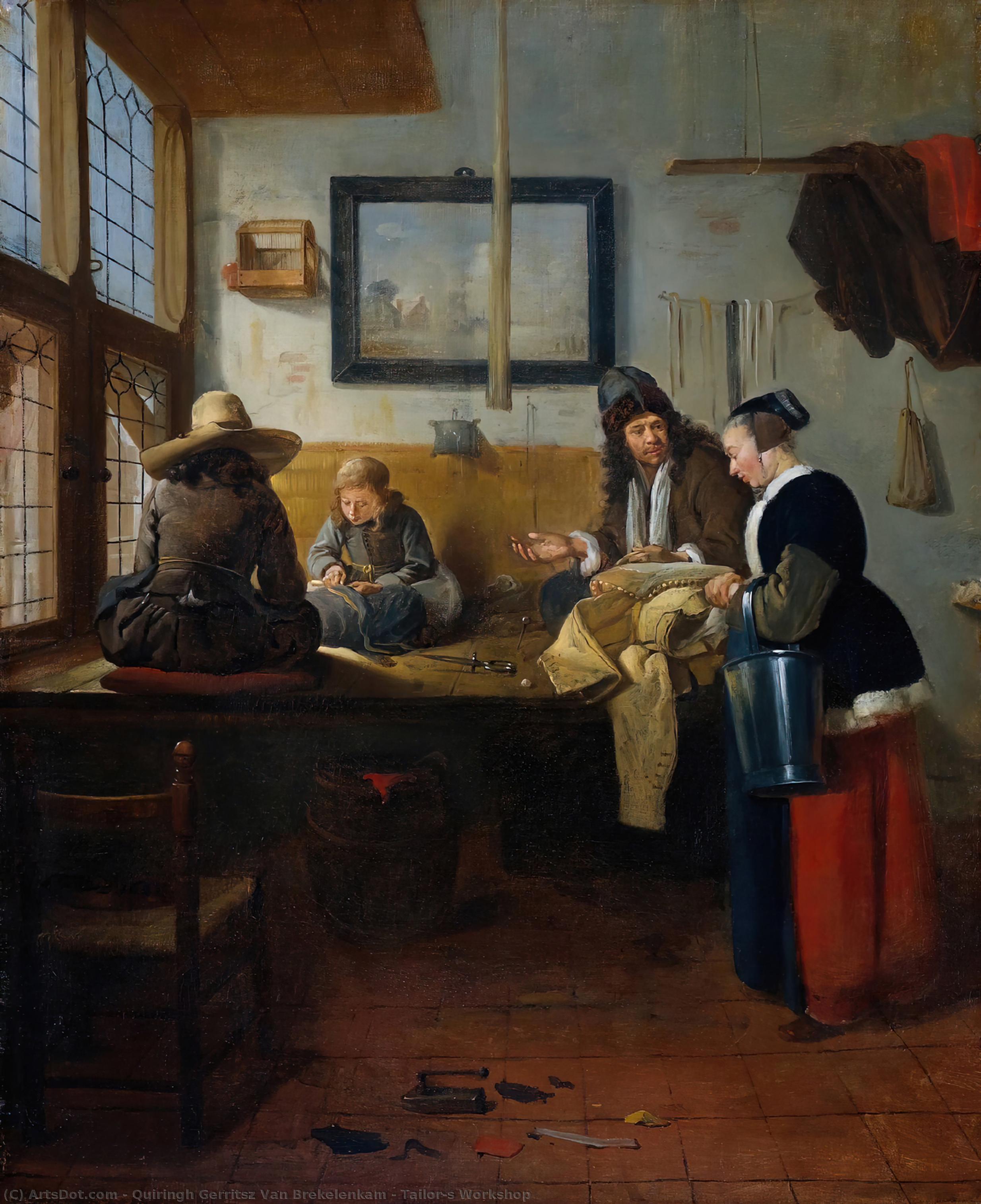
Step back with us into the bustling, intimate world depicted in this masterful scene, Tailor's Workshop by Quiringh Gerritsz. van Brekelenkam. This painting is far more than a mere depiction of industry; it is a vibrant tableau vivant, capturing the very pulse of life within a specialized artisan’s domain during the Dutch Golden Age. One can almost hear the rhythmic snip of scissors and the low murmur of conversation echoing off the walls. The composition draws the viewer deep into the activity, presenting a meticulously ordered chaos where human endeavor meets tangible creation.
The Art of Everyday Life in Miniature
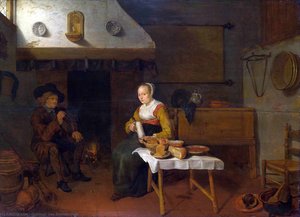
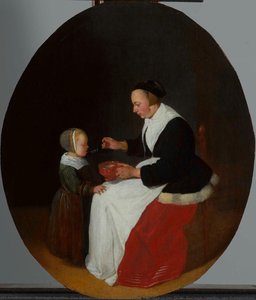
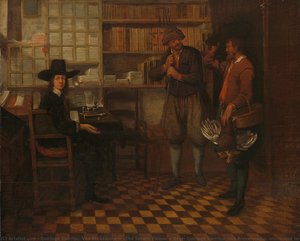
Brekelenkam, trained in the exacting tradition of the Leiden fijnschilders, possessed an unparalleled gift for rendering the minute details of daily existence. Here, that skill shines through with breathtaking clarity. Observe the array of tools scattered across the tables—the gleaming scissors resting near a pile of books, the various bottles suggesting inks or specialized dyes. Every object seems imbued with purpose, contributing to the narrative tapestry of textile creation. The inclusion of multiple figures, engaged in conversation or focused on their tasks, grounds the work in palpable human interaction. It speaks to a community built around skill and exchange.
Historical Context and Technical Brilliance
Dating from 1661, this piece situates itself firmly within the zenith of Dutch mercantile prosperity. The workshop itself serves as a microcosm of the era’s economic engine—the burgeoning trade in fine goods, particularly textiles. Technically, Brekelenkam employs a precision that borders on the scientific; his handling of light and shadow allows the textures—be it the weave of cloth or the polished wood of the furniture—to leap out from the canvas. This masterful technique ensures that even the most peripheral elements contribute to the overall richness, inviting prolonged study from the appreciative collector.
Symbolism of Labor and Community
Beyond its documentary quality, Tailor's Workshop carries subtle symbolic weight. The act of tailoring itself symbolizes transformation—taking raw material and shaping it into something beautiful and functional for another life. Furthermore, the gathering of people around shared work speaks to the profound value placed on community and skilled labor during this period. For the modern admirer or designer, the painting offers a powerful meditation on craftsmanship in an increasingly mechanized world; it is a quiet celebration of human hands at work.
Bringing the Workshop Home
To own a reproduction of this piece is to invite a pocket of 17th-century Dutch vitality into your contemporary space. Its rich narrative depth and exquisite detail make it a stunning focal point for any room, particularly those designed with an appreciation for history or artisanal quality. It does not merely decorate; it tells a story of dedication, precision, and the enduring beauty found in human skill.
Related Artworks




Artist Biography
Early Life and Artistic Beginnings
Quiringh Gerritsz. van Brekelenkam, born in the small Dutch village of Zwammerdam around 1622, emerged during the vibrant heart of the Dutch Golden Age. While precise details surrounding his early life remain elusive, it is generally accepted that he entered the artistic world through an apprenticeship with Gerard Dou, a leading figure within the Leiden *fijnschilders*—a school renowned for its meticulous detail and refined technique. This formative training profoundly shaped Brekelenkam’s aesthetic sensibilities, instilling in him a dedication to capturing the subtleties of everyday life with remarkable precision.
Brekelenkam's initial foray into professional artistry is marked by his entry into the Leiden Guild of Saint Luke in 1648. This signifies not merely a technical proficiency but also an acceptance into the established artistic community, allowing him to exhibit and sell his work. His earliest dated painting from this period—1644—offers a glimpse into the nascent talent that would soon blossom into a distinctive style.
A Master of Genre Scenes: Domesticity and Daily Life
Van Brekelenkam carved a niche for himself as a genre painter, specializing in intimate scenes of Dutch domestic life. His canvases depict households bustling with activity, workshops filled with the tools of various trades, and peasant interiors radiating warmth and authenticity. Unlike some of his contemporaries who imbued their scenes with overt moralizing symbolism, Brekelenkam’s work often presents a more straightforward portrayal of daily routines—a quiet observation of human existence.
His paintings are characterized by an exquisite attention to detail; the textures of fabrics, the gleam of pewter, and the play of light across surfaces are rendered with astonishing realism. This dedication to verisimilitude is not merely a display of technical skill but also reflects a broader cultural fascination with capturing the material world during this period of burgeoning prosperity. Works like The Silver Ewer exemplify his ability to transform commonplace objects into subjects of compelling beauty, while Old Woman with a Candle showcases his sensitivity in portraying human emotion and character.
Influences and Artistic Development
Gerard Dou’s influence is undeniably present in Brekelenkam's early work. The meticulous brushwork, the carefully composed interiors, and the focus on individual figures all bear the hallmarks of Dou’s style. However, Brekelenkam gradually developed a unique voice, moving away from the strict adherence to his master’s techniques. His paintings became more ‘painterly’, less focused on an almost hyper-realistic finish, and embraced a greater sense of spontaneity.
As his career progressed, Brekelenkam began to explore new subject matter, including portraits and scenes depicting members of the upper classes engaged in leisurely activities—such as receiving letters or tending to their toilette. This shift suggests an expanding clientele and a growing recognition within broader social circles. His later works reveal a subtle awareness of Gerard ter Borch II’s style, particularly in his depiction of light and atmosphere.
Legacy and Historical Significance
Quiringh van Brekelenkam's contributions to the Dutch Baroque tradition lie in his ability to capture the essence of everyday life with both technical mastery and a quiet sensitivity. His paintings offer valuable insights into the material culture, social customs, and domestic interiors of 17th-century Netherlands.
While perhaps not as widely celebrated as some of his more famous contemporaries, Brekelenkam’s work has garnered increasing attention in recent years. His paintings are now held in prestigious collections such as the Musée du Louvre in Paris and the Wallace Collection in London, testament to their enduring artistic merit. Today, platforms like ArtsDot.com make his captivating scenes accessible to a wider audience, allowing viewers to appreciate the subtle beauty and historical significance of this remarkable Dutch genre painter.
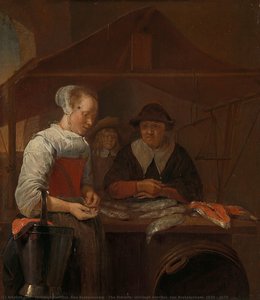
- Notable Works: The Silver Ewer, Old Woman with a Candle, A Hermit, The Tenant Farmer’s Rent, The Fishwife, Interior with Lace-Worker and a Visitor.
- Museums & Collections: Musée du Louvre, Wallace Collection.
- Artistic Style: Dutch Baroque, Genre Scenes, Leiden Fijnschilder.
- Key Influences: Gerard Dou, Leiden Fijnschilders.
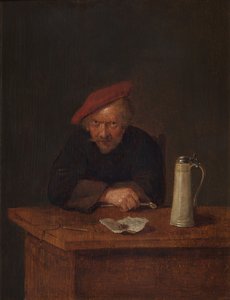
quiringh gerritsz. van brekelenkam
1622 - 1669 , Netherlands
Quick Facts
- Artistic Movement Or Style: Baroque, Genre painting
- Artists Or Movements Influenced By This Artist: ['Leiden fijnschilders']
- Artists Who Influenced This Artist: ['Gerard Dou']
- Date Of Birth: 1622/29, Zwammerdam
- Date Of Death: 1669/79, Leiden
- Full Name: Quiringh Gerritsz van Brekelenkam
- Nationality: Dutch
- Notable Artworks:
- The Silver Ewer
- Old Woman with a Candle
- The Spinner
- Place Of Birth: Zwammerdam, Netherlands
Related Articles

Dutch Masters: 10 Golden Age Paintings That Still Inspire |
Journey into the Dutch Golden Age! Explore 10 iconic paintings by Rembrandt, Vermeer & Hals. Discover the stories behind these Baroque masterpieces and find museum-quality art reproductions to elevate your home decor on .

Golden Age Reflections: Dutch Baroque Painting & Cultural Innovation
Explore the Dutch Golden Age of painting! Discover key artists like Vermeer & ter Borch, their innovative techniques, and the rich cultural context behind these Baroque masterpieces. Learn about collecting & appreciating this iconic art period.

Illuminating Innovation: Exploring the Dutch Golden Age of Painting
Explore the Dutch Golden Age of painting with ArtsDot. Discover Rembrandt, Vermeer & other Masters. Learn about key characteristics, iconic artworks, and lasting influence. Expert insights for collectors & enthusiasts.
Genre Painting: A Window into Daily Life & Societal Values of the Dutch Golden Age
Explore the captivating world of Dutch Golden Age genre painting! Discover realistic depictions of daily life, masterful artists like Ostade & Metsu, and hidden symbolism. Learn about this influential art movement with ArtsDot.
Illuminating Realism: Exploring the Dutch Golden Age of Painting (1600-1700)
Explore the Dutch Golden Age of painting (1600-1700) with ArtsDot. Discover Rembrandt, Vermeer & other masters. Learn about techniques, history & find museum-quality reproductions.