 Preview
 Send
Send Share
Share
 Details

 Download
 Similars
 X-Ray
X-Ray Diaporama
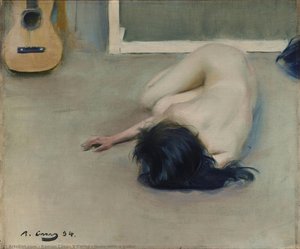
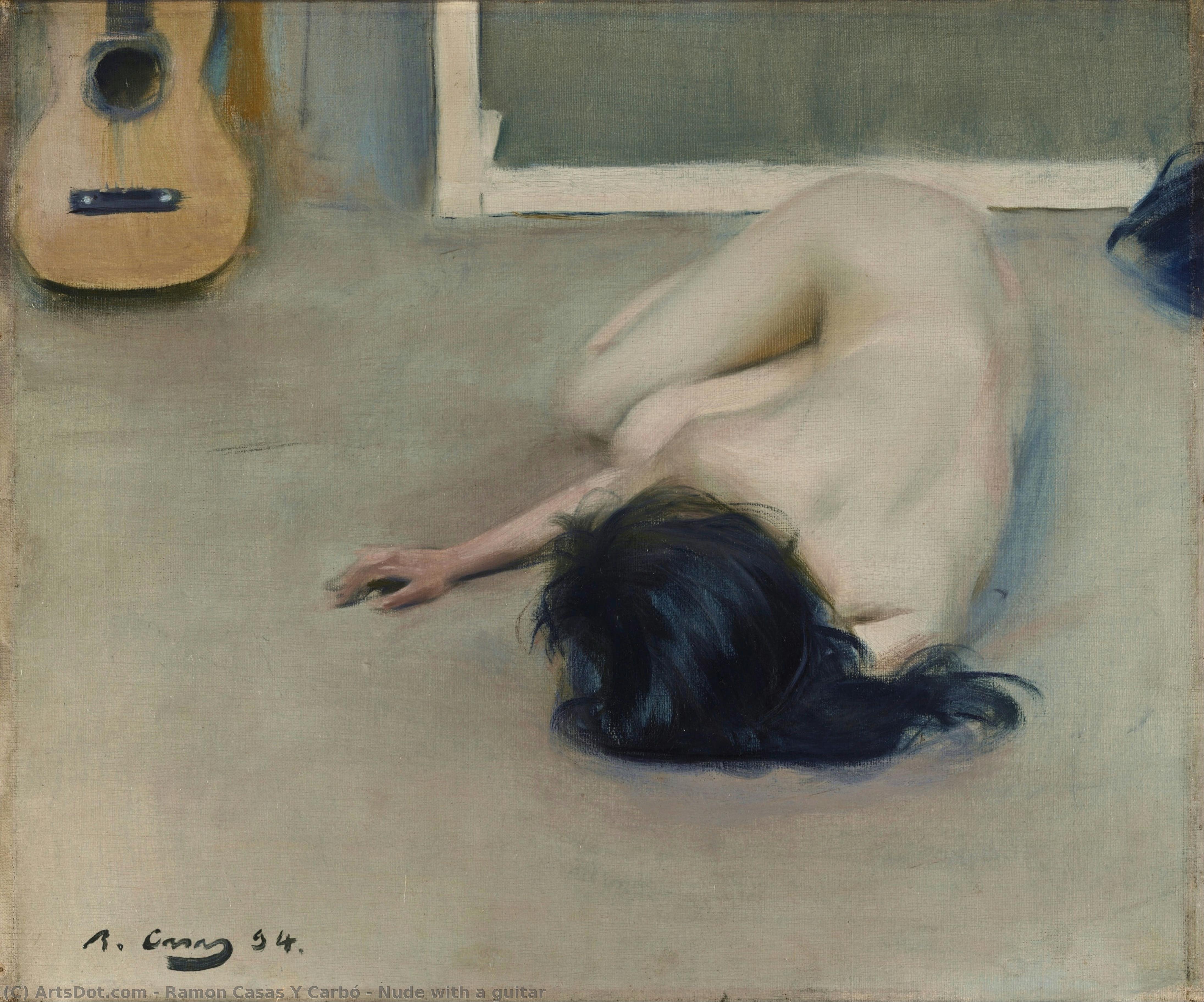
Nude with a guitar
 Acrylic On Canvas
- WallArt
- Modernisme
 1894
1894- 19th Century
 46.0 x 56.0 cm
 Cau Ferrat Museum
 Read More
Hand Made Oil Reproduction
Hand-painted oil on canvas in your size and frame, made to order by our artists. ( Buy Print Buy Image)




P118B $10

P118H $10

P118W $10

P438Z $10

P508JH $12

P508YH $12

P805H $10

P805Z $10

P919BZ $10

P919G $10

P919XJ $10

P959ZH $10

P968JZ $12

W106C $8

W218G $10

W218JH $8

W218Y $10

W307PJ $10

W316G $10

W316PJ $8

W316Y $10

W398PJ $8

W4111J $10

W500HY $15

W500JH $15

W692G $12

W849H $8

W940BG $15

W953PJ $8




Pick from our preset sizes that match the artwork's original proportions.

You may enter your own dimensions to fit a specific frame or space. If your selected size does not match the original image's proportions, we will either crop the artwork or extend the painting with additional hand-painted elements. A digital mockup will be sent for your approval before production begins.
Please note that the on-screen preview does not reflect the actual cropping or extension. Only the mockup will accurately show the final composition.
While custom sizes are available, we recommend selecting a dimension from the predefined list to preserve the original proportions.
After order, ArtsDot.com team will email client for instructions and provide a mockup preview
Worldwide Delivery () in 3/4 weeks instead of standard 5 weeks. (17 August). No compromise on quality.

Free Worldwide Express Shipping

High-Quality Linen Canvas

Full Shipping Insurance

Customs Tax Refund Guarantee

True Color Matching Guarantee

60-Day Return Policy (Defects Only)

100% Money-Back Guarantee

Bulk Discount Offer
 Glass option is only available in size under 110 CM

Nude with a guitar
Reproduction Medium
Reproduction Size
-


Total Price
$ 263
Artwork Description
Ramon Casas i Carbó’s *Nude with a Guitar*: A Catalan Modernist Intimacy
This exquisite hand-painted reproduction captures the essence of Ramon Casas i Carbó's pivotal work, *Nude with a Guitar*, painted in 1894. More than just a depiction of a reclining woman, this piece embodies the spirit of Catalan Modernisme – a movement characterized by its embrace of beauty, emotion, and a deep connection to local culture. The scene unfolds with a quiet intimacy, revealing a moment of vulnerability and perhaps even melancholy, set against a backdrop of subtle social observation.
Subject Matter and Composition
The central figure, a nude woman, lies gracefully on the floor, her head bowed – an act that immediately invites contemplation. The presence of a guitar nearby suggests musicality, relaxation, or perhaps a yearning for expression. Casas masterfully employs composition to draw the viewer’s eye; the placement of the guitar in the top left corner creates a visual anchor, while the secondary figures—a standing man and a seated woman—add layers of narrative complexity. These individuals, though partially obscured, contribute to the feeling of a private scene, hinting at relationships and social dynamics within Catalan society.
Technique and Style – Impressionistic Realism
Casas’s technique is a fascinating blend of realism and impressionism. He meticulously renders the woman's form with an eye for anatomical accuracy, yet employs loose brushstrokes and vibrant color to evoke atmosphere and emotion. Notice the dappled light illuminating her skin, achieved through short, broken strokes – a hallmark of Impressionist painting. The use of warm tones—ochres, reds, and browns—creates a sense of warmth and intimacy, contrasting with the cooler blues and greens used in the background. This skillful manipulation of color and light is characteristic of Casas’s approach, reflecting his training under Joan Vicens and his engagement with contemporary artistic trends.
Historical Context and Symbolism
*Nude with a Guitar* was created during a period of significant social and artistic change in Barcelona. The rise of Modernisme challenged traditional academic styles, encouraging artists to explore new themes and techniques. The inclusion of the guitar itself holds symbolic weight; music was deeply intertwined with Catalan culture at the time, representing passion, romance, and national identity. The scene’s overall mood suggests a quiet reflection on beauty, vulnerability, and perhaps the transient nature of life – themes frequently explored by Modernist artists. This artwork is a testament to Casas's ability to capture not just a visual image, but also the spirit of his era.
Perfect for Interior Design & Art Collection
This hand-painted reproduction offers an exceptional opportunity to bring a piece of Catalan Modernisme into your home or office. Its size (46 x 56 cm) makes it suitable for a variety of spaces, and the high level of detail ensures that it will be a captivating focal point. Whether you are an art collector seeking to expand your collection of Spanish Modernist works or an interior designer looking for a unique statement piece, this *Nude with a Guitar* reproduction is sure to impress.
Related Artworks
Artist Biography
Ramon Casas i Carbó: A Catalan Modernisme Pioneer
Ramon Casas i Carbó (January 4, 1866 – February 5, 1932) was a prominent Spanish painter and decorator of the Modernisme movement. Born in Barcelona, Spain, he is celebrated for his portraits, genre scenes, and depictions of Catalan life, blending elements of Realism and Impressionism into a distinctive style.
Early Life, Training, and Artistic Beginnings
- Birth and Family: Casas was born into a wealthy family; his father had amassed considerable fortune in Cuba, while his mother hailed from a well-established Catalan lineage.
- Artistic Education: Recognizing his artistic inclinations early on, at the age of 11 (in 1877), Casas abandoned formal schooling to study art under Joan Vicens, marking the commencement of his dedicated artistic journey.
- Early Works and Recognition: His initial works primarily focused on portraits and caricatures of members of the Catalan, Spanish, and French elite. The painting Self-portrait as a Flamenco Dancer (1883) garnered significant attention, leading to an invitation for him to join the Societé d'Artistes Français.
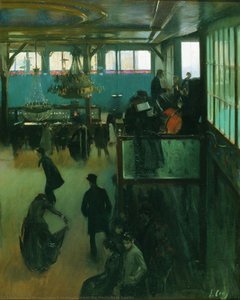
- Early Successes: Corrida de Toros (1884), showcasing his ability to capture dynamic crowd scenes, further solidified his reputation. His work Intérieur du Moulin de la Galette (1891) earned him a medal at the Berlin International Exposition, demonstrating his growing artistic maturity.
Development and Key Artistic Themes
- Influence of Impressionism and Realism: Casas’s style was heavily influenced by both Impressionist techniques – evident in his use of light and color – and Realistic portrayals of everyday life and individuals.
- Catalan Identity: A recurring theme in Casas' work was the depiction of Catalan culture, society, and landscapes. He frequently portrayed scenes of daily life, festivals, and portraits of prominent figures within Catalonia.
- Collaboration with Santiago Rusiñol: In 1889, Casas embarked on a significant artistic journey alongside fellow artist Santiago Rusiñol, traveling through Catalonia and documenting their experiences in sketches and paintings. This collaboration fostered his understanding of Catalan identity and rural life.
- Association with the Societé d'Artistes Français: Becoming an associate of this prestigious society allowed Casas to exhibit his work at their salon without undergoing jury selection, providing him with greater exposure and recognition within the Parisian art world.
Major Achievements and Notable Works
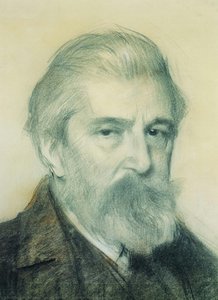
- Portraits: Casas was renowned for his insightful and expressive portraits, capturing not only physical likeness but also the character and personality of his subjects. Examples include Portrait of Mr. Domínguez (1899) which showcases his skill in pencil drawing.
- Genre Scenes: His genre paintings offered vivid glimpses into Catalan life, depicting scenes from bullfights (Corrida de Toros), cafes, and social gatherings.
- Self-portrait as a Flamenco Dancer (1883): This early work established his unique style and demonstrated his ability to blend portraiture with theatrical flair.
- Depictions of Celebrated Figures: Casas created portraits of prominent figures such as composer Isaac Albéniz, poet Jaume Massó, and writer Albert Bernís, solidifying his reputation as a sought-after portraitist.
Legacy and Historical Significance
Ramon Casas i Carbó left an indelible mark on Catalan art and the broader Modernisme movement. His work is celebrated for its vibrant depictions of Catalan life, insightful portraits, and skillful blending of Realism and Impressionism. Today, his paintings are housed in prestigious museums including the Cau Ferrat Museum (Sitges) and the Museu d'Art Contemporani de Barcelona, ensuring that his artistic legacy continues to inspire and captivate audiences.
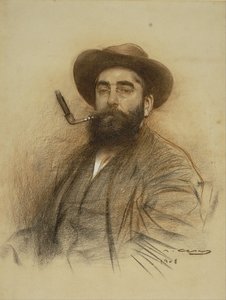
Ramon Casas i Carbó
1866 - 1932 , Spain
Quick Facts
- Artistic Movement Or Style: Catalan Modernisme
- Date Of Birth: January 4, 1866
- Date Of Death: 1932
- Full Name: Ramon Casas i Carbó
- Nationality: Spanish
- Notable Artworks:
- Self-portrait as a flamenco dancer
- Corrida de toros
- Intérieur du moulin de la galette
- Portrait of Mr. Domíngez
- Place Of Birth: Barcelona, Spain
Related Articles
Emilio Grau Sala: A Catalan Colorist Between Modernisme & Symbolism
Explore the vibrant world of Emilio Grau Sala, a leading Catalan colorist influenced by Parisian Modernisme & Symbolism. Discover his captivating paintings, artistic techniques, and lasting legacy with ArtsDot.
Josep Cusachs i: Exploring Catalan Modernism Through Social Commentary & Artistic Innovation
Explore the captivating world of Josep Cusachs i, a key figure in Catalan Modernism. Discover his realist paintings, social commentary, and influence on 19th-century Spanish art. Hand-painted reproductions available at ArtsDot.
The Enduring Allure of the Nude: A Historical & Artistic Exploration of the Human Form
Explore the captivating history of nude art! Discover iconic paintings & artists from classical to modern eras. Uncover symbolism, techniques & find museum-quality reproductions at ArtsDot.
Joaquim Mir: A Catalan Visionary – Exploring Symbolism, Landscape & Modernist Aesthetic
Explore the captivating world of Joaquim Mir, a pivotal Catalan Modernisme painter. Discover his vibrant landscapes, symbolic depth & lasting influence on Spanish art history. Learn more at ArtsDot.
Josep Mompou Dencausse: Exploring Intimacy & Catalan Identity Through Minimalist Expression
Explore the captivating world of Josep Mompou Dencausse, a master of Post-Impressionism whose intimate paintings reflect Catalan identity and minimalist beauty. Discover his life, style & legacy.