 Preview
 Send
Send Share
Share
 Details

 Download
 Similars
 X-Ray
X-Ray Diaporama
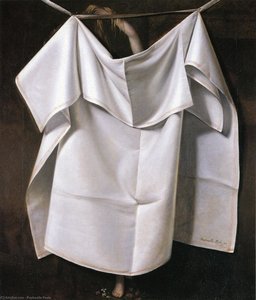
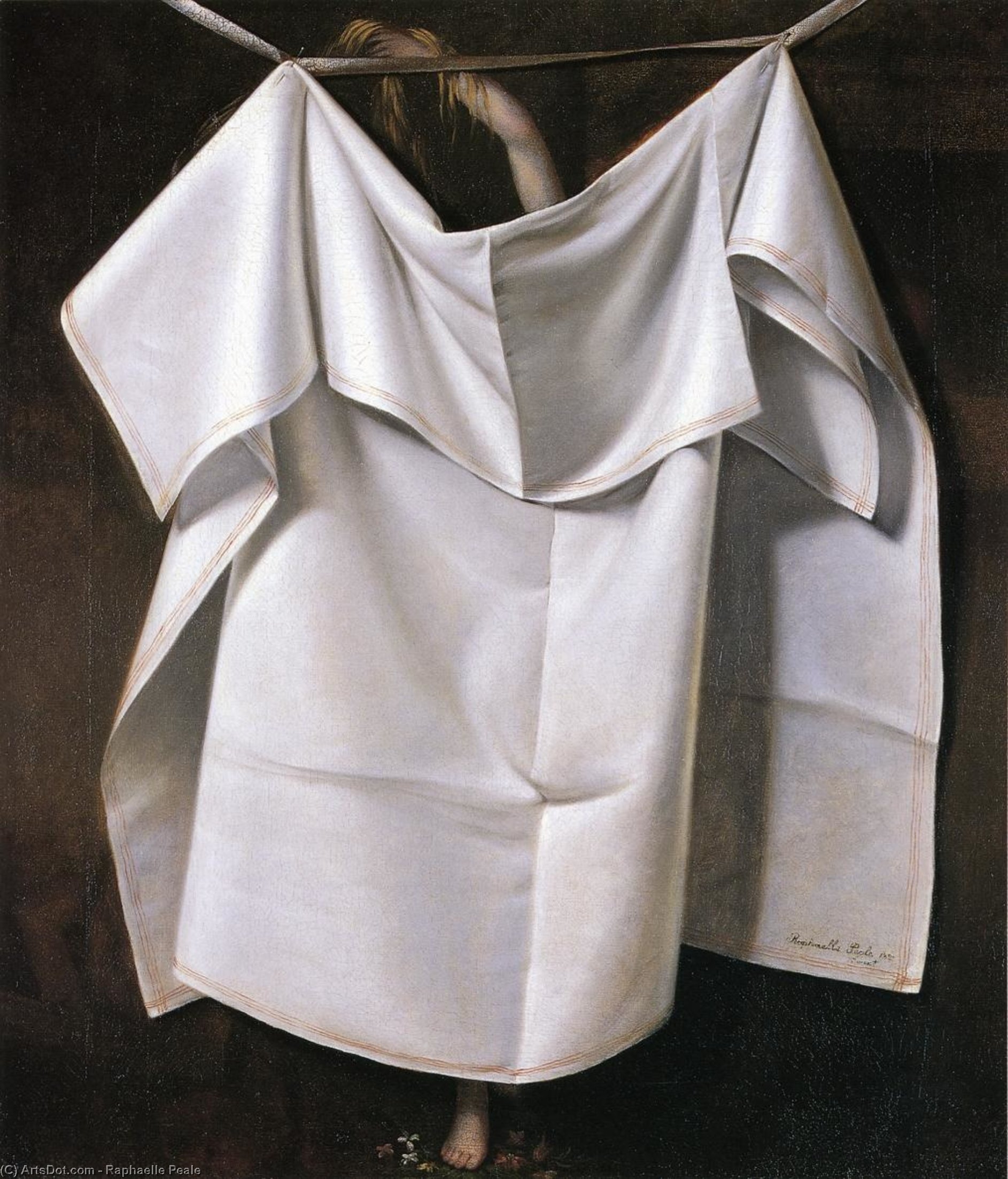
Venus Rising from the Sea - A Deception (also known as After the Bath)


 Read More
Hand Made Oil Reproduction
Hand-painted oil on canvas in your size and frame, made to order by our artists. ( Buy Print Buy Image)




P118B $10

P118H $10

P118W $10

P438Z $10

P508JH $12

P508YH $12

P805H $10

P805Z $10

P919BZ $10

P919G $10

P919XJ $10

P959ZH $10

P968JZ $12

W106C $8

W218G $10

W218JH $8

W218Y $10

W307PJ $10

W316G $10

W316PJ $8

W316Y $10

W398PJ $8

W4111J $10

W500HY $15

W500JH $15

W692G $12

W849H $8

W940BG $15

W953PJ $8




Pick from our preset sizes that match the artwork's original proportions.

You may enter your own dimensions to fit a specific frame or space. If your selected size does not match the original image's proportions, we will either crop the artwork or extend the painting with additional hand-painted elements. A digital mockup will be sent for your approval before production begins.
Please note that the on-screen preview does not reflect the actual cropping or extension. Only the mockup will accurately show the final composition.
While custom sizes are available, we recommend selecting a dimension from the predefined list to preserve the original proportions.
After order, ArtsDot.com team will email client for instructions and provide a mockup preview
Worldwide Delivery () in 3/4 weeks instead of standard 5 weeks. (17 August). No compromise on quality.

Free Worldwide Express Shipping

High-Quality Linen Canvas

Full Shipping Insurance

Customs Tax Refund Guarantee

True Color Matching Guarantee

60-Day Return Policy (Defects Only)

100% Money-Back Guarantee

Bulk Discount Offer
 Glass option is only available in size under 110 CM

Venus Rising from the Sea - A Deception (also known as After the Bath)
Reproduction Medium
Reproduction Size
-


Total Price
$ 263
Artwork Description
A Moment of Intimacy and Hidden Echoes: Exploring Raphaelle Peale’s “Venus Rising”
Raphaelle Peale's "Venus Rising from the Sea – A Deception," painted in 1822, is far more than a simple depiction of a woman emerging from a bath. It’s a carefully constructed tableau of veiled secrets and layered narratives, a testament to the artist’s skill as both a painter and a subtle manipulator of visual language. The work immediately draws the viewer in with its deceptively simple composition: a partially draped figure, her face obscured by a pristine white towel, hinting at vulnerability and quiet contemplation. Yet, beneath this surface lies a complex web of references – to classical mythology, to Peale’s own family history, and ultimately, to the very nature of artistic representation itself.
The painting's genesis is rooted in the burgeoning interest in neoclassical art during the early 19th century. Peale, a pioneer in American still life painting, deliberately chose to emulate James Barry’s celebrated “Birth of Venus” (1772), a work that had achieved immense popularity through its widespread reproduction as an engraving. By incorporating this iconic image – subtly concealed beneath the towel – Peale wasn't merely copying; he was engaging in a dialogue with art history, challenging viewers to actively participate in deciphering the layers of meaning within his composition. The choice of the white towel itself is significant, evoking notions of modesty and concealment, yet simultaneously suggesting an invitation to peek behind the curtain.
The Technique of Illusion: Trompe L’Oeil and Peale's Mastery
Peale’s technical prowess lies in his masterful execution of *trompe l’oeil*, a technique designed to create the illusion of three-dimensionality on a two-dimensional surface. The meticulous rendering of the towel’s folds, the subtle variations in tone within the white fabric, and the carefully positioned shadows all contribute to this convincing effect. He doesn't simply paint a towel; he paints the *impression* of a towel – its texture, its weight, even the way it drapes across the rack. This heightened realism is further enhanced by the dark background, which serves to amplify the luminosity of the white and create a dramatic contrast that draws the eye directly to the central figure.
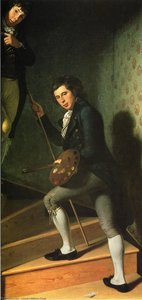
Interestingly, recent research conducted by conservator Mary Schafer has revealed an even deeper layer of complexity within the painting. Schafer discovered an earlier, unfinished version hidden beneath the margins – a partial copy of Charles Willson Peale’s 1817 portrait of his son Raphaelle! This concealed image, also partially obscured by the white towel, adds a poignant and almost conspiratorial element to the work, suggesting a familial secret or perhaps even a subtle critique of the artist's own father. It transforms "Venus Rising" from a simple still life into a complex family portrait with an underlying narrative.
Symbolism and Emotional Resonance: A Portrait of Quiet Contemplation
Beyond its technical brilliance and historical references, “Venus Rising” resonates deeply on an emotional level. The partially obscured figure evokes a sense of vulnerability and introspection – a moment of private reflection away from the gaze of others. The title itself, "Venus Rising from the Sea - A Deception," is laden with symbolic weight. Venus, the Roman goddess of love and beauty, suggests themes of desire and sensuality, while “A Deception” hints at hidden truths and obscured realities. The painting invites us to consider the complexities of self-perception, the allure of the unknown, and the ways in which we construct our own narratives about ourselves.
A Legacy of Innovation: Peale’s Place in American Art History
Raphaelle Peale's "Venus Rising from the Sea – A Deception" stands as a pivotal work in American art history, marking a significant departure from the prevailing portraiture styles of the time. His pioneering exploration of still life painting, coupled with his innovative use of *trompe l’oeil* and his subtle engagement with artistic tradition, established him as a true innovator. The painting's enduring appeal lies not only in its technical mastery but also in its ability to provoke thought and invite multiple interpretations – a testament to Peale’s genius as both an artist and a storyteller.
Related Artworks
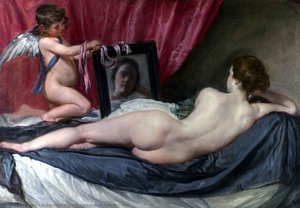
Artist Biography
The Pioneer of the American Still Life
In the burgeoning landscape of early nineteenth-century American art, where portraiture reigned supreme as the primary vehicle for status and legacy, Raphaelle Peale dared to turn his gaze toward the quiet, often overlooked beauty of the inanimate. Born in Annapolis in 1774, Peale was not merely a painter but a pioneer who carved out a specialized niche that had previously been neglected in the young nation's artistic repertoire. As the son of the legendary Charles Willson Peale, his very existence was intertwined with the pulse of American scientific and artistic discovery. Growing up within the orbit of one of America’s most influential artistic dynasties, Raphaelle was immersed in an environment where meticulous observation was considered both a fine art and a scientific necessity.
His early training was deeply rooted in this dual tradition of naturalism and craftsmanship. Under the watchful eye of his father, Peale learned to see the world through a lens of profound detail, a skill that would later become the hallmark of his mature style. While his siblings often pursued paths in medicine or natural history, Raphaelle channeled this inherited passion for documentation into the medium of oil on canvas. He did not merely seek to represent objects; he sought to elevate them. By focusing on the textures of fruit, the sheen of porcelain, and the subtle decay of organic matter, he brought a sense of permanence to the ephemeral, transforming simple kitchen items into subjects of high art.
Mastery of Texture and Trompe l'oeil
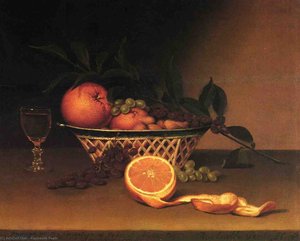
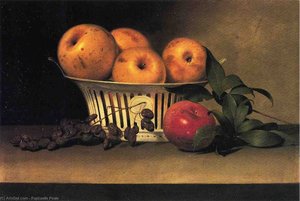
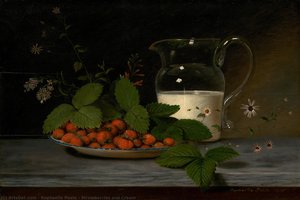
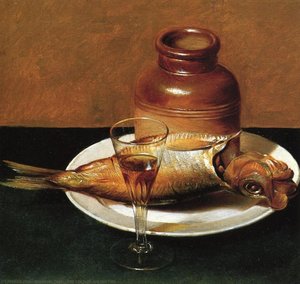
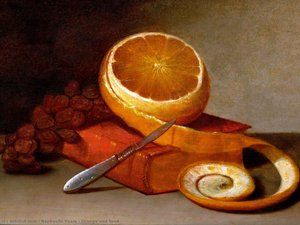
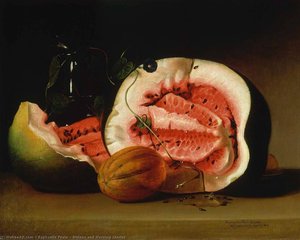
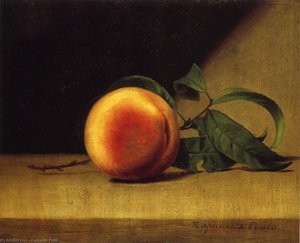
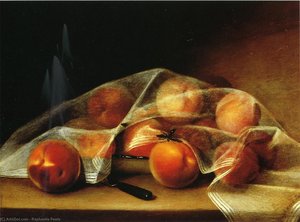
The true brilliance of Peale’s work lies in his technical command over light and surface. He became a master of trompe l'oeil—a technique designed to "deceive the eye"—creating illusions so convincing that viewers were often tempted to reach out and touch the depicted objects. His compositions, such as those featuring peaches, raisins, or fish, are studies in tactile reality. One can almost sense the velvety skin of a ripening peach or the cool, smooth surface of a ceramic jug through his masterful application of glaze and shadow.
Peale’s stylistic development was significantly shaped by an awareness of European traditions, particularly the influence of Spanish masters who had long perfected the art of the still life. By blending this Old World sophistication with a uniquely American sensibility, he created works that felt both globally informed and locally grounded. His paintings often feature:
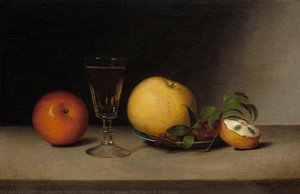
- Meticulous Detail: An unwavering commitment to capturing the minute imperfections of nature, from tiny blemishes on an apple to the delicate veins in a leaf.
- Dramatic Lighting: The use of chiaroscuro to pull subjects forward from dark, atmospheric backgrounds, lending each object a sculptural presence.
- Compositional Balance: A careful arrangement of elements that guides the viewer's eye through a silent, contemplative narrative of abundance and mortality.
A Lasting Legacy in American Art
Though his career was relatively brief, ending with his death in 1825, Raphaelle Peale’s impact on the trajectory of American art cannot be overstated. He broke the monopoly of portraiture, proving that the domestic and the naturalistic were worthy of the highest level of artistic devotion. In doing so, he laid the groundwork for generations of American still-life painters who would follow in his footsteps, exploring themes of abundance, decay, and the beauty of the everyday.
Today, Peale is remembered not just as a member of a famous family, but as a singular talent who possessed the courage to find greatness in the small. His works remain vital testaments to a period of American history when the nation was still defining its visual identity. Through his brushes, the simple contents of a basket or the humble arrangement of a tabletop became enduring symbols of a burgeoning culture's ability to observe, appreciate, and immortalize the world around it.
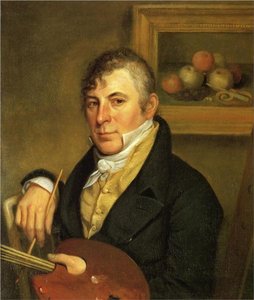
Raphaelle Peale
1774 - 1825 , United States of America
Quick Facts
- Artistic Movement Or Style: Still Life
- Artists Or Movements Influenced By This Artist: ['Spanish Masters']
- Artists Who Influenced This Artist: ['Charles Willson Peale']
- Date Of Birth: February 17, 1774
- Date Of Death: March 4, 1825
- Full Name: Raphaelle Peale
- Nationality: American
- Notable Artworks:
- Still Life with Raisins, Yellow and Red Apples in Porcelain Basket
- Still Life with Jug and Fish
- Place Of Birth: Annapolis, United States
Related Articles

Titian Ramsay Peale II: A Legacy of Botanical Precision & Artistic Innovation
Explore the life & art of Titian Ramsay Peale II, a master of botanical precision and wildlife painting. Discover his legacy bridging art & natural history at ArtsDot.
William Michael Harnett: Still Life, Realism & the American Pursuit of Materiality
Explore the captivating still lifes of William Michael Harnett, a master of American realism and trompe l'oeil painting. Discover his technique, legacy & the cultural context behind his iconic works.

Charles Willson Peale: Portraiture, Enlightenment Ideals & Shaping American Identity
Explore the life & art of Charles Willson Peale – Revolutionary portraitist, scientist, and founder of America’s first museum. Discover his iconic paintings of Washington & the Enlightenment ideals that shaped a nation.
Silent Narratives: Exploring the Enduring Appeal of Still Life Painting Across Centuries
Explore the rich history of still life painting with ArtsDot. Discover Dutch Masters, decode vanitas symbolism & learn about collecting timeless art. Expert insights and museum-quality reproductions.
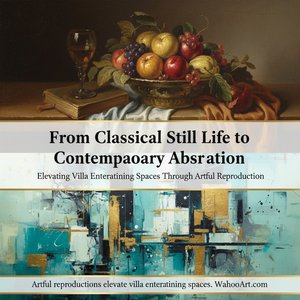
From Classical Still Life to Contemporary Abstraction: Elevating Villa Entertaining Spaces Through Artful Reproduction
Explore the history of still life painting & discover how artful reproductions elevate villa entertaining spaces. Expert guidance, museum-quality prints & custom artwork at ArtsDot.com.