 Preview
 Send
Send Share
Share
 Details

 Download
 Similars
 X-Ray
X-Ray Diaporama
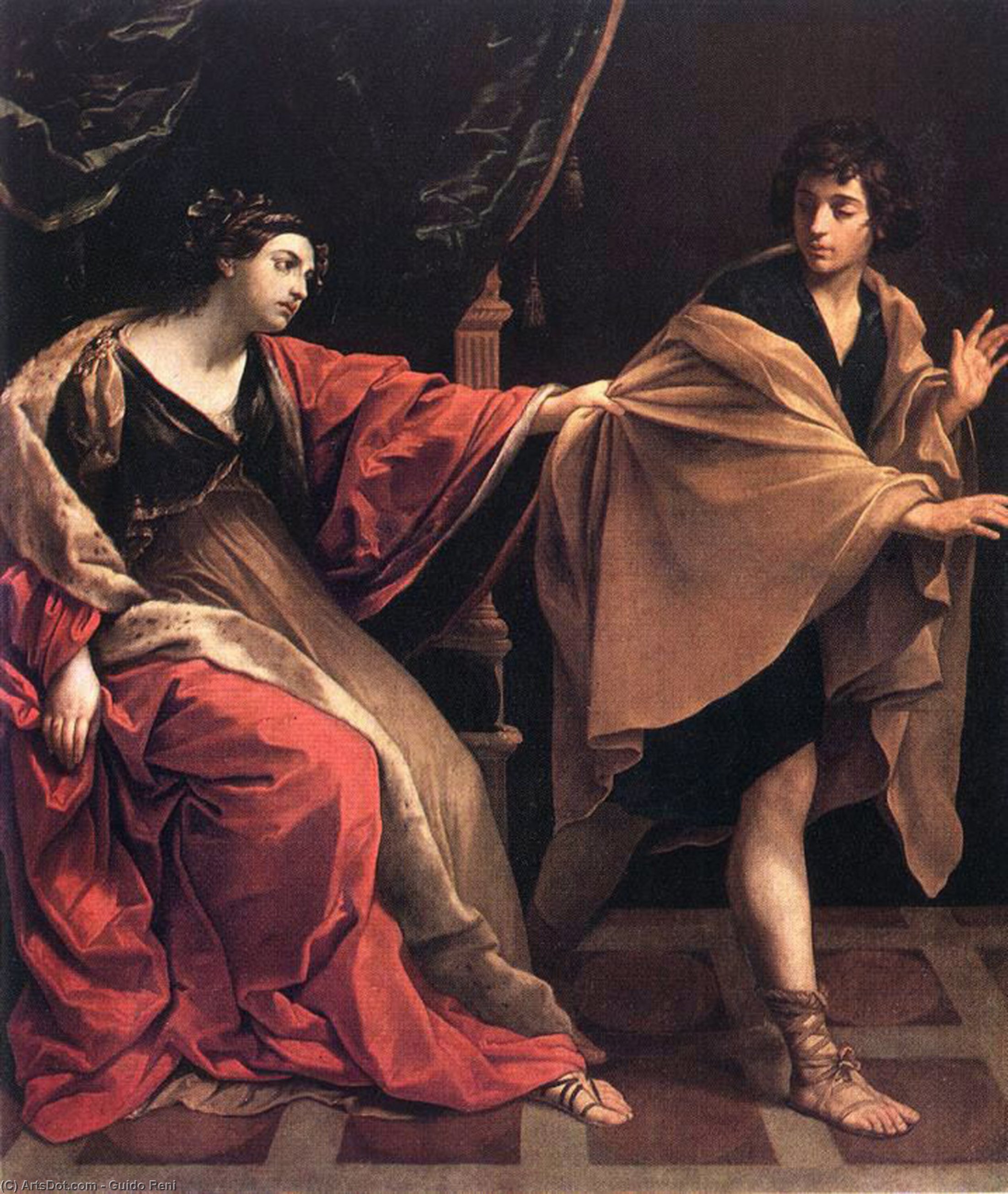
Joseph and Potiphar's Wife
 Oil On Canvas
- WallArt
- Baroque Classicism
 1631
1631- Early Modern
 227.0 x 195.0 cm
 Pushkin State Museum
 Read More
Giclée / Art Print
Museum-quality giclée or canvas print with fast production and flexible finish options. ( Buy Hand Made Painting Buy Image)




P118B $10

P118H $10

P118W $10

P438Z $10

P508JH $12

P508YH $12

P805H $10

P805Z $10

P919BZ $10

P919G $10

P919XJ $10

P959ZH $10

P968JZ $12

W106C $8

W218G $10

W218JH $8

W218Y $10

W307PJ $10

W316G $10

W316PJ $8

W316Y $10

W398PJ $8

W4111J $10

W500HY $15

W500JH $15

W692G $12

W849H $8

W940BG $15

W953PJ $8




Pick from our preset sizes that match the artwork's original proportions.

You may enter your own dimensions to fit a specific frame or space. If your selected size does not match the original image's proportions, we will either crop the artwork or extend the image with a mirrored or solid-fill edge. A digital mockup will be sent for your approval before production begins.
Please note that the on-screen preview does not reflect the actual cropping or extension. Only the mockup will accurately show the final composition.
While custom sizes are available, we recommend selecting a dimension from the predefined list to preserve the original proportions.
Worldwide Delivery () in 2 weeks instead of standard 4/5 weeks. (24 August)

Free Worldwide Express Shipping

High-Quality Linen Canvas

Full Shipping Insurance

Customs Tax Refund Guarantee

True Color Matching Guarantee

60-Day Return Policy (Defects Only)

100% Money-Back Guarantee

Bulk Discount Offer
 Glass option is only available in size under 110 CM

Joseph and Potiphar's Wife
Giclée / Art Print
Reproduction Size
-


Total Price
$ 63
Collectible Description
A Masterpiece of Moral Tension and Grace
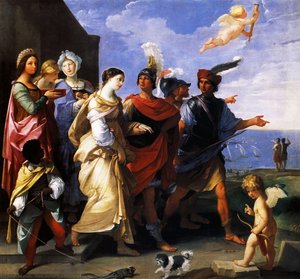
In the grand tapestry of the Baroque era, few works capture the delicate friction between earthly temptation and spiritual fortitude as exquisitely as Guido Reni’s "Joseph and Potiphar's Wife." Executed around 1631, this monumental canvas serves as a profound window into a pivotal biblical moment, rendered not with the jarring violence of some of his contemporaries, but with a refined, classical elegance. The scene depicts the fateful encounter between Joseph, the virtuous son of Jacob, and the wife of Potiphar, whose unrequited desire for him would eventually lead to his unjust imprisonment. Reni, often celebrated as Le Guide, masterfully avoids the sensationalism typically associated with such scandalous narratives, choosing instead to focus on a quiet, psychological intimacy that invites the viewer into a deeply contemplative space.
The composition is anchored by a deliberate use of architectural depth, placing the figures upon a staircase that serves as more than just a setting. This ascent symbolizes the moral climb and the steadfastness of Joseph’s character amidst the swirling pressures of temptation. As the eye wanders through the scene, one notices the subtle interplay of light and shadow—a hallmark of Reni's ability to breathe life into flesh and fabric. The woman, draped in a rich, commanding red dress, represents the visceral pull of passion, while Joseph, clad in somber black, embodies a resolute, quiet piety. This visual contrast creates a silent dialogue, a tension that is felt rather than shouted, making the painting an essential study in human emotion.
The Elegance of Venetian Classicism
Technically, this work stands as a triumph of Venetian Classicism within the broader Baroque movement. Reni eschews the turbulent, chaotic energy found in the works of Caravaggio, opting instead for a more restrained and harmonious palette dominated by muted reds, earthy browns, and soft creams. This choice of color contributes to an atmosphere of serene dignity, allowing the viewer to focus on the anatomical precision and the smooth, luminous glazing that characterizes his technique. The surface of the canvas possesses an almost ethereal quality, where light seems to glide over the musculature of Joseph and the flowing silks of Potiphar's wife with remarkable accuracy.
For the discerning collector or interior designer, this painting offers a rare opportunity to possess a piece that embodies artistic perfection. Its scale—measuring an impressive 227 x 195 cm—commands attention in any grand hall or curated gallery space, providing a sophisticated focal point that stimulates intellectual conversation. The artwork does not merely decorate a room; it transforms it, bringing with it the historical weight of the 17th century and the timeless beauty of the Bolognese school. Whether viewed as a study in religious history or an exemplar of classical technique, "Joseph and Potiphar's Wife" remains a breathtaking testament to the power of art to capture the eternal struggle between the soul and the senses.
Related Artworks


Artist Biography
Guido Reni (Le Guide): Life and Legacy
Early Life and Training
Guido Reni, also known as Le Guide, was born in Bologna, Italy, in 1575. He was the only child of Daniele Reni, a musician, and Ginevra Pozzi, also from a musical family. This upbringing instilled in him an appreciation for harmony and form that would later influence his artistic style. At the young age of nine, Guido began his apprenticeship under Denis Calvaert, a Flemish painter working in Bologna. He studied alongside fellow aspiring artists Albani and Domenichino, forming a strong foundation in classical principles.
Artistic Career and Development
Reni’s artistic career spanned several Italian cities, including Rome, Naples, and his native Bologna. His early work showed the influence of Calvaert and the Carracci brothers, emphasizing anatomical accuracy and dramatic composition. However, Reni quickly developed a distinctive style characterized by its elegant classicism, refined technique, and emotional intensity. He became a dominant figure in the Bolognese School, known for its emphasis on academic training and idealized forms.
Key Influences
- Denis Calvaert: Reni’s initial teacher provided him with a strong foundation in Flemish painting techniques.
- The Carracci Family (Annibale, Agostino, Ludovico): Their emphasis on classical art and anatomical study profoundly impacted his artistic development.
- Raphael: Reni greatly admired Raphael’s gracefulness and harmonious compositions, which are evident in many of his works.
Major Works and Artistic Style
Reni's oeuvre encompasses a wide range of subjects, including religious scenes, mythological narratives, and allegorical representations. Some of his most celebrated works include:
- Apollo on the Sun Chariot (Albertina, Vienna): A dynamic drawing showcasing Reni’s mastery of Baroque style.
- Saint James the Greater: Demonstrates his skill in capturing religious fervor and human emotion.
- Atalanta and Hippomenes (Palace of Capodimonte, Naples): An example of his mythological paintings, characterized by graceful figures and dramatic storytelling.
- Saint Jerome: A testament to Reni’s ability to balance composition with emotional depth.
- Tarantella (Palace of Capodimonte, Naples): Illustrates his influence on Italian folk dance culture.
Reni's style is often described as eclectic classicism. He blended the precision of classical art with the dynamism and emotion of the Baroque period. His figures are typically idealized, possessing a serene beauty and graceful movement.
Historical Significance and Legacy
Guido Reni played a crucial role in shaping the development of High Baroque style in Italy. He influenced generations of artists with his refined technique, elegant compositions, and emotional depth. His work can be found in prominent museums worldwide, including the Palace of Capodimonte in Naples. Reni’s legacy extends beyond painting; he was also a poet and a respected intellectual figure in his time.
His art continues to inspire artists and art enthusiasts today, solidifying his place as one of the most important painters of the 17th century. His influence can be seen in subsequent Baroque artists who sought to emulate his gracefulness and emotional power.
Death
Guido Reni died in Bologna in 1642, leaving behind a rich artistic legacy that continues to captivate audiences centuries later.
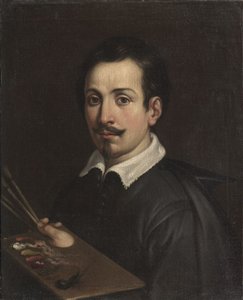
reni guido (le guide)
1575 - 1642 , Italy
Quick Facts
- Birth Date: 1575
- Birth Place: Bologna, Italy
- Death Date: 1642
- Influenced By: Denis Calvaert
- Movement: High Baroque, Bolognese School
- Name: Guido Reni (Le Guide)
- Nationality: Italian
- Notable Works:
- Apollo on the Sun Chariot
- Saint James the Greater
- Atalanta and Hippomenes
- Saint Jerome
- Tarantella
Related Articles
Guido Reni: A Study in Baroque Classicism & Artistic Perfection
Explore the life & work of Guido Reni, a master of Baroque classicism. Discover his iconic religious & mythological paintings, and understand his enduring influence on art history. Expert analysis for collectors.

Baroque Classicism: Reconciling Drama & Order in 17th-Century Art
Explore the captivating world of Baroque Classicism! Discover its history, key artists like Caravaggio & Rubens, and defining characteristics. Expert insights & high-quality reproductions at ArtsDot.
Neo-Classicism's Greatest Hits: 10 Masterpieces for Your Home |
Journey through Neo-Classicism's finest! Explore 10 iconic masterpieces by David, Ingres & Canova. Discover art history, techniques & timeless beauty – perfect for inspiring your home decor. Find museum-quality reproductions at

Giclée Prints: Archival Quality & Aesthetic Nuances for the Discerning Collector
Explore the world of giclée prints with ArtsDot. Learn about archival quality, aesthetic nuances & investment potential. Expert guidance for discerning art collectors seeking museum-quality reproductions and lasting value.

Transforming Spaces: A Comprehensive Exploration of Wall Decor Through Art History & Contemporary Practice
Explore the art of transforming spaces with our comprehensive guide to wall decor. From historical movements to contemporary trends, discover how to curate impactful interiors and commission bespoke artwork for a truly personalized aesthetic.