 Preview
 Send
Send Share
Share
 Details

 Download
 Similars
 X-Ray
X-Ray Diaporama
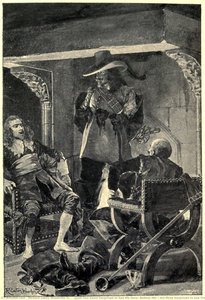
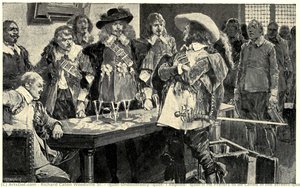
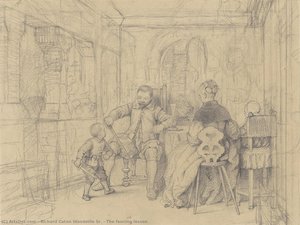
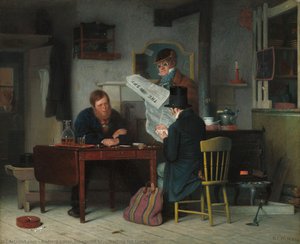
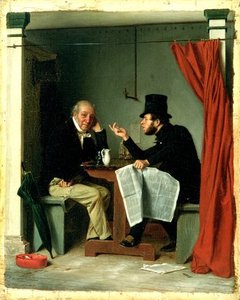
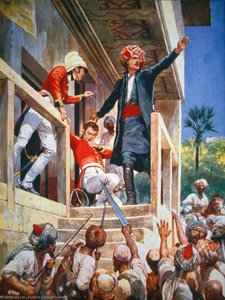
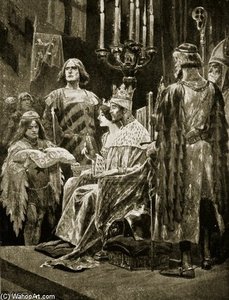
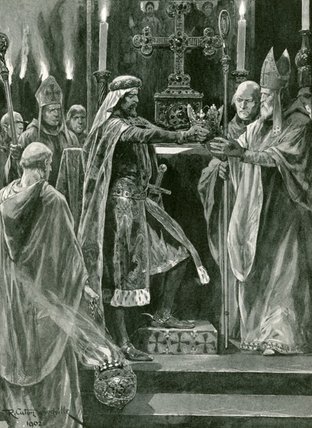
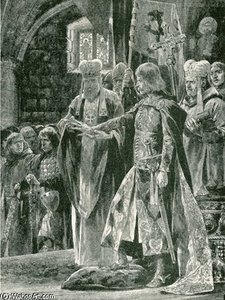
I Delivering The Crown To The Archbishop

 Read More
Hand Made Oil Reproduction
Hand-painted oil on canvas in your size and frame, made to order by our artists. ( Buy Print Buy Image)




































Pick from our preset sizes that match the artwork's original proportions.

You may enter your own dimensions to fit a specific frame or space. If your selected size does not match the original image's proportions, we will either crop the artwork or extend the painting with additional hand-painted elements. A digital mockup will be sent for your approval before production begins.
Please note that the on-screen preview does not reflect the actual cropping or extension. Only the mockup will accurately show the final composition.
While custom sizes are available, we recommend selecting a dimension from the predefined list to preserve the original proportions.
After order, ArtsDot.com team will email client for instructions and provide a mockup preview
Worldwide Delivery () in 3/4 weeks instead of standard 5 weeks. (16 August). No compromise on quality.

Free Worldwide Express Shipping

High-Quality Linen Canvas

Full Shipping Insurance

Customs Tax Refund Guarantee

True Color Matching Guarantee

60-Day Return Policy (Defects Only)

100% Money-Back Guarantee

Bulk Discount Offer
 Glass option is only available in size under 110 CM

I Delivering The Crown To The Archbishop
Reproduction Medium
Reproduction Size
-


Total Price
$ 388
Related Artworks
Artist Biography
A Life Etched in Battle: The World of Richard Caton Woodville Jr.
Richard Caton Woodville Jr., a name synonymous with dramatic battle scenes and meticulous historical illustration, occupied a unique position within the Victorian and Edwardian art worlds. Born in London on January 7th, 1856, his life was one dedicated to capturing the intensity of conflict, not merely as spectacle, but as a deeply human experience etched onto canvas. The son of Richard Caton Woodville Sr., an American artist who also found success depicting genre scenes, young Richard inherited both a lineage of artistic talent and a keen eye for narrative detail. His early training laid a solid foundation, initially under his father’s guidance before he embarked on formal studies at the prestigious Kunstakademie Düsseldorf. There, immersed in the Prussian tradition of military painting under Wilhelm Camphausen and Eduard von Gebhardt, Woodville honed his skills in draftsmanship and realism – qualities that would define his career. Brief sojourns to Russia and Paris, where he absorbed techniques from Jean-Léon Gérôme, further broadened his artistic horizons, shaping a style characterized by precision and dramatic flair.From Battlefield Reporter to Master of the Canvas
Woodville’s ascent wasn't confined to the studio; it was forged on the front lines. His long association with the *Illustrated London News* proved pivotal, transforming him from an artist into a visual reporter of his age. He didn’t simply recreate battles; he witnessed them firsthand. The Russo-Turkish War of 1877-1878 became his initial proving ground, providing invaluable experience and shaping his artistic focus. This was followed by the Anglo-Egyptian War in 1882, where Woodville's sketches and photographic documentation proved crucial to fellow artist Alphonse-Marie-Adolphe de Neuville. He wasn’t merely an observer; he actively contributed to the visual record of these conflicts, offering a level of authenticity rarely seen at the time. This commitment to realism extended beyond military engagements, encompassing scenes from the Second Anglo-Afghan War, the Zulu War, and the First Boer War – each conflict providing fodder for his increasingly detailed and compelling canvases. His work also graced the pages of other prominent magazines like *Cornhill Magazine*, *Strand Magazine*, and *The Tatler*, solidifying his reputation as a leading illustrator and battle painter.A Style Defined by Detail and Drama
Woodville’s artistic style was instantly recognizable, marked by an unwavering commitment to detail and a dramatic sensibility. He didn't shy away from the chaos of battle, instead embracing it, meticulously rendering every uniform, weapon, and facial expression with astonishing accuracy. His paintings weren’t simply depictions of warfare; they were immersive experiences, drawing viewers into the heart of the action. *Before Leuthen, 3 December 1757*, an early work, immediately established his reputation for historical realism. Later masterpieces like *The Charge of the Light Brigade* and *The Charge of the 21st Lancers at Omdurman* showcased his ability to capture both the bravery and the brutality of combat. Even in scenes depicting quieter moments – preparations before battle or the aftermath of conflict – Woodville’s attention to detail remained paramount, creating a sense of palpable tension and emotional weight. He excelled at portraying not just the grand sweep of military maneuvers but also the individual stories unfolding within them, imbuing his work with a profound humanism.Tragedy and Legacy: A Life Cut Short
Despite achieving widespread popularity and critical acclaim during his lifetime, Woodville’s later years were marred by personal tragedy and financial hardship. His marriage to Annie Elizabeth Hill in 1877 brought him twin sons – actor Anthony Caton Woodville and painter William Passenham Caton Woodville – but ended in divorce in 1892. Financial difficulties culminated in bankruptcy in 1905, casting a shadow over his final years. The tragic culmination came on August 17th, 1927, when he was found dead at his studio in St John's Wood, an inquest ruling the death a suicide due to unsound mind. He died effectively destitute, and for many years, his grave remained unmarked – a poignant testament to the vagaries of fate. It wasn’t until 2013, thanks to the efforts of his great-grandson, that a headstone was finally placed on his resting place in Kensal Green Cemetery.Enduring Impact and Artistic Remembrance
Despite the hardships he faced, Richard Caton Woodville Jr.’s legacy endures as one of the foremost battle painters of his era. His works continue to captivate audiences with their dramatic realism and historical significance, exhibited in prestigious institutions such as the National Army Museum, the Tate, Walker Art Gallery, and the Royal Academy. He wasn’t merely a painter of battles; he was a chronicler of an age defined by conflict, offering a unique window into the experiences of soldiers and the realities of war. His ability to blend artistic skill with journalistic integrity cemented his place in art history, ensuring that his depictions of courage, sacrifice, and the human cost of conflict will continue to resonate for generations to come. His paintings serve as powerful reminders of the past, urging us to remember those who fought – and those whose stories were forever altered by the tides of war.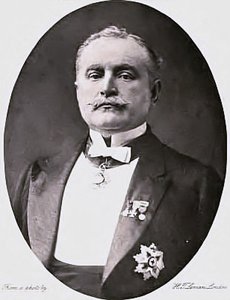
Richard Caton Woodville
1856 - 1927 , United States of America
Quick Facts
- Artistic Movement Or Style: Battle painting, Realism
- Artists Who Influenced This Artist:
- Wilhelm Camphausen
- Eduard von Gebhardt
- Jean-Léon Gérôme
- Date Of Birth: January 7, 1856
- Date Of Death: August 17, 1927
- Full Name: Richard Caton Woodville Jr.
- Nationality: English
- Notable Artworks:
- Before Leuthen
- Charge of Light Brigade
- Omdurman Charge
- Defeat at Tweebosch
- Halloween, 1914
- Place Of Birth: Baltimore, USA
Related Articles
Richard Caton Woodville: Chronicles of Victorian Life & Narrative Realism
Explore the captivating world of Richard Caton Woodville, a pivotal American artist who masterfully captured Victorian life through detailed narrative realism. Discover his legacy and influence on 19th-century painting.
Echoes of the Past: Historical Painting from Narrative to Contemporary Interpretation
Explore the captivating world of historical painting! Discover iconic masterpieces, influential movements & expert insights for collectors. Learn about narrative art's evolution and find your perfect artwork at ArtsDot.
Blossoms of Time: A Historical & Aesthetic Exploration of Floral Painting Across Cultures
Explore the rich history of floral painting! Discover symbolism, techniques & masterpieces from Van Huysum to O'Keeffe. Expert insights for art lovers & collectors at ArtsDot.
Daniel Maclise: Historical Narratives & Romantic Ideals in 19th-Century British Art
Explore the life & works of Daniel Maclise, a leading Victorian historical painter. Discover his captivating murals, Shakespearean scenes, and portraits at ArtsDot.com – handmade oil paintings & museum-quality prints.
Graphite Masters: 10 Iconic Paintings & Timeless Art for Your Home
Explore 10 iconic paintings dominated by graphite tones – from Rembrandt's chiaroscuro to Goya’s drama. Discover art history, techniques & find museum-quality reproductions for your home at . Explore the full collection online.