 Preview
 Send
Send Share
Share
 Details

 Download
 Similars
 X-Ray
X-Ray Diaporama
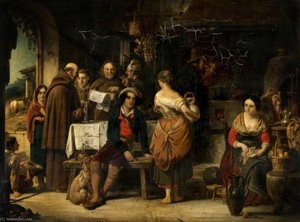
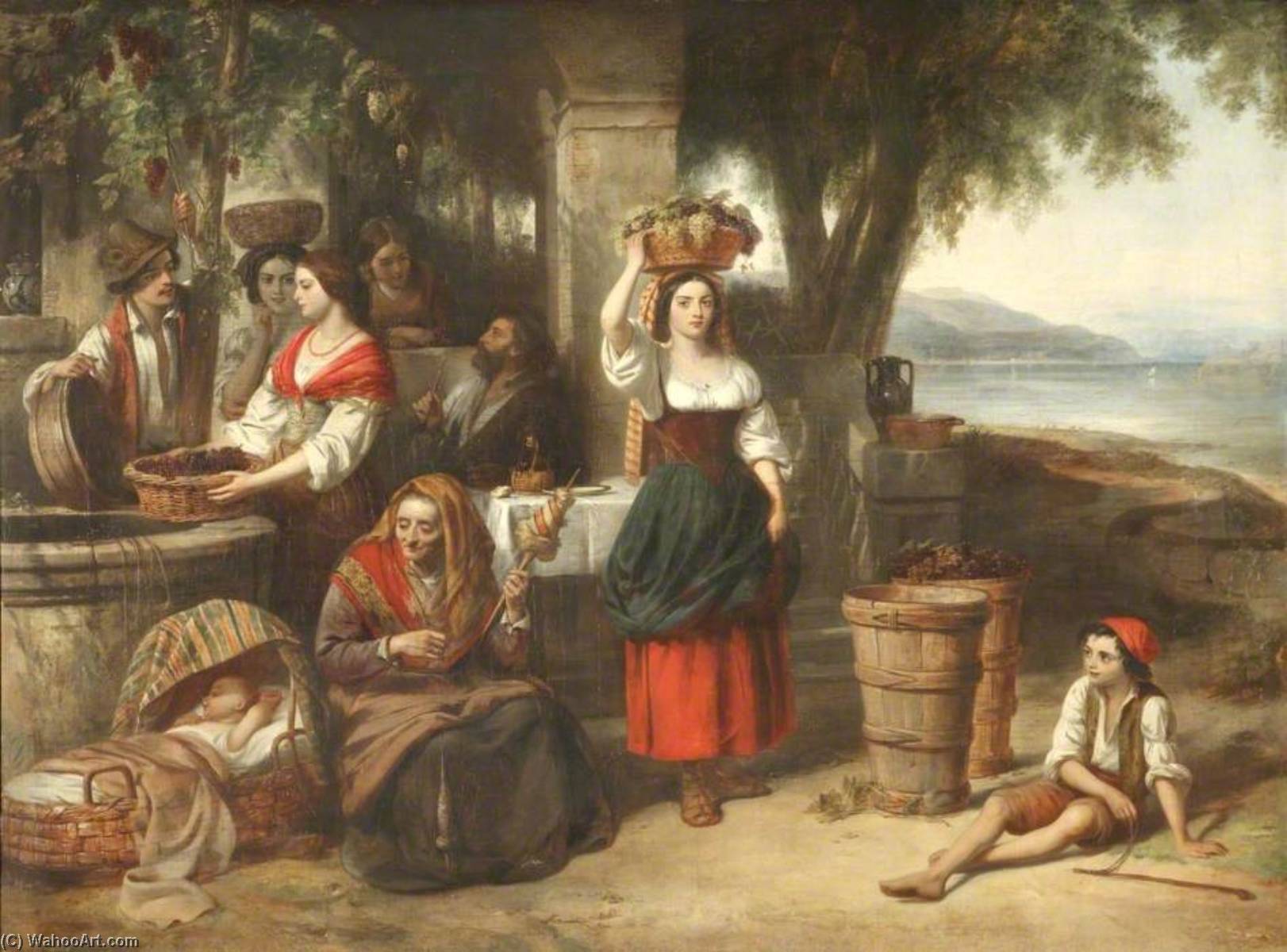
The Gathering of the Vintage
 Oil On Canvas
- WallArt
- Realism
 1854
1854- 19th Century
 90.0 x 119.0 cm
 Walker Art Gallery
 Read More
Giclée / Art Print
Museum-quality giclée or canvas print with fast production and flexible finish options. ( Buy Hand Made Painting Buy Image)




P118B $10

P118H $10

P118W $10

P438Z $10

P508JH $12

P508YH $12

P805H $10

P805Z $10

P919BZ $10

P919G $10

P919XJ $10

P959ZH $10

P968JZ $12

W106C $8

W218G $10

W218JH $8

W218Y $10

W307PJ $10

W316G $10

W316PJ $8

W316Y $10

W398PJ $8

W4111J $10

W500HY $15

W500JH $15

W692G $12

W849H $8

W940BG $15

W953PJ $8




Pick from our preset sizes that match the artwork's original proportions.

You may enter your own dimensions to fit a specific frame or space. If your selected size does not match the original image's proportions, we will either crop the artwork or extend the image with a mirrored or solid-fill edge. A digital mockup will be sent for your approval before production begins.
Please note that the on-screen preview does not reflect the actual cropping or extension. Only the mockup will accurately show the final composition.
While custom sizes are available, we recommend selecting a dimension from the predefined list to preserve the original proportions.
Worldwide Delivery () in 2 weeks instead of standard 4/5 weeks. (21 August)

Free Worldwide Express Shipping

High-Quality Linen Canvas

Full Shipping Insurance

Customs Tax Refund Guarantee

True Color Matching Guarantee

60-Day Return Policy (Defects Only)

100% Money-Back Guarantee

Bulk Discount Offer
 Glass option is only available in size under 110 CM

The Gathering of the Vintage
Giclée / Art Print
Reproduction Size
-


Total Price
$ 63
Collectible Description
A Tapestry of Community: The Soul of The Gathering of the Vintage
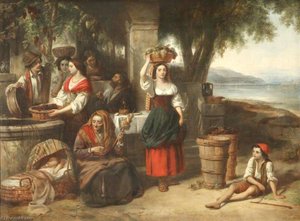
In the quiet, rhythmic pulse of 19th-century village life, Robert McInnes captured a moment of profound human connection in his masterpiece, The Gathering of the Vintage. Created in 1854, this evocative oil on canvas serves as more than just a depiction of agricultural labor; it is a window into the very heart of Victorian social cohesion. As the viewer enters the scene, they are immediately enveloped by a sense of warmth and shared purpose. The painting portrays a bustling gathering where men and women move in a choreographed dance of cooperation, engaged in the timeless rituals of eating, talking, and working together. Through McInnes’s expert hand, the mundane tasks of the harvest are elevated to a level of communal celebration, making the canvas feel less like a static image and more like a living, breathing memory of a bygone era.
The technical brilliance of McInnes lies in his ability to balance intricate detail with an atmospheric, painterly glow. The artist utilizes a palette of rich, warm colors that bathe the village setting in a nostalgic light, emphasizing the harmony between the people and their environment. One cannot help but be drawn to the delicate rendering of the villagers' clothing and accessories, which provides a tactile sense of reality to the scene. A woman stands prominently with a basket balanced upon her head—a symbol of both the physical labor required by the season and the grace found within daily toil. In the background, the subtle presence of boats near the water’s edge and a solitary clock hanging upon the wall serve as quiet reminders of the passage of time and the interconnectedness of land and sea, grounding the social gathering in a specific, tangible world.
A Legacy of Victorian Observance
To understand The Gathering of the Vintage, one must look to the broader context of Robert McInnes’s career as an observer of the human condition. As a Scottish painter working during the height of the Victorian era, McInnes possessed a unique talent for capturing the social dynamics and moral undertones of his time. His work often functions as a visual diary of 19th-century rituals, documenting the subtle shifts in community life with a polished, academic style. This particular piece resonates deeply with collectors and art enthusiasts because it avoids the grandiosity of historical epic painting in favor of something much more intimate: the dignity of the everyday. The painting does not merely show a harvest; it celebrates the spirit of togetherness that sustains a society.
For the discerning interior designer or art collector, this work offers an unparalleled opportunity to introduce a sense of history and warmth into a contemporary space. The composition’s balance of movement and stillness makes it a versatile centerpiece, capable of anchoring a room with its narrative depth. Whether displayed in a grand library or a sophisticated living area, a high-quality reproduction of this painting brings with it the prestige of the Walker Art Gallery and the enduring charm of McInnes’s vision. It is an invitation to pause, to reflect on our own connections to community, and to surround ourselves with art that speaks of the enduring beauty found in the simplest of human gatherings.
Related Artworks

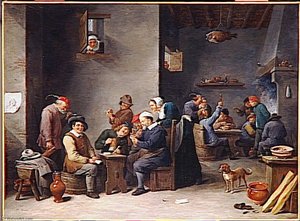
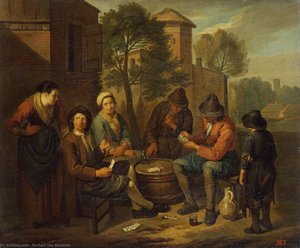
Artist Biography
Robert McInnes: A Painter of Victorian Life
Robert McInnes (1801-1886) emerges from the rich tapestry of 19th-century Scottish art as a skilled and observant painter, best known for his evocative genre scenes, meticulously rendered portraits, and captivating glimpses into Italian landscapes. His work offers a valuable window into Victorian society – its rituals, social dynamics, and everyday moments – presented with a polished style that reflects both technical mastery and a keen understanding of human psychology. While not as widely celebrated as some of his contemporaries, McInnes’s contribution to the visual record of his era is significant, particularly through pieces like ‘The Sunday School,’ which provides a poignant snapshot of Victorian morality and community life.
Born in Scotland, the precise details of McInnes' early life remain somewhat elusive. His artistic training likely began within established Scottish traditions, absorbing influences from the prevailing academic style prevalent at the time. However, he quickly developed his own distinctive approach – a careful balance between realism and a subtle romanticism. His paintings aren’t merely depictions; they are carefully constructed narratives, imbued with atmosphere and a sensitivity to light and shadow. He demonstrated an ability to capture not just appearances but also the emotional tenor of his subjects, evident in the expressions of quiet contemplation or gentle amusement that frequently grace his portraits.
Genre Scenes and Social Realism
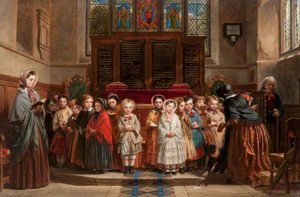
McInnes’s most enduring legacy lies in his genre paintings. These scenes – often depicting domestic life, social gatherings, or moments of leisure – offer a remarkably detailed portrayal of Victorian society. ‘The Sunday School,’ perhaps his most famous work, exemplifies this talent. It's not simply a record of a religious gathering; it’s a study of class distinctions, the roles of women and children, and the prevailing moral values of the era. The composition is meticulously arranged, with each figure carefully positioned to convey a specific social role or relationship. His ability to capture these nuances – the attentive gaze of the teacher, the shy glances of the students, the quiet dignity of the elderly – speaks volumes about his observational skills and artistic insight.
Beyond ‘The Sunday School,’ McInnes produced numerous genre scenes that provide a valuable social commentary. He frequently depicted rural life, capturing the rhythms of farming communities and the simple pleasures of country living. His portraits, too, are not merely likenesses; they reveal something about the sitter’s character and status. He skillfully employed lighting and pose to create an impression of personality – whether it be the stern authority of a landowner or the gentle grace of a young woman.
Italian Landscapes and Artistic Development
While McInnes is primarily remembered for his domestic scenes, he also possessed considerable skill in painting Italian landscapes. These works demonstrate a shift towards a more expressive style, influenced by the Romantic movement and perhaps informed by his travels. His Italian paintings are characterized by vibrant colors, dramatic lighting, and an emphasis on atmospheric effects – capturing the beauty of the Tuscan countryside or the rugged grandeur of the Amalfi Coast. The influence of artists like Turner is evident in his use of light and color to evoke mood and atmosphere.
It’s believed that McInnes spent considerable time in Italy during his career, immersing himself in the artistic traditions of the region. This exposure undoubtedly shaped his style and broadened his artistic horizons. His Italian landscapes represent a significant departure from his earlier, more restrained works, showcasing a newfound confidence and experimentation with technique.
Connections and Legacy
Robert McInnes was associated with the Royal Scottish Association of Artists (RSA), a prominent organization that played a crucial role in promoting artistic development in Scotland during the 19th century. Membership in the RSA provided him with opportunities to exhibit his work, network with other artists, and gain recognition for his talent. His connection to this influential group underscores his place within the broader context of Scottish art history.
Although he may not be as widely celebrated as some of his contemporaries, Robert McInnes’s paintings offer a valuable glimpse into Victorian life – its social customs, moral values, and everyday experiences. His polished style, combined with his keen observational skills and subtle emotional insights, ensures that his work continues to resonate with viewers today. The Robert McLaughlin Gallery in Oshawa, Canada, houses a significant collection of his works, offering visitors the opportunity to appreciate the enduring quality of his art.
Further research into McInnes’s life and work can be found at resources such as Art UK (https://artuk.org/discover/artists/mcinnes-robert-18011886) and the Robert McLaughlin Gallery website (https://www.robertmclaughlingallery.com/).
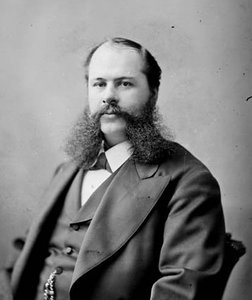
robert mcinnes
1801 - 1886
Quick Facts
- Artistic Movement Or Style: Genre, portraits, landscapes
- Date Of Birth: 1801
- Date Of Death: 1886
- Full Name: Robert McInnes
- Nationality: Scottish
- Notable Artworks:
- The Sunday School
- Woman with a Pearl Diadem
- The Gathering of the Vintage
- Place Of Birth: Scotland
Related Articles
George Goodwin Kilburne: Capturing Victorian Sentimentality Through Genre Painting
Explore the evocative Victorian paintings of George Goodwin Kilburne. Discover his detailed scenes of domestic life, masterful use of light, and lasting impact on British genre painting. Learn more at ArtsDot.
John Gilbert: A Comprehensive Exploration of Technique, Context, and Enduring Legacy in Victorian Genre Painting
Explore the life & art of John Gilbert, a prolific Victorian painter renowned for his captivating genre scenes and Venetian-inspired style. Discover his legacy with ArtsDot.
Robert Lillie: A Study in Victorian Genre Painting and Domestic Narrative
Explore the captivating Victorian genre paintings of Robert Lillie (1867-1949). Discover his serene Scottish landscapes and intimate domestic scenes, reflecting a unique artistic vision. Learn about his life, style & legacy.
Thomas Edwin Mostyn: A Victorian Genre Painter's Journey from Realism to Romantic Enchantment
Discover the captivating world of Thomas Edwin Mostyn (1864-1930), a Victorian artist renowned for his romantic garden scenes and evocative portraits. Explore his artistic journey, legacy & find high-quality reproductions at ArtsDot.
William Powell Frith: Narratives of Victorian Society & the Rise of Realist Painting
Explore the life & works of William Powell Frith, the 'greatest British painter of social scenes.' Discover his iconic Victorian genre paintings and learn about his lasting impact on realist art. Hand-painted reproductions available.