 Preview
 Send
Send Share
Share
 Details

 Download
 Similars
 X-Ray
X-Ray Diaporama
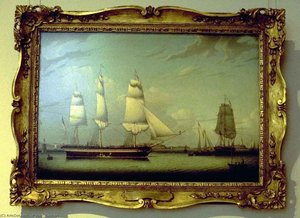
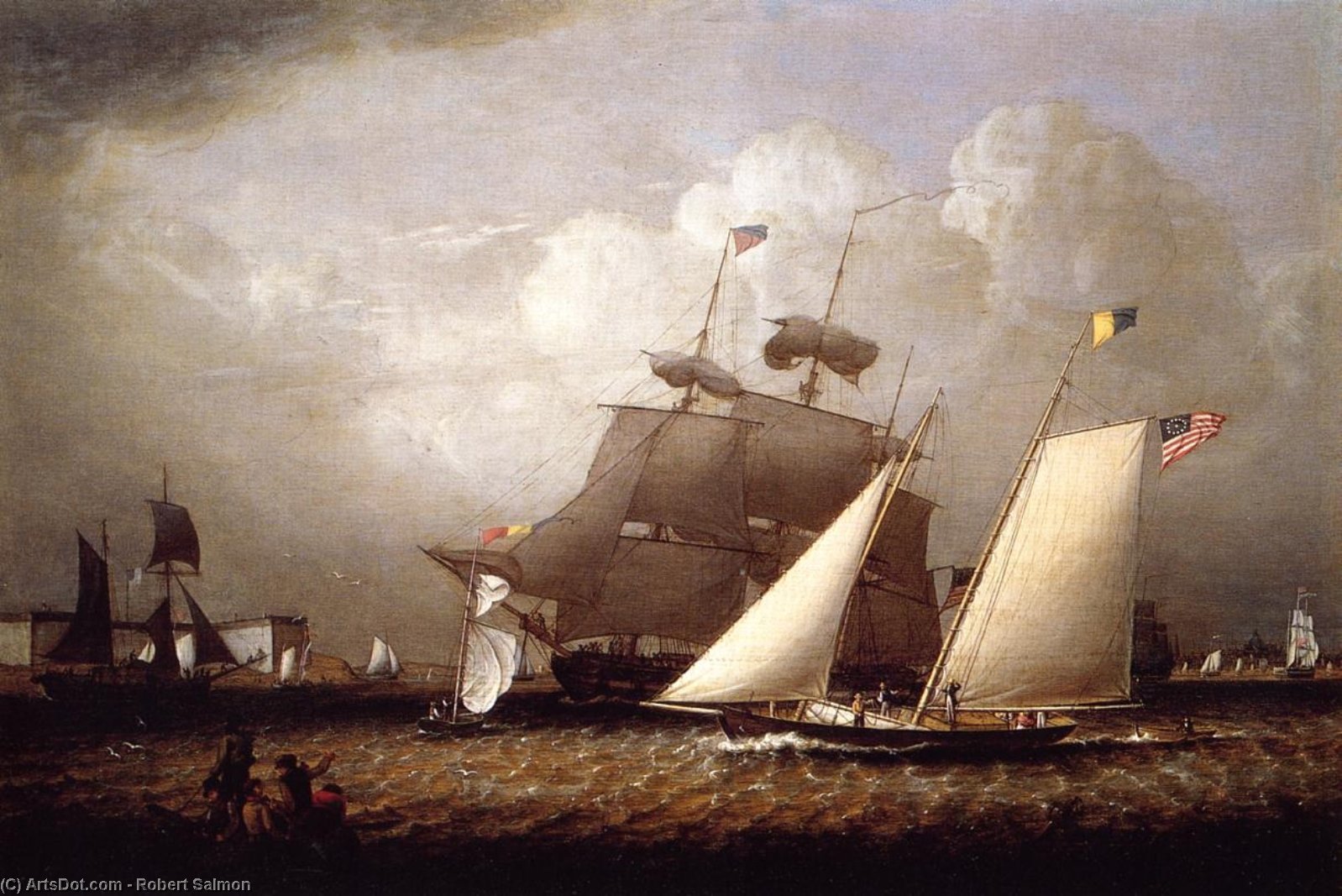
Picture of the 'Dream Poleasure Yacht''


 Read More
Hand Made Oil Reproduction
Hand-painted oil on canvas in your size and frame, made to order by our artists. ( Buy Print Buy Image)




P118B $10

P118H $10

P118W $10

P438Z $10

P508JH $12

P508YH $12

P805H $10

P805Z $10

P919BZ $10

P919G $10

P919XJ $10

P959ZH $10

P968JZ $12

W106C $8

W218G $10

W218JH $8

W218Y $10

W307PJ $10

W316G $10

W316PJ $8

W316Y $10

W398PJ $8

W4111J $10

W500HY $15

W500JH $15

W692G $12

W849H $8

W940BG $15

W953PJ $8




Pick from our preset sizes that match the artwork's original proportions.

You may enter your own dimensions to fit a specific frame or space. If your selected size does not match the original image's proportions, we will either crop the artwork or extend the painting with additional hand-painted elements. A digital mockup will be sent for your approval before production begins.
Please note that the on-screen preview does not reflect the actual cropping or extension. Only the mockup will accurately show the final composition.
While custom sizes are available, we recommend selecting a dimension from the predefined list to preserve the original proportions.
After order, ArtsDot.com team will email client for instructions and provide a mockup preview
Worldwide Delivery () in 3/4 weeks instead of standard 5 weeks. (17 August). No compromise on quality.

Free Worldwide Express Shipping

High-Quality Linen Canvas

Full Shipping Insurance

Customs Tax Refund Guarantee

True Color Matching Guarantee

60-Day Return Policy (Defects Only)

100% Money-Back Guarantee

Bulk Discount Offer
 Glass option is only available in size under 110 CM

Picture of the 'Dream Poleasure Yacht''
Reproduction Medium
Reproduction Size
-


Total Price
$ 263
Artwork Description
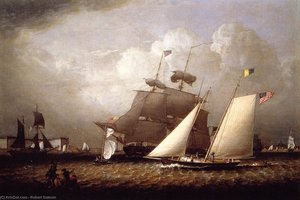
Robert W. Salmon’s “Picture of the ‘Dream’ Pleasure Yacht”: A Glimpse of Georgian Maritime Splendor
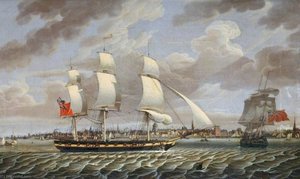
Robert W. Salmon's "Picture of the ‘Dream’ Pleasure Yacht," painted in December 1839, offers a captivating window into the burgeoning world of leisure and maritime society during Britain’s Regency era. More than just a depiction of a sailing vessel, this oil-on-panel painting embodies the spirit of innovation, wealth, and refined taste that characterized Boston Harbor at the time. Salmon, a skilled marine painter who had established himself in Liverpool after his early training in Whitehaven, meticulously captured not only the physical appearance of the “Dream” but also the atmosphere of its era – a period marked by rapid commercial growth, burgeoning yachting culture, and a fascination with the sea.
Salmon’s artistic journey is fascinating. Born into a family connected to the jewelry trade, his early exposure to craftsmanship undoubtedly influenced his meticulous attention to detail. He consciously studied the techniques of Dutch marine painters from the 17th century, alongside the dramatic landscapes of Italian vedute artists like Canaletto and the idealized scenes of Claude Lorrain. This diverse influence is evident in Salmon’s work – a harmonious blend of realism, atmospheric perspective, and classical composition. The painting's light, for instance, mimics the soft, diffused illumination favored by Lorrain, while the ship’s forms are rendered with a precision reminiscent of Dutch masters.
A Yachting Innovation: The “Dream” and Boston Society
The “Dream” Pleasure Yacht itself is a remarkable subject. Built in 1833 by Webb & Allen in New York, it represented a significant departure from the prevailing style of sailing vessels in Boston Harbor. Unlike the sturdy merchant ships that dominated the waterfront, the “Dream” was a sleek, elegant schooner designed for leisure and social gatherings. Its construction was funded by a group of twelve friends – members of the newly formed “Dream” Club – who embraced a novel approach to yachting: shared ownership and cooperative use. This innovative model reflected the growing desire among Boston’s elite to engage in recreational pursuits beyond traditional business activities.
Salmon's depiction brilliantly captures this social context. The painting isn’t merely a portrait of a ship; it’s a snapshot of a specific moment in Bostonian society – a gathering of wealthy merchants and their associates enjoying the pleasures of the sea. The presence of the rowboat with figures in the foreground adds an element of narrative, suggesting the active participation of onlookers and reinforcing the sense of lively activity.
Technique and Composition: A Masterful Balance
Salmon’s technical skill is immediately apparent in the painting's meticulous detail. He skillfully rendered the textures of the sails, the reflections on the water, and the subtle nuances of light and shadow. The composition is carefully balanced, with the three ships arranged across the canvas to create a sense of depth and movement. Salmon masterfully employs atmospheric perspective – using lighter tones and softer edges to depict objects in the distance – to convey the vastness of the ocean.
Notably, Salmon’s use of light is particularly striking. The painting is bathed in a warm, golden glow that evokes the late afternoon sun. This luminous quality not only enhances the beauty of the scene but also imbues it with a sense of optimism and prosperity. The artist's ability to capture both the dynamism of the sea and the serenity of the harbor reflects his deep understanding of light and color.
Symbolism and Emotional Resonance
"Picture of the ‘Dream’ Pleasure Yacht" transcends its literal subject matter, offering a glimpse into the values and aspirations of 19th-century Boston. The yacht itself symbolizes wealth, leisure, and social connection – elements highly prized by the city's elite. Salmon’s painting celebrates these ideals while simultaneously capturing the spirit of innovation and progress that defined the era. The scene evokes a feeling of idyllic beauty, inviting the viewer to imagine themselves immersed in this vibrant maritime world.
Today, reproductions of this captivating work offer an accessible way to appreciate Salmon's artistry and gain insight into a fascinating chapter in American social and maritime history. It remains a testament to the enduring appeal of the sea and the human desire for leisure and connection.
Related Artworks

Artist Biography
Early Life and Artistic Training
- Origins: Salmon was born Robert Salomon to Francis Salomon, a jeweler. Whitehaven's bustling port provided an early influence on his artistic development.
- Early Influences: His training is not extensively documented but it’s believed he studied Dutch marine painters of the 17th century, Italian vedute artists, and Claude Lorrain.
- Early Works: His earliest known works, “Two Armed Merchantmen Leaving Whitehaven Harbor” (1800) and “The ‘Estridge’ off Dover,” demonstrate his early skill in capturing maritime scenes.
- Royal Academy Debut: Salmon first exhibited at the Royal Academy in 1802, marking a significant step in his career.
Career Development and Style
- Move to Liverpool (1806): Salmon settled in Liverpool and changed his name to Salmon. This period saw him produce numerous marine paintings now housed in the National Maritime Museum in London.
- Ship Portraits: His ship portraits reveal a deep familiarity with sailing ships and their mechanics, often depicting the same vessel from multiple angles on a single canvas.
- Popularity & Collectors: Salmon's work gained popularity among prominent Bostonians like Samuel Cabot, Robert Bennett Forbes, and John Newmarch Cushing, indicating his growing recognition in America.
- Luminism Pioneer: He is considered a key figure in the development of American Luminism, influencing artists like William Bradford and Fitz Henry Lane. His emphasis on light and atmosphere created serene and tranquil scenes.
Notable Works and Artistic Significance
- Key Paintings: Some of Salmon's most recognized works include "The Brig 'Ariel'," "Sailing Ship 'Trelawney'," and “View of Liverpool from Cheshire.” These paintings exemplify his skill in capturing the beauty and complexity of sailing vessels.
- Boston Harbor Series: He produced a significant body of work depicting Boston Harbor, showcasing maritime life and historical Boston. “Boston Harbor from Castle Island (Ship Charlotte)” is a notable example.
- Influence on American Art: Salmon's style profoundly influenced subsequent generations of American seascape painters, contributing to the development of Luminism as an important artistic movement.
Legacy and Recognition
- Museum Holdings: Salmon’s works are held in prestigious institutions including the U.S. Naval Academy, Museum of Fine Arts, Boston, and the National Maritime Museum, Greenwich.
- Lasting Impact: His paintings continue to inspire artists today, serving as a testament to his skill and artistry.
- Father of American Luminism: Salmon’s legacy is firmly established as a pioneer of American Luminism, leaving an indelible mark on the art world.
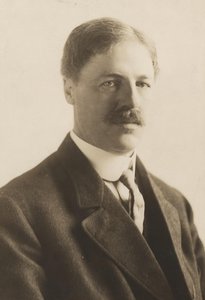
Robert W. Salmon
1775 - 1845 , United Kingdom
Quick Facts
- Artistic Movement Or Style: American Luminism
- Artists Or Movements Influenced By This Artist:
- William Bradford
- Fitz Henry Lane
- Artists Who Influenced This Artist:
- Dutch marine painters
- Italian vedute artists
- Claude Lorrain
- Date Of Birth: 1775
- Date Of Death: 1845
- Full Name: Robert W. Salmon
- Nationality: British
- Notable Artworks:
- Sailing Ship 'Trelawney'
- Boston Harbor from Castle Island
- A Frigate of the Baltic Fleet
- Place Of Birth: Whitehaven, United Kingdom
Related Articles
Robert W. Salmon: Navigating the Currents of Maritime Painting & American Realism
Explore the captivating maritime paintings of Robert W. Salmon, a pioneer of American Luminism. Discover his Boston Harbor scenes, legacy, and collecting guide at ArtsDot.
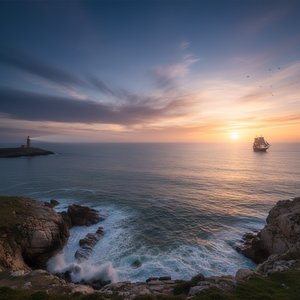
The Allure of the Horizon: A Comprehensive Exploration of Seascape Art Through History & Emotion
Explore the captivating world of seascape art! Discover its history, key artists & movements – from Dutch Masters to Impressionism. Expert insights for collectors and enthusiasts at ArtsDot.

The Enduring Legacy of Oil on Canvas: Technique, History & Aesthetic Impact
Explore the rich history & techniques of oil painting – from Renaissance masters to Impressionism. Discover pigments, layering methods, and why this timeless medium endures. Expert insights for artists & art enthusiasts.

Oil on Canvas: A Historical & Technical Exploration of a Timeless Artistic Medium
Explore the rich history & enduring techniques of oil painting on canvas. Discover the science behind its longevity, conservation practices, and contemporary relevance. Expert insights for art enthusiasts.

The Enduring Power of Painting: A Historical & Contemporary Exploration of Form and Emotion
Explore the rich history & enduring techniques of oil painting with ArtsDot. Discover masterpieces, learn about art collecting, and find authentic handmade reproductions crafted by skilled artists.