 Preview
 Send
Send Share
Share
 Details

 Download
 Similars
 X-Ray
X-Ray Diaporama
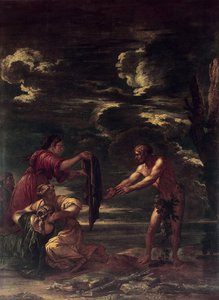
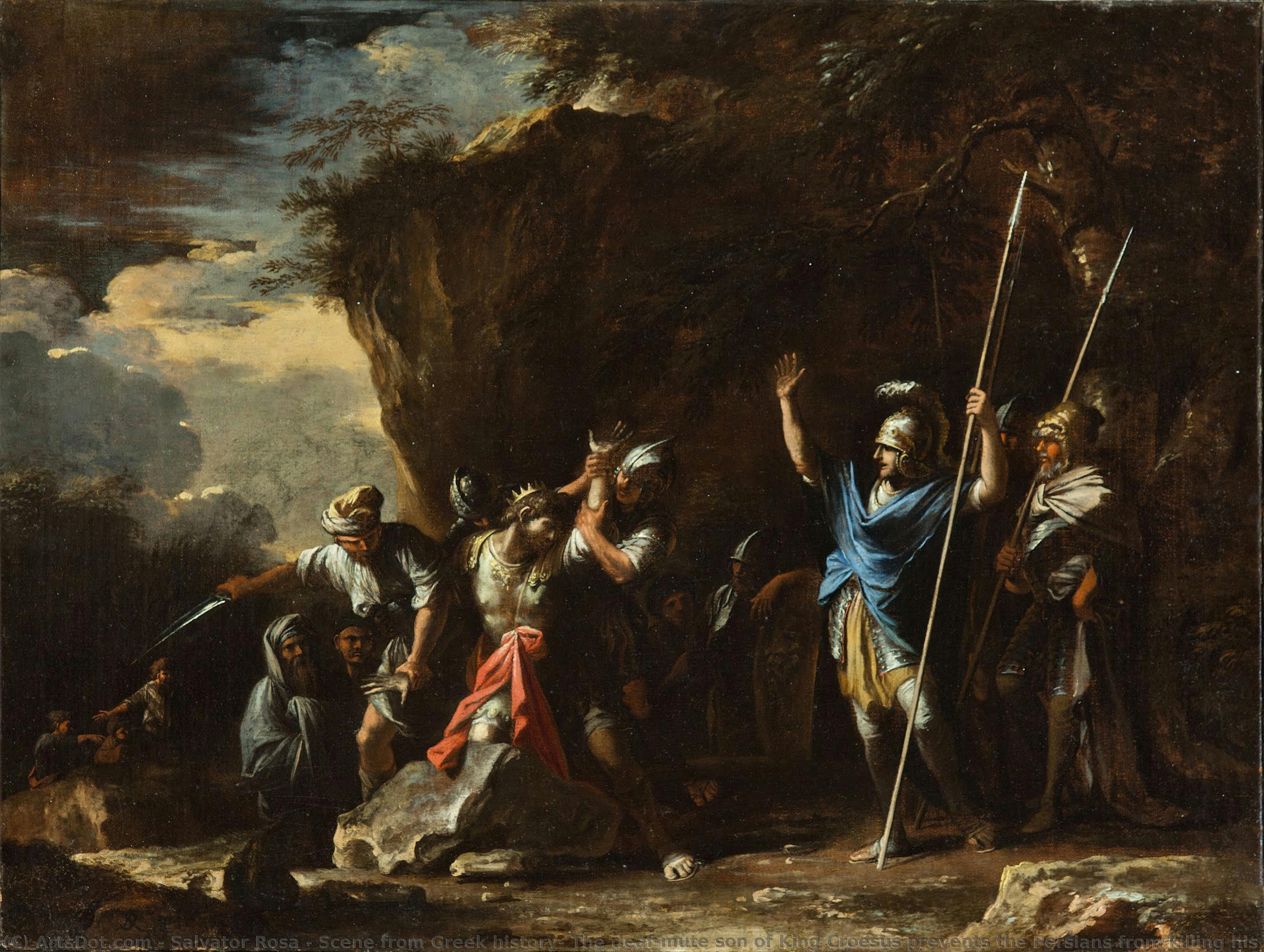
Scene from Greek history: The deaf-mute son of King Croesus prevents the Persians from killing his father
 Oil On Canvas
- WallArt
- Baroque
 1663
1663- Early Modern
 97.0 x 73.0 cm
 Art Gallery of South Australia
 Read More
Giclée / Art Print
Museum-quality giclée or canvas print with fast production and flexible finish options. ( Buy Hand Made Painting Buy Image)




P118B $10

P118H $10

P118W $10

P438Z $10

P508JH $12

P508YH $12

P805H $10

P805Z $10

P919BZ $10

P919G $10

P919XJ $10

P959ZH $10

P968JZ $12

W106C $8

W218G $10

W218JH $8

W218Y $10

W307PJ $10

W316G $10

W316PJ $8

W316Y $10

W398PJ $8

W4111J $10

W500HY $15

W500JH $15

W692G $12

W849H $8

W940BG $15

W953PJ $8




Pick from our preset sizes that match the artwork's original proportions.

You may enter your own dimensions to fit a specific frame or space. If your selected size does not match the original image's proportions, we will either crop the artwork or extend the image with a mirrored or solid-fill edge. A digital mockup will be sent for your approval before production begins.
Please note that the on-screen preview does not reflect the actual cropping or extension. Only the mockup will accurately show the final composition.
While custom sizes are available, we recommend selecting a dimension from the predefined list to preserve the original proportions.
Worldwide Delivery () in 2 weeks instead of standard 4/5 weeks. (28 August)

Free Worldwide Express Shipping

High-Quality Linen Canvas

Full Shipping Insurance

Customs Tax Refund Guarantee

True Color Matching Guarantee

60-Day Return Policy (Defects Only)

100% Money-Back Guarantee

Bulk Discount Offer
 Glass option is only available in size under 110 CM

Scene from Greek history: The deaf-mute son of King Croesus prevents the Persians from killing his father
Giclée / Art Print
Reproduction Size
-


Total Price
$ 63
A Cinematic Encounter with Baroque Drama
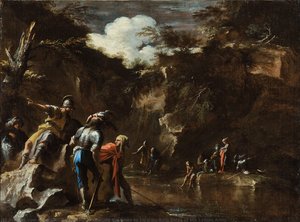
In the heart of a jagged, primordial landscape, Salvator Rosa captures a moment of breathless tension that feels less like a static painting and more like a frozen frame from a grand cinematic epic. "Scene from Greek history: The deaf-mute son of King Croesus prevents the Persians from killing his father" is a masterclass in the Baroque aesthetic, pulling the viewer into a world where survival hangs by a single, desperate thread. The scene, likely inspired by the legendary tales found within Homer’s Iliad, presents us with a visceral struggle for life amidst the shadows of antiquity. As we gaze upon the rugged terrain and the frantic movement of the figures, we are not merely observers; we are witnesses to a profound act of familial devotion and heroic defiance.
The composition is anchored by a central figure whose commanding presence radiates an almost electric urgency. With one hand raised aloft, he acts as a human barrier against the encroaching tide of violence, his gesture cutting through the chaos of the surrounding skirmish. Around him, the canvas teems with life and conflict: men clash with spears and shields, while others watch with eyes wide in apprehension or intensity. Rosa utilizes strong, directional lines—the sharp tilt of a weapon, the dramatic drape of a tunic, the jagged edge of a stone—to guide our eyes through this whirlwind of action, ensuring that the emotional momentum never falters.
The Mastery of Light and Shadow
Technically, this 1663 masterpiece showcases Rosa’s unparalleled ability to manipulate the chiaroscuro technique to evoke psychological depth. The lighting is profoundly dramatic, characterized by stark contrasts that carve figures out of the surrounding gloom. Deep, cavernous shadows retreat into the crevices of the rocky landscape, creating a sense of immense, suffocating space, while sudden bursts of light illuminate the musculature and facial expressions of the protagonists. This interplay of light and dark does more than provide three-dimensionality; it mirrors the internal turmoil of the characters, reflecting the struggle between life and death, and order and chaos.
The texture of the work is equally captivating. Through meticulous oil painting on canvas, Rosa achieves a rich, layered effect that suggests the grit of the earth and the cold hardness of stone. His brushwork is both precise in rendering the fine details of armor and fluid enough to capture the kinetic energy of a battlefield. For the discerning collector or interior designer, this tactile quality offers a profound sense of luxury and historical weight, making it an ideal centerpiece for spaces that demand a sense of gravitas and intellectual intrigue.
Symbolism and Eternal Resonance
Beyond its surface-level spectacle, the painting serves as a powerful allegory for the human condition. The deaf-mute son, unable to use words to plead for mercy, must rely on the raw power of physical presence and symbolic gesture. This element introduces a poignant layer of symbolism regarding the limits of communication and the universality of sacrifice. In an era of political instability and religious upheaval, such themes of leadership, resistance against overwhelming odds, and the preservation of legacy would have resonated deeply with 17th-century audiences—and they continue to resonate with us today.
For those looking to adorn a curated collection or a sophisticated living space, this reproduction offers more than just visual beauty. It brings into a room a piece of history that speaks of resilience and the indomitable spirit. Whether placed in a library, a formal study, or a contemporary gallery setting, Rosa’s work provides an enduring focal point that invites contemplation, sparking conversations about the legends of the past and the timeless emotions that bind us all.
Related Artworks
Artist Biography
**early life and training**
salvator rosa, an italian baroque painter, poet, and printmaker, was born in arenella, naples, on either june 20 or july 21, 1615. his mother, giulia greca rosa, was a member of one of the greek families of sicily. despite his father's wishes for him to become a lawyer or priest, salvator showed a preference for the arts from an early age.**artistic career**
salvator rosa's artistic career was marked by his unorthodox and extravagant style, which set him apart from his contemporaries. he was active in naples, rome, and florence, and his work was influenced by the naturalism of ribera and the classicism of poussin. however, he refused to be tied down by any particular style or movement.- pythagoras emerging from the underworld (kimbell art museum, fort worth, united states), one of his most famous works, showcases his unique blend of philosophical and artistic themes.
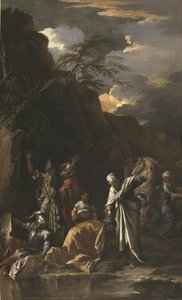
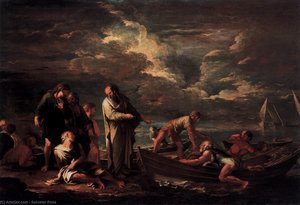
- his the baptism of the eunuch (chrysler museum of art, norfolk, united states) demonstrates his ability to infuse high drama into even minor bible stories.
**influences and legacy**
salvator rosa's work had a significant impact on the development of baroque art. his influence can be seen in the works of later artists, such as luca giordano, who continued to push the boundaries of artistic expression. **important links:** salvator rosa's profile on ArtsDot wikipedia: salvator rosa pythagoras emerging from the underworld on ArtsDot**conclusion**
salvator rosa's life and work continue to fascinate art lovers and historians alike. his unorthodox style and perpetual rebellion against the norms of his time have cemented his place in the annals of baroque art. as a painter, poet, and printmaker, he remains an enigmatic figure, and his work continues to inspire new generations of artists and art enthusiasts.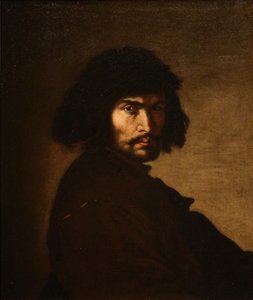
Salvator Rosa
1615 - 1673 , Italy
Quick Facts
- Artistic Movement Or Style: Baroque art
- Artists Or Movements Influenced By This Artist: ['Luca Giordano']
- Artists Who Influenced This Artist: ['José de Ribera']
- Date Of Birth: June 20, 1615
- Full Name: Salvator Rosa
- Nationality: Italian
- Notable Artworks:
- View of the Gulf of Salerno
- Study for 'Il Genio di Rosa
- Grotto with Cascades
- Place Of Birth: Arenella, Sicily
Related Articles
Salvator Rosa: A Baroque Rebel's Vision of Landscape, Allegory & the Human Condition
Explore the captivating world of Salvator Rosa, a rebellious Baroque master. Discover his dramatic landscapes, allegorical paintings & lasting influence on Romanticism. Hand-painted reproductions available at ArtsDot.

The Dramatic Flourish: Exploring the Baroque Movement's Enduring Legacy in Art History
Explore the dramatic world of Baroque art! Discover iconic artists like Caravaggio & Rubens, defining techniques, and its lasting impact on art history. Expert insights for collectors & enthusiasts at ArtsDot.

Baroque Masterpieces: 10 Paintings That Defined an Era |
Journey through the drama & grandeur of Baroque art! Explore 10 masterpieces by Caravaggio, Rembrandt, Rubens & more. Discover stunning oil paintings, rich colors & timeless stories. Find museum-quality reproductions at .

The Enduring Power of Painting: A Historical & Contemporary Exploration of Form and Emotion
Explore the rich history & enduring techniques of oil painting with ArtsDot. Discover masterpieces, learn about art collecting, and find authentic handmade reproductions crafted by skilled artists.

Baroque Classicism: Reconciling Drama & Order in 17th-Century Art
Explore the captivating world of Baroque Classicism! Discover its history, key artists like Caravaggio & Rubens, and defining characteristics. Expert insights & high-quality reproductions at ArtsDot.