 Preview
 Send
Send Share
Share
 Details

 Download
 Similars
 X-Ray
X-Ray Diaporama
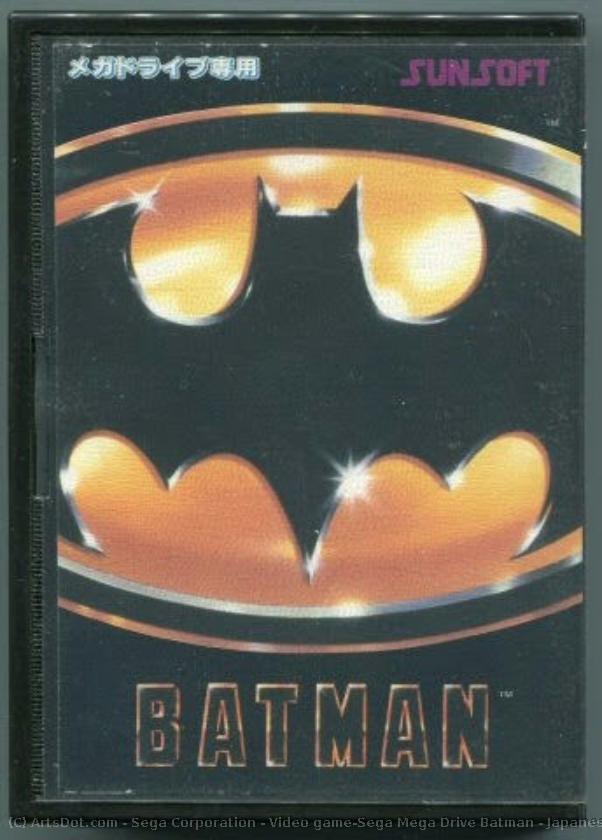
Video game:Sega Mega Drive Batman - Japanese Edition


 Read More
Hand Made Oil Reproduction
Hand-painted oil on canvas in your size and frame, made to order by our artists. ( Buy Print Buy Image)




P118B $10

P118H $10

P118W $10

P438Z $10

P508JH $12

P508YH $12

P805H $10

P805Z $10

P919BZ $10

P919G $10

P919XJ $10

P959ZH $10

P968JZ $12

W106C $8

W218G $10

W218JH $8

W218Y $10

W307PJ $10

W316G $10

W316PJ $8

W316Y $10

W398PJ $8

W4111J $10

W500HY $15

W500JH $15

W692G $12

W849H $8

W940BG $15

W953PJ $8




Pick from our preset sizes that match the artwork's original proportions.

You may enter your own dimensions to fit a specific frame or space. If your selected size does not match the original image's proportions, we will either crop the artwork or extend the painting with additional hand-painted elements. A digital mockup will be sent for your approval before production begins.
Please note that the on-screen preview does not reflect the actual cropping or extension. Only the mockup will accurately show the final composition.
While custom sizes are available, we recommend selecting a dimension from the predefined list to preserve the original proportions.
After order, ArtsDot.com team will email client for instructions and provide a mockup preview
Worldwide Delivery () in 3/4 weeks instead of standard 5 weeks. (29 August). No compromise on quality.

Free Worldwide Express Shipping

High-Quality Linen Canvas

Full Shipping Insurance

Customs Tax Refund Guarantee

True Color Matching Guarantee

60-Day Return Policy (Defects Only)

100% Money-Back Guarantee

Bulk Discount Offer
 Glass option is only available in size under 110 CM

Video game:Sega Mega Drive Batman - Japanese Edition
Reproduction Medium
Reproduction Size
-


Total Price
$ 263
Related Artworks







Artist Biography
The Enduring Legacy of Sega Corporation: A Collective Vision
Sega Corporation, more than a single artist, represents a vibrant collective—a Japanese video game company born from the post-war desire for entertainment and evolving into a global icon. Its story isn’t one of individual brushstrokes but rather a tapestry woven with the contributions of countless designers, programmers, musicians, and artists who shaped the landscape of arcade gaming and home console experiences. Founded in 1960 as Nihon Goraku Bussan by Martin Bromley and Richard Stewart, the company initially focused on importing coin-operated amusement machines to American military bases in Japan. This early exposure to Western entertainment sensibilities would subtly influence its future direction. The acquisition of Service Games of Japan shortly after solidified its position within the burgeoning arcade industry, but it was the 1965 rebranding as Sega Enterprises Ltd., following a merger with Rosen Enterprises, that truly signaled the company’s ambition—a commitment to creating original gaming experiences.From Arcades to Consoles: A Revolution in Play
The mid-1960s saw Sega begin its journey into game development itself, most notably with *Periscope*, a pioneering coin-operated submarine simulator. This marked the beginning of a relentless pursuit of innovation that would define the company for decades. However, it was the 1980s that truly cemented Sega’s place in gaming history. Recognizing the potential of home consoles, Sega launched the SG-1000 and later the Master System, attempting to challenge Nintendo's growing dominance. While these early ventures faced stiff competition, they laid the groundwork for a more significant breakthrough: the Mega Drive (known as Genesis in North America). The arrival of *Sonic the Hedgehog* in 1991 was nothing short of revolutionary. Sonic wasn’t merely a character; he was an attitude—a symbol of speed, rebellion, and cool that directly contrasted with Nintendo's established mascot, Mario. This bold move ignited a console war that captivated a generation, briefly establishing Sega as the market leader in North America. The artistic design of *Sonic*, spearheaded by Naoto Ohshima, Yuji Naka, and Hirokazu Yasuhara, was crucial to its success—a vibrant aesthetic that embraced bright colors, fluid animation, and a sense of kinetic energy.A Spectrum of Creative Talent
The strength of Sega lay not just in *Sonic* but in the diversity of its creative teams. Artists like Greg Martin, responsible for the iconic Western *Sonic* cover art, crafted images that captured the spirit of the games and became synonymous with the brand. Boris Vallejo and Julie Belle brought their signature fantasy style to numerous titles, lending a sense of epic scale and visual richness. Within Japan, Hiroaki Shioya’s painterly covers offered a distinct aesthetic sensibility. The company fostered an environment where different artistic visions could flourish, resulting in a remarkably varied catalog. Beyond the visual arts, composers like Masato Nakamura created unforgettable soundtracks that became integral to the gaming experience. Sega's internal teams, such as Ryu Ga Gotoku Studio (known for the *Yakuza* series) and Sonic Team, continue to push boundaries today. The influence of these artists extends beyond their immediate work; they inspired a generation of game developers and illustrators.Challenges, Transformations, and Enduring Influence
The late 1990s proved challenging for Sega. Commercial failures like the 32X and Saturn, coupled with the rise of Sony’s PlayStation, led to the difficult decision to exit the console market in 2001. This wasn't an end but a transformation. Sega reinvented itself as a third-party developer and publisher, focusing on creating high-quality games for other platforms. The acquisition by Sammy Corporation in 2004 further stabilized the company, leading to renewed success with franchises like *Yakuza*, *Total War* (through Creative Assembly), and *Persona* (through Atlus). Today, Sega is a multifaceted entertainment powerhouse, encompassing video game development, arcade operations, animation studios (TMS Entertainment and Marza Animation Planet), and even toy manufacturing. The company’s legacy isn't simply about the games it created but about its willingness to take risks, embrace innovation, and foster a culture of creativity. Sega continues to shape the gaming landscape, proving that a collective vision can endure—and evolve—through decades of change.Major Achievements & Historical Significance
- Pioneering Arcade Gaming: Sega’s early success in arcades established it as a major player in the entertainment industry, laying the foundation for its future ventures.
- The Sonic Revolution: *Sonic the Hedgehog* redefined platforming and challenged Nintendo's dominance, sparking a console war that captivated a generation.
- Diverse Artistic Styles: Sega fostered an environment where different artistic visions could flourish, resulting in a remarkably varied catalog of games.
- Innovation in Gameplay: From the fast-paced action of *Sonic* to the strategic depth of *Total War*, Sega consistently pushed boundaries in gameplay design.
- Enduring Franchises: The continued success of franchises like *Yakuza*, *Persona*, and *Super Monkey Ball* demonstrates Sega’s ability to adapt and thrive in a constantly evolving market.
Related Articles
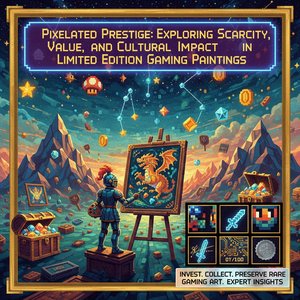
Pixelated Prestige: Exploring Scarcity, Value, and Cultural Impact in Limited Edition Gaming Paintings
Explore the world of limited edition gaming paintings! Discover investment strategies, artist insights & preservation tips for collectors. Trusted expertise in rare video game art.
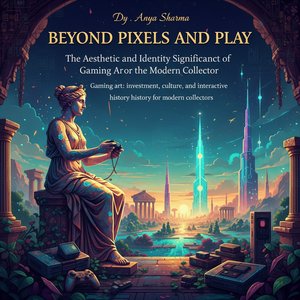
Beyond Pixels and Play: The Aesthetic and Identity Significance of Gaming Art for the Modern Collector
Explore the rising world of gaming art! Discover why collectors are investing in vintage games & interactive experiences. Expert insights on value, trends & cultural significance.
Bridging Realities: Exploring Aesthetic Crossovers Between Video Game Universes and Fine Art Traditions
Explore the fascinating intersection of video game aesthetics & fine art traditions. Discover how gaming influences design, collect iconic art reproductions, and elevate your space with expert guidance from ArtsDot.

Beyond the Screen: Transforming Video Game Worlds into Contemporary Canvas Art
Explore the captivating world where video games meet fine art! Discover how iconic gaming imagery is transformed into stunning contemporary canvas paintings – a new frontier for collectors and enthusiasts alike.
Pixel & Palette: Exploring the Artistic Craftsmanship of Hand-Painted Game Universes and the Artists Who Bring Them to Life
Explore the artistry of hand-painted game universes! Discover techniques, artists & history behind this unique style. Expert insights for collectors & developers.