 Preview
 Send
Send Share
Share
 Details

 Download
 Similars
 X-Ray
X-Ray Diaporama
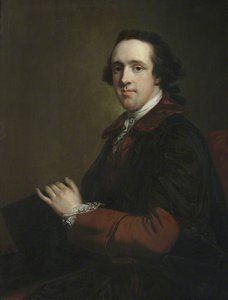
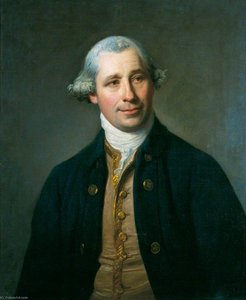
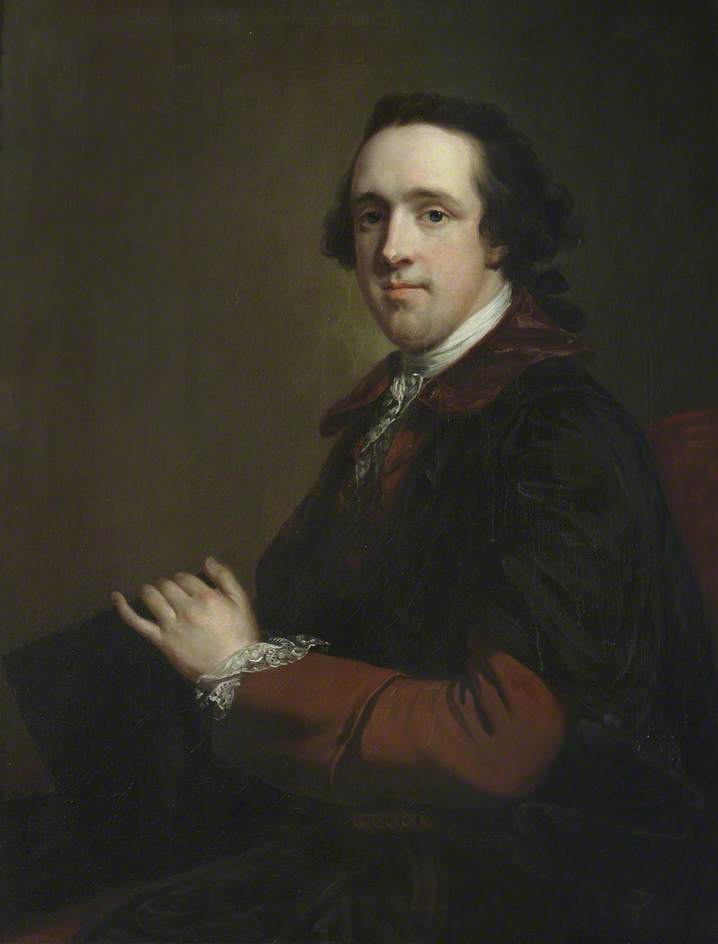
John Lodge Hubbersty (d.1837), Recorder of Lancaster, Fellow (1781)
 Oil On Canvas
- WallArt
- Baroque Portraiture
 89.0 x 69.0 cm
 Queens' College
 Read More
Hand Made Oil Reproduction
Hand-painted oil on canvas in your size and frame, made to order by our artists. ( Buy Print Buy Image)




P118B $10

P118H $10

P118W $10

P438Z $10

P508JH $12

P508YH $12

P805H $10

P805Z $10

P919BZ $10

P919G $10

P919XJ $10

P959ZH $10

P968JZ $12

W106C $8

W218G $10

W218JH $8

W218Y $10

W307PJ $10

W316G $10

W316PJ $8

W316Y $10

W398PJ $8

W4111J $10

W500HY $15

W500JH $15

W692G $12

W849H $8

W940BG $15

W953PJ $8




Pick from our preset sizes that match the artwork's original proportions.

You may enter your own dimensions to fit a specific frame or space. If your selected size does not match the original image's proportions, we will either crop the artwork or extend the painting with additional hand-painted elements. A digital mockup will be sent for your approval before production begins.
Please note that the on-screen preview does not reflect the actual cropping or extension. Only the mockup will accurately show the final composition.
While custom sizes are available, we recommend selecting a dimension from the predefined list to preserve the original proportions.
After order, ArtsDot.com team will email client for instructions and provide a mockup preview
Worldwide Delivery () in 3/4 weeks instead of standard 5 weeks. (17 August). No compromise on quality.

Free Worldwide Express Shipping

High-Quality Linen Canvas

Full Shipping Insurance

Customs Tax Refund Guarantee

True Color Matching Guarantee

60-Day Return Policy (Defects Only)

100% Money-Back Guarantee

Bulk Discount Offer
 Glass option is only available in size under 110 CM

John Lodge Hubbersty (d.1837), Recorder of Lancaster, Fellow (1781)
Reproduction Medium
Reproduction Size
-


Total Price
$ 263
Artwork Description
A Portrait of Civic Dignity: John Lodge Hubbersty by Nathaniel Dance-Holland
The painting before us, “John Lodge Hubbersty (d.1837), Recorder of Lancaster, Fellow (1781),” is more than a simple likeness; it’s a carefully constructed tableau of civic responsibility and scholarly contemplation, rendered with the subtle grace characteristic of Nathaniel Dance-Holland’s mature style. Completed around 1781, this oil on canvas offers a glimpse into the life of a man deeply embedded within the fabric of Lancaster society – a Recorder, a respected member of Queens' College Cambridge, and a figure whose influence extended far beyond his immediate locale.
Dance-Holland’s approach is rooted in the classical tradition he’d honed during his time in Italy, yet tempered with a distinctly British sensibility. The composition immediately draws the eye to Hubbersty’s posture: seated upright, but not rigidly so, suggesting both authority and an openness to discourse. His hands, resting lightly on a well-worn book – likely a legal text or scholarly treatise given Hubbersty's roles – convey a sense of quiet contemplation, hinting at the intellectual pursuits that occupied his time. The lighting is masterful, employing chiaroscuro to sculpt Hubbersty’s face and create depth within the scene; light falls primarily on his left side, highlighting his features and drawing attention to his thoughtful gaze.
The Language of Dress and Status
A meticulous examination of Hubbersty's attire reveals a wealth of information about his social standing and the era in which he lived. He is clad in a rich red jacket, trimmed with elegant white lace – a color and detail indicative of high status within Lancaster society. The cut of the jacket speaks to the formality of the occasion, suggesting an important civic event or official gathering. The inclusion of a book further reinforces his scholarly credentials, placing him firmly within the intellectual circles of Cambridge and Lancaster.
Dance-Holland’s skill lies not just in replicating physical appearance but in conveying character through subtle details. The slight furrow of Hubbersty's brow, the gentle curve of his lips – these are the elements that breathe life into the portrait, transforming a mere representation into a compelling psychological study. The background is deliberately muted, focusing attention entirely on the subject and reinforcing the sense of quiet dignity.
A Window to the 18th Century
To fully appreciate “John Lodge Hubbersty,” it’s crucial to understand the context in which it was created. The late 18th century was a period of significant social and political change in Britain, marked by the rise of the Enlightenment and increasing emphasis on civic virtue. Figures like Hubbersty played a vital role in upholding traditional values while navigating the complexities of a rapidly evolving society. Dance-Holland’s portrait captures this duality perfectly – portraying a man who embodies both the weight of tradition and the promise of progress.
Furthermore, Nathaniel Dance-Holland himself was a prominent figure during this period, serving as a Member of Parliament and holding various positions within the Royal Academy. His artistic career spanned decades, encompassing portraits of royalty, nobility, and notable figures of his time. This painting stands as a testament to his enduring talent and his ability to capture the essence of his subjects with remarkable precision and sensitivity.
Recreating the Legacy: A High-Quality Reproduction
Reproducing this captivating portrait offers an exceptional opportunity to bring a piece of 18th-century history into your home or office. A faithful reproduction, meticulously crafted using archival materials and printing techniques, will faithfully capture the nuances of Dance-Holland’s original work – from the subtle gradations of light and shadow to the intricate details of Hubbersty's attire. It is a beautiful addition to any collection, offering both aesthetic pleasure and a tangible connection to a bygone era.
Consider framing this reproduction within a dark wood frame reminiscent of those favored during the period – a choice that will further enhance its historical authenticity and visual impact. Whether displayed in a study, a library, or a formal living room, “John Lodge Hubbersty” is sure to serve as a timeless reminder of civic duty, intellectual pursuit, and the enduring power of portraiture.
Related Artworks
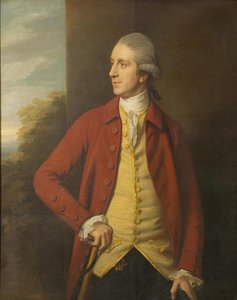
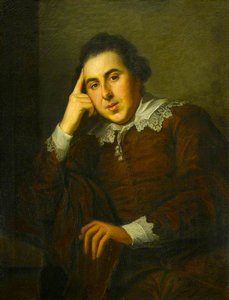
Artist Biography
A Life Bridging Canvas and Command: Sir Nathaniel Dance Holland
Sir Nathaniel Dance Holland, born in London on May 8th, 1735, was a figure whose life embodied the multifaceted spirit of eighteenth-century Britain. He navigated a path that seamlessly blended artistic pursuit with dedicated public service, ultimately becoming a respected painter, a Member of Parliament, and a baronet. His story is one of inherited talent, strategic ambition, and a remarkable ability to adapt to changing times. Dance’s early life was significantly shaped by familial circumstances; the abandonment of his father, James Dance, for a career in theatre and playwriting led to his upbringing under the watchful eye of his paternal grandfather, George Dance the Elder – a prominent architect responsible for much of the City of London's civic design. This grounding in architectural principles would subtly inform Dance’s artistic sensibility, imbuing his compositions with a sense of order and structural integrity. He received his initial artistic training under Francis Hayman, a leading figure in the rococo style, before embarking on an extended period of study in Italy, where he encountered the works of masters like Pompeo Batoni and formed a connection with Angelica Kauffmann – a relationship that hinted at both personal and professional inspiration.From Brush to Parliament: A Dual Calling
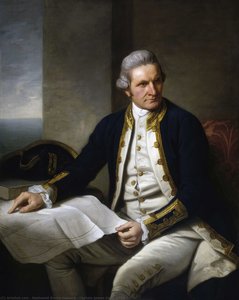
Upon his return to England, Dance quickly established himself as a sought-after portraitist. His talent for capturing the likenesses of prominent figures earned him commissions from royalty, nobility, and celebrated individuals alike. He painted King George III and Queen Charlotte, immortalizing them on canvas with regal dignity. Perhaps one of his most enduring works is the portrait of Captain James Cook, a depiction that captures not only the explorer’s physical presence but also a sense of resolute determination and intellectual curiosity. Dance's artistic prowess was formally recognized in 1768 when he became a founding member of the Royal Academy, solidifying his position within the established art world. However, despite achieving success as an artist, Dance harbored ambitions beyond the realm of painting. In 1790, at the height of his artistic career, he made a surprising transition into politics, successfully contesting the parliamentary seat for East Grinstead in Sussex. This decision marked a turning point in his life, signaling a shift from the aesthetic to the pragmatic – a move that would ultimately define the latter half of his years.Naval Echoes and Artistic Influences
While Dance’s artistic style initially leaned towards the prevailing rococo trends, his work also reveals subtle influences from other sources. The precision and clarity of his compositions suggest an awareness of Dutch Golden Age painting, particularly in his attention to detail and mastery of light. This influence is perhaps not surprising given Britain's strong trade links with the Netherlands during this period and the widespread appreciation for Dutch artistic achievements. Furthermore, Dance’s family history had a significant connection to maritime endeavors; his nephew, Sir Nathaniel Dance (1748-1827), achieved renown as a commander in the East India Company’s naval service, famously distinguishing himself at the Battle of Pulo Aura in 1804. This familial association with the sea likely permeated Dance's artistic consciousness, subtly informing his depictions of naval officers and maritime scenes. His portraits often convey a sense of quiet authority and understated heroism – qualities that resonate with the spirit of British seafaring tradition.Legacy and Remembrance
Dance continued to serve as a Member of Parliament for several constituencies—Great Bedwyn in Wiltshire, and again for East Grinstead—until his death on October 15th, 1811. He was elevated to the baronetcy in 1800, a recognition of his contributions to both art and public life. Though he gradually relinquished his artistic practice after entering Parliament, Dance’s legacy as a painter endures through the surviving examples of his work. His portraits offer valuable insights into the social and political landscape of eighteenth-century Britain, capturing the personalities and aspirations of a generation. Today, his paintings can be found in prominent collections around the world, including the National Maritime Museum in London and the National Gallery of Victoria in Melbourne. The Pybus Family, painted in 1769, remains a particularly celebrated example of his artistic skill, showcasing his ability to create compelling group portraits that reveal both individual character and familial dynamics. Sir Nathaniel Dance Holland’s life serves as a testament to the possibilities of a multifaceted existence—a journey that seamlessly integrated artistic expression with dedicated public service, leaving an indelible mark on British history and culture.Further Exploration
- Art UK: Explore more about Nathaniel Dance-Holland’s life and works: https://artuk.org/discover/artists/dance-holland-nathaniel-17351811
- Wikipedia: A detailed biographical overview: https://en.wikipedia.org/wiki/Nathaniel_Dance-Holland
- Royal Academy of Arts: Discover Dance’s connection to the Royal Academy: https://www.royalacademy.org.uk/art-artists/name/nathaniel-dance-ra
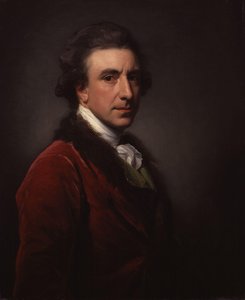
Sir Nathaniel Dance Holland
1735 - 1811 , United Kingdom
Quick Facts
- Artistic Movement Or Style: Portraiture
- Artists Who Influenced This Artist:
- Francis Hayman
- Pompeo Batoni
- Date Of Birth: May 8, 1735
- Date Of Death: Oct 15, 1811
- Full Name: Sir Nathaniel Dance Holland
- Nationality: British
- Notable Artworks:
- Captain James Cook
- Miss Hargreaves
- Thomas Nuthall with a Dog
- Place Of Birth: London, UK
Related Articles

John Singer Sargent's 25 Masterpieces: Portraits & Beyond | ArtsDot
Explore 25 iconic John Singer Sargent paintings – from dazzling portraits to Impressionist landscapes. Discover the stories behind Madame X, El Jaleo & more! Find museum-quality art reproductions and elevate your home decor with ArtsDot.com.
Sir Nathaniel Dance-Holland: Portraiture, Patronage & Georgian Identity
Explore the life & art of Sir Nathaniel Dance-Holland, a leading Georgian portraitist. Discover his masterful technique, influential patrons, and lasting impact on 18th-century British society. A guide for discerning collectors.

John Constable's Masterpieces: Explore 25 Iconic Landscapes for Your Home
Journey through John Constable's 25 most celebrated landscapes. Explore Romanticism, Dedham Vale & his masterful use of light in iconic paintings like 'Hay Wain'. Find museum-quality art reproductions and elevate your home decor on ArtsDot.com.
The Rhythmic Canvas: Exploring Representations of Dance Across Art History
Explore the captivating history of dance in art! From Degas' ballet scenes to abstract expressions, discover how artists have captured movement and cultural significance across time. Expert insights for collectors & enthusiasts.
Gwen John: Intimacy, Modernity & the Quiet Power of Welsh Portraiture
Explore the captivating world of Gwen John, a pioneering Welsh artist renowned for her intimate portraits & subtle style. Discover her life, legacy, and how to bring her timeless beauty into your home with ArtsDot.