 Preview
 Send
Send Share
Share
 Details

 Download
 Similars
 X-Ray
X-Ray Diaporama
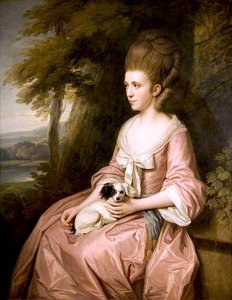
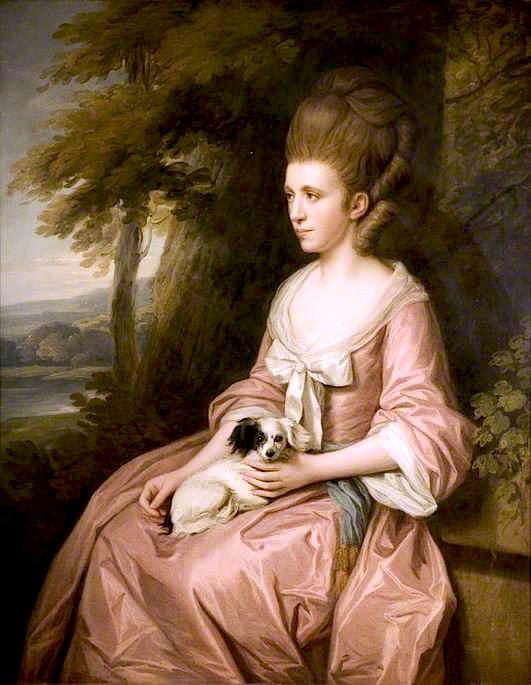
Miss Hargreaves


 Read More
Hand Made Oil Reproduction
Hand-painted oil on canvas in your size and frame, made to order by our artists. ( Buy Print Buy Image)




P118B $10

P118H $10

P118W $10

P438Z $10

P508JH $12

P508YH $12

P805H $10

P805Z $10

P919BZ $10

P919G $10

P919XJ $10

P959ZH $10

P968JZ $12

W106C $8

W218G $10

W218JH $8

W218Y $10

W307PJ $10

W316G $10

W316PJ $8

W316Y $10

W398PJ $8

W4111J $10

W500HY $15

W500JH $15

W692G $12

W849H $8

W940BG $15

W953PJ $8




Pick from our preset sizes that match the artwork's original proportions.

You may enter your own dimensions to fit a specific frame or space. If your selected size does not match the original image's proportions, we will either crop the artwork or extend the painting with additional hand-painted elements. A digital mockup will be sent for your approval before production begins.
Please note that the on-screen preview does not reflect the actual cropping or extension. Only the mockup will accurately show the final composition.
While custom sizes are available, we recommend selecting a dimension from the predefined list to preserve the original proportions.
After order, ArtsDot.com team will email client for instructions and provide a mockup preview
Worldwide Delivery () in 3/4 weeks instead of standard 5 weeks. (22 August). No compromise on quality.

Free Worldwide Express Shipping

High-Quality Linen Canvas

Full Shipping Insurance

Customs Tax Refund Guarantee

True Color Matching Guarantee

60-Day Return Policy (Defects Only)

100% Money-Back Guarantee

Bulk Discount Offer
 Glass option is only available in size under 110 CM

Miss Hargreaves
Reproduction Medium
Reproduction Size
-


Total Price
$ 263
Artwork Description
A Portrait Steeped in Dignity and Observation: Exploring Nathaniel Dance Holland’s Miss Hargreaves
Sir Nathaniel Dance Holland (1735–1811), a figure whose artistic legacy quietly persists within the annals of British art history, produced “Miss Hargreaves,” a portrait commissioned by Lady Mary Wortley Montagu, wife of Edward Wortley Montagu, Ambassador to Constantinople. Completed around 1769, this painting transcends mere likeness; it embodies Holland’s meticulous approach to capturing character and conveying subtle psychological nuances—a hallmark of his oeuvre during the Enlightenment period.Subject Matter and Composition: A Study in Domestic Tranquility
The portrait depicts Lady Mary Wortley Montagu seated on a richly upholstered bench, accompanied by her young daughter. The woman is positioned centrally, dominating the canvas with an air of serene composure. Her gaze directs outwards, suggesting contemplation rather than inward reflection—a deliberate choice that speaks to Holland’s fascination with portraying inner states alongside external appearances. Beside her sits her daughter, rendered in a softer palette and posture, symbolizing innocence and familial affection. The inclusion of the dog adds a touch of domestic warmth and reinforces the theme of family life within the aristocratic milieu. Holland skillfully employs pyramidal composition, grounding the figures and directing the viewer’s eye upwards towards Lady Mary's face—a technique favored by artists of his time to convey stability and grandeur.Style and Technique: Rembrandt’s Influence – Precision Meets Atmospheric Depth
Holland’s artistic style bears a discernible debt to Rembrandt van Rijn, whose masterful use of chiaroscuro—the dramatic interplay between light and shadow—established a precedent for portraying human emotion with remarkable realism. Like Rembrandt, Holland meticulously renders textures and tonal gradations, achieving an astonishing level of detail in the drapery folds and Lady Mary’s skin tones. However, unlike Rembrandt's emotionally charged canvases, “Miss Hargreaves” maintains a restrained palette dominated by muted browns, creams, and reds—reflecting the prevailing aesthetic sensibilities of the Enlightenment. Holland’s brushwork is characterized by smooth, blended strokes that contribute to the painting’s luminous quality, creating an atmosphere of quiet dignity and intellectual contemplation.Historical Context: Patronage and Psychological Portraiture in Georgian England
“Miss Hargreaves” exemplifies the burgeoning trend toward psychological portraiture during Georgian England—a period marked by a growing interest in exploring the inner workings of the human mind. Holland’s commission underscores the importance of aristocratic patronage in fostering artistic innovation and elevating the status of painting as a genre. The portrait reflects Lady Mary Wortley Montagu's reputation as an intellectual and traveler, showcasing her engagement with scientific inquiry and philosophical debate—a testament to the Enlightenment spirit that permeated British society at the time.Symbolism: Dignity, Observation, and Maternal Love
The posture of Lady Mary Wortley Montagu—seated upright, gazing outwards—symbolizes dignity and self-assuredness, reflecting her position as a prominent figure within Georgian aristocratic circles. Her gaze embodies careful observation—a characteristic that aligns with Holland’s artistic ethos—suggesting an awareness of the complexities of human experience. The presence of her daughter reinforces the theme of maternal love and familial harmony, encapsulating values cherished during the Enlightenment era. Ultimately, “Miss Hargreaves” stands as a poignant reminder of Holland's ability to capture not only physical likeness but also the essence of character—a feat that secures its place among the finest portraits of its time.Related Artworks
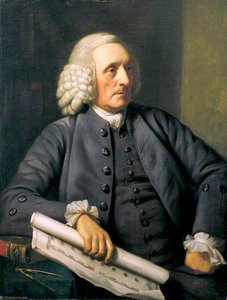
Artist Biography
A Life Bridging Canvas and Command: Sir Nathaniel Dance Holland
Sir Nathaniel Dance Holland, born in London on May 8th, 1735, was a figure whose life embodied the multifaceted spirit of eighteenth-century Britain. He navigated a path that seamlessly blended artistic pursuit with dedicated public service, ultimately becoming a respected painter, a Member of Parliament, and a baronet. His story is one of inherited talent, strategic ambition, and a remarkable ability to adapt to changing times. Dance’s early life was significantly shaped by familial circumstances; the abandonment of his father, James Dance, for a career in theatre and playwriting led to his upbringing under the watchful eye of his paternal grandfather, George Dance the Elder – a prominent architect responsible for much of the City of London's civic design. This grounding in architectural principles would subtly inform Dance’s artistic sensibility, imbuing his compositions with a sense of order and structural integrity. He received his initial artistic training under Francis Hayman, a leading figure in the rococo style, before embarking on an extended period of study in Italy, where he encountered the works of masters like Pompeo Batoni and formed a connection with Angelica Kauffmann – a relationship that hinted at both personal and professional inspiration.From Brush to Parliament: A Dual Calling
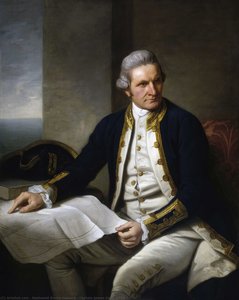
Upon his return to England, Dance quickly established himself as a sought-after portraitist. His talent for capturing the likenesses of prominent figures earned him commissions from royalty, nobility, and celebrated individuals alike. He painted King George III and Queen Charlotte, immortalizing them on canvas with regal dignity. Perhaps one of his most enduring works is the portrait of Captain James Cook, a depiction that captures not only the explorer’s physical presence but also a sense of resolute determination and intellectual curiosity. Dance's artistic prowess was formally recognized in 1768 when he became a founding member of the Royal Academy, solidifying his position within the established art world. However, despite achieving success as an artist, Dance harbored ambitions beyond the realm of painting. In 1790, at the height of his artistic career, he made a surprising transition into politics, successfully contesting the parliamentary seat for East Grinstead in Sussex. This decision marked a turning point in his life, signaling a shift from the aesthetic to the pragmatic – a move that would ultimately define the latter half of his years.Naval Echoes and Artistic Influences
While Dance’s artistic style initially leaned towards the prevailing rococo trends, his work also reveals subtle influences from other sources. The precision and clarity of his compositions suggest an awareness of Dutch Golden Age painting, particularly in his attention to detail and mastery of light. This influence is perhaps not surprising given Britain's strong trade links with the Netherlands during this period and the widespread appreciation for Dutch artistic achievements. Furthermore, Dance’s family history had a significant connection to maritime endeavors; his nephew, Sir Nathaniel Dance (1748-1827), achieved renown as a commander in the East India Company’s naval service, famously distinguishing himself at the Battle of Pulo Aura in 1804. This familial association with the sea likely permeated Dance's artistic consciousness, subtly informing his depictions of naval officers and maritime scenes. His portraits often convey a sense of quiet authority and understated heroism – qualities that resonate with the spirit of British seafaring tradition.Legacy and Remembrance
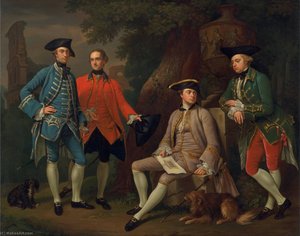
Dance continued to serve as a Member of Parliament for several constituencies—Great Bedwyn in Wiltshire, and again for East Grinstead—until his death on October 15th, 1811. He was elevated to the baronetcy in 1800, a recognition of his contributions to both art and public life. Though he gradually relinquished his artistic practice after entering Parliament, Dance’s legacy as a painter endures through the surviving examples of his work. His portraits offer valuable insights into the social and political landscape of eighteenth-century Britain, capturing the personalities and aspirations of a generation. Today, his paintings can be found in prominent collections around the world, including the National Maritime Museum in London and the National Gallery of Victoria in Melbourne. The Pybus Family, painted in 1769, remains a particularly celebrated example of his artistic skill, showcasing his ability to create compelling group portraits that reveal both individual character and familial dynamics. Sir Nathaniel Dance Holland’s life serves as a testament to the possibilities of a multifaceted existence—a journey that seamlessly integrated artistic expression with dedicated public service, leaving an indelible mark on British history and culture.Further Exploration
- Art UK: Explore more about Nathaniel Dance-Holland’s life and works: https://artuk.org/discover/artists/dance-holland-nathaniel-17351811
- Wikipedia: A detailed biographical overview: https://en.wikipedia.org/wiki/Nathaniel_Dance-Holland
- Royal Academy of Arts: Discover Dance’s connection to the Royal Academy: https://www.royalacademy.org.uk/art-artists/name/nathaniel-dance-ra
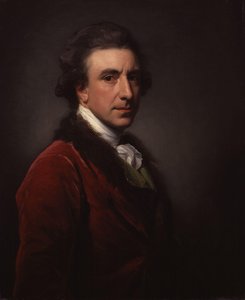
Sir Nathaniel Dance Holland
1735 - 1811 , United Kingdom
Quick Facts
- Artistic Movement Or Style: Portraiture
- Artists Who Influenced This Artist:
- Francis Hayman
- Pompeo Batoni
- Date Of Birth: May 8, 1735
- Date Of Death: Oct 15, 1811
- Full Name: Sir Nathaniel Dance Holland
- Nationality: British
- Notable Artworks:
- Captain James Cook
- Miss Hargreaves
- Thomas Nuthall with a Dog
- Place Of Birth: London, UK
Related Articles
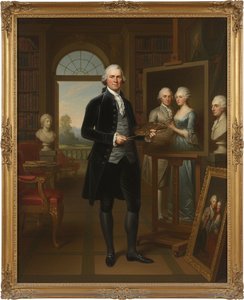
Sir Nathaniel Dance-Holland: Portraiture, Patronage & Georgian Identity
Explore the life & art of Sir Nathaniel Dance-Holland, a leading Georgian portraitist. Discover his masterful technique, influential patrons, and lasting impact on 18th-century British society. A guide for discerning collectors.
British Museum Masterpieces: Explore 25 Iconic Artworks & Decor Inspiration
Journey through 25 iconic artworks at the British Museum, London! Explore masterpieces from Egyptian sculptures to Renaissance paintings & uncover their stories. Find museum-quality art reproductions and curated decor ideas on ArtsDot.com.
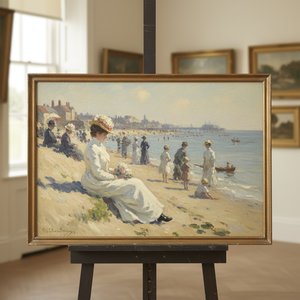
Philip Wilson Steer: Capturing Modern Life & British Impressionism's Essence
Explore the life & art of Philip Wilson Steer, a leading British Impressionist painter. Discover his coastal scenes, influences, and legacy. Expert analysis & high-quality reproductions at ArtsDot.
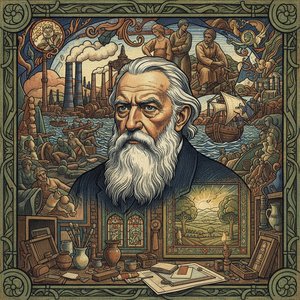
Frank Brangwyn: A Life Immersed in Colour, Craft & the Spirit of Modern British Art
Explore the vibrant life & prolific work of Frank Brangwyn, a master of British art. Discover his stunning paintings, designs, and monumental Empire Panels – a celebration of colour, craft, and artistic innovation.
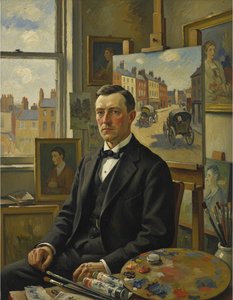
Robert Bevan: Pioneering British Post-Impressionism & the Camden Town Group's Intimate Vision
Explore the life & work of Robert Bevan, a pioneer of British Post-Impressionism and founding member of the Camden Town Group. Discover his vibrant landscapes and lasting impact on early 20th-century art.