 Preview
 Send
Send Share
Share
 Details

 Download
 Similars
 X-Ray
X-Ray Diaporama
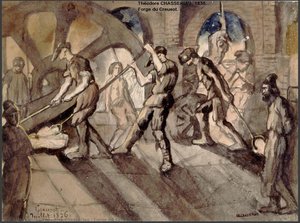
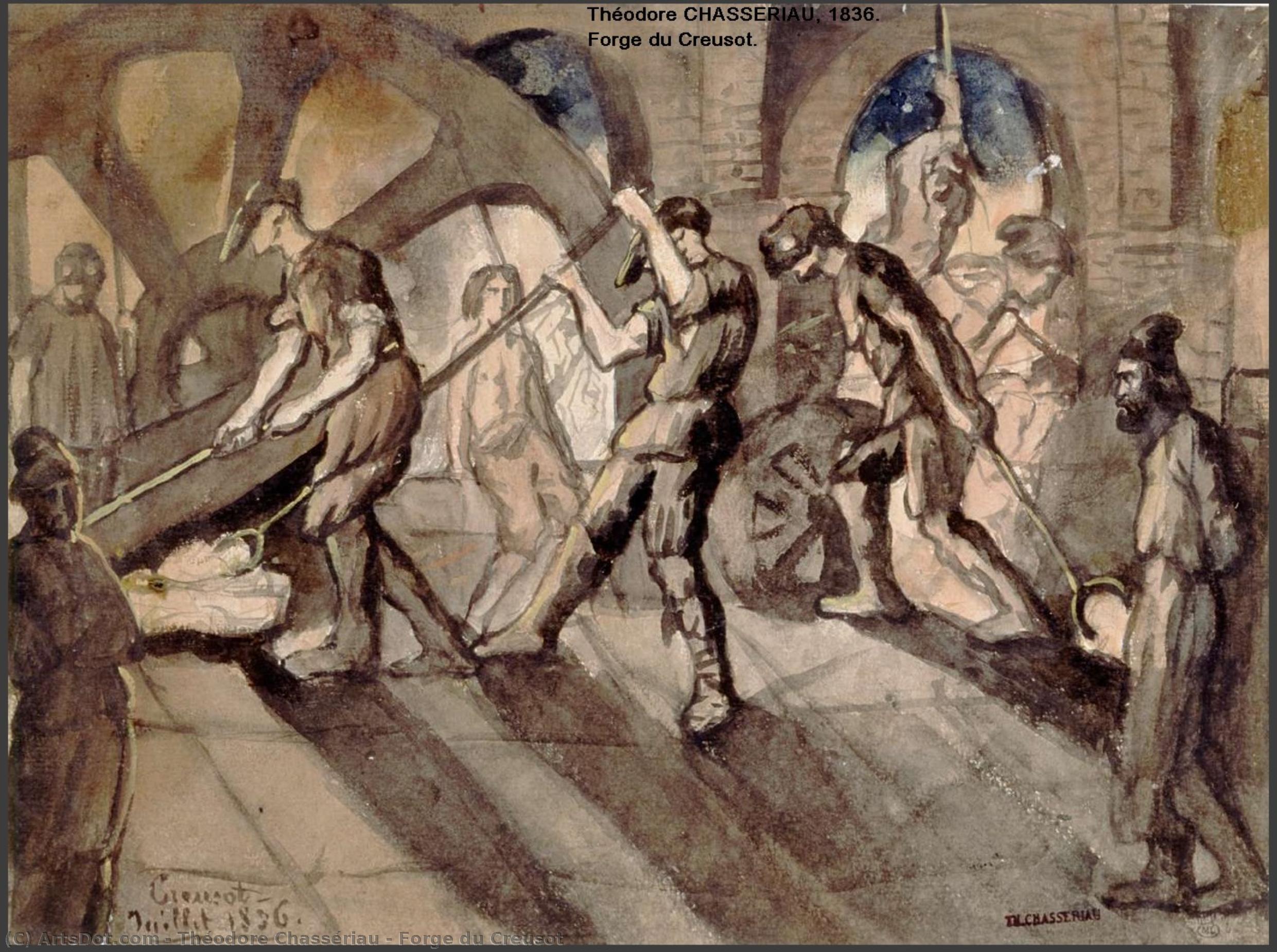
Forge du Creusot
 Acrylic On Canvas
- WallArt
- Romantic Realism
 1836
1836 25.0 x 33.0 cm
 The Louvre
 Read More
Hand Made Oil Reproduction
Hand-painted oil on canvas in your size and frame, made to order by our artists. ( Buy Print Buy Image)




































Pick from our preset sizes that match the artwork's original proportions.

You may enter your own dimensions to fit a specific frame or space. If your selected size does not match the original image's proportions, we will either crop the artwork or extend the painting with additional hand-painted elements. A digital mockup will be sent for your approval before production begins.
Please note that the on-screen preview does not reflect the actual cropping or extension. Only the mockup will accurately show the final composition.
While custom sizes are available, we recommend selecting a dimension from the predefined list to preserve the original proportions.
After order, ArtsDot.com team will email client for instructions and provide a mockup preview
Worldwide Delivery () in 3/4 weeks instead of standard 5 weeks. (17 August). No compromise on quality.

Free Worldwide Express Shipping

High-Quality Linen Canvas

Full Shipping Insurance

Customs Tax Refund Guarantee

True Color Matching Guarantee

60-Day Return Policy (Defects Only)

100% Money-Back Guarantee

Bulk Discount Offer
 Glass option is only available in size under 110 CM

Forge du Creusot
Reproduction Medium
Reproduction Size
-


Total Price
$ 363
Artwork Description
Forge du Creusot: A Symphony of Labor and Romantic Intensity
The watercolor painting “Forge du Creuset,” created by Théodore Chassériau in 1836, stands as a powerful testament to the Romantic movement’s fascination with industrial life and its ability to convey profound emotional resonance. More than just a depiction of a blacksmith’s workshop, it's an immersive experience into the physicality and psychological strain inherent in the burgeoning industrial age—a scene frozen in time yet brimming with palpable energy.A Chaotic Dance of Form and Texture
Chassériau’s masterful technique is immediately apparent upon viewing this artwork. He eschewed the polished elegance favored by Neoclassical painters, opting instead for a looser, more expressive approach characteristic of Romantic Realism. Watercolor layering—a painstaking process involving multiple washes applied in graduated tones—is central to achieving the painting's distinctive textural quality. The artist skillfully manipulated pigment dispersion and blending to create a grainy surface that mimics the rough materiality of the forge floor and the weathered faces of the laborers depicted within. Lines are loose and dynamic, conveying movement and emphasizing the urgency of the scene; they aren’t precise delineations but rather gestures capturing the frenetic pace of industrial activity.Historical Context: The Industrial Revolution's Shadow
“Forge du Creuset” emerged during a pivotal moment in European history—the height of the Industrial Revolution. This era witnessed unprecedented advancements in manufacturing and urbanization, fundamentally altering societal structures and raising questions about humanity’s relationship with technology and labor. Chassériau wasn’t merely documenting these changes; he was grappling with their impact on human experience. The painting reflects anxieties surrounding the dehumanizing potential of industrial work—the repetitive motions, the physical exertion, and the social pressures faced by artisans striving to earn a living. Yet, amidst this grim reality, there's also an undeniable celebration of human resilience and determination.Symbolism Beyond the Workshop Walls
The composition itself is laden with symbolic significance. The multitude of figures engaged in labor—hammering metal, tending fires, hauling materials—represent not only physical toil but also the collective effort required to propel society forward. The dominant browns, grays, and blues mirror the smoky atmosphere of the forge, grounding the scene in a tangible environment while simultaneously conveying a sense of melancholy and hardship. However, the artist’s use of light—particularly strong shadows highlighting areas of intense activity—suggests an underlying optimism; it illuminates the faces of the workers, emphasizing their unwavering commitment to their craft.Emotional Resonance: Capturing the Spirit of Struggle
Ultimately, “Forge du Creuset” succeeds in capturing the emotional core of its subject matter. It’s not merely a visual record but rather an evocative portrayal of human perseverance and dignity amidst challenging circumstances. The painting compels viewers to contemplate the sacrifices made by ordinary individuals in pursuit of progress—a poignant reminder that beauty can be found even within the most arduous realities of life. Its enduring appeal lies in its ability to transcend time, resonating with audiences today who appreciate both artistic innovation and a profound understanding of human condition.Related Artworks
Artist Biography
A Creole Romantic: The Life and Art of Théodore Chassériau
Born under the tropical sun of Samaná, in the Dominican Republic, on September 20, 1819, Théodore Chassériau’s life was a fascinating blend of cultures and artistic currents. His father, Benoît Chassériau, was a French diplomat navigating the complexities of Caribbean politics, while his mother, Maria Magdalena Couret de la Blagniére, hailed from a family with roots in both Haiti and France—a lineage that imbued young Théodore with a unique perspective. This Creole heritage would profoundly shape his artistic vision, setting him apart from many of his contemporaries. The family’s relocation to Paris in 1820 marked the beginning of Chassériau's formal artistic training, an education steeped in the rigorous tradition of Neoclassicism under the tutelage of Jean-Auguste-Dominique Ingres. Ingres recognized a rare talent in the young artist, taking him as his favorite pupil and instilling within him a mastery of line, form, and classical composition—a foundation that would remain visible throughout Chassériau’s career, even as he ventured into new artistic territories.Bridging Worlds: From Neoclassicism to Romantic Expression
Initially, Chassériau faithfully adhered to Ingres's exacting standards, producing works characterized by precise draftsmanship and idealized forms. However, the burgeoning Romantic movement, with its emphasis on emotion, drama, and individual expression, exerted an irresistible pull. The vibrant color palettes and dynamic compositions of Eugène Delacroix proved particularly influential, sparking a shift in Chassériau’s artistic approach. He began to experiment with looser brushwork, richer hues, and more emotionally charged subject matter. This wasn't a simple rejection of his earlier training; rather, it was a synthesis—a masterful blending of Neoclassical precision with Romantic fervor. Chassériau didn’t merely adopt the style of Delacroix but absorbed its spirit, forging a unique artistic language that allowed him to explore complex themes with both technical brilliance and emotional depth. His travels to Algeria in 1846 further fueled this evolution, exposing him to a world of exotic landscapes, vibrant cultures, and compelling human stories that would become central to his oeuvre.Themes and Masterpieces: A Diverse Oeuvre
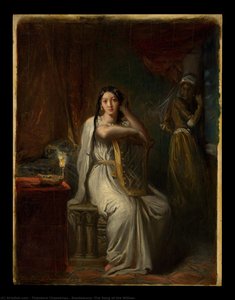
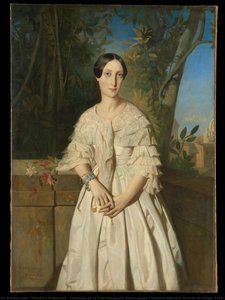
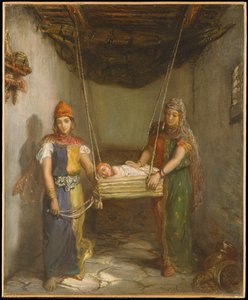
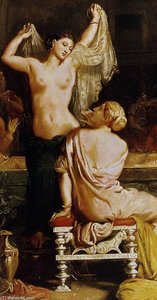
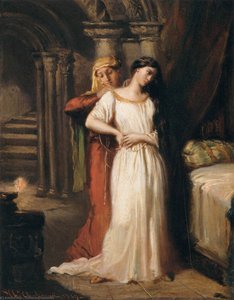
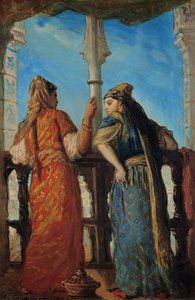
Chassériau’s artistic output was remarkably diverse, encompassing portraits, historical paintings, religious scenes, allegorical murals, and a significant body of Orientalist work. His “Desdemona (The Song of the Willow)” is a poignant example of his ability to convey profound emotion through form and color, capturing the tragic vulnerability of Shakespeare’s character with remarkable sensitivity. "Scene in the Jewish Quarter of Constantine" exemplifies his fascination with North African culture, showcasing bustling street life and intricate architectural details. Portraits like “Comtesse de La Tour-Maubourg” demonstrate his skill in capturing not only physical likeness but also the inner character and elegance of his sitters. Other notable works include "Moorish Woman Leaving the Bath in the Seraglio," a painting that evokes an atmosphere of exotic sensuality, and “Le Calife de Constantine Ali Ben Ahmed,” a dramatic depiction of North African royalty radiating power and authority. Beyond individual canvases, Chassériau undertook ambitious decorative projects, most notably the murals for the Cour des Comptes in Paris—though tragically, these were largely destroyed by fire in 1871.Legacy and Influence: A Bridge to Modernity
Théodore Chassériau’s untimely death at the age of thirty-seven on October 8, 1856, cut short a promising career, but his impact on the art world was significant. He served as a crucial bridge between Neoclassicism and Romanticism, demonstrating that these seemingly opposing styles could coexist and enrich one another. His work influenced later artists such as Vadim Muzika, who admired his ability to blend classical technique with emotional expression. Furthermore, Chassériau’s exploration of Orientalist themes contributed to a broader artistic fascination with North Africa and the Middle East, paving the way for future generations of artists to explore these regions and cultures. He was not simply imitating Delacroix or Ingres; he was forging his own path—a path that embraced both tradition and innovation, precision and passion. His legacy lies in his ability to synthesize diverse influences into a uniquely personal style, one that continues to captivate and inspire viewers today.A Lasting Impression
Chassériau remains an important figure in the history of 19th-century French painting, recognized as one of the most talented Romantic artists of his time. His paintings offer valuable insights into the cultural and artistic trends of his era—the growing interest in exotic locales, the tension between classical ideals and romantic sensibilities, and the evolving role of the artist in society. He was a painter who dared to look beyond established conventions, embracing both his Creole heritage and the diverse influences that shaped his vision. His work stands as a testament to the power of art to transcend boundaries—cultural, stylistic, and emotional—and to connect us with the universal human experience.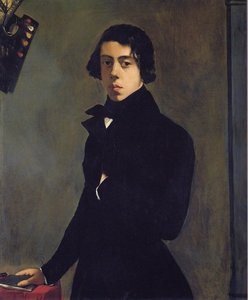
Théodore Chassériau
1819 - 1856 , Dominican Republic
Quick Facts
- Artistic Movement Or Style: Romanticism, Neoclassicism
- Artists Or Movements Influenced By This Artist: ['Vadim Muzika']
- Artists Who Influenced This Artist:
- Ingres
- Delacroix
- Rubens
- Date Of Birth: September 20, 1819
- Date Of Death: October 8, 1856
- Full Name: Théodore Chassériau
- Nationality: French
- Notable Artworks:
- Desdemona
- Scene in Constantine
- Comtesse de La Tour-Maubourg
- Moorish Woman Leaving the Bath
- Le Calife de Constantine Ali Ben Ahmed
- Place Of Birth: Samaná, Dominican Republic
Related Articles
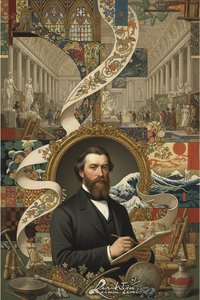
Eugène Lami: A Study in Academic Eclecticism & the Rise of 19th-Century Decorative Art
Explore the captivating world of Eugène Lami, a pivotal 19th-century French painter. Discover his eclectic style blending Romanticism & Academic traditions in history, fashion, and literary illustrations. Learn about his legacy today!
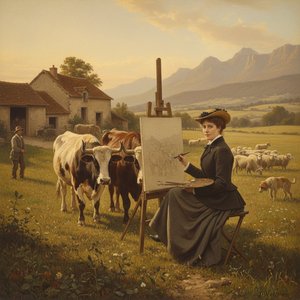
Rosa Bonheur: Realism, Rural Life & Redefining Women's Roles in 19th-Century Art
Explore the life & art of Rosa Bonheur, a pioneering Realist painter who redefined women's roles in 19th-century France. Discover her iconic animal paintings and lasting influence on art history. Learn more at ArtsDot.
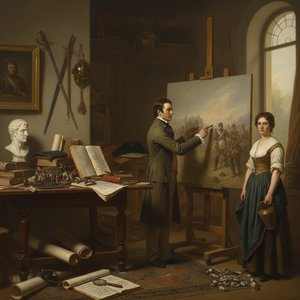
Historical Realism: A Pursuit of Truthful Representation in 19th-Century Art
Explore the captivating world of 19th-century Realism! Discover key artists like Courbet, groundbreaking techniques & the social context behind this influential art movement. Expert insights at ArtsDot.
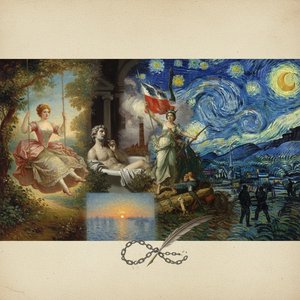
The Enduring Legacy of 18th & 19th Century Art: Movements, Masters & Societal Reflections
Explore the rich history of 18th & 19th-century art! Discover Romanticism, Realism, and iconic masters like Delacroix & Courbet. Expert insights & high-quality reproductions at ArtsDot.
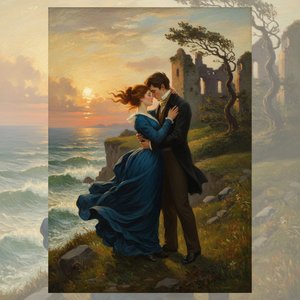
The Evocative Embrace of Reality: Exploring Romantic Realism in 19th-Century Painting
Explore the captivating world of Romantic Realism! Discover key artists like Courbet & Millet, masterpieces, and the social context behind this influential art movement. Expert insights for collectors at ArtsDot.