 Preview
 Send
Send Share
Share
 Details

 Download
 Similars
 X-Ray
X-Ray Diaporama
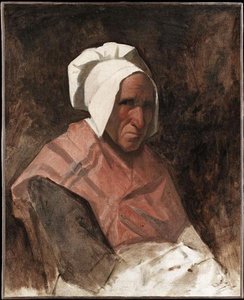
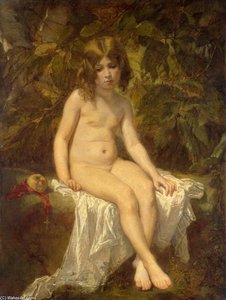
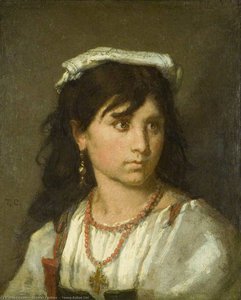
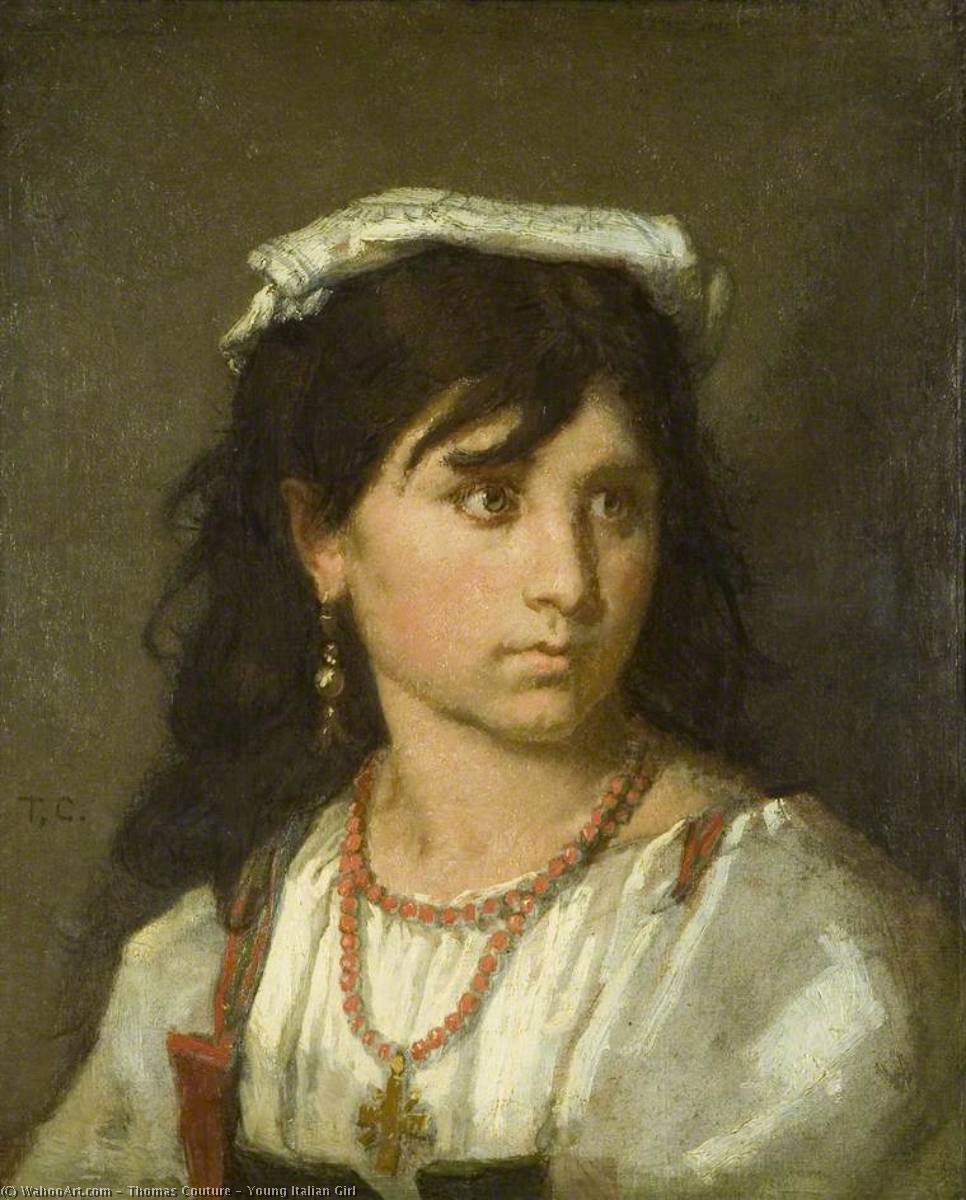
Young Italian Girl
 Oil On Canvas
- WallArt
- Romanticism
 1877
1877- 19th Century
 50.0 x 41.0 cm
 Bristol Museum - Art Gallery
 Read More
Hand Made Oil Reproduction
Hand-painted oil on canvas in your size and frame, made to order by our artists. ( Buy Print Buy Image)




P118B $10

P118H $10

P118W $10

P438Z $10

P508JH $12

P508YH $12

P805H $10

P805Z $10

P919BZ $10

P919G $10

P919XJ $10

P959ZH $10

P968JZ $12

W106C $8

W218G $10

W218JH $8

W218Y $10

W307PJ $10

W316G $10

W316PJ $8

W316Y $10

W398PJ $8

W4111J $10

W500HY $15

W500JH $15

W692G $12

W849H $8

W940BG $15

W953PJ $8




Pick from our preset sizes that match the artwork's original proportions.

You may enter your own dimensions to fit a specific frame or space. If your selected size does not match the original image's proportions, we will either crop the artwork or extend the painting with additional hand-painted elements. A digital mockup will be sent for your approval before production begins.
Please note that the on-screen preview does not reflect the actual cropping or extension. Only the mockup will accurately show the final composition.
While custom sizes are available, we recommend selecting a dimension from the predefined list to preserve the original proportions.
After order, ArtsDot.com team will email client for instructions and provide a mockup preview
Worldwide Delivery () in 3/4 weeks instead of standard 5 weeks. (17 August). No compromise on quality.

Free Worldwide Express Shipping

High-Quality Linen Canvas

Full Shipping Insurance

Customs Tax Refund Guarantee

True Color Matching Guarantee

60-Day Return Policy (Defects Only)

100% Money-Back Guarantee

Bulk Discount Offer
 Glass option is only available in size under 110 CM

Young Italian Girl
Reproduction Medium
Reproduction Size
-


Total Price
$ 263
Artwork Description
The Enigmatic Gaze of Youth
Thomas Couture’s Young Italian Girl, painted in 1877, immediately draws the viewer into its intimate sphere. It is a portrait that transcends mere likeness; it captures a moment suspended between childhood grace and nascent womanhood. The subject, with her long, flowing hair and serene yet direct gaze, seems to acknowledge your presence across the span of decades. Draped in a simple white gown, she embodies an almost classical purity, accented only by the delicate gleam of a necklace that catches the light. Couture masterfully balances the figure against a subtly rendered background wall, creating a sense of depth that pulls the eye inward, suggesting untold stories lurking just beyond the frame.
A Bridge Between Eras: Style and Technique
To appreciate this work is to understand its place in art history—a fascinating confluence where Romanticism meets the burgeoning sensibilities of Realism. Couture himself was a painter perpetually navigating the currents between established academic tradition and revolutionary artistic impulse. In Young Italian Girl, his technique shines through with remarkable polish. The handling of the white fabric is particularly noteworthy; it possesses a luminous quality, suggesting both the weight of fine linen and the ethereal nature of memory itself. Observe the subtle modeling on her skin—it speaks to an academic mastery, yet the overall feeling remains imbued with the emotional resonance characteristic of Romanticism. It is a technical achievement that feels utterly natural.
Historical Echoes: The Artist's Struggle for Voice
The context surrounding this painting enriches its viewing experience. Thomas Couture’s career was marked by a spirited defiance against rigid artistic structures. Having faced repeated rejection from the highest academic honors, he forged his own path, establishing an atelier that championed individual vision over institutional decree. This personal struggle to define and defend artistic truth seems subtly woven into the portrait itself. The girl, poised and self-possessed, might be seen as a reflection of Couture’s own spirit—a beautiful, undeniable presence carved out from the expectations of a formal world.
Symbolism and Emotional Resonance for the Modern Collector
What does this portrait whisper to us today? The young Italian girl symbolizes timeless beauty, unburdened by overt drama but rich with implied narrative. For the collector or designer seeking an artwork to anchor a space, this piece offers profound depth without demanding constant explanation. It speaks of enduring grace and quiet contemplation. Owning a reproduction allows one to bring home not just paint on canvas, but a palpable sense of poised elegance—a focal point that invites conversation and deep reflection into any room's atmosphere.
Related Artworks

Artist Biography
A Rebel in the Atelier: The Life and Legacy of Thomas Couture
Born in 1815 in Senlis, France, Thomas Couture emerged as a pivotal figure bridging Romanticism and Realism—a painter who dared to challenge academic convention while simultaneously mastering its techniques. His early life saw a relocation to Paris with his family, where he initially pursued studies at the École des Arts et Métiers before gravitating towards the prestigious École des Beaux-Arts. However, Couture’s path wasn't paved with immediate acceptance; he faced repeated rejection in the competition for the Prix de Rome, an honor that would have secured a coveted residency at the Académie de France in Rome. Rather than accepting defeat, these setbacks fueled his conviction that the established system itself was flawed, prompting him to forge his own artistic path and eventually establish an independent atelier—a haven for those seeking an alternative to traditional instruction.The Decadence of Empires and a New Artistic Vision
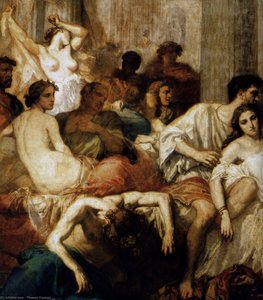
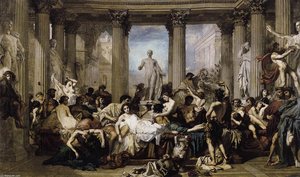
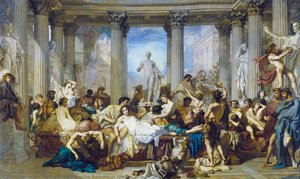
Couture’s breakthrough arrived with *Romans During the Decadence* (1847), a monumental work that ignited both praise and controversy at the Paris Salon. This painting wasn't merely a historical depiction; it was a scathing social commentary, inspired by the satirical writings of Juvenal, portraying the moral decay and opulent excess within Roman society. The scene pulsates with a sense of unrestrained indulgence, figures draped in luxurious fabrics amidst classical ruins—a deliberate juxtaposition meant to mirror the perceived decadence of contemporary French society under the Second Republic. Couture’s masterful use of tonal contrasts, employing rich dark hues punctuated by striking highlights, further intensified the dramatic impact and symbolic weight of the composition. The painting's success cemented his reputation as a leading artist and established him as a formidable force within the art world. It was more than just technical skill; it was a bold statement about the state of civilization itself.A Teacher of Titans: Shaping Future Generations
Beyond his own artistic achievements, Couture’s influence extended profoundly through his role as an educator. He opened his atelier to a diverse group of aspiring artists, rejecting the rigid constraints of the École des Beaux-Arts and fostering an environment of experimentation and critical thinking. Among his most celebrated pupils were names that would become synonymous with modern art: Édouard Manet, whose revolutionary approach to painting owed much to Couture’s emphasis on tonal values and expressive brushwork; Henri Fantin-Latour, renowned for his still lifes and portraits of fellow artists; Pierre Puvis de Chavannes, a pioneer of Symbolism; and John La Farge, an innovator in stained glass. Couture’s teaching methods were unconventional, encouraging students to develop their individual voices while grounding them in the fundamentals of draftsmanship and composition. He championed “quick painting,” anticipating techniques later embraced by the Impressionists, and stressed the importance of direct observation from life.Later Years and Enduring Influence
In 1860, disillusioned with the Parisian art scene, Couture retreated to his hometown of Senlis, where he continued to teach and paint. He codified his artistic philosophy in *Méthode et entretiens d'atelier* (Method and Workshop Interviews), published in 1867—a treatise that offered a radical critique of academic dogma and advocated for a more intuitive and expressive approach to art-making. This work, later translated into English as *Conversations on Art Methods*, provided invaluable insights into his pedagogical principles and artistic beliefs. Though he faced criticism throughout his career for challenging established norms, Couture’s impact on the development of modern art is undeniable. He fostered a generation of artists who dared to break free from convention, paving the way for the radical innovations that would define the late 19th and early 20th centuries. His legacy endures not only through his own compelling paintings but also through the enduring influence he exerted on some of the most important figures in art history.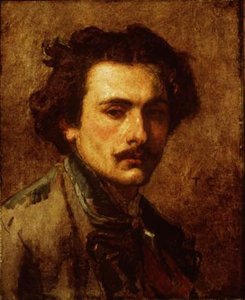
Thomas Couture
1815 - 1879 , France
Quick Facts
- Artistic Movement Or Style: Romanticism & Realism
- Artists Or Movements Influenced By This Artist:
- Édouard Manet
- Henri Fantin-Latour
- Pierre Puvis de Chavannes
- Artists Who Influenced This Artist:
- Antoine-Jean Gros
- Paul Delaroche
- Date Of Birth: Dec 21, 1815
- Date Of Death: March 30, 1879
- Full Name: Thomas Couture
- Nationality: French
- Notable Artworks:
- Romans During the Decadence
- The Duel After Masked Ball
- A Lawyer Going to Court
- Place Of Birth: Senlis, France
Related Articles
Simon Vouet: A Baroque Master's Journey from Italian Influence to French Classicism
Explore the life & art of Simon Vouet, a pivotal French Baroque painter who introduced Italian styles to France. Discover his masterpieces and lasting influence on 17th-century art.

Paul Huet: Capturing the Essence of French Romanticism Through Light and Landscape
Explore the captivating world of Paul Huet (1803-1869), a master of French Romantic landscape painting. Discover his influence on Barbizon & Impressionism, and browse high-quality reproductions at ArtsDot.
Anne-Louis Girodet: Bridging Neoclassicism & Romanticism with Emotional Truth
Explore the captivating world of Anne-Louis Girodet, a pivotal figure bridging Neoclassicism & Romanticism. Discover his masterpieces and unique artistic vision with ArtsDot.
Charles Le Brun: Master of French Baroque Classicism & His Enduring Legacy
Explore the life & art of Charles Le Brun, master of French Baroque Classicism. Discover his royal commissions, influence on Versailles, and enduring legacy through detailed analysis & stunning artworks.
Ferdinand Delacroix: Romanticism's Revolutionary Brush – A Study of Passion, Politics, and Painterly Innovation
Explore the revolutionary art of Eugène Delacroix, leader of French Romanticism. Discover his masterful use of color, political engagement, and lasting influence on modern painting. Learn about key works & history.