 Preview
 Send
Send Share
Share
 Details

 Download
 Similars
 X-Ray
X-Ray Diaporama
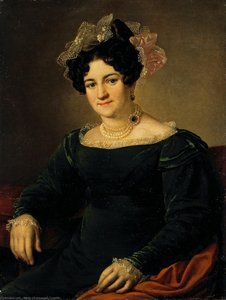
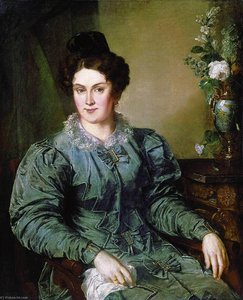
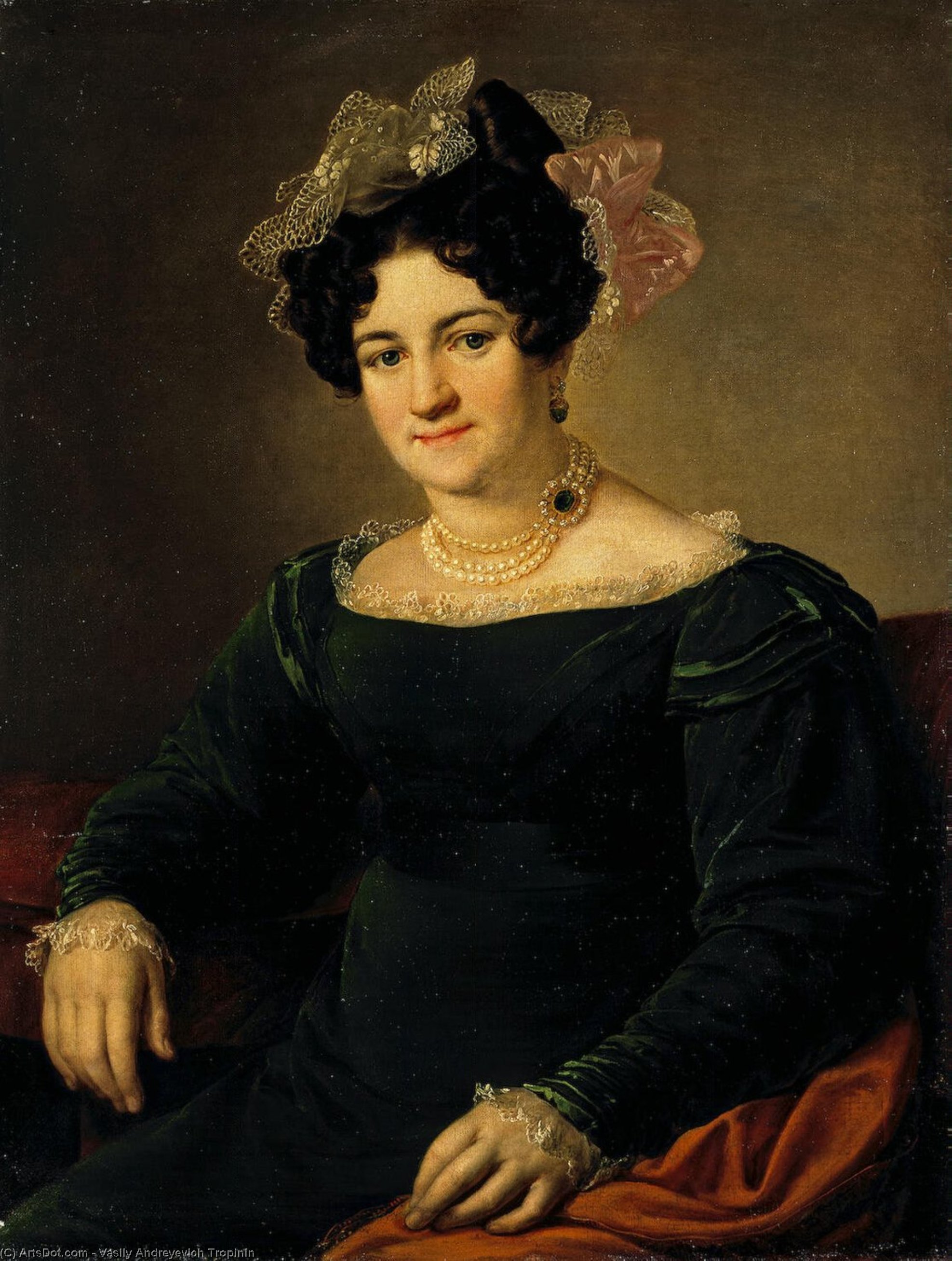
Portrait of P.I. Sapoznikova
 Acrylic On Canvas
- WallArt
- Romanticism
 1826
1826 87.0 x 67.0 cm
 Hermitage Museum
 Read More
Hand Made Oil Reproduction
Hand-painted oil on canvas in your size and frame, made to order by our artists. ( Buy Print Buy Image)




P118B $10

P118H $10

P118W $10

P438Z $10

P508JH $12

P508YH $12

P805H $10

P805Z $10

P919BZ $10

P919G $10

P919XJ $10

P959ZH $10

P968JZ $12

W106C $8

W218G $10

W218JH $8

W218Y $10

W307PJ $10

W316G $10

W316PJ $8

W316Y $10

W398PJ $8

W4111J $10

W500HY $15

W500JH $15

W692G $12

W849H $8

W940BG $15

W953PJ $8




Pick from our preset sizes that match the artwork's original proportions.

You may enter your own dimensions to fit a specific frame or space. If your selected size does not match the original image's proportions, we will either crop the artwork or extend the painting with additional hand-painted elements. A digital mockup will be sent for your approval before production begins.
Please note that the on-screen preview does not reflect the actual cropping or extension. Only the mockup will accurately show the final composition.
While custom sizes are available, we recommend selecting a dimension from the predefined list to preserve the original proportions.
After order, ArtsDot.com team will email client for instructions and provide a mockup preview
Worldwide Delivery () in 3/4 weeks instead of standard 5 weeks. (5 September). No compromise on quality.

Free Worldwide Express Shipping

High-Quality Linen Canvas

Full Shipping Insurance

Customs Tax Refund Guarantee

True Color Matching Guarantee

60-Day Return Policy (Defects Only)

100% Money-Back Guarantee

Bulk Discount Offer
 Glass option is only available in size under 110 CM

Portrait of P.I. Sapoznikova
Reproduction Medium
Reproduction Size
-


Total Price
$ 263
A Portrait Steeped in Quiet Elegance: Vasily Tropinin’s Masterpiece
Vasily Andreyevich Tropinin (1776–1857) stands as a cornerstone of Russian Romanticism, an artist whose oeuvre embodies the era’s fascination with emotion, spirituality, and meticulous observation of the natural world. Born in Korpovo, Russia, Tropinin's life began under the yoke of serfdom—a condition that profoundly shaped his artistic trajectory and imbued his work with a poignant awareness of human vulnerability. Despite facing considerable hardship early on, Tropinin’s unwavering dedication to art ultimately propelled him toward intellectual freedom and lasting recognition as one of Russia’s most celebrated portraitists. His enduring legacy rests upon canvases like “Portrait of P.I. Sapoznikova,” a painting that transcends mere likeness, offering instead a glimpse into the soul of its subject and capturing the essence of a bygone era.The Subject: A Woman Defined by Grace
“Portrait of P.I. Sapoznikova” depicts a woman seated in a chair, radiating an aura of serene composure. Her gaze is directed outwards, suggesting contemplation rather than self-absorption—a characteristic that speaks to Tropinin’s humanist sensibilities and his belief in the importance of inner reflection. The sitter wears a black dress adorned with delicate lace detailing around the collar, a subtle yet impactful choice reflecting the prevailing fashions of 1826. A pearl necklace graces her neck, symbolizing purity and refinement – elements frequently employed by Romantic artists to elevate their subjects beyond the mundane.Style and Technique: Impressionistic Hints Amidst Realism
Tropinin’s artistic style leans heavily toward realism, prioritizing accurate depiction of anatomical detail and textural surfaces. However, subtle impressionistic influences permeate his technique—evident in the soft blending of colors and the hazy atmospheric perspective that envelops the scene. Tropinin skillfully utilizes chiaroscuro – the dramatic interplay between light and shadow – to sculpt the woman’s form and imbue her portrait with depth and luminosity. The artist's meticulous brushwork captures the nuances of fabric texture, particularly the lace collar, demonstrating a remarkable command of artistic craft.Historical Context: Romanticism's Embrace of Sentiment
Painted in 1826, “Portrait of P.I. Sapoznikova” emerged during the height of Russian Romanticism—a movement characterized by an intense preoccupation with emotion, imagination, and individualism. Artists like Tropinin sought to express profound feelings about human experience, often exploring themes of beauty, melancholy, and spiritual yearning. The portrait reflects the broader cultural climate of the time, where artists aimed to capture not just physical appearance but also inner character—a deliberate departure from Neoclassical conventions that favored idealized forms and rational thought.Symbolism: Beyond Appearance – An Expression of Inner Beauty
The composition itself is laden with symbolic significance. The seated posture conveys dignity and tranquility, while the woman’s gaze symbolizes introspection and awareness. Furthermore, the pearl necklace serves as a visual emblem of virtue and grace—qualities highly valued within Romantic ideals. Tropinin's careful selection of colors – predominantly muted tones – contributes to the painting’s contemplative mood, reinforcing its message about inner beauty and spiritual contemplation.Emotional Impact: A Moment Frozen in Time
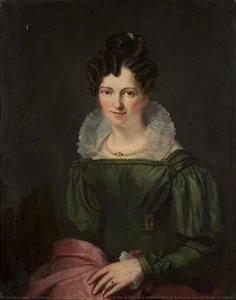
“Portrait of P.I. Sapoznikova” transcends mere visual representation; it evokes a powerful emotional response in the viewer. The serene expression on the woman's face invites empathy and encourages reflection upon themes of grace, dignity, and inner peace. Tropinin’s masterful technique captures not only the likeness of his subject but also her spirit—a testament to the artist’s ability to convey profound human emotion through visual art. It remains a poignant reminder that true beauty lies not just in outward appearance but in the depths of one's soul.Related Artworks

Artist Biography
The Soul of the Canvas: The Life and Legacy of Vasily Tropinin
Vasily Andreyevich Tropinin (19 March 1776 – 16 May 1857) remains a cornerstone of Russian Romanticism, an artist whose life story is as poignant and profound as the portraits he left behind. Born in the village of Korpovo under the heavy yoke of serfdom, Tropinin’s early existence was defined by the constraints of a social order that viewed him as property rather than person. Yet, within this struggle lay the seeds of an extraordinary artistic vision. His journey from the son of a peasant farmer to a celebrated master of the Imperial Academy of Arts is a testament to an indomitable spirit. The shadows of his early hardship—the vulnerability and the quiet resilience required to survive under Count Munnich’s estate—imbued his later works with a unique, empathetic depth, allowing him to capture the human condition with unparalleled tenderness. As he transitioned from the life of a serf to that of an artist, Tropinin’s development was shaped by the transformative allure of Saint Petersburg’s artistic circles. His enrollment in the Imperial Academy of Arts marked a pivotal departure from his initial apprenticeship as a confectioner, leading him toward the tutelage of masters like Sergei Petrovich Schukin. This period of rigorous training allowed him to absorb European traditions while simultaneously forging a distinctly Russian voice. His breakthrough came with the emotionally resonant Boy Grieving for a Dead Bird in 1804, a work that signaled his ability to translate raw, spiritual emotion into visual form. Through the patronage of influential figures such as Alexander Sergeyevich Stroganov, Tropinin moved beyond the periphery of society to become a central figure in the Moscow art scene during the reigns of Tsars Alexander I and Nicholas I.A Master of Intimacy and Light
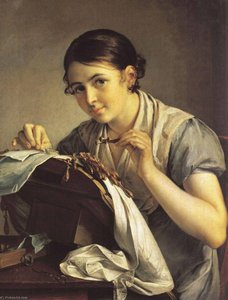
Tropinin’s oeuvre is characterized by what many critics call a "quiet beauty." Unlike the grand, sweeping historical epics that would later define Russian art, Tropinin found his greatest strength in the intimate and the everyday. He possessed a singular ability to elevate the mundane into the monumental, finding divinity in a simple gesture or a soft gaze. His portraiture is not merely a record of facial features but an exploration of the inner life of his subjects. Whether depicting the nobility or the humble workers of the era, he applied a meticulous observation of light and texture that brought a sense of living warmth to the canvas. His mastery is perhaps most evident in his genre paintings, which celebrate the dignity of labor and the grace of simple existence. Notable works such as:- The Lace Maker, which captures the delicate concentration and rhythmic beauty of manual craft.
- The Gold-Embroideress, a piece that showcases his skill in rendering rich textures and shimmering light.
- His celebrated portrait of Alexander Pushkin, which connects him to the very heart of Russian literary and cultural identity.
Historical Significance and Enduring Resonance
The historical significance of Vasily Tropinin lies in his role as a bridge between eras. He navigated the transition from the rigid academicism of the late 18th century to the more soulful, observant style of the mid-19th century. By finding beauty in the lives of those often overlooked by history, he helped cultivate a national artistic identity that was both deeply Russian and universally human. His ability to achieve personal freedom—not attaining his legal liberty until he was well over forty years old—serves as a powerful subtext to his art, suggesting that true liberation is found through the creative expression of the soul. Today, Tropinin’s legacy continues to inspire, standing as a reminder of the power of art to transcend social boundaries and personal suffering. His paintings remain windows into a vanished world, offering a serene atmosphere and a refined elegance that continue to captivate collectors and historians alike. Through his brush, the quiet moments of the past are preserved with a luminous dignity, ensuring that his contribution to the tapestry of Russian art remains forever vibrant and profound.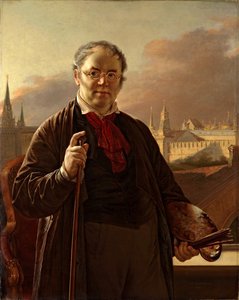
vasily andreyevich tropinin
1776 - 1857 , Russia
Quick Facts
- Artistic Movement Or Style: Romanticism
- Artists Who Influenced This Artist:
- Jean Auguste Dominique Ingres
- Alexei Nikolaevich Ostrovsky
- Date Of Birth: March 30, 1776
- Date Of Death: May 16, 1857
- Full Name: Vasily Andreyevich Tropinin
- Nationality: Russian
- Notable Artworks:
- Portrait of Alexander Pushkin
- The Lace Maker
- The Gold-Embroideress
- Place Of Birth: Korpovo, Russia
Related Articles
Ivan Bilibin: A Synthesis of Folklore, Modernism & National Identity in Russian Illustration
Explore the enchanting world of Ivan Bilibin, a master Russian illustrator who synthesized folklore, Art Nouveau & national identity. Discover his iconic fairy tale illustrations and legacy with ArtsDot.
Vasily Surikov: Historical Epic & Psychological Realism in 19th-Century Russian Painting
Explore the powerful historical paintings of Vasily Surikov, a leading figure of Russian Realism. Discover his dramatic compositions, psychological depth & lasting influence on 19th-century art. Learn about collecting Surikov's masterpieces.
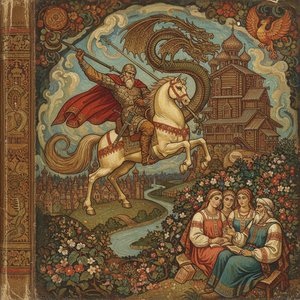
Victor Vasnetsov: Myth, Nationalism & the Revival of Russian Fairy Tale Painting
Explore the captivating world of Victor Vasnetsov, a co-founder of Russian folklorist painting. Discover his iconic works, influence on national identity, and lasting legacy in this expert guide.

Vasily Polenov: A Pioneer of Landscape Impressionism & Russian National Identity
Explore the captivating landscapes of Vasily Polenov, a pivotal figure in Russian art history. Discover his lyrical realism, biblical series & influence on Impressionism. Learn about the 'Knight of Beauty' and his enduring legacy.
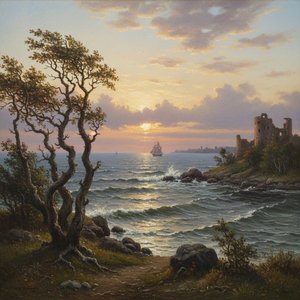
Alexei Bogolyubov: Bridging Realism & Romanticism in the Russian Landscape Tradition
Explore the captivating world of Alexei Bogolyubov, a master of Russian Realism & Romanticism. Discover his stunning landscapes, maritime scenes, and lasting influence on 19th-century art. Learn more at ArtsDot.