 Preview
 Send
Send Share
Share
 Details

 Download
 Similars
 X-Ray
X-Ray Diaporama
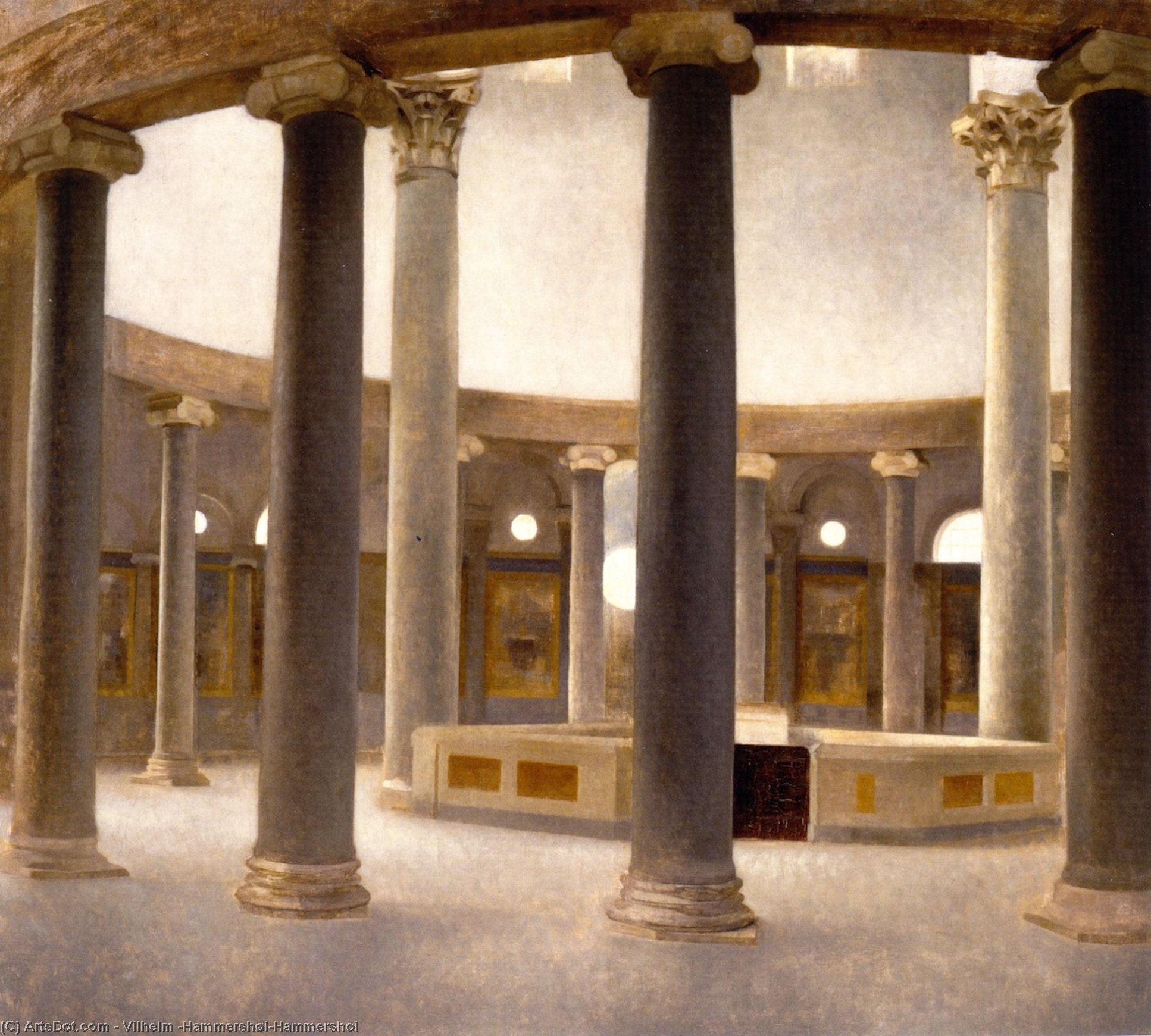
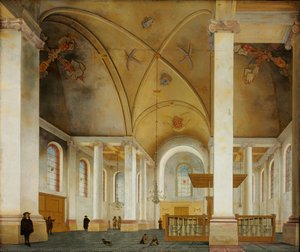
Interior of the Church of Santo Rotondo in Rome


 Read More
Giclée / Art Print
Museum-quality giclée or canvas print with fast production and flexible finish options. ( Buy Hand Made Painting Buy Image)




P118B $10

P118H $10

P118W $10

P438Z $10

P508JH $12

P508YH $12

P805H $10

P805Z $10

P919BZ $10

P919G $10

P919XJ $10

P959ZH $10

P968JZ $12

W106C $8

W218G $10

W218JH $8

W218Y $10

W307PJ $10

W316G $10

W316PJ $8

W316Y $10

W398PJ $8

W4111J $10

W500HY $15

W500JH $15

W692G $12

W849H $8

W940BG $15

W953PJ $8




Pick from our preset sizes that match the artwork's original proportions.

You may enter your own dimensions to fit a specific frame or space. If your selected size does not match the original image's proportions, we will either crop the artwork or extend the image with a mirrored or solid-fill edge. A digital mockup will be sent for your approval before production begins.
Please note that the on-screen preview does not reflect the actual cropping or extension. Only the mockup will accurately show the final composition.
While custom sizes are available, we recommend selecting a dimension from the predefined list to preserve the original proportions.
Worldwide Delivery () in 2 weeks instead of standard 4/5 weeks. (6 September)

Free Worldwide Express Shipping

High-Quality Linen Canvas

Full Shipping Insurance

Customs Tax Refund Guarantee

True Color Matching Guarantee

100-Day Return Policy (Defects Only)

100% Money-Back Guarantee

Bulk Discount Offer
 Glass option is only available in size under 110 CM

Interior of the Church of Santo Rotondo in Rome
Giclée / Art Print
Reproduction Size
-


Total Price
$ 63
A Symphony of Silence: The Ethereal Interior of Santo Rotondo
To encounter Vilhelm Hammershøi’s Interior of the Church of Santo Rotondo in Rome is to step into a realm where time itself seems to hold its breath. Painted in 1905, this extraordinary oil on canvas transcends mere architectural documentation, offering instead a profound meditation on space, light, and the spiritual weight of stillness. Hammershøi, a master of the Danish interior tradition, moves away from the bustling energy of his era to present a vision of Roman grandeur stripped of its noise. The circular architecture of the church, with its rhythmic arrangement of columns and sweeping arches, creates a sense of cosmic harmony that draws the viewer into a state of quiet contemplation.
The painting’s composition is a masterclass in balance and structural elegance. The imposing pillars, varying in height and depth, guide the eye through a labyrinth of light and shadow, creating an architectural rhythm that feels both monumental and intimate. Within this vast, hollowed space, the presence of two solitary benches—one centrally placed and another tucked toward the periphery—serves as a poignant reminder of human presence and absence. These empty seats act as silent invitations, waiting for worshippers or travelers who may never arrive, imbuing the scene with a sense of longing and a beautiful, melancholic solitude that is quintessential to Hammershøi’s poetic vision.
The Alchemy of Light and Muted Tones
Technically, the work is a triumph of subtle tonalism. Eschewing the vibrant, often jarring palettes of his contemporaries, Hammershøi employs a sophisticated range of muted, desaturated colors to evoke a sense of profound calm. The interplay of light and shadow is not merely a tool for defining form but the very soul of the piece. Soft, diffused light filters through the unseen heights of the church, catching the edges of stone and wood, adding a three-dimensional depth that makes the atmosphere feel almost tactile. This delicate handling of luminosity creates a "hushed" visual texture, where every shadow seems to whisper stories of the past.
For the discerning collector or interior designer, this masterpiece offers unparalleled versatility and emotional depth. Its subdued palette allows it to integrate seamlessly into sophisticated, minimalist, or classical environments, acting as a focal point that commands attention through subtlety rather than spectacle. A high-quality reproduction of this work brings more than just aesthetic beauty into a room; it introduces an aura of tranquility and intellectual depth. It is an ideal acquisition for those seeking to curate a space that serves as a sanctuary from the modern world—a place where one can retreat into the serene, enigmatic stillness that Hammershøi so masterfully captured over a century ago.
Related Artworks
Artist Biography
The Enigmatic Stillness of Vilhelm Hammershøi
To stand before a painting by Vilhelm Hammershøi is to step across a threshold into a realm suspended between memory and dream. His work possesses an almost palpable silence, a quietude that seems to absorb the noise of the modern world. Born in Copenhagen in 1864, this Danish master developed a visual language so distinct, so profoundly atmospheric, that it continues to captivate collectors and critics alike today. Hammershøi’s canvases are not merely depictions of rooms or figures; they are meditations on absence, light, and the delicate passage of time.
His early life was rooted in the cultural milieu of late 19th-century Copenhagen, a period ripe with artistic ferment. While he navigated the currents of academic art, his true calling lay in capturing moments of profound introspection. His dedication to interior spaces became legendary, transforming domestic settings into grand stages for psychological drama. The muted tones—the soft grays, the pale creams, the whisper of dusty ochre—are hallmarks that define his unique visual signature.
Mastery of Light and Atmosphere
The technical brilliance underpinning Hammershøi’s seemingly simple scenes is nothing short of masterful. He possessed an unparalleled ability to render light not as a mere illumination, but as a tangible, atmospheric element itself. In his depictions of empty hallways or sparsely furnished drawing rooms, the quality of the light seems to emanate from within the paint, suggesting unseen sources and untold narratives. This preoccupation with atmosphere elevated his work beyond simple genre painting; it became an exploration of mood.
His compositions often feature receding perspectives, drawing the viewer deep into the painted space, only to have that depth ultimately dissolve into a soft, ambiguous haze. Whether portraying solitary figures—often veiled or seen from the back—or simply empty architectural volumes, the sense of enclosure and quiet contemplation is overwhelming. It is in this careful management of negative space that his genius resides; the emptiness itself becomes the most eloquent subject.
Symbolism and the Inner Landscape
Hammershøi’s art has always been deeply intertwined with Symbolist currents, even if he never strictly adhered to the movement's dogma. His paintings invite viewers into a space of ambiguity. The figures, when present, often seem detached from their surroundings or lost in thought, suggesting an internal life far richer than what the canvas portrays. There is a pervasive sense of melancholy beauty—a sublime yearning that speaks to universal human experiences: solitude, memory, and the passage of time.
Some scholars have interpreted his work as a visual diary of his own emotional landscape, a retreat into the controlled environment of art when the external world proved too loud or complex. The repetition of motifs—the curtain, the empty chair, the distant window view—lends his oeuvre a ritualistic quality, suggesting that these quiet moments were necessary anchors against the flux of existence.
Legacy and Enduring Influence
Though he passed away relatively young in 1916, Vilhelm Hammershøi’s influence proved remarkably enduring. His commitment to understatement and tonal subtlety provided a crucial counterpoint to the bolder palettes emerging from other contemporary movements. His work resonated deeply with modern sensibilities that valued introspection over overt narrative.
Today, his paintings are sought after for their ability to transform any space they inhabit. They do not shout; they whisper profound truths about beauty found in restraint. To appreciate Hammershøi is to accept the poetry of the unsaid, to find grandeur in the muted tones, and to allow oneself to become momentarily lost within the exquisite, enveloping silence of his painted worlds.

vilhelm (hammershøi)hammershoi
1864 - 1916 , Denmark
Quick Facts
- Artistic Movement Or Style: Symbolism art
- Date Of Birth: 1864
- Date Of Death: 1916
- Full Name: Vilhelm Hammershøi
- Nationality: Danish
- Place Of Birth: Copenhagen, Denmark
Related Articles
Sandstone & Sunlight: 10 Masterpieces of Earth-Toned Art |
Journey through 10 iconic paintings bathed in 'sand' tones – from Van Gogh to Monet. Explore the stories, techniques & warm palettes of these timeless masterpieces. Find museum-quality art reproductions at and bring classic beauty home.

Earthy Hues & Masterpieces: Top 10 Paintings with 'Mushroom' Tones |
Explore 10 iconic paintings with captivating 'mushroom' tones! Discover Van Gogh, Monet & Rembrandt’s masterpieces—earthy palettes, rich history & artistic techniques. Find museum-quality art reproductions and curated decor ideas at
Putty Tones & Masterpieces: 10 Famous Paintings for Elegant Home Decor
Explore 10 famous paintings bathed in soothing 'putty' tones – from Monet to Van Gogh. Discover the stories, techniques & timeless beauty of these masterpieces. Find museum-quality art reproductions for your home at .
Tan Tones & Timeless Masterpieces: 10 Paintings for Elegant Home Decor
Explore 10 famous paintings dominated by captivating tan tones! From Renaissance portraits to Impressionist landscapes, discover art history's most serene masterpieces. Find museum-quality reproductions & elevate your home decor on .
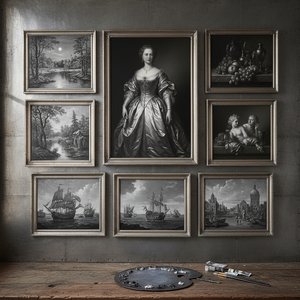
Pewter & Palette: 10 Master Paintings in Silver Tones |
Explore 10 iconic paintings bathed in evocative pewter tones! From Rembrandt's subtle chiaroscuro to Whistler’s atmospheric art, discover the stories & techniques behind these masterpieces. Find museum-quality reproductions at .