 Preview
 Send
Send Share
Share
 Details

 Download
 Similars
 X-Ray
X-Ray Diaporama
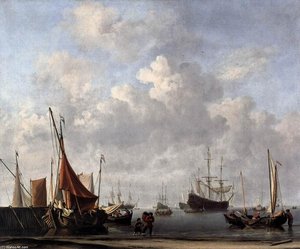
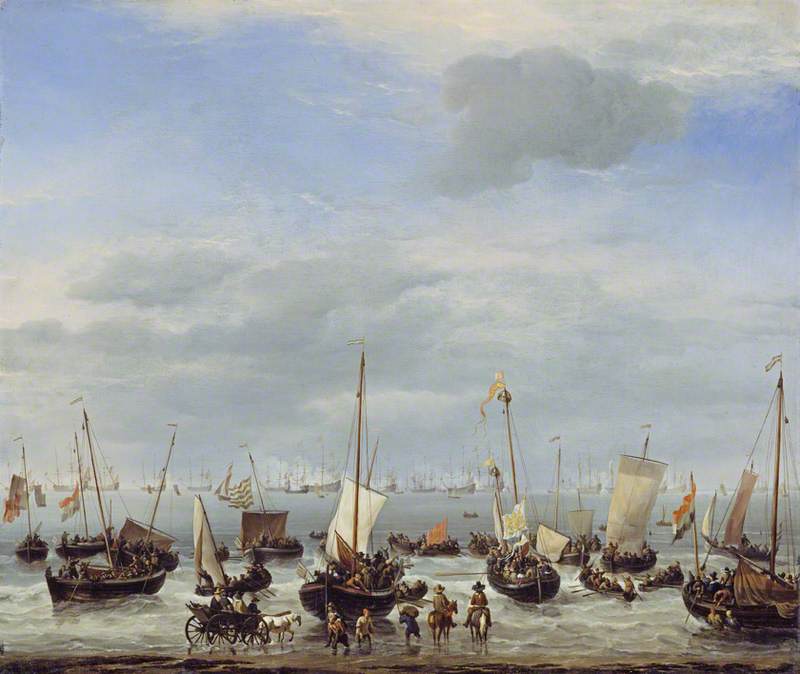
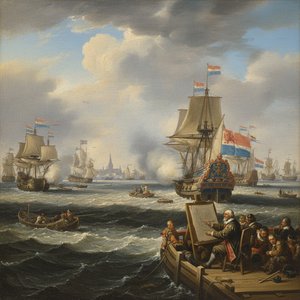
The Embarkation of Charles II at Scheveningen
 Oil On Canvas
- WallArt
 1661
1661 48.0 x 57.0 cm
 The Wallace Collection
 Read More
Giclée / Art Print
Museum-quality giclée or canvas print with fast production and flexible finish options. ( Buy Hand Made Painting Buy Image)




P118B $10

P118H $10

P118W $10

P438Z $10

P508JH $12

P508YH $12

P805H $10

P805Z $10

P919BZ $10

P919G $10

P919XJ $10

P959ZH $10

P968JZ $12

W106C $8

W218G $10

W218JH $8

W218Y $10

W307PJ $10

W316G $10

W316PJ $8

W316Y $10

W398PJ $8

W4111J $10

W500HY $15

W500JH $15

W692G $12

W849H $8

W940BG $15

W953PJ $8




Pick from our preset sizes that match the artwork's original proportions.

You may enter your own dimensions to fit a specific frame or space. If your selected size does not match the original image's proportions, we will either crop the artwork or extend the image with a mirrored or solid-fill edge. A digital mockup will be sent for your approval before production begins.
Please note that the on-screen preview does not reflect the actual cropping or extension. Only the mockup will accurately show the final composition.
While custom sizes are available, we recommend selecting a dimension from the predefined list to preserve the original proportions.
Worldwide Delivery () in 2 weeks instead of standard 4/5 weeks. (30 August)

Free Worldwide Express Shipping

High-Quality Linen Canvas

Full Shipping Insurance

Customs Tax Refund Guarantee

True Color Matching Guarantee

60-Day Return Policy (Defects Only)

100% Money-Back Guarantee

Bulk Discount Offer
 Glass option is only available in size under 110 CM

The Embarkation of Charles II at Scheveningen
Giclée / Art Print
Reproduction Size
-


Total Price
$ 63
The Embarkation of Charles II at Scheveningen – A Dutch Golden Age Masterpiece
Willem van de Velde the Elder’s “The Embarkation of Charles II at Scheveningen,” painted circa 1661, is more than just a maritime scene; it's a meticulously crafted window into a pivotal moment in English and Dutch history. This oil-on-canvas work, now residing within The Wallace Collection in London, captures the vibrant energy of a royal departure – Charles II’s journey to Scheveningen, Netherlands, marking a significant diplomatic maneuver amidst the turbulent political landscape of the 17th century. Van de Velde's skill lies not merely in depicting ships and figures, but in conveying an atmosphere of controlled chaos, formality, and subtle power.
The painting immediately draws the eye with its expansive composition. A horizontal arrangement dominates, mirroring the vastness of the North Sea and the coastline. The foreground is a carefully orchestrated tableau: elegantly dressed dignitaries, identifiable by their elaborate attire and ceremonial flags, mingle with sailors aboard numerous vessels – from stately galleons to smaller, more nimble boats. Horses, likely involved in transporting officials or providing a visual spectacle for the occasion, are strategically placed on land, adding to the scene’s sense of grandeur. The eye is then guided through the middle ground, teeming with activity as ships prepare to set sail, their masts and sails creating dynamic diagonals that inject movement into the otherwise static composition.
Van de Velde's mastery of technique is evident in every brushstroke. He employed a masterful use of linear perspective, subtly diminishing the size of distant ships to create an illusion of depth – a hallmark of Dutch Golden Age painting. The artist’s meticulous attention to detail is particularly striking in the rendering of the sails, which ripple and billow with remarkable realism, capturing both their texture and movement. The muted color palette—a symphony of blues, greys, browns, and beiges—evokes the atmospheric conditions of a cloudy day, lending an air of quiet observation rather than dramatic spectacle. The subtle use of red and orange in the flags provides vital focal points, highlighting the importance of this royal event.
A Window into Dutch-English Relations
“The Embarkation of Charles II at Scheveningen” is inextricably linked to the complex political relationship between England and the Netherlands during the mid-17th century. Following the English Civil War, Charles II sought refuge in Holland, skillfully navigating the precarious balance between loyalty to his father, King James II, and the burgeoning Protestant movement in England. This voyage to Scheveningen was a carefully orchestrated diplomatic mission, designed to secure support from Dutch merchants and officials. Van de Velde’s painting serves as a visual record of this pivotal moment, capturing not just the event itself but also the underlying tensions and strategic considerations that shaped Anglo-Dutch relations.
The inclusion of Charles II himself, though perhaps subtly rendered, is significant. The King's presence underscores the importance of the occasion and highlights his carefully cultivated image as a symbol of stability and legitimacy. Furthermore, the painting reflects the prevailing artistic trends of the Dutch Golden Age – a period characterized by an unparalleled commitment to realism, meticulous detail, and a fascination with maritime subjects. Van de Velde’s work stands alongside other celebrated Dutch marine paintings, such as those by Jan van de Cappelle and Pieter Claesz, demonstrating the Netherlands' position as a leading center for artistic innovation.
The Art of “Penschilderij” – A Unique Technique
Van de Velde the Elder was renowned for his pioneering technique known as "penschilderij" (pen painting). Unlike traditional oil painting methods, which rely on layering thin glazes to build up color and texture, penschilderij involved creating detailed, durable artworks using ink on panel or canvas. This innovative approach allowed Van de Velde to achieve an astonishing level of precision and detail, mimicking the appearance of elaborate drawings while maintaining the durability of a painted work. The fine lines and sharp edges visible in “The Embarkation of Charles II at Scheveningen” are testament to this unique technique.
This meticulous approach is particularly evident in the rendering of the ships’ rigging, sails, and figures – each element rendered with painstaking accuracy. The artist's use of a fine brush and carefully controlled ink allowed him to create incredibly detailed textures and patterns, capturing the subtle nuances of light and shadow. “Penschilderij” was not merely a technical innovation; it also reflected Van de Velde’s artistic philosophy – a commitment to realism and an appreciation for the beauty of detail.
Symbolism and Emotional Resonance
While “The Embarkation of Charles II at Scheveningen” is primarily a historical record, it also carries subtle symbolic weight. The orderly arrangement of figures and ships suggests a sense of control and authority – reflecting the King’s carefully managed diplomatic strategy. The cloudy sky and muted color palette evoke a feeling of quiet contemplation, suggesting that this event was not merely a political maneuver but also a moment of significant historical consequence.
Despite its formal composition, the painting possesses an undeniable emotional resonance. The bustling activity of the harbor, the presence of dignitaries and sailors, and the anticipation of departure all contribute to a sense of vibrant energy. “The Embarkation of Charles II at Scheveningen” is not simply a depiction of a historical event; it’s a powerful evocation of a specific time and place – a testament to the skill and artistry of Willem van de Velde the Elder.
Related Artworks




Artist Biography
early life and career
willem van de velde the elder, a renowned dutch golden age seascape painter, was born in leiden, netherlands, around 1611. his father, willem willemsz van de velde, was a flemish skipper, which likely influenced his son's interest in maritime art.artistic style and technique
van de velde's work is characterized by its precision and attention to detail. he pioneered the technique of pen painting (penschilderij), which involved creating detailed, durable artworks using ink on panel or canvas. this innovative approach allowed his pieces to resemble elaborate drawings while maintaining the durability of a painting.notable works and collaborations
* the battle of texel, 1687 (oil on canvas) * the burning of the royal james at the battle of solebay (drawing) * collaboration with charles ii of england, producing paintings of british ships and naval battlesmuseums and collections featuring van de velde's work
* the mauritshuis, netherlands (features dutch golden age paintings, including works by van de velde) * the kremer collection, the hague, netherlands (a private art museum with a focus on 17th-century dutch and flemish paintings)- view willem van de velde the elder's artwork on ArtsDot.com
- explore more dutch golden age artists, including rembrandt van rijn, on ArtsDot.com's artist page
- discover the mauritshuis's collection, featuring works by willem van de velde the elder, on ArtsDot.com's museum page
legacy and impact
willem van de velde the elder's contributions to dutch golden age seascape painting are undeniable. his innovative techniques, attention to detail, and collaborations with prominent figures have solidified his place in art history. the museum universiteitsbibliotheek (leiden, netherlands) - a comprehensive guide on ArtsDot.com provides further insight into the cultural context of van de velde's work.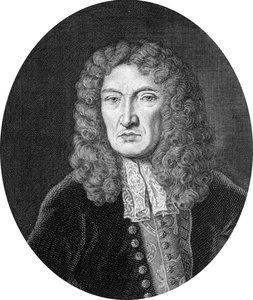
Willem van de Velde the Elder
1611 - 1693 , Netherlands
Quick Facts
- Artistic Movement Or Style: Pen painting, Seascape
- Artists Or Movements Influenced By This Artist: ['Willem van de Velde the Younger']
- Artists Who Influenced This Artist: ['His father (Willem Willemsz)']
- Date Of Birth: 1611, Leiden, Netherlands
- Date Of Death: 1693, London, England
- Full Name: Willem van de Velde the Elder
- Nationality: Dutch Golden Age
- Notable Artworks:
- The Battle of Texel
- Burning of James
- Place Of Birth: Leiden, Netherlands
Related Articles

Dutch Masters: 10 Golden Age Paintings That Still Inspire |
Journey into the Dutch Golden Age! Explore 10 iconic paintings by Rembrandt, Vermeer & Hals. Discover the stories behind these Baroque masterpieces and find museum-quality art reproductions to elevate your home decor on .
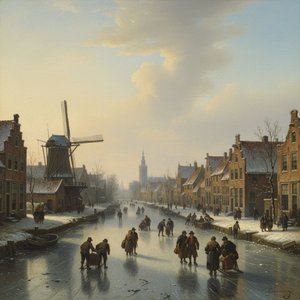
Charles Leickert: Capturing the Dutch Golden Age Light – A Comprehensive Study of Technique, Context, and Legacy
Explore the captivating winter landscapes of Charles Leickert, a master of Dutch Golden Age light & atmosphere. Discover his techniques, symbolism, and lasting legacy – a comprehensive study for art enthusiasts and collectors.
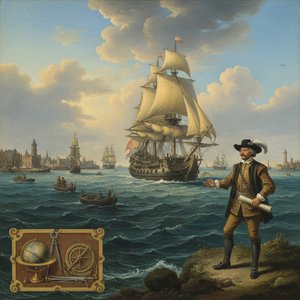
Abraham Hulk Senior: Pioneering Maritime Topography of the Dutch Golden Age
Explore the captivating seascapes of Abraham Hulk Senior, a leading Anglo-Dutch marine painter of the 19th century. Discover his signature style, family legacy & collectable artworks at ArtsDot.
Willem van de Velde the Elder: Master of Maritime Painting & Chronicler of the Dutch Golden Age
Discover the captivating maritime paintings of Willem van de Velde the Elder, a master chronicler of the Dutch Golden Age. Explore his unparalleled realism and lasting influence on naval art history.

Illuminating Innovation: Exploring the Dutch Golden Age of Painting
Explore the Dutch Golden Age of painting with ArtsDot. Discover Rembrandt, Vermeer & other Masters. Learn about key characteristics, iconic artworks, and lasting influence. Expert insights for collectors & enthusiasts.