 Preview
 Send
Send Share
Share
 Details

 Download
 Similars
 X-Ray
X-Ray Diaporama
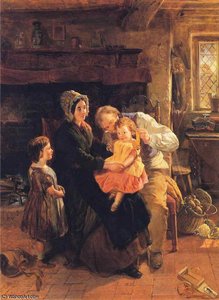
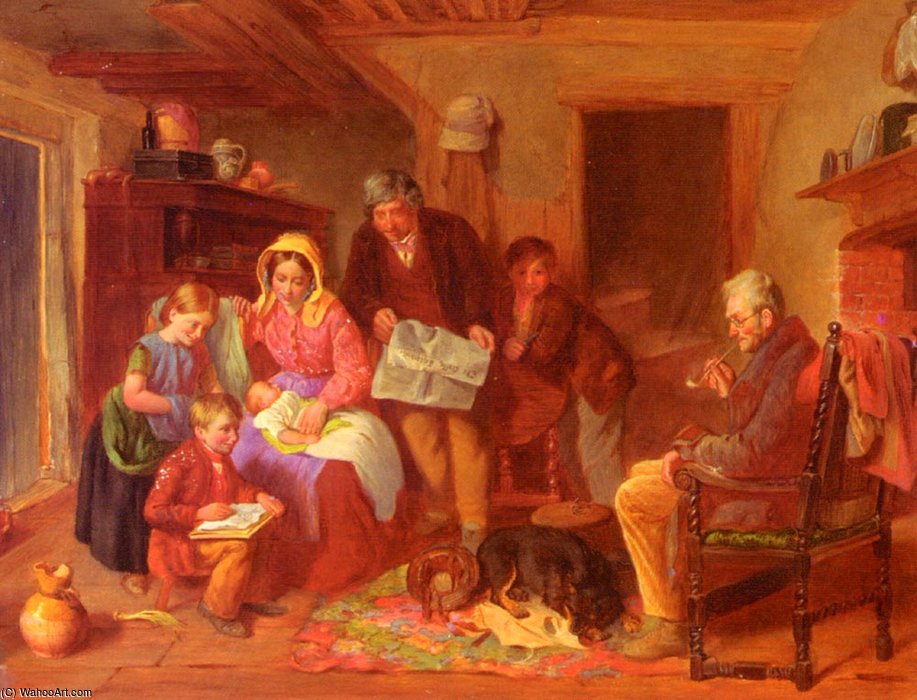
The new arrival

 Read More
Giclée / Art Print
Museum-quality giclée or canvas print with fast production and flexible finish options. ( Buy Hand Made Painting Buy Image)




































Pick from our preset sizes that match the artwork's original proportions.

You may enter your own dimensions to fit a specific frame or space. If your selected size does not match the original image's proportions, we will either crop the artwork or extend the image with a mirrored or solid-fill edge. A digital mockup will be sent for your approval before production begins.
Please note that the on-screen preview does not reflect the actual cropping or extension. Only the mockup will accurately show the final composition.
While custom sizes are available, we recommend selecting a dimension from the predefined list to preserve the original proportions.
Worldwide Delivery () in 2 weeks instead of standard 4/5 weeks. (17 August)

Free Worldwide Express Shipping

High-Quality Linen Canvas

Full Shipping Insurance

Customs Tax Refund Guarantee

True Color Matching Guarantee

60-Day Return Policy (Defects Only)

100% Money-Back Guarantee

Bulk Discount Offer
 Glass option is only available in size under 110 CM

The new arrival
Giclée / Art Print
Reproduction Size
-


Total Price
$ 63
Collectible Description
A Glimpse into Victorian Domesticity: "The New Arrival"
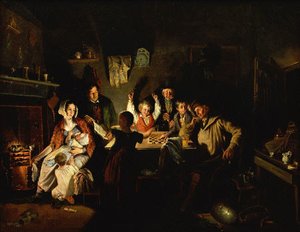
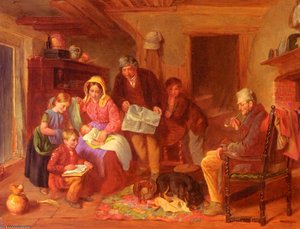
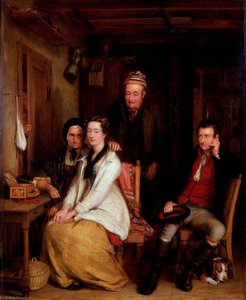
William Henry Knight’s “The New Arrival” offers a tender and intimate portrayal of family life in 19th-century England. This captivating oil painting transports viewers to a warmly lit, rustic interior where a multigenerational family gathers around, seemingly engrossed in news or correspondence. The scene exudes a sense of quiet contentment and shared experience, characteristic of the genre paintings that flourished during this period.
Style & Technique: A Master of Genre Painting
Knight firmly belonged to the tradition of British genre painting, which sought to depict everyday life with realism and narrative depth. His style is marked by meticulous brushwork and a keen eye for detail – observe the textures in the clothing, the subtle expressions on each face, and the carefully rendered details of the furniture and interior setting. The use of oil paints allows for rich color saturation and nuanced shading, contributing to the painting’s overall warmth and inviting atmosphere. The perspective, slightly elevated, provides a comprehensive view into this domestic tableau, drawing the viewer directly into the scene.
Historical Context & Symbolism
Created around the mid-19th century (exact date unknown), “The New Arrival” reflects a period of significant social and economic change in England. The presence of a newspaper suggests an awareness of current events, while the multigenerational family dynamic highlights the importance of tradition and familial bonds. Consider these symbolic elements:
- The Newspaper: Represents communication, news from afar, and connection to the wider world.
- Children: Symbolize innocence, hope for the future, and the continuation of family lineage.
- Elderly Man: Embodies wisdom, experience, and a link to the past.
- The Dog: A common symbol of domesticity, loyalty, and companionship.
Genre paintings like this were immensely popular during the Victorian era, offering viewers relatable scenes of everyday life that provided both entertainment and a sense of moral upliftment.
Emotional Impact & Lasting Appeal
“The New Arrival” evokes a feeling of warmth, nostalgia, and quiet joy. The soft lighting from the fireplace, the gentle expressions on the faces of the family members, and the overall composition create an atmosphere of peaceful domesticity. It’s a scene that resonates with universal themes of family, tradition, and the simple pleasures of life. This painting's enduring appeal lies in its ability to transport viewers to another time while simultaneously tapping into timeless emotions and values.
Related Artworks

Artist Biography
The Tender Vision of William Henry Knight
In the heart of the Victorian era, a period often characterized by its rigid social structures and industrial transformation, there emerged an artist capable of capturing the soft, unblemished essence of human connection. William Henry Knight (1823–1863) was not merely a painter of scenes, but a chronicler of the soul’s most innocent moments. Born in Newbury, Berkshire, into a family where education was paramount—his father serving as a local schoolmaster—Knight’s early life was steeped in an environment that valued observation and intellect. Though his initial path was destined for the structured world of law, the siren call of the visual arts proved irresistible. The turning point of his life arrived when two of his works were accepted into the annual exhibition of the Society of British Artists, a moment of validation that redirected his destiny from the courtroom to the canvas.
Knight’s journey took him to the bustling streets of London in 1855, where he lived a life of modest means but immense artistic dedication. To sustain himself, he practiced the delicate art of drawing crayon portraits, a technique that undoubtedly refined his ability to capture subtle facial expressions and the nuances of character. His formal training was rigorous; he spent countless hours studying within the halls of the British Museum and honing his craft at the prestigious Royal Academy schools. This period of intense study allowed him to draw inspiration from masters like William Mulready, whose commitment to realism and emotional resonance became a guiding light for Knight’s own development. Through this disciplined approach, he learned to marry technical precision with a profound sense of narrative warmth.
Mastery of the Genre and the Art of Observation
The true brilliance of Knight lies in his mastery of genre painting—a style dedicated to depicting everyday life with a sense of dignity and emotional depth. His oeuvre, which includes over eighty paintings produced between 1846 and his untimely death in 1863, serves as a window into the domestic intimacy of 19th-century England. Knight possessed a rare gift for observing the interplay of light and shadow, using it to imbue his subjects with a palpable vitality. Whether he was rendering the textures of a rustic interior or the soft glow of a festive gathering, his brushwork remained meticulous, ensuring that every detail contributed to the larger emotional tapestry.
His works often explore themes of family, continuity, and the simple joys of childhood. Consider the following elements that define his most evocative compositions:
- The Sanctity of Childhood: Works such as "Time for Play" and "The Village School" showcase his ability to portray children not just as subjects, but as symbols of hope and uncorrupted spirit.
- Domestic Warmth: In paintings like "The New Arrival," Knight utilizes a multigenerational cast to illustrate the strength of familial bonds, using light to create an atmosphere of quiet contentment.
- Narrative Symbolism: He frequently embedded subtle clues within his scenes—a newspaper representing a connection to the wider world, or a loyal dog symbolizing domestic stability—to deepen the storytelling for the viewer.
A Lasting Legacy of Emotional Realism
Though his career was tragically cut short at the age of forty, the impact of William Henry Knight remains etched in the history of British art. He achieved significant critical acclaim through consistent exhibitions at the Royal Academy, which provided him with a platform to reach the most discerning collectors of his time. His ability to capture "fleeting moments of human interaction"* allowed him to transcend the mere depiction of scenes, moving instead into the realm of emotional truth.
Today, Knight is remembered as a painter who could find the extraordinary within the ordinary. His legacy is found in the way his canvases continue to evoke nostalgia and tenderness in the modern viewer, reminding us of a time when the smallest joys—a game of Blind Man’s Buff or a shared family meal—were worthy of eternal preservation. Through his unwavering commitment to observation and his sensitive touch, Knight ensured that the innocence of the Victorian era would never truly fade from the annals of art history.
William Henry Knight
1823 - 1863 , United Kingdom
Quick Facts
- Artistic Movement Or Style: Victorian Painting
- Artists Or Movements Influenced By This Artist: ['Romantic Realism']
- Artists Who Influenced This Artist: ['William Mulready']
- Date Of Birth: 1823 Newbury, United Kingdom
- Date Of Death: 1863
- Full Name: William Henry Knight
- Nationality: British
- Notable Artworks:
- A Christmas Party Preparing for Blind Man's Buff
- Time for Play
- Boys Snowballing
- The Broken Window
- The Village School
- Hide and Seek
- The Game of Marbles
- An Unexpected Trump
- Rival Ghosts to Blondin
- The Counterfeit Coin
- Place Of Birth: Newbury, Berkshire
Related Articles
Henri Matisse's Masterpieces: Explore 25 Iconic Paintings & Art Decor Ideas
Journey through Henri Matisse's 25 most iconic paintings! Explore Fauvism, vibrant colors & the stories behind masterpieces like 'The Dance'. Find museum-quality art reproductions and curated decor ideas to elevate your space. Discover all masterpieces on ArtsDot.com.
R.A. Benjamin Williams: Victorian Genre Painting & Social Commentary
Explore the captivating world of Benjamin Williams Leader's Victorian genre paintings. Discover his mastery of naturalism, social commentary & lasting influence on British art. Expert insights at ArtsDot.
William Powell Frith: Narratives of Victorian Society & the Rise of Realist Painting
Explore the life & works of William Powell Frith, the 'greatest British painter of social scenes.' Discover his iconic Victorian genre paintings and learn about his lasting impact on realist art. Hand-painted reproductions available.
William Henry Hope: Illuminating American Genre Painting Through Luminosity & Narrative
Explore the captivating landscapes & genre scenes of William Henry Hope, a pivotal Canadian artist. Discover his mastery of light, realism, and narrative in this insightful guide. Learn about collecting his work & its place in art history.
William Henry Pyne: A Topographical Vision of Early 19th-Century England – Art, Society & Watercolour's Rise
Explore the captivating world of William Henry Pyne (1769-1843), a key figure in early 19th-century English art. Discover his stunning watercolours, architectural studies & contribution to the rise of watercolour painting. Learn about this fascinating artist's life and legacy.