 Preview
 Send
Send Share
Share
 Details

 Download
 Similars
 X-Ray
X-Ray Diaporama
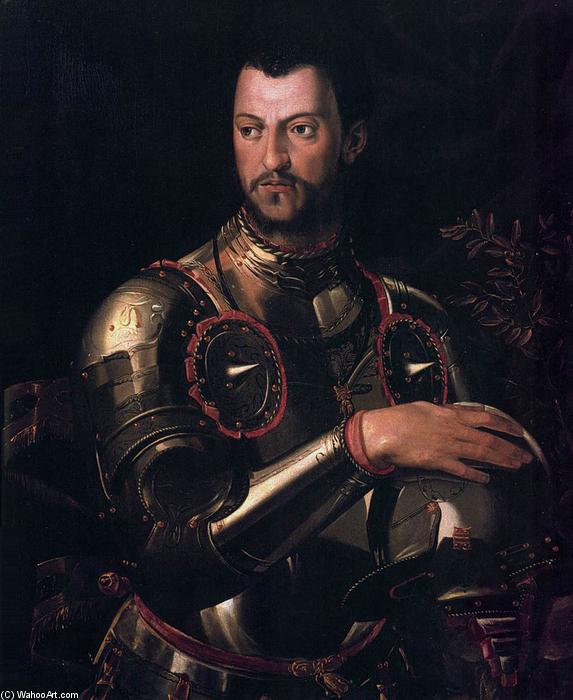
Cosimo I de' Medici in Armour
 Acrylic
- WallArt
- Italian Mannerism
 1550
1550 114.0 x 89.0 cm
 Museo degli Argenti
 Read More
Hand Made Oil Reproduction
Hand-painted oil on canvas in your size and frame, made to order by our artists. ( Buy Print Buy Image)




P118B $10

P118H $10

P118W $10

P438Z $10

P508JH $12

P508YH $12

P805H $10

P805Z $10

P919BZ $10

P919G $10

P919XJ $10

P959ZH $10

P968JZ $12

W106C $8

W218G $10

W218JH $8

W218Y $10

W307PJ $10

W316G $10

W316PJ $8

W316Y $10

W398PJ $8

W4111J $10

W500HY $15

W500JH $15

W692G $12

W849H $8

W940BG $15

W953PJ $8




Pick from our preset sizes that match the artwork's original proportions.

You may enter your own dimensions to fit a specific frame or space. If your selected size does not match the original image's proportions, we will either crop the artwork or extend the painting with additional hand-painted elements. A digital mockup will be sent for your approval before production begins.
Please note that the on-screen preview does not reflect the actual cropping or extension. Only the mockup will accurately show the final composition.
While custom sizes are available, we recommend selecting a dimension from the predefined list to preserve the original proportions.
After order, ArtsDot.com team will email client for instructions and provide a mockup preview
Worldwide Delivery () in 3/4 weeks instead of standard 5 weeks. (16 August). No compromise on quality.

Free Worldwide Express Shipping

High-Quality Linen Canvas

Full Shipping Insurance

Customs Tax Refund Guarantee

True Color Matching Guarantee

60-Day Return Policy (Defects Only)

100% Money-Back Guarantee

Bulk Discount Offer
 Glass option is only available in size under 110 CM

Cosimo I de' Medici in Armour
Reproduction Medium
Reproduction Size
-


Total Price
$ 263
Artwork Description
A Portrait of Power: Agnolo Bronzino’s Cosimo I de' Medici in Armour
The painting “Cosimo I de' Medici in Armour,” executed by Agnolo Bronzino around 1550, stands as a testament to the meticulous artistry and symbolic resonance characteristic of Mannerist art. Measuring 114 x 89 cm, this portrait captures Cosimo I, ruler of Florence and Grand Duke of Tuscany, not merely as an individual but as an embodiment of regal authority—a carefully constructed image designed to project prestige and reinforce his dominion. Bronzino’s masterful depiction transcends mere representation; it delves into the psychological complexities of power and conveys a profound sense of stillness that belies its significance.- Subject Matter: The central figure is Cosimo I de' Medici, dressed in opulent armour—a symbol of military prowess and aristocratic status. His posture exudes confidence and control, reflecting the realities of his reign amidst turbulent political landscapes.
- Style & Technique: Bronzino’s signature Mannerist style prioritizes idealized beauty and refined detail over expressive emotion. The artist employs a technique known as sfumato—a subtle blending of tones—to create an ethereal glow around Cosimo's face, enhancing his solemn countenance. Precise lines delineate the armour and helmet, emphasizing geometric precision against the softer contours of the flesh.
Related Artworks
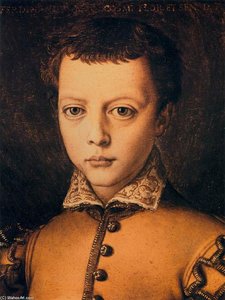
Artist Biography
A Florentine Master of Reserved Elegance
Agnolo di Cosimo, known to history as Bronzino, emerged from the vibrant artistic landscape of Renaissance Florence in 1503, a period already brimming with genius. Born the son of a butcher, his path diverged sharply from familial trade, guided instead by an innate talent that would see him become one of the most sought-after portraitists of his era and a defining figure of Mannerism. His early training began with Raffaellino del Garbo, but it was under the tutelage of Jacopo da Pontormo that Bronzino’s artistic sensibilities truly took shape. While absorbing Pontormo's innovative style, he ultimately forged his own distinct voice—one characterized by a cool composure and refined detail markedly different from his teacher’s often emotionally charged works. This early period was also influenced by studies with Andrea del Sarto, exposing him to the legacies of Michelangelo and Leonardo da Vinci, foundational influences that would subtly permeate his mature style. The young Bronzino quickly demonstrated an aptitude for capturing not just physical likeness but a certain psychological depth, even in his earliest commissions.Ascension at the Medici Court
Bronzino’s career ascended dramatically with the patronage of Cosimo I de’ Medici, Duke of Tuscany. This relationship, solidified after Bronzino contributed to the lavish decorations celebrating Cosimo’s wedding to Eleonora di Toledo in 1539, cemented his position as the official court painter for much of his life. It was a role he fulfilled with unwavering dedication and remarkable skill. The portraits emanating from this period are not merely likenesses; they are carefully constructed statements of power, status, and dynastic ambition. Cosimo and Eleonora themselves became frequent subjects, immortalized in paintings that exude an aristocratic aloofness and polished elegance. These works weren’t simply about capturing physical resemblance but crafting enduring symbols of Medici authority. Bronzino's mastery extended beyond portraiture; he was entrusted with decorating the chapel dedicated to Eleonora, a project spanning two decades and showcasing his versatility as a fresco painter. The meticulous detail and refined technique evident in these works established Bronzino as the preeminent artist of the Florentine court, shaping the visual language of power for generations to come.The Art of Mannerist Refinement
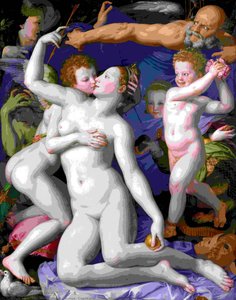
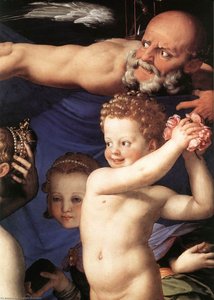
Bronzino’s artistic style is quintessentially Mannerist—a movement that flourished in Italy during the mid-16th century as a reaction against the High Renaissance's emphasis on naturalism and harmonious balance. He embraced elongated forms, stylized poses, and an often cool, detached emotionality. His figures are rarely caught in moments of spontaneous action; instead, they appear carefully posed, almost sculptural in their stillness. Venus, Cupid, Folly and Time (c. 1544-45), perhaps his most celebrated allegorical work, exemplifies this approach. The painting is a complex tapestry of symbolism, inviting multiple interpretations while simultaneously maintaining an air of enigmatic detachment. His portraits are renowned for their meticulous attention to detail—the textures of fabrics, the gleam of jewels, the subtle nuances of expression—all rendered with an almost enamel-like precision. This dedication to surface refinement and intellectual complexity distinguishes Bronzino’s work from that of his contemporaries. He wasn't interested in simply replicating reality; he sought to elevate it through artifice and stylistic control.Legacy and Lasting Influence
Beyond his prolific output as a painter, Bronzino played an important role in the Florentine artistic community. He was a founding member of the Accademia delle Arti del Disegno in 1563, an institution dedicated to promoting the study of art and fostering artistic excellence. His influence extended far beyond Florence, impacting court portraiture throughout Europe for generations. The cool elegance and refined technique he championed became hallmarks of aristocratic representation. Though his style fell somewhat out of favor during periods that prioritized more emotive or naturalistic approaches, Bronzino’s work has experienced a resurgence in appreciation in recent decades. Scholars now recognize the intellectual depth and stylistic innovation inherent in his art. He passed away in Florence in 1572, leaving behind a legacy as one of the most important Mannerist painters—a master of reserved elegance whose portraits continue to captivate and intrigue viewers centuries later. His ability to capture not just likeness but also the essence of power and status ensures his enduring place in art history.- Born: Florence, Italy, 1503
- Died: Florence, Italy, 1572
- Key Movement: Mannerism
- Notable Works: *Venus, Cupid, Folly and Time*, Portraits of Cosimo I de’ Medici and Eleonora di Toledo
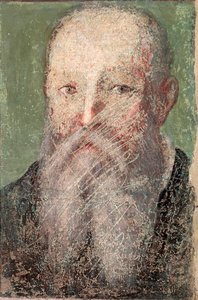
Agnolo Bronzino
1503 - 1572 , Italy
Quick Facts
- Artistic Movement Or Style: Mannerism
- Artists Or Movements Influenced By This Artist: European court portraiture
- Artists Who Influenced This Artist:
- Pontormo
- Michelangelo
- Leonardo da Vinci
- Date Of Birth: November 17, 1503
- Date Of Death: November 23, 1572
- Full Name: Agnolo di Cosimo
- Nationality: Italian
- Notable Artworks:
- Venus, Cupid, Folly & Time
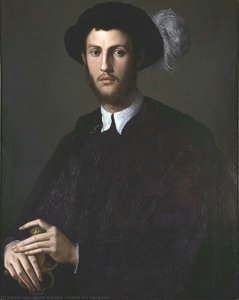
- Ugolino Martelli
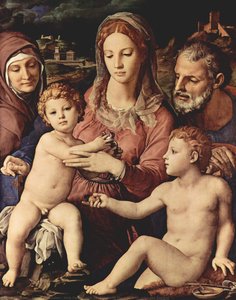
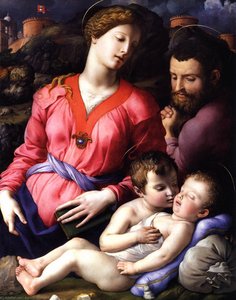
- The Holy Family
- Place Of Birth: Florence, Italy
Related Articles
Agnolo Bronzino: Mastering Courtly Portraiture & the Enigmatic Gaze of Renaissance Florence
Explore the captivating world of Agnolo Bronzino, Renaissance master portraitist. Discover his elegant style, symbolic depth & lasting influence on art history. Expert insights for collectors.
Mannerism: Bridging Renaissance Harmony & Baroque Drama – A Study of Style & Affectation
Explore the fascinating world of Mannerism! Discover its key characteristics, pioneering artists like Pontormo & Bronzino, and its pivotal role in bridging Renaissance harmony to Baroque drama. A comprehensive guide for art enthusiasts.
The Enduring Legacy of Formal Portraiture: Power, Identity & Artistic Exploration
Explore the rich history of formal portraiture & its enduring power to capture identity and shape perception. Discover investment-worthy artworks, expert appraisals, and custom reproduction services at ArtsDot.
The Grandeur of Presence: Exploring Representations of Stately Bearing in Western Portraiture
Explore the art of stately bearing in Western portraiture with expert analysis of Renaissance & Baroque masterpieces. Discover symbolism, techniques, and the legacy of iconic portraits – a guide for discerning collectors.
Sir Nathaniel Dance-Holland: Portraiture, Patronage & Georgian Identity
Explore the life & art of Sir Nathaniel Dance-Holland, a leading Georgian portraitist. Discover his masterful technique, influential patrons, and lasting impact on 18th-century British society. A guide for discerning collectors.