 Send
Send Share
Share
 Details

 Download
 Similars
 Diaporama
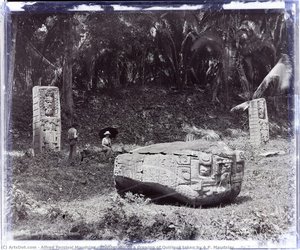
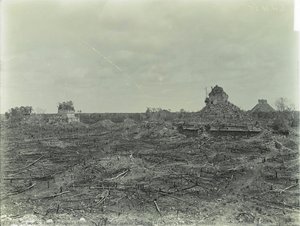
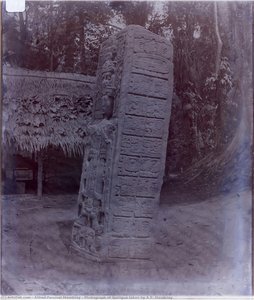
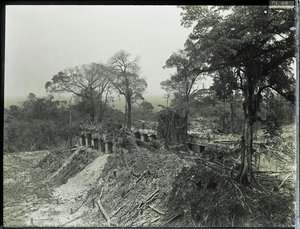
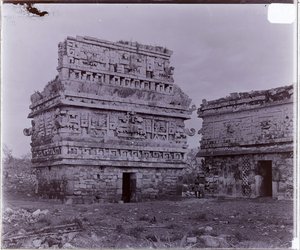
Photograph of Palenque taken by A.P. Maudslay
 Gelatin Silver Print
- Photo
- Documentary Photography
 1894
1894- 19th Century
 25.0 x 30.0 cm
 British Museum
 Read More
Hand Made Oil Reproduction
Hand-painted oil on canvas in your size and frame, made to order by our artists. ( Buy Print Buy Image)




































Pick from our preset sizes that match the artwork's original proportions.

You may enter your own dimensions to fit a specific frame or space. If your selected size does not match the original image's proportions, we will either crop the artwork or extend the painting with additional hand-painted elements. A digital mockup will be sent for your approval before production begins.
Please note that the on-screen preview does not reflect the actual cropping or extension. Only the mockup will accurately show the final composition.
While custom sizes are available, we recommend selecting a dimension from the predefined list to preserve the original proportions.
After order, ArtsDot.com team will email client for instructions and provide a mockup preview
Worldwide Delivery () in 3/4 weeks instead of standard 5 weeks. (6 September). No compromise on quality.

Free Worldwide Express Shipping

High-Quality Linen Canvas

Full Shipping Insurance

Customs Tax Refund Guarantee

True Color Matching Guarantee

100-Day Return Policy (Defects Only)

100% Money-Back Guarantee

Bulk Discount Offer
 Glass option is only available in size under 110 CM

Photograph of Palenque taken by A.P. Maudslay
Reproduction Medium
Reproduction Size
-


Total Price
$ 413
A Window into the Lost Maya: The Timelessness of Maudslay’s Palenque
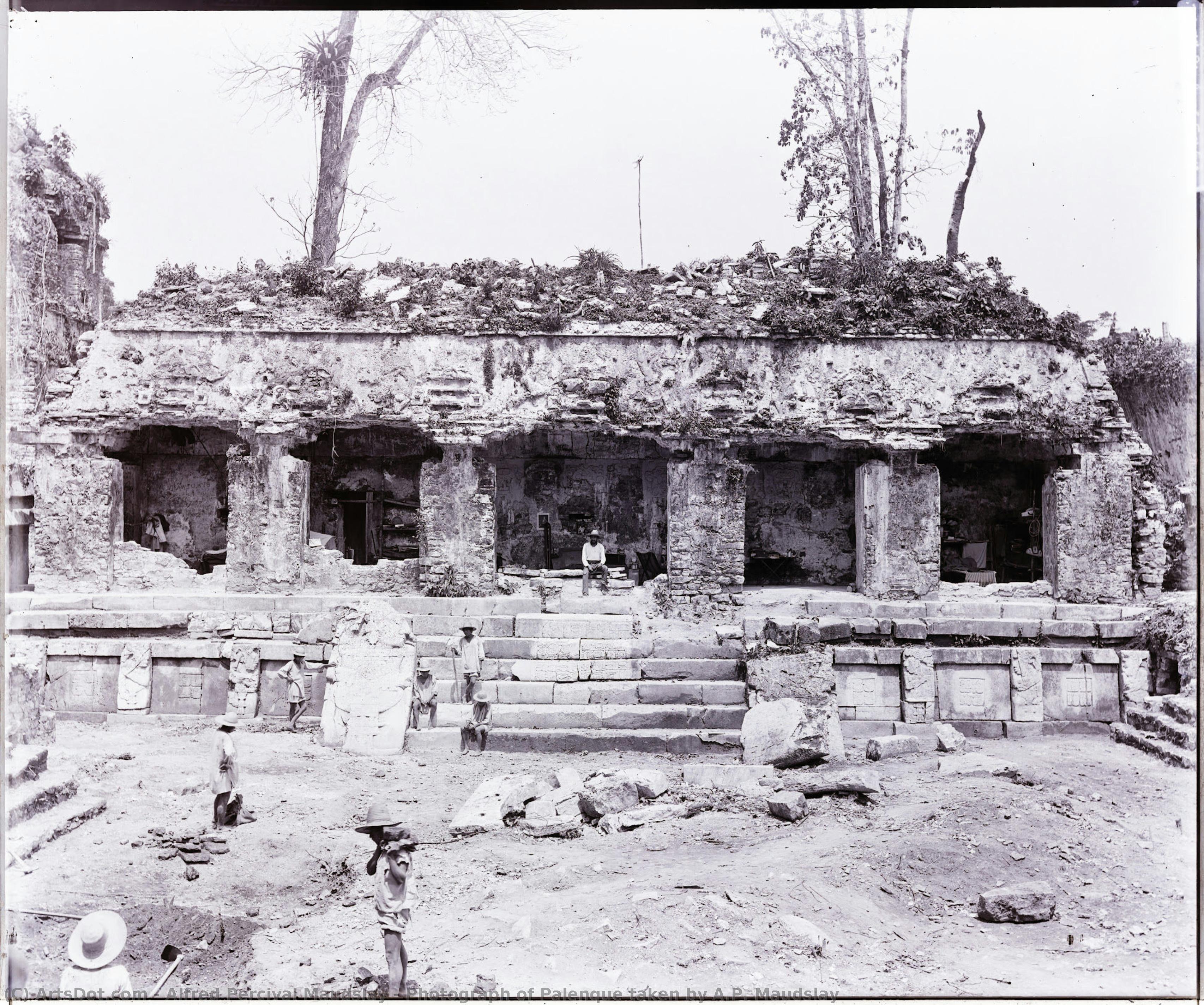
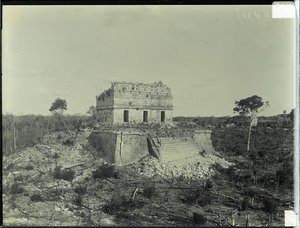
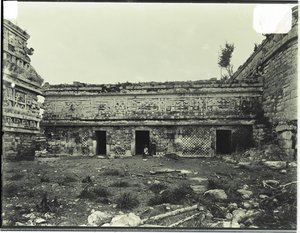
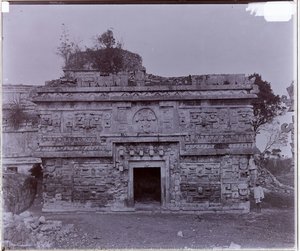
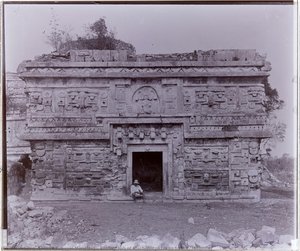
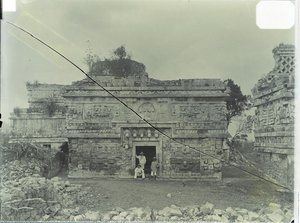
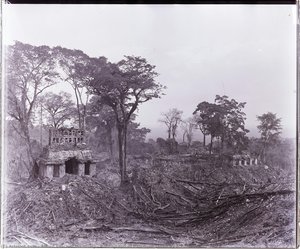
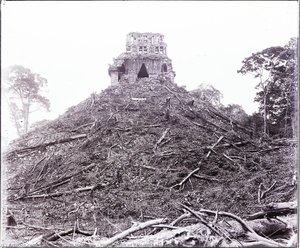
In the quiet, silvered tones of Alfred Percival Maudslay’s 1894 photograph, we are invited to step through a portal into a vanished world. This evocative silver gelatin print captures the majestic ruins of Palenque not merely as a collection of weathered stones, but as a profound dialogue between human ambition and the relentless reclamation of nature. The composition is anchored by a monumental, multi-tiered stone structure that commands the frame, its geometric precision standing in stark defiance against the encroaching, soft textures of the surrounding jungle. Through the lens of Maudslay, the archaeological site becomes a stage where history and atmosphere perform a silent, eternal dance.
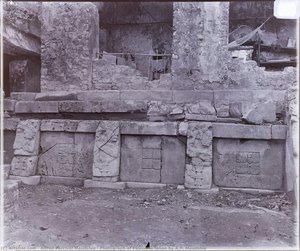
The technical mastery of this piece lies in its sophisticated use of light and shadow. Utilizing the traditional medium of black and white photography, Maudslay employs strong contrasts to carve out the architectural details of the Mayan masonry. The sharp, rhythmic edges of rectangular platforms and square pillars are defined by a diffused light that lends the scene a dreamlike, almost ethereal quality. This soft illumination prevents the shadows from becoming mere voids, instead allowing them to cradle the textures of the aged stone and the lush, tangled foliage. For the discerning collector, this interplay of light offers a sense of depth and movement that breathes life into a static historical moment.
The Human Element and the Weight of History
What elevates this photograph from a mere documentary record to a work of profound emotional resonance is the presence of the human figures scattered throughout the ruins. These small, transient silhouettes provide an essential sense of scale, reminding the viewer of the sheer magnitude of the ancient architecture. Their presence suggests a moment of discovery—a snapshot of explorers or workers navigating the remnants of a civilization that once flourished in splendor. This layering of the contemporary (for 1894) against the ancient creates a poignant tension, evoking themes of mortality, the passage of time, and the cyclical nature of empires.
For interior designers and lovers of fine art, this photograph serves as a sophisticated centerpiece that brings an air of intellectual mystery and historical gravity to any space. The monochromatic palette is inherently versatile, fitting seamlessly into minimalist, classical, or even contemporary industrial decors. It does not merely decorate a wall; it provides a focal point for contemplation. To possess a reproduction of this work is to hold a piece of the nineteenth-century archaeological spirit—a tribute to the era of great exploration and a hauntingly beautiful reminder of the enduring mysteries buried beneath the earth.
Related Artworks
Artist Biography
**early life and education**
alfred percival maudslay, a british colonial administrator and archaeologist, was born on 18 march 1850 in london into a wealthy family. he studied natural sciences at trinity hall, cambridge, obtaining a ba in 1872.**career and travels**
maudslay's early plans for a medical career were deferred as he travelled with his brother, touring central america, mexico, and parts of the united states. this journey sparked an interest in archaeology, which would later define his legacy. after returning home, maudslay again postponed medical school to travel to iceland in 1873. his chronic bronchitis led him to seek a warmer climate, leading to a series of positions in jamaica, trinidad, and eventually, the south pacific.**archaeological contributions**
maudslay's time in the british pacific colonies laid the groundwork for his future archaeological pursuits. he became interested in collecting ethnographic materials, which would eventually contribute to the formation of the university museum of archaeology and ethnology at cambridge. his friend, ornithologist osbert salvin, encouraged maudslay to explore the maya ruins of quiriguá and copán.**notable achievements**
* maudslay was the first to describe the site of yaxchilán. * he explored chichén in the 1880s, taking extensive photographs. * published the first long-form description of chichen itza in his book, biologia centrali-americana. * made a complete translation with annotations of bernal díaz del castillo's historia, which remains the standard english edition.**artistic legacy**
maudslay's photographs and writings have been preserved, offering a unique glimpse into the world of 19th-century archaeology. his work can be found in various museums, including the british museum (london, united kingdom), which houses several of his photographs.- photograph of chichén itzá taken by a.p. maudslay (16 x 21 cm, british museum, photograph)
- photograph of chichén itzá taken by a.p. maudsly (25 x 30 cm, british museum, photograph)
- photograph of copán taken by a.p. maudslay (31 x 25 cm, british museum, photograph)
**conclusion**
alfred percival maudslay's legacy is a testament to the power of curiosity and exploration. from his early days as a colonial administrator to his later years as an archaeologist, maudslay's work continues to inspire and educate.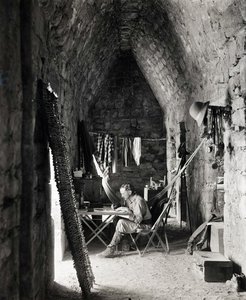
alfred percival maudslay
1850 - 1931 , United Kingdom
Quick Facts
- Artistic Movement Or Style: Archaeology/Photography
- Date Of Birth: 1850
- Date Of Death: 1931
- Full Name: Alfred Percival Maudslay
- Nationality: British
- Notable Artworks: ['Photograph of Chichén Itzá']
- Place Of Birth: London, United Kingdom
Related Articles
Sir Alfred Munnings' Masterpieces: 25 Paintings That Define Equine Art | ArtsDot
Explore 25 iconic Sir Alfred Munnings paintings! Discover the beauty of British Impressionism, equine art & rural England. Find museum-quality reproductions and elevate your home decor with ArtsDot. Explore the full collection online.
Documentary Photography's Defining Moments: 10 Masterpieces for Your Home |
Explore 10 defining documentary photography masterpieces – from Dorothea Lange to Robert Capa. Discover powerful stories, iconic images & timeless art for your home. Museum-quality prints at .
Hubert Robert: Picturing Ruins, Preserving Memory – A Study of Romantic Antiquarianism & Artistic Innovation
Explore the captivating world of Hubert Robert, master of Romantic landscape painting & 'capriccio' ruins. Discover his historical context, artistic innovations, and collecting insights with ArtsDot.
Resurrecting Memories: Artistic Reconstruction of Low-Resolution Photographs into High-Fidelity Oil Paintings
Transform cherished low-resolution photos into stunning, high-fidelity oil paintings. Expert restoration & museum-quality reproductions by skilled artists. Preserve your memories with lasting beauty.
Aaron Siskind: Deconstructing Reality – A Photographic Exploration of Texture, Form & the Abstract Landscape
Explore the transformative journey of Aaron Siskind, from social realism to pioneering abstract photography. Discover his iconic series & lasting influence on modern art. A guide for collectors.