 Preview
 Send
Send Share
Share
 Details

 Download
 Similars
 X-Ray
X-Ray Diaporama
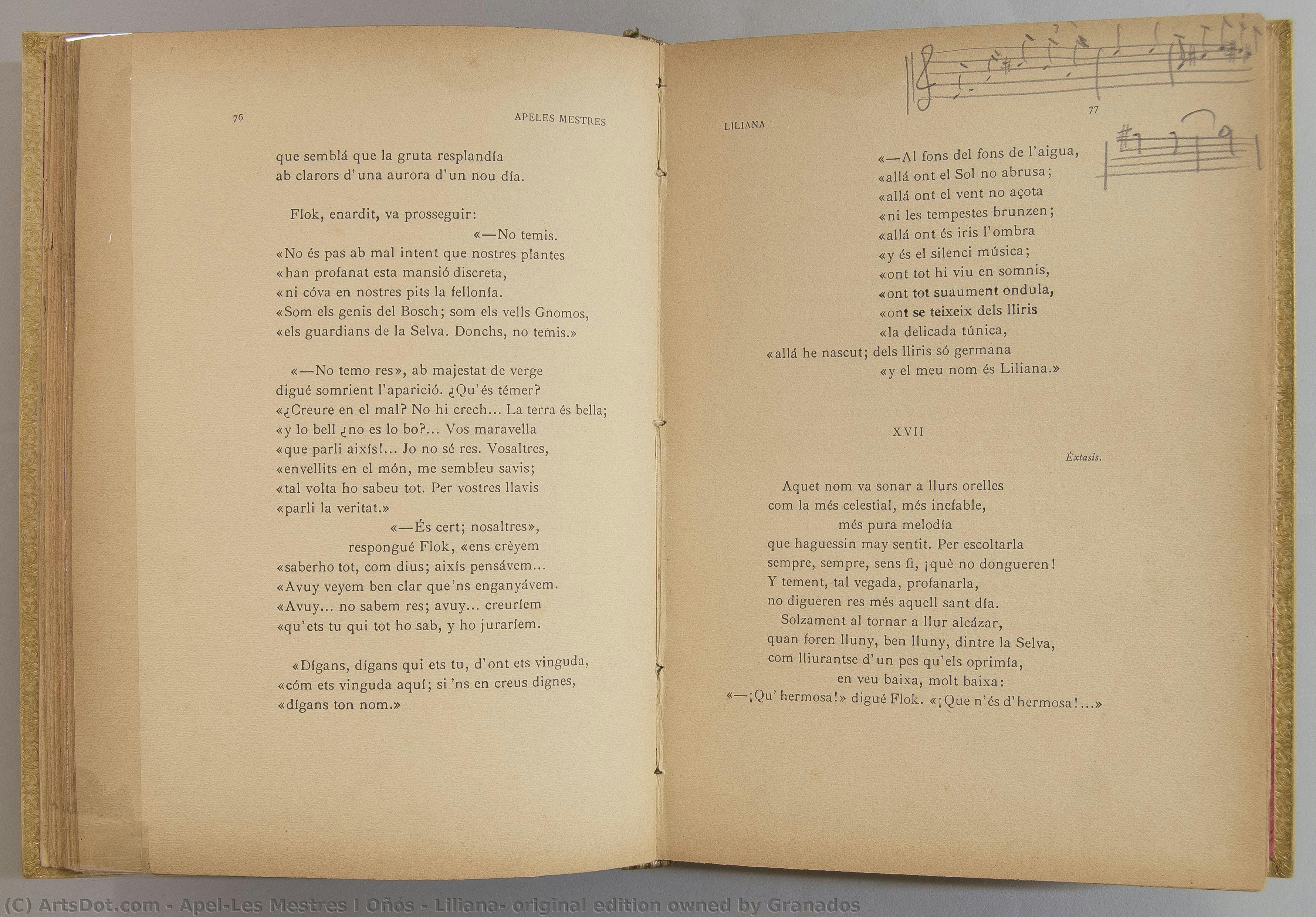
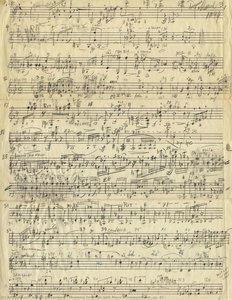
Liliana, original edition owned by Granados
 Manuscript
 19th Century
 5.0 x 48.0 cm
 Museum of Music of Barcelona
 Read More
Giclée / Art Print
Museum-quality giclée or canvas print with fast production and flexible finish options. ( Buy Hand Made Painting Buy Image)




P118B $10

P118H $10

P118W $10

P438Z $10

P508JH $12

P508YH $12

P805H $10

P805Z $10

P919BZ $10

P919G $10

P919XJ $10

P959ZH $10

P968JZ $12

W106C $8

W218G $10

W218JH $8

W218Y $10

W307PJ $10

W316G $10

W316PJ $8

W316Y $10

W398PJ $8

W4111J $10

W500HY $15

W500JH $15

W692G $12

W849H $8

W940BG $15

W953PJ $8




Pick from our preset sizes that match the artwork's original proportions.

You may enter your own dimensions to fit a specific frame or space. If your selected size does not match the original image's proportions, we will either crop the artwork or extend the image with a mirrored or solid-fill edge. A digital mockup will be sent for your approval before production begins.
Please note that the on-screen preview does not reflect the actual cropping or extension. Only the mockup will accurately show the final composition.
While custom sizes are available, we recommend selecting a dimension from the predefined list to preserve the original proportions.
Worldwide Delivery () in 2 weeks instead of standard 4/5 weeks. (28 August)

Free Worldwide Express Shipping

High-Quality Linen Canvas

Full Shipping Insurance

Customs Tax Refund Guarantee

True Color Matching Guarantee

60-Day Return Policy (Defects Only)

100% Money-Back Guarantee

Bulk Discount Offer
 Glass option is only available in size under 110 CM

Liliana, original edition owned by Granados
Giclée / Art Print
Reproduction Size
-


Total Price
$ 63
A Melodic Fragment of Catalan History
In the delicate, yellowed pages of Liliana, original edition owned by Granados, we find more than mere paper and ink; we encounter a profound intersection of literature, music, and history. This exquisite piece, an original edition once held in the prestigious collection of Granados, serves as a tactile window into the soul of late 19th-century Catalan culture. The artwork presents a close-up view of an open book, where the rhythmic dance of musical notes intertwines seamlessly with the lyrical grace of written poetry. Each note rests upon the aged parchment like a heartbeat, inviting the viewer to hear the silent echoes of a bygone era. It is a composition that transcends the visual, appealing to the auditory imagination and evoking the soft rustle of turning pages in a quiet, sunlit study.
The artistry of Apel·les Mestres i Oñós shines through in this multidisciplinary masterpiece. As an artist who moved fluidly between the worlds of poetry, theater, and graphic illustration, Mestres i Oñós possessed a unique ability to harmonize different forms of expression. In this work, the technique is one of intimate observation. The focus on the texture of the weathered paper and the precise placement of the musical notation creates an atmosphere of reverence. There is a profound sense of nostalgia embedded in the sepia tones and the organic decay of the edges, reminding us of the ephemeral nature of time even as the music remains eternally preserved within the ink.
Symbolism and the Harmony of the Arts
Beyond its surface beauty, this work serves as a powerful symbol of the Gesamtkunstwerk—the total work of art. By blending musical notation with poetic text, Mestres i Oñós celebrates the unity of the senses. The book acts as a vessel for human emotion, where the structure of music provides the rhythm for the narrative flow of the poem. For the collector or the interior designer, this piece offers a sophisticated layer of intellectual depth. It is not merely a decorative object but a conversation starter that speaks to themes of heritage, memory, and the enduring legacy of Catalan artistic excellence.
Integrating a high-quality reproduction of such a piece into a contemporary space can transform an environment. Whether placed in a library, a music room, or a refined living area, Liliana brings a sense of scholarly elegance and warmth. The muted, earthy palette of the aged pages complements both classical and modern decor, providing a focal point that is both calming and intellectually stimulating. It invites guests to linger, to look closer, and to lose themselves in the silent symphony of history and art.
Related Artworks
Artist Biography
A Renaissance Soul of Catalonia
In the vibrant, culturally surging atmosphere of late 19th-century Barcelona, few figures embodied the multidisciplinary spirit of the era as profoundly as Apel·les Mestres i Oñós. Born on October 28, 1854, to the esteemed architect Josep Oriol Mestres, Apel·les was destined to inhabit a world where art, architecture, and literature intertwined seamlessly. His life, which spanned until July 19, 1936, was not merely a career in fine arts but a lifelong devotion to the very essence of Catalan identity. He moved through the worlds of poetry, theater, music, and graphic illustration with a grace that suggested a singular, unified creative vision, making him a true polymath of the Modernisme movement.
Mestres i Oñós possessed a rare ability to translate emotion across vastly different mediums. While many artists of his time remained tethered to the canvas, he found rhythm in music, drama in his plays, and lyrical depth in his poetry. This versatility allowed him to become a cornerstone of the Catalan graphic arts, where his illustrations for books and magazines brought a sophisticated visual language to the public consciousness. His work was never isolated; it was part of a larger cultural dialogue aimed at celebrating and defining the unique spirit of Catalonia during a period of intense nationalistic pride and artistic renewal.
The Mastery of Graphic Expression and Modernisme
As a prominent figure in the Modernisme movement, Mestres i Oñós played a pivotal role in shaping the visual aesthetics of his generation. His approach to graphic design and illustration was characterized by an exquisite sensitivity to line and form, often blending the decorative elegance of the period with a profound narrative depth. He understood that the printed word and the drawn image could act as powerful vessels for cultural memory. Through his contributions to various publications, he helped cultivate a visual identity that was both modern in its execution and deeply rooted in local tradition.
The influence of his lineage and his environment is evident in the structural integrity of his compositions. Being the son of a renowned architect, he brought an inherent sense of balance and spatial awareness to his drawings and illustrations. This architectural foundation allowed him to navigate the complexities of graphic design with ease, creating works that were as structurally sound as they were aesthetically captivating. His legacy is not found solely in individual masterpieces but in the way he helped bridge the gap between high art and the burgeoning mass media of the late 19th and early 20th centuries.
Legacy and Enduring Significance
The historical significance of Apel·les Mestres i Oñós lies in his role as a cultural architect of the Catalan soul. His ability to influence contemporaries such as Santiago Rusiñol and Joaquim Mir Trinxet underscores his position within the upper echelons of the Modernisme movement. While these artists would go on to define the painting styles of the era, Mestres i Oñós provided the multidisciplinary framework that allowed such a diverse range of artistic expressions to flourish.
Today, much of his vital contribution is preserved within the hallowed halls of the Museu Nacional d'Art de Catalunya in Barcelona. This collection serves as a testament to a man who refused to be confined by a single medium, reminding us that true creativity knows no boundaries. To study his life is to study the heartbeat of Barcelona itself—a journey through color, sound, and word that continues to inspire those who seek the profound beauty of the Catalan heritage.
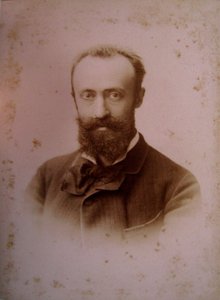
apel·les mestres i oñós
1854 - 1936 , Spain
Quick Facts
- Artistic Movement Or Style: Modernisme
- Artists Or Movements Influenced By This Artist: ['Catalan Art']
- Artists Who Influenced This Artist:
- Santiago Rusinol
- Joaquim Mir Trinxet
- Date Of Birth: October 28, 1854
- Date Of Death: July 19, 1936
- Full Name: Apel·les Mestres i Oñós
- Nationality: Catalan
- Notable Artworks:
- Bosc d\.
- Untitled
- Place Of Birth: Barcelona, Spain
Related Articles
Harmonies on Canvas: Exploring the Visual Representation of Music in Art History
Explore the fascinating history of music's visual representation in art! From ancient symbolism to modern abstraction, discover how artists have captured sound and emotion on canvas. Expert insights & stunning examples.
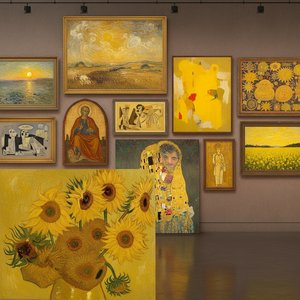
Golden Hues: 10 Masterpieces Dominated by Chrome Yellow | ArtsDot
Immerse yourself in golden light! Explore 10 famous paintings dominated by 'Chrome Yellow', from Van Gogh’s Sunflowers to Monet's Haystacks. Discover the stories behind these iconic Impressionist & Post-Impressionist masterpieces and find museum-quality art reproductions at ArtsDot.com.
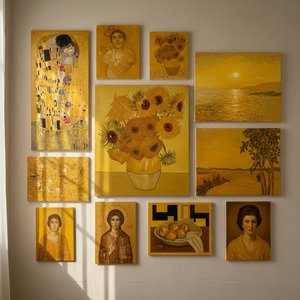
Golden Hues: Top 10 Paintings Dominated by Yellow Ochre |
Explore 10 iconic paintings bathed in golden yellow ochre! From Van Gogh's sunflowers to Monet’s haystacks, discover the stories behind these masterpieces. Find museum-quality art reproductions & elevate your home decor on .
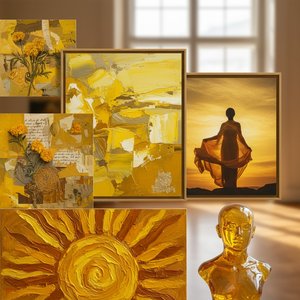
The Golden Hue: Exploring Symbolism & Emotion in Yellow Art
Explore the rich symbolism & emotional power of yellow in art history! From Van Gogh to Kandinsky, discover how artists used this vibrant hue. Expert analysis & high-quality reproductions at ArtsDot.
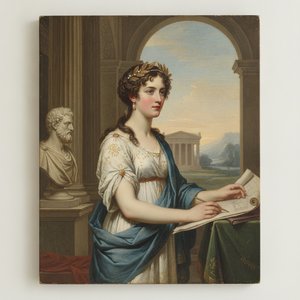
The Revival of Antiquity: Exploring Ideals of Beauty & Power in Neoclassical Portraiture
Explore the captivating world of Neoclassical portraiture! Discover the power & ideals behind masterpieces by David, Girodet & more. Expert analysis, custom reproductions & art appraisal at ArtsDot.