 Preview
 Send
Send Share
Share
 Details

 Download
 Similars
 X-Ray
X-Ray Diaporama
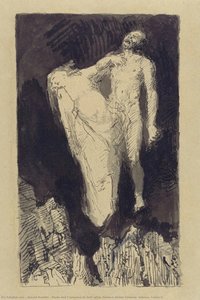
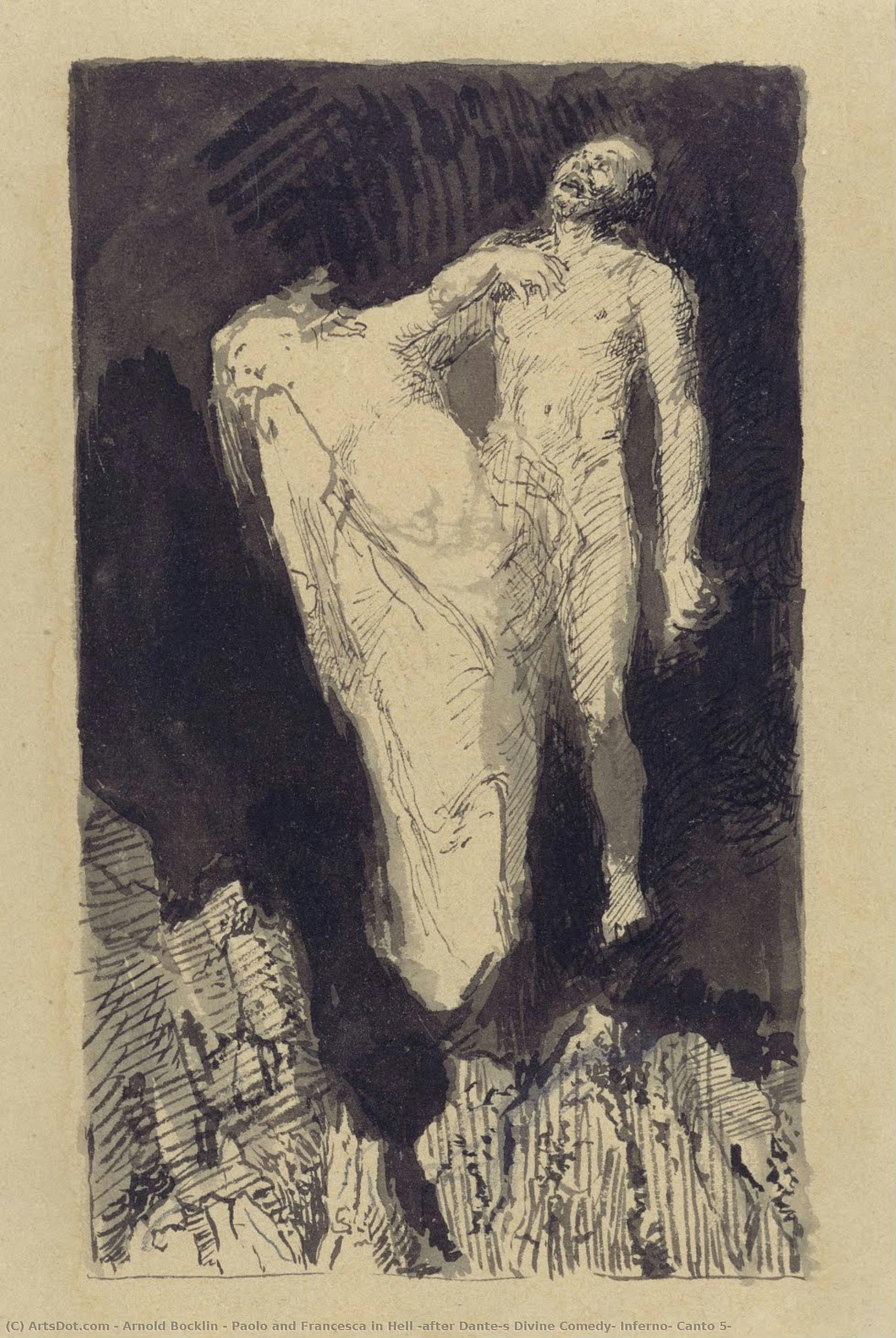
Paolo and Francesca in Hell (after Dante’s Divine Comedy, Inferno, Canto 5)
 Acrylic On Canvas
- WallArt
- Symbolist Painting
 14.0 x 22.0 cm
 Kupferstichkabinett
 Read More
Hand Made Oil Reproduction
Hand-painted oil on canvas in your size and frame, made to order by our artists. ( Buy Print Buy Image)




P118B $10

P118H $10

P118W $10

P438Z $10

P508JH $12

P508YH $12

P805H $10

P805Z $10

P919BZ $10

P919G $10

P919XJ $10

P959ZH $10

P968JZ $12

W106C $8

W218G $10

W218JH $8

W218Y $10

W307PJ $10

W316G $10

W316PJ $8

W316Y $10

W398PJ $8

W4111J $10

W500HY $15

W500JH $15

W692G $12

W849H $8

W940BG $15

W953PJ $8




Pick from our preset sizes that match the artwork's original proportions.

You may enter your own dimensions to fit a specific frame or space. If your selected size does not match the original image's proportions, we will either crop the artwork or extend the painting with additional hand-painted elements. A digital mockup will be sent for your approval before production begins.
Please note that the on-screen preview does not reflect the actual cropping or extension. Only the mockup will accurately show the final composition.
While custom sizes are available, we recommend selecting a dimension from the predefined list to preserve the original proportions.
After order, ArtsDot.com team will email client for instructions and provide a mockup preview
Worldwide Delivery () in 3/4 weeks instead of standard 5 weeks. (16 August). No compromise on quality.

Free Worldwide Express Shipping

High-Quality Linen Canvas

Full Shipping Insurance

Customs Tax Refund Guarantee

True Color Matching Guarantee

60-Day Return Policy (Defects Only)

100% Money-Back Guarantee

Bulk Discount Offer
 Glass option is only available in size under 110 CM

Paolo and Francesca in Hell (after Dante’s Divine Comedy, Inferno, Canto 5)
Reproduction Medium
Reproduction Size
-


Total Price
$ 263
Artwork Description
The Haunting Echoes of Love and Loss
Arnold Böcklin's "Paolo and Francesca in Hell" (1893-1895) isn’t merely a depiction of a tragic tale; it’s a profound plunge into the heart of Dante Alighieri’s *Inferno*, rendered with an unsettling beauty that continues to captivate viewers over a century later. Born in Basel, Switzerland, Böcklin was a key figure in the Symbolist movement, a period characterized by its focus on subjective experience and evocative imagery rather than strict realism. He sought to capture not just what he saw, but what he *felt*, drawing heavily from the rich tapestry of mythology, folklore, and the darker currents of the human psyche.
The painting’s genesis lies within Dante's own poetic vision – specifically, Canto V of the *Divine Comedy*. Dante, guided by Virgil through the second circle of hell, encounters Paolo and Francesca, lovers condemned for their adulterous passion. Böcklin masterfully translates this harrowing encounter onto canvas, eschewing a literal representation of the infernal landscape in favor of an intensely symbolic portrayal of despair and regret. The scene unfolds within a swirling vortex of dark blues and purples, suggesting both the tumultuous emotions experienced by the doomed lovers and the chaotic nature of hell itself. The figures are rendered with a haunting ethereal quality, almost dissolving into the surrounding darkness – a visual representation of their lost humanity.
A Study in Contrasting Forms
Böcklin’s technique is deliberately restrained yet powerfully expressive. He employs a meticulous, almost photographic realism in depicting the figures themselves—Paolo and Francesca are rendered with an unnerving detail, capturing every nuance of their anguish. However, he abandons precise rendering for the surrounding environment, opting instead for loose brushstrokes and atmospheric washes that create a sense of instability and unease. The use of charcoal and quill on paper lends the image a tactile quality, as if one could almost feel the cold wind whipping around the lovers’ bodies. Notice how Böcklin utilizes contrasting forms: Paolo's outstretched arms, reaching towards Francesca, are juxtaposed against her slumped posture, conveying a desperate yearning for connection amidst overwhelming despair.
- Color Palette: Dominated by deep blues, purples, and blacks, evoking the darkness of hell.
- Brushwork: Loose and expressive, creating an atmospheric effect.
- Medium: Quill and brush on paper – contributing to a tactile quality.
Symbolism and Dante’s Moral Lesson
Beyond the immediate depiction of Paolo and Francesca's tragic fate, the painting is laden with symbolic meaning. The swirling winds represent the destructive force of their illicit love, while the desolate landscape mirrors the spiritual emptiness they have embraced. Crucially, Böcklin doesn’t simply portray a romantic tragedy; he embodies Dante’s moral lesson: that earthly passions, unchecked by virtue and reason, lead to eternal damnation. Francesca's poignant speech – as recounted in *Inferno* – highlights her refusal to accept responsibility for her actions, attributing her downfall entirely to the irresistible power of love. This echoes a central theme within the *Divine Comedy*: the importance of free will and the consequences of succumbing to temptation.
A Timeless Portrait of Despair
“Paolo and Francesca in Hell” transcends its historical context, offering a timeless meditation on love, loss, and the inescapable weight of sin. The painting’s enduring power lies not just in its depiction of a specific story from Dante's *Inferno*, but in its ability to evoke a profound sense of melancholy and existential dread. It is a haunting reminder that even the most passionate loves can lead to ruin, and that true happiness resides in aligning one’s desires with virtue and reason. Reproductions of this work continue to resonate deeply, serving as a poignant visual testament to the enduring power of human emotion and the complexities of the human condition.
Related Artworks

Artist Biography
early life and training
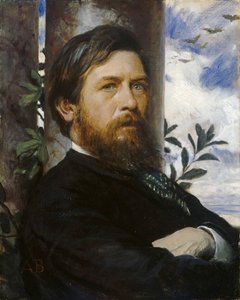
arnold böcklin, a swiss symbolist painter, was born on october 16, 1827, in basel, switzerland. his father, christian frederick böcklin, descended from an old family of schaffhausen and engaged in the silk trade. arnold's mother, ursula lippe, was a native of the same city. he studied at the düsseldorf academy under schirmer, becoming a friend of anselm feuerbach. böcklin is associated with the düsseldorf school of painting.artistic career and symbolism
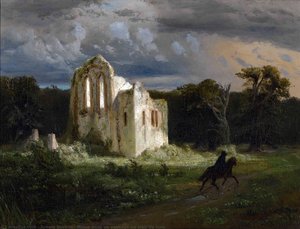
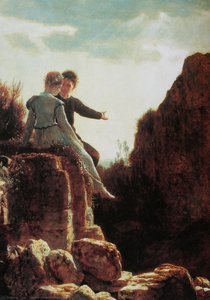
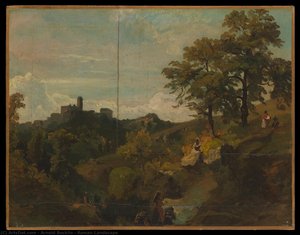
böcklin's artistic journey took him to various cities, including paris, where he worked at the louvre, and rome, where he was influenced by its sights. his work often featured allegorical and mythological figures in settings involving classical architecture, exploring themes of death and mortality.- great park, one of his earliest works, showcased ancient mythology.
- nymph and satyr (1858) and sappho (1859) were notable works from this period.
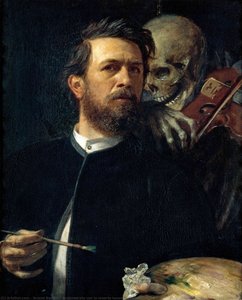
- böcklin's portrait of myself, with death playing a violin (1872) exemplified his unique style.
legacy and influence
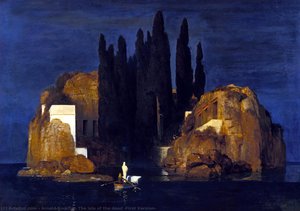
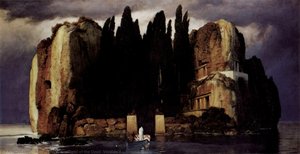
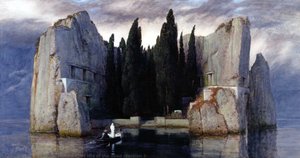
böcklin is best known for his five versions of the isle of the dead (1880-1886), which evoked the english cemetery in florence, where his daughter was buried. his work influenced younger artists like hans thoma and inspired several late-romantic composers.- clement greenberg described böcklin's work as "one of the most consummate expressions" of its time.
- böcklin's style overlapped with the pre-raphaelites, emphasizing the world of dreams and mysticism.
museums and collections
böcklin's work can be found in various museums, including:- öffentliche kunstsammlung (basel, switzerland)
- kunstmuseum basel (switzerland)
- museum kunsthaus zürich (zürich, switzerland)
Arnold Böcklin
1827 - 1901 , Switzerland
Quick Facts
- Artistic Movement Or Style: Symbolism
- Artists Or Movements Influenced By This Artist:
- Hans Thoma
- Pre-Raphaelites
- Artists Who Influenced This Artist:
- Schirmer
- Feuerbach
- Date Of Birth: October 16, 1827
- Date Of Death: January 16, 1901
- Full Name: Arnold Böcklin
- Nationality: Swiss
- Notable Artworks:
- Isle of the Dead
- Nymph and Satyr
- Sappho
- Portrait of Myself
- Place Of Birth: Basel, Switzerland
Related Articles
Dante Gabriel Rossetti's 25 Masterpieces: A Journey Through Victorian Art & Symbolism | ArtsDot
Explore 25 iconic artworks by Dante Gabriel Rossetti, a leading Pre-Raphaelite artist. Discover the stories behind masterpieces like 'Proserpine' & 'Beata Beatrix'. Find museum-quality art reproductions and elevate your home decor with ArtsDot.com.
Paolo Veronese: A Renaissance Master of Color, Composition, and Venetian Splendor
Explore the vibrant world of Paolo Veronese, a Renaissance master renowned for his opulent compositions, masterful use of color, and dramatic Venetian scenes. Discover key artworks & legacy.
Paolo Uccello: Pioneering Perspective & the Renaissance Pursuit of Visual Truth
Explore the revolutionary art of Paolo Uccello, a Florentine Renaissance master who pioneered perspective. Discover his iconic paintings like 'St. George & The Dragon' and learn about his lasting influence on art history.
Piero della Francesca: Renaissance Perspective, Divine Proportion & the Pursuit of Ideal Form
Explore the revolutionary art of Piero della Francesca – master of perspective, divine proportion & Renaissance humanism. Discover his iconic paintings & lasting influence on art history.
Giovanni Paolo Panini: Capturing Roman Grandeur – A Vedute Master's Legacy
Explore the captivating world of Giovanni Paolo Panini, master of Roman vedute painting. Discover his technique, iconic works, influence on art history & collecting advice from experts at ArtsDot.