 Preview
 Send
Send Share
Share
 Details

 Download
 Similars
 X-Ray
X-Ray Diaporama
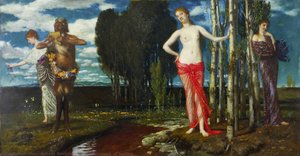
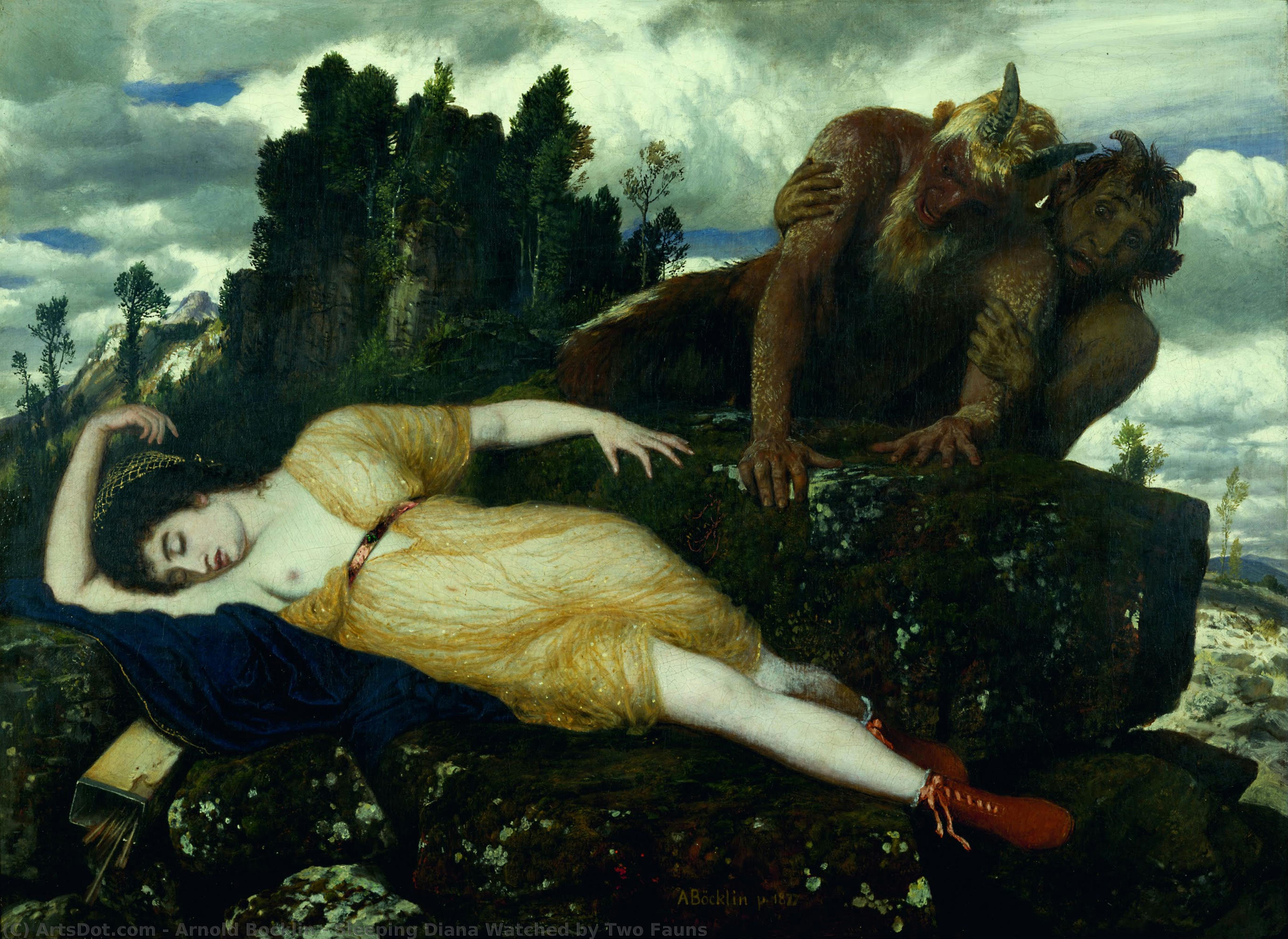
Sleeping Diana Watched by Two Fauns
 Acrylic On Canvas
- WallArt
- Symbolist Painting
 1877
1877 50.0 x 774.0 cm
 Kunstpalast
 Read More
Hand Made Oil Reproduction
Hand-painted oil on canvas in your size and frame, made to order by our artists. ( Buy Print Buy Image)




P118B $10

P118H $10

P118W $10

P438Z $10

P508JH $12

P508YH $12

P805H $10

P805Z $10

P919BZ $10

P919G $10

P919XJ $10

P959ZH $10

P968JZ $12

W106C $8

W218G $10

W218JH $8

W218Y $10

W307PJ $10

W316G $10

W316PJ $8

W316Y $10

W398PJ $8

W4111J $10

W500HY $15

W500JH $15

W692G $12

W849H $8

W940BG $15

W953PJ $8




Pick from our preset sizes that match the artwork's original proportions.

You may enter your own dimensions to fit a specific frame or space. If your selected size does not match the original image's proportions, we will either crop the artwork or extend the painting with additional hand-painted elements. A digital mockup will be sent for your approval before production begins.
Please note that the on-screen preview does not reflect the actual cropping or extension. Only the mockup will accurately show the final composition.
While custom sizes are available, we recommend selecting a dimension from the predefined list to preserve the original proportions.
After order, ArtsDot.com team will email client for instructions and provide a mockup preview
Worldwide Delivery () in 3/4 weeks instead of standard 5 weeks. (17 August). No compromise on quality.

Free Worldwide Express Shipping

High-Quality Linen Canvas

Full Shipping Insurance

Customs Tax Refund Guarantee

True Color Matching Guarantee

60-Day Return Policy (Defects Only)

100% Money-Back Guarantee

Bulk Discount Offer
 Glass option is only available in size under 110 CM

Sleeping Diana Watched by Two Fauns
Reproduction Medium
Reproduction Size
-


Total Price
$ 263
Artwork Description
The Enigmatic Realm of Arnold Böcklin’s “Sleeping Diana”
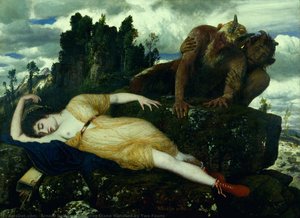
Arnold Böcklin's "Sleeping Diana Watched by Two Fauns," painted in 1877-85, is not merely a depiction of a serene woodland scene; it’s an immersion into a realm of potent symbolism and haunting beauty. This tempera on panel masterpiece, currently residing in the Museum Kunstpalast in Düsseldorf, immediately draws the viewer into a world where classical mythology intertwines with unsettling introspection. The painting's power lies not just in its exquisite detail – the dappled sunlight filtering through ancient trees, the delicate folds of Diana’s gown – but in the palpable tension between innocence and primal instinct, restraint and desire.
Böcklin, a key figure in the Symbolist movement, rejected the naturalism prevalent in earlier art. Instead, he sought to evoke emotions and ideas through suggestive imagery, often drawing upon folklore, mythology, and the darker aspects of human experience. His work frequently explores themes of death, decay, and the subconscious—elements subtly woven into this particular composition. The painting’s genesis is rooted in a fascination with the ancient world, particularly Roman art and literature, combined with a deeply personal exploration of mortality and the fleeting nature of beauty.
A Dance of Contrasts: Goddess and Creatures
At the heart of “Sleeping Diana” lies a captivating interplay of figures. The goddess Diana, depicted in a state of languid repose upon a moss-covered rock, embodies purity, chastity, and the hunt—attributes traditionally associated with her role as protector of young women. Her serene expression and graceful posture suggest both vulnerability and an underlying strength. However, this idealized image is dramatically contrasted by the two fauns flanking her. These creatures, rendered with a touch of unsettling realism, possess a distinctly animalistic quality, their hands almost touching in a gesture that hints at a suppressed, perhaps even forbidden, attraction.
The positioning of the fauns—one reaching out tentatively towards Diana, the other holding back—creates a dynamic tension. It’s not a violent confrontation, but rather a delicate negotiation between opposing forces: the divine and the earthly, the rational and the instinctual, the controlled and the wild. The subtle shift in their postures suggests a moment suspended in time, a fleeting glimpse into a primal drama.
Technique and Atmosphere – A Palette of Twilight
Böcklin’s masterful technique contributes significantly to the painting's evocative atmosphere. He employed a rich, layered application of tempera paint, creating a sense of depth and texture that captures the dappled light filtering through the trees. The color palette is dominated by muted greens, browns, and blues—tones reminiscent of twilight or early morning—which imbue the scene with a melancholic beauty. Böcklin’s use of chiaroscuro – the dramatic contrast between light and shadow – further enhances the painting's emotional impact, drawing attention to Diana’s form while simultaneously shrouding the surrounding landscape in mystery.
Notably, Böcklin was influenced by the Italian Renaissance color palettes, particularly those favored during the Early Renaissance. This influence is evident in the warm, earthy tones and the overall sense of harmony and balance within the composition. The meticulous detail in rendering the foliage and the subtle nuances of light and shadow demonstrate Böcklin’s exceptional skill as a landscape painter.
Symbolism and Enduring Resonance
“Sleeping Diana Watched by Two Fauns” is replete with symbolic meaning, inviting multiple interpretations. The painting can be read as an allegory for the tension between desire and restraint, innocence and experience, or perhaps even the struggle to maintain control over one’s impulses. The fauns themselves are often interpreted as representing the darker aspects of human nature—the primal instincts that lie beneath the surface of civilized society. Diana's sleep can be seen as a state of vulnerability, while the watchful fauns embody the constant threat of temptation and transgression.
Despite its somewhat unsettling undertones, “Sleeping Diana” remains a profoundly beautiful and captivating work of art. It’s a testament to Böcklin’s ability to capture not just visual beauty but also the complex emotions and psychological states that lie beneath the surface of human experience. Reproductions of this iconic painting continue to resonate with viewers today, offering a glimpse into a world where myth, symbolism, and timeless beauty converge.
Related Artworks
Artist Biography
early life and training
arnold böcklin, a swiss symbolist painter, was born on october 16, 1827, in basel, switzerland. his father, christian frederick böcklin, descended from an old family of schaffhausen and engaged in the silk trade. arnold's mother, ursula lippe, was a native of the same city. he studied at the düsseldorf academy under schirmer, becoming a friend of anselm feuerbach. böcklin is associated with the düsseldorf school of painting.artistic career and symbolism
böcklin's artistic journey took him to various cities, including paris, where he worked at the louvre, and rome, where he was influenced by its sights. his work often featured allegorical and mythological figures in settings involving classical architecture, exploring themes of death and mortality.- great park, one of his earliest works, showcased ancient mythology.
- nymph and satyr (1858) and sappho (1859) were notable works from this period.
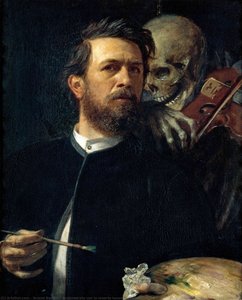
- böcklin's portrait of myself, with death playing a violin (1872) exemplified his unique style.
legacy and influence
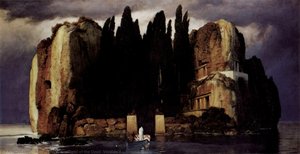
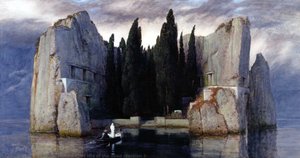
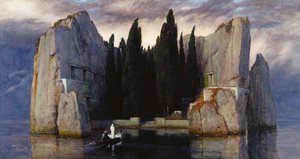
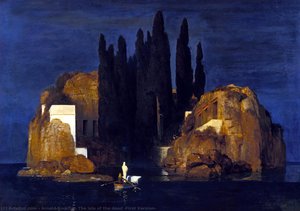
böcklin is best known for his five versions of the isle of the dead (1880-1886), which evoked the english cemetery in florence, where his daughter was buried. his work influenced younger artists like hans thoma and inspired several late-romantic composers.- clement greenberg described böcklin's work as "one of the most consummate expressions" of its time.
- böcklin's style overlapped with the pre-raphaelites, emphasizing the world of dreams and mysticism.
museums and collections
böcklin's work can be found in various museums, including:- öffentliche kunstsammlung (basel, switzerland)
- kunstmuseum basel (switzerland)
- museum kunsthaus zürich (zürich, switzerland)
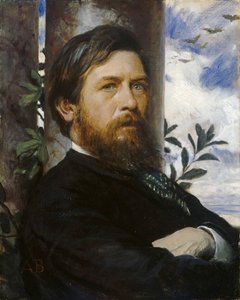
Arnold Böcklin
1827 - 1901 , Switzerland
Quick Facts
- Artistic Movement Or Style: Symbolism
- Artists Or Movements Influenced By This Artist:
- Hans Thoma
- Pre-Raphaelites
- Artists Who Influenced This Artist:
- Schirmer
- Feuerbach
- Date Of Birth: October 16, 1827
- Date Of Death: January 16, 1901
- Full Name: Arnold Böcklin
- Nationality: Swiss
- Notable Artworks:
- Isle of the Dead
- Nymph and Satyr
- Sappho
- Portrait of Myself
- Place Of Birth: Basel, Switzerland
Related Articles
Echoes of Olympus: Mythological Narratives in Western Art Through the Ages
Explore the captivating history of mythological narratives in Western art! From ancient Greece to modern masterpieces, discover iconic artworks & symbolism. Expert analysis and high-quality reproductions at ArtsDot.
Weaving Personal Narratives into Symbolic Form: Commissioning Oil Paintings as Expressions of Individual Mythology
Transform your story into an enduring masterpiece. Commission a bespoke oil painting with ArtsDot – blending personal narrative, symbolic depth & expert artistry. Explore the power of art to express your unique mythology.
Franz von Stuck: Symbolism, Decadence & the Pursuit of Ideal Beauty
Explore the captivating world of Franz von Stuck, a leading Symbolist painter. Discover his mythological masterpieces, decadent themes, & investment potential. Expert analysis for discerning collectors.
Salvador Dalí's Masterpieces: 25 Surrealist Visions for Your Home | ArtsDot
Journey into the surreal world of Salvador Dalí! Explore 25 iconic paintings—from 'The Persistence of Memory' to his boldest creations. Discover the stories behind these masterpieces & find museum-quality art reproductions for your home at ArtsDot.com.
The Ethereal Realm on Canvas: Exploring Themes of Fantasy & Imagination in Art History
Explore the captivating world of fantasy & surreal art history with ArtsDot. Discover iconic artists like De Chirico & Moreau, and expert guidance for collecting timeless masterpieces. Find your dream artwork today!