 Preview
 Send
Send Share
Share
 Details

 Download
 Similars
 X-Ray
X-Ray Diaporama
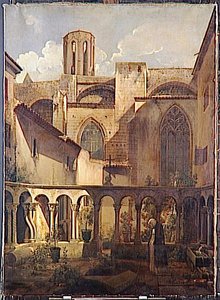
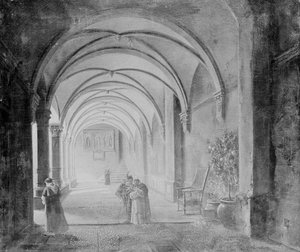
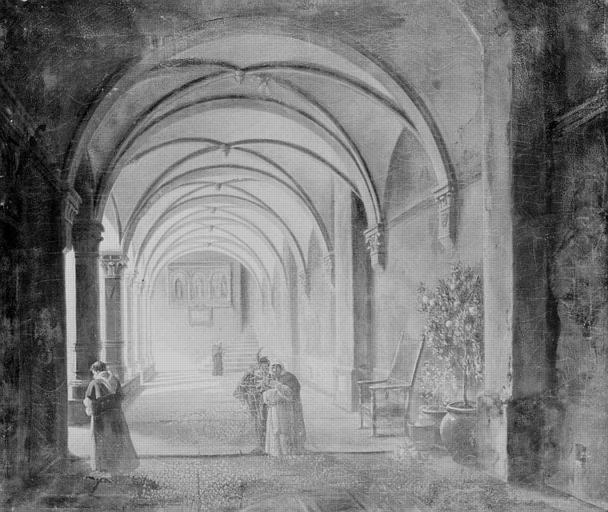
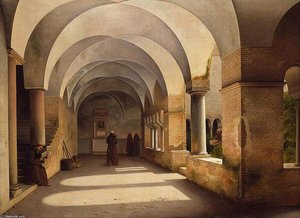
VUE INTERIEURE DU CLOITRE DE SANTA MARIA NOVELLA A FLORENCE


 Read More
Hand Made Oil Reproduction
Hand-painted oil on canvas in your size and frame, made to order by our artists. ( Buy Print Buy Image)




P118B $10

P118H $10

P118W $10

P438Z $10

P508JH $12

P508YH $12

P805H $10

P805Z $10

P919BZ $10

P919G $10

P919XJ $10

P959ZH $10

P968JZ $12

W106C $8

W218G $10

W218JH $8

W218Y $10

W307PJ $10

W316G $10

W316PJ $8

W316Y $10

W398PJ $8

W4111J $10

W500HY $15

W500JH $15

W692G $12

W849H $8

W940BG $15

W953PJ $8




Pick from our preset sizes that match the artwork's original proportions.

You may enter your own dimensions to fit a specific frame or space. If your selected size does not match the original image's proportions, we will either crop the artwork or extend the painting with additional hand-painted elements. A digital mockup will be sent for your approval before production begins.
Please note that the on-screen preview does not reflect the actual cropping or extension. Only the mockup will accurately show the final composition.
While custom sizes are available, we recommend selecting a dimension from the predefined list to preserve the original proportions.
After order, ArtsDot.com team will email client for instructions and provide a mockup preview
Worldwide Delivery () in 3/4 weeks instead of standard 5 weeks. (25 August). No compromise on quality.

Free Worldwide Express Shipping

High-Quality Linen Canvas

Full Shipping Insurance

Customs Tax Refund Guarantee

True Color Matching Guarantee

60-Day Return Policy (Defects Only)

100% Money-Back Guarantee

Bulk Discount Offer
 Glass option is only available in size under 110 CM

VUE INTERIEURE DU CLOITRE DE SANTA MARIA NOVELLA A FLORENCE
Reproduction Medium
Reproduction Size
-


Total Price
$ 313
Artwork Description
Auguste de Forbin’s Serene Reflection: An Exploration of Florentine Cloister Light
The artwork presented here—a monochrome depiction of the cloister at Santa Maria Novella in Florence—offers more than just a visual record; it embodies the spirit of Romanticism, capturing a moment suspended between observation and emotion. Executed around 1825-1850 during the second quarter of the nineteenth century, this piece exemplifies Forbin’s meticulous approach to topographical drawing, blending scientific accuracy with artistic sensitivity—a hallmark of his oeuvre.- Subject Matter & Context: Santa Maria Novella, a Franciscan church founded in 1246, stands as a testament to Florentine architectural grandeur and spiritual devotion. Forbin’s depiction isn't merely an illustration; it seeks to convey the atmosphere of contemplation fostered within its walls—a space designed for prayer and reflection during a period grappling with societal reform and artistic experimentation.
- Style & Technique: The artwork adheres closely to Romantic principles, prioritizing mood and tonal gradation over precise representation. Forbin employed graphite or charcoal on paper, layering delicate washes of pigment – likely watercolor – to achieve subtle nuances in shading that illuminate the architectural forms with remarkable realism. This technique prioritizes capturing the interplay of light and shadow, mirroring the Romantic fascination with sublime landscapes.
- Composition & Perspective: The composition draws the viewer’s eye inward through repeating arched lines converging towards a distant staircase and altar—a deliberate strategy to emphasize depth and create an illusion of vastness. Linear perspective skillfully renders the cloister's spatial dimensions, mirroring the Romantic preoccupation with capturing the grandeur of nature and architectural spaces.
- Color Palette & Texture: Remarkably devoid of color, the artwork’s grayscale palette underscores its focus on form and texture. The artist meticulously rendered stone surfaces, tiled floors, draped fabrics, and foliage—suggesting a tactile experience akin to encountering the space firsthand. These textural details contribute significantly to the overall impression of serenity.
- Symbolism & Emotional Impact: Beyond its formal qualities, the artwork speaks to themes of spirituality and timelessness. The quiet stillness of the cloister reflects the Romantic yearning for communion with the divine—a sentiment powerfully conveyed through Forbin’s masterful rendering of light and shadow. It invites contemplation and evokes a feeling of profound peace.
Related Artworks


Artist Biography
A Life Forged in the Crucible of Revolution
The life of Auguste de Forbin (1777–1841) was a dramatic tapestry woven from the threads of nobility, tragedy, and profound political transformation. Born into the aristocratic splendor of Château La Roque-d’Anthéron in Provence, Forbin’s early years were marked by an extraordinary precocity; it is said he possessed the ability to draw before he had even mastered the art of writing. This innate talent was nurtured through a lifelong bond with his contemporary, François Marius Granet, a friendship that would serve as a cornerstone for their shared artistic evolution. However, the tranquility of his noble upbringing was shattered by the violent tremors of the French Revolution. During the Lyon insurrection of 1793, Forbin suffered the devastating loss of both his father, the Marquis de Pont-à-Mousson, and his uncle. This early encounter with mortality and political upheaval left an indelible mark on his psyche, instilling a sensitivity to the ephemeral nature of power and the inevitable decay of even the most grand structures.
Despite the shadows cast by personal loss, Forbin’s ascent within the Parisian art world was nothing short of meteoric. The Directory provided him with the ultimate gateway to prestige: entry into the legendary studio of Jacques-Louis David. Within this neoclassical sanctuary, Forbin absorbed the rigorous discipline and formal precision that defined the era's dominant aesthetic. Collaborating closely with Granet, he refined a technique that balanced the structured ideals of Neoclassicism with an emerging, soulful Romanticism. His journey was not merely one of academic study but a physical pilgrimage through the heart of classical civilization, most notably during his transformative travels to Rome in 1804. In the vibrant, intellectual atmosphere of Roman society, Forbin immersed himself in the grandeur of antiquity, a period that would forever inform the spiritual and historical weight of his later compositions.
The Romantic Vision: Landscapes of Memory and Decay
As his style matured, Forbin’s work began to transcend mere topographical representation, moving toward a deeply emotive exploration of the sublime. His canvases became windows into a world where history and nature converged in moments of poignant melancholy. In masterpieces such as “Vue de Cazzafani, dans l'île de Chypre,” Forbin utilized a masterful blend of realism and evocative abstraction to capture the relentless passage of time. These landscapes were rarely just scenery; they were visceral encounters with the ghosts of bygone eras, where crumbling ruins served as metaphors for the fragility of human ambition. His ability to render the texture of decay—the way light falls upon weathered stone or how shadows cling to ancient walls—allowed him to communicate a sense of loss that resonated deeply with the Romantic movement's fascination with the ephemeral.
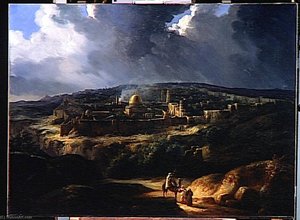
This preoccupation with historical narrative and spiritual grandeur is perhaps most evident in his depictions of the Levant and the Holy Land. In works like “Vue de Jérusalem, prise de la vallée de Josaphat,” painted in 1825, Forbin constructed meticulously crafted tableaus that sought to capture the sacred weight of the ancient city. Through a sophisticated use of light and composition, he invited viewers to contemplate the intersection of the divine and the earthly. Whether painting the sun-drenched ruins of Ascalon or the quiet cloisters of Aix-en-Provence, Forbin’s brushwork remained deeply informed by his early training under David, yet it was infused with a new, restless energy that sought to find beauty in the wreckage of history.
Legacy of a Curator and Antiquary
Beyond the canvas, Auguste de Forbin occupied a position of immense cultural significance within the French state. His expertise as an antiquary and his profound understanding of classical aesthetics led him to succeed the great Vivant Denon as the curator of the Musée du Louvre and other vital French museums. In this capacity, he was not merely a keeper of objects but a guardian of national heritage, navigating the complex responsibilities of managing one of the world's most significant collections during a period of intense political transition. His career, which intertwined military service, diplomatic missions, and museum administration, reflects the multifaceted nature of an intellectual caught between the pragmatic demands of the Napoleonic era and the idealistic pursuits of the Romantic age.
The historical significance of Forbin lies in his ability to bridge disparate worlds:
- Stylistic Synthesis: He successfully merged the disciplined, linear precision of Davidian Neoclassicism with the emotive, atmospheric depth of Romanticism.
- Cultural Stewardship: As a curator, he played a pivotal role in shaping the public's engagement with classical and historical art within the Louvre.
- Thematic Depth: His oeuvre remains a profound meditation on the themes of memory, the passage of time, and the enduring power of ruins.
Auguste de Forbin
1777 - 1841
Quick Facts
- Artistic Movement Or Style: Romanticism
- Artists Or Movements Influenced By This Artist: ['Neoclassicism']
- Artists Who Influenced This Artist: ['François Marius Granet']
- Date Of Birth: 1777
- Date Of Death: 1841
- Full Name: Auguste de Forbin
- Nationality: French
- Notable Artworks:
- Vue de Jérusalem, prise de la vallée de Josaphat
- Vue de Cazzafani, dans l’île de Chypre
- Vue d’un cloître sur les bords de la Méditerranée, près de Carrère
- Place Of Birth: Laroched'antheron, France
Related Articles

The Nuances of Graphite: Exploring Emotional Depth & Technical Mastery in Pencil Drawing
Explore the captivating world of graphite drawing! Discover its rich history, master essential techniques like chiaroscuro, and learn how artists evoke emotion through this timeless medium. Expert insights for art enthusiasts.
The Alchemy of Graphite: An Expert Guide to Mastering Detail and Depth in Pencil Sketching
Unlock the secrets of graphite sketching with our expert guide for art students. Learn to master pencil grades, create realistic depth, and capture intricate textures through professional techniques designed to elevate your observational drawing skills.
Uffizi's 25 Masterpieces: Renaissance Art & Timeless Decor Inspiration
Journey through the Uffizi Gallery's 25 most iconic Renaissance artworks! Explore Botticelli, Leonardo da Vinci & Michelangelo’s masterpieces. Find museum-quality art reproductions and curated decor ideas to bring timeless Italian beauty into your home. Discover all masterpieces on ArtsDot.com

Graphite Masters: 10 Iconic Paintings & Timeless Art for Your Home
Explore 10 iconic paintings dominated by graphite tones – from Rembrandt's chiaroscuro to Goya’s drama. Discover art history, techniques & find museum-quality reproductions for your home at . Explore the full collection online.
The Power of One Hue: Mastering Monochrome Art for Sophisticated and Timeless Interiors
Elevate your interiors with the profound elegance of monochrome art. Explore ArtsDot.com’s curated collection of hand-painted oil reproductions and bespoke commissions, designed to bring sophisticated simplicity and timeless texture to every professional design project.