 Preview
 Send
Send Share
Share
 Details

 Download
 Similars
 X-Ray
X-Ray Diaporama
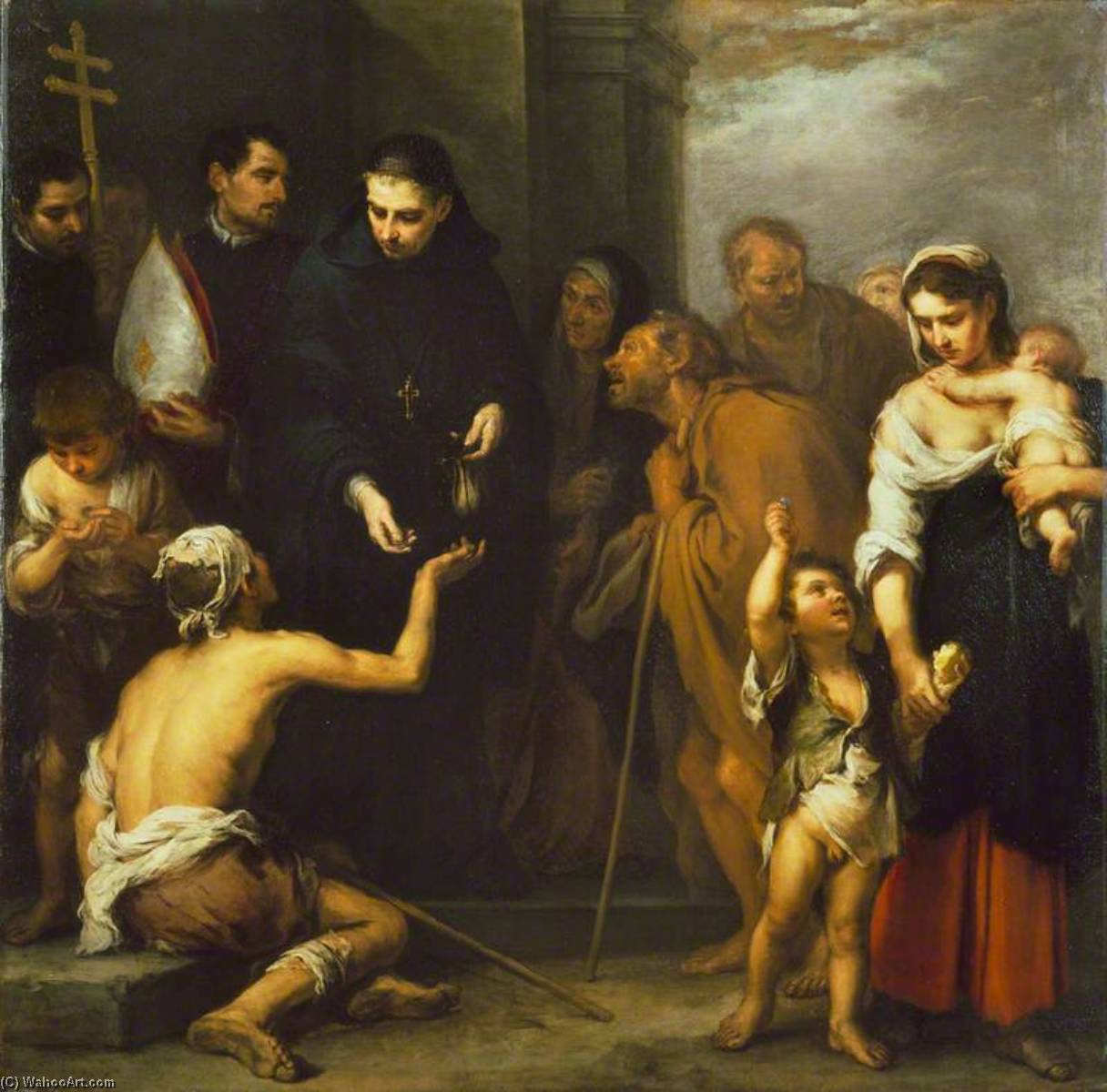
The Charity of Saint Thomas of Villanueva
 Oil On Canvas
- WallArt
- Baroque Spanish Painting
 1670
1670 150.0 x 152.0 cm
 The Wallace Collection
 Read More
Giclée / Art Print
Museum-quality giclée or canvas print with fast production and flexible finish options. ( Buy Hand Made Painting Buy Image)




P118B $10

P118H $10

P118W $10

P438Z $10

P508JH $12

P508YH $12

P805H $10

P805Z $10

P919BZ $10

P919G $10

P919XJ $10

P959ZH $10

P968JZ $12

W106C $8

W218G $10

W218JH $8

W218Y $10

W307PJ $10

W316G $10

W316PJ $8

W316Y $10

W398PJ $8

W4111J $10

W500HY $15

W500JH $15

W692G $12

W849H $8

W940BG $15

W953PJ $8




Pick from our preset sizes that match the artwork's original proportions.

You may enter your own dimensions to fit a specific frame or space. If your selected size does not match the original image's proportions, we will either crop the artwork or extend the image with a mirrored or solid-fill edge. A digital mockup will be sent for your approval before production begins.
Please note that the on-screen preview does not reflect the actual cropping or extension. Only the mockup will accurately show the final composition.
While custom sizes are available, we recommend selecting a dimension from the predefined list to preserve the original proportions.
Worldwide Delivery () in 2 weeks instead of standard 4/5 weeks. (16 August)

Free Worldwide Express Shipping

High-Quality Linen Canvas

Full Shipping Insurance

Customs Tax Refund Guarantee

True Color Matching Guarantee

60-Day Return Policy (Defects Only)

100% Money-Back Guarantee

Bulk Discount Offer
 Glass option is only available in size under 110 CM

The Charity of Saint Thomas of Villanueva
Giclée / Art Print
Reproduction Size
-


Total Price
$ 63
Collectible Description
Bartolomé Esteban Murillo’s “The Charity of Saint Thomas of Villanueva” – A Window into Golden Age Seville
Bartolomé Esteban Murillo's "The Charity of Saint Thomas of Villanueva," painted around 1670, isn’t merely a depiction of an act of generosity; it’s a profound meditation on compassion, faith, and the social fabric of 17th-century Seville. This remarkable work, now housed within the Wallace Collection in London, offers a captivating glimpse into the life of Saint Thomas de Villanova, a figure revered for his unwavering dedication to the poor and marginalized – a man whose legacy Murillo masterfully captures with a luminous palette and deeply human touch.
The scene unfolds within a modest interior, likely a charitable institution overseen by the Augustinian friars. At the center stands Saint Thomas, identifiable by his distinctive habit and bearing an expression of serene dignity. He extends his hand to a group of individuals – men, women, and children – each receiving a portion of food. The composition is remarkably balanced; Murillo avoids dramatic diagonals or overly complex arrangements, instead favoring a harmonious grouping that draws the eye naturally across the canvas. The figures are not idealized in a classical sense; they possess a tangible humanity, their faces etched with varying degrees of need and gratitude. This realism, tempered by Murillo’s signature style, elevates the painting beyond simple charity to a poignant portrayal of human connection.
A Masterclass in Light and Color – Murillo's Technique
Murillo’s genius lies not just in his subject matter but also in his masterful technique. He employs a distinctive “tenebrism,” a dramatic contrast between light and shadow, to create a sense of depth and intimacy. The figures are bathed in a soft, diffused light that emanates from an unseen source, highlighting their faces and gestures while leaving the background subtly darker. This chiaroscuro effect draws attention to the central act of charity, emphasizing its importance and emotional resonance. The artist’s brushwork is remarkably delicate – almost feathery – particularly noticeable in the rendering of fabrics and textures. He achieves a remarkable level of detail without sacrificing the overall sense of serenity and grace.
Furthermore, Murillo's use of color is exceptionally restrained yet profoundly evocative. The palette is dominated by earthy tones—ochres, browns, and muted reds—reflecting the humble setting and the dignity of the recipients. The subtle variations in hue create a sense of warmth and intimacy, while the occasional bursts of brighter color – perhaps in a child’s garment or a flower – add visual interest without disrupting the overall harmony.
Historical Context: Seville and the Spirit of Charity
To fully appreciate “The Charity of Saint Thomas of Villanueva,” it's crucial to understand the historical context in which it was created. 17th-century Seville, a vibrant hub of commerce and religious fervor, was also grappling with significant social inequalities. The city’s wealth was concentrated in the hands of a few, while many struggled to survive on meager wages or faced destitution. Saint Thomas de Villanova's life exemplified this tension – he dedicated himself entirely to alleviating poverty and providing aid to those in need, earning him considerable respect and admiration.
Murillo’s painting reflects this social reality, offering a powerful visual statement about the importance of charity and compassion. The work was likely commissioned by the Monastery of Saint Augustin, reflecting their commitment to supporting the poor within the community. It's important to note that Murillo wasn't simply documenting an event; he was conveying a deeply held belief in the transformative power of selfless giving – a belief rooted in both Christian faith and humanist values.
Symbolism and Emotional Resonance
Beyond its immediate depiction of charity, “The Charity of Saint Thomas of Villanueva” is rich in symbolism. The two birds perched near the top left and bottom right corners are often interpreted as representing hope and divine grace – a subtle reminder that acts of kindness are ultimately blessed by God. The simple gestures of gratitude on the faces of those receiving alms speak volumes about the profound impact of Saint Thomas’s generosity.
Ultimately, this painting transcends its historical context to offer a timeless message of empathy and compassion. It invites viewers to contemplate their own capacity for kindness and to consider the importance of supporting those in need. Murillo's masterpiece remains a powerful testament to the enduring value of human connection and the transformative power of charity – a luminous window into the heart of Golden Age Seville and the spirit of Saint Thomas de Villanova.
Related Artworks
Artist Biography
A Life Bathed in Andalusian Light
Bartolomé Esteban Murillo, a name synonymous with the golden age of Spanish Baroque painting, emerged from the vibrant heart of Seville in 1618. His life, though marked by personal tragedy and societal shifts, blossomed into an artistic career that captured the spirit of his time—a period of religious fervor, social change, and burgeoning artistic innovation. Born to Gaspar Esteban, a barber-surgeon, and María Pérez Murillo, within a large family of fourteen children, young Bartolomé experienced early loss with the passing of both parents in quick succession during his childhood. This hardship led him into the guardianship of his sister’s husband, Juan Agustín Lagares, a pivotal figure who would indirectly guide his artistic path. Murillo's initial training began under Juan del Castillo, a local artist and relative through his mother, laying the foundation for a style that would eventually become uniquely his own. The early years were steeped in the realist traditions prevalent in Seville, absorbing influences from masters like Zurbarán, Ribera, and Cano—artists who prioritized stark realism and dramatic intensity. However, Murillo’s genius lay not in mere imitation but in transforming these foundations into something softer, more luminous, and profoundly human.From Realism to Radiant Grace
Murillo's artistic journey wasn’t a sudden leap to fame but rather an evolution marked by distinct phases. His early works, heavily influenced by the austere realism of his contemporaries, showcased a meticulous attention to detail and a somber palette. Young Man with a Basket of Fruit (Personification of Summer), created around 1640-50, exemplifies this period—a grounded depiction of everyday life rendered with remarkable precision. Yet, even in these early pieces, hints of the tenderness and emotional depth that would define his mature style began to emerge. The Young Beggar, painted circa 1645, demonstrates a growing sensitivity towards human suffering, echoing the influence of Velázquez’s masterful portrayals of everyday people. As Murillo matured, his style underwent a remarkable transformation. He moved away from the stark realism of his predecessors, embracing a more polished and refined aesthetic that resonated with the tastes of Seville's burgeoning bourgeois and aristocratic classes. This shift was particularly evident in his religious works, where he infused traditional iconography with an unprecedented sense of warmth, grace, and emotional accessibility. St. Jerome, painted between 1650-52, stands as a testament to this mature style—a softly luminous depiction that radiates serenity and devotion.A Master of Religious Sentiment and Genre Scenes
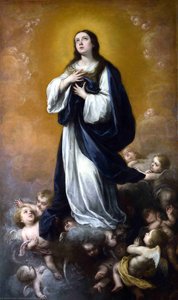
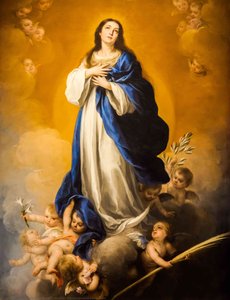
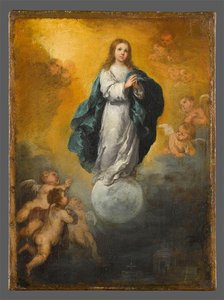
Murillo’s artistic output was remarkably diverse, encompassing religious paintings, genre scenes, portraits, and mythological subjects. However, he is most celebrated for his depictions of the Immaculate Conception—a subject that captivated him throughout his career and resulted in numerous variations, each imbued with a unique sense of ethereal beauty. These works, characterized by their delicate brushwork, luminous colors, and graceful compositions, became immensely popular and established Murillo as the preeminent painter of religious imagery in Spain. Beyond his sacred subjects, Murillo also excelled at capturing the everyday lives of ordinary people. His genre scenes—depictions of flower girls, street urchins, and beggars—offer a poignant glimpse into the social realities of 17th-century Seville. These paintings are not merely observational studies; they are imbued with a deep sense of empathy and compassion, elevating the humble subjects to a level of dignity and grace. He possessed an extraordinary ability to capture the innocence of childhood, portraying young children with remarkable realism and tenderness.Legacy and Enduring Influence
Bartolomé Esteban Murillo’s impact on the course of Spanish art—and indeed, European painting—is undeniable. He established a distinctive style that blended religious devotion with humanistic sentiment, creating works that resonated deeply with audiences across social strata. His influence extended far beyond his native Spain, inspiring generations of artists throughout Europe. Gainsborough and Greuze, among others, acknowledged their debt to Murillo’s luminous style and sensitive portrayals of human emotion. He trained numerous pupils in his Seville workshop, ensuring the continuation of his artistic legacy. His paintings can be found in prestigious museums worldwide, including the Museo del Prado in Madrid, the Hermitage Museum in Saint Petersburg, the Wallace Collection in London, and the Timken Museum of Art in San Diego—testaments to his enduring appeal and historical significance. Murillo’s art continues to captivate viewers with its beauty, grace, and profound humanity, solidifying his place as one of the most beloved and influential painters of the Spanish Baroque period. His ability to infuse religious imagery with emotional depth and portray everyday life with empathy ensures that his work remains relevant and inspiring centuries after his death in 1682.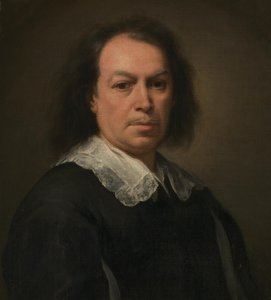
Bartolomé Esteban Murillo
1618 - 1682 , Spain
Quick Facts
- Artistic Movement Or Style: Baroque painting
- Artists Or Movements Influenced By This Artist:
- Gainsborough
- Greuze
- Artists Who Influenced This Artist:
- Zurbarán
- Jusepe de Ribera
- Date Of Birth: January 1, 1618
- Date Of Death: April 3, 1682
- Full Name: Bartolomé Esteban Murillo
- Nationality: Spanish
- Notable Artworks:
- The Immaculate Conception
- Young Beggar
- St. Jerome
- Place Of Birth: Seville, Spain
Related Articles
The Golden Age Reforged: Dramatic Realism & Religious Zeal in Spanish Baroque Art
Explore the dramatic world of Spanish Baroque art! Discover masters like Zurbarán & the powerful influence of religious zeal on painting techniques – a guide for collectors and enthusiasts.
Bartolomé Esteban Murillo: Divine Light & Social Commentary in Golden Age Seville
Explore the captivating world of Bartolomé Esteban Murillo, a master of Spanish Baroque painting. Discover his luminous religious scenes, tender genre paintings & lasting legacy in Golden Age Seville. Learn more at ArtsDot.

The Dramatic Flourish: Exploring the Baroque Movement's Enduring Legacy in Art History
Explore the dramatic world of Baroque art! Discover iconic artists like Caravaggio & Rubens, defining techniques, and its lasting impact on art history. Expert insights for collectors & enthusiasts at ArtsDot.

Baroque Masterpieces: 10 Paintings That Defined an Era |
Journey through the drama & grandeur of Baroque art! Explore 10 masterpieces by Caravaggio, Rembrandt, Rubens & more. Discover stunning oil paintings, rich colors & timeless stories. Find museum-quality reproductions at .
Theatricality & Triumph: Baroque Drama in Painting & Sculpture
Explore the dramatic world of Baroque art! Discover its history, defining characteristics, & lasting influence on painting & sculpture. Expert insights into Caravaggio, Zurbarán, and Bernini – plus high-quality reproductions at ArtsDot.