 Send
Send Share
Share
 Details

 Download
 Similars
 Diaporama
History of Saint Donnino


 Read More
Hand Made Oil Reproduction
Hand-painted oil on canvas in your size and frame, made to order by our artists. ( Buy Print Buy Image)




































Pick from our preset sizes that match the artwork's original proportions.

You may enter your own dimensions to fit a specific frame or space. If your selected size does not match the original image's proportions, we will either crop the artwork or extend the painting with additional hand-painted elements. A digital mockup will be sent for your approval before production begins.
Please note that the on-screen preview does not reflect the actual cropping or extension. Only the mockup will accurately show the final composition.
While custom sizes are available, we recommend selecting a dimension from the predefined list to preserve the original proportions.
After order, ArtsDot.com team will email client for instructions and provide a mockup preview
Worldwide Delivery () in 3/4 weeks instead of standard 5 weeks. (23 August). No compromise on quality.

Free Worldwide Express Shipping

High-Quality Linen Canvas

Full Shipping Insurance

Customs Tax Refund Guarantee

True Color Matching Guarantee

60-Day Return Policy (Defects Only)

100% Money-Back Guarantee

Bulk Discount Offer
 Glass option is only available in size under 110 CM

History of Saint Donnino
Reproduction Medium
Reproduction Size
-


Total Price
$ 263
Artwork Description
A Tapestry in Stone: The Narrative Majesty of Saint Donnino
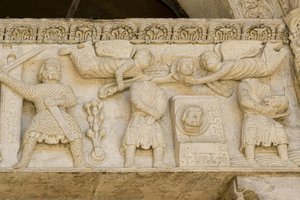
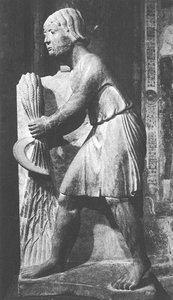
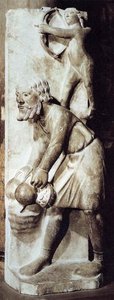
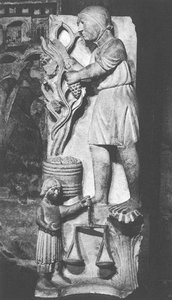
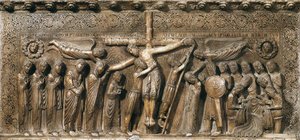
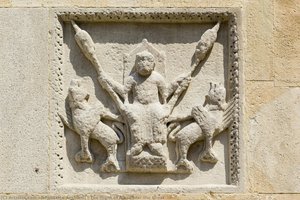
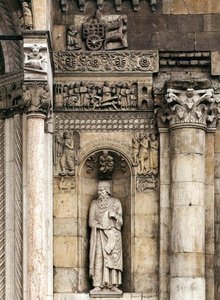
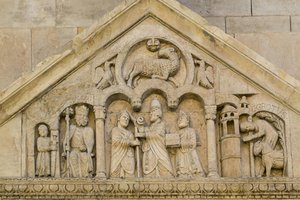
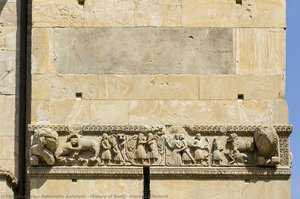
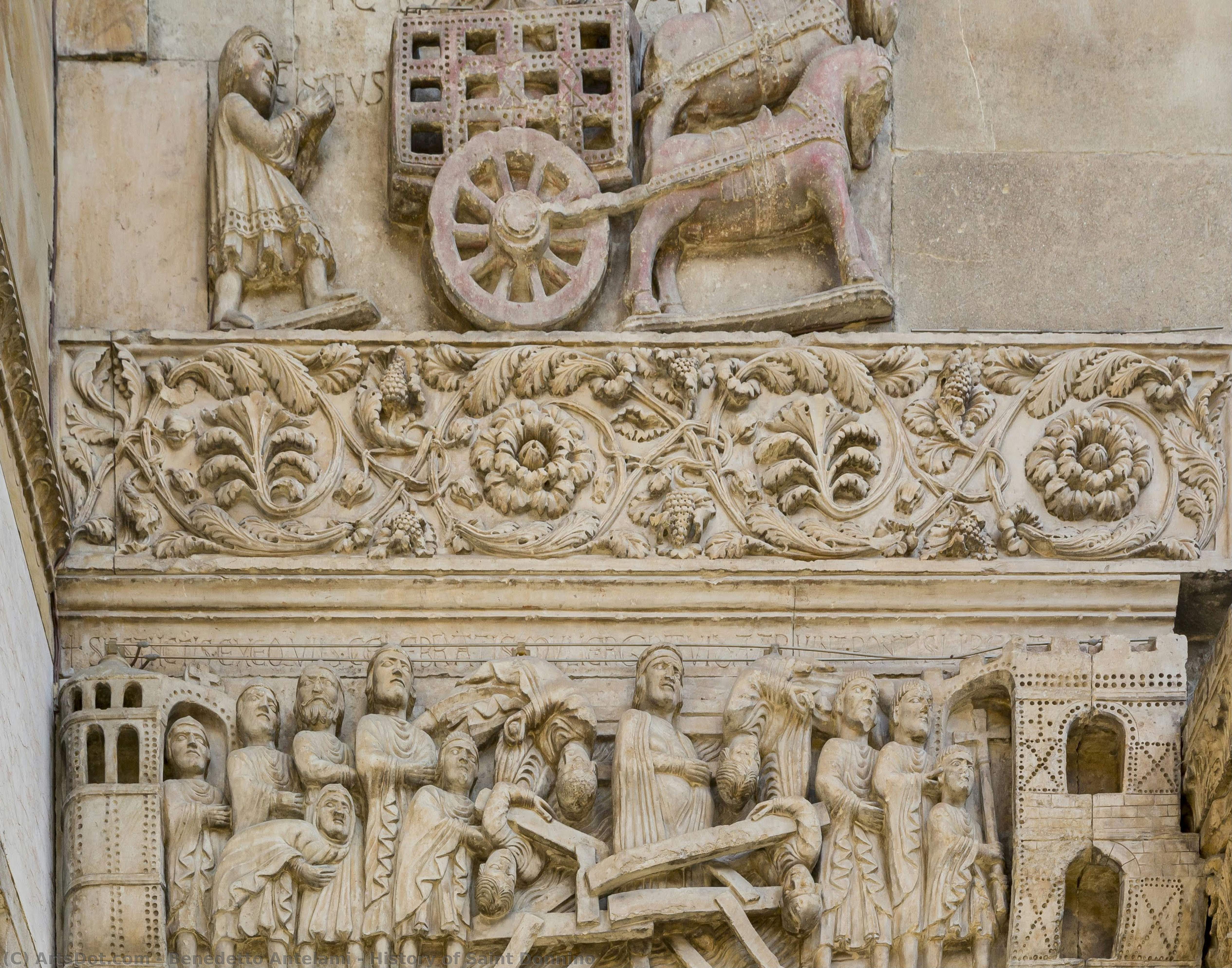
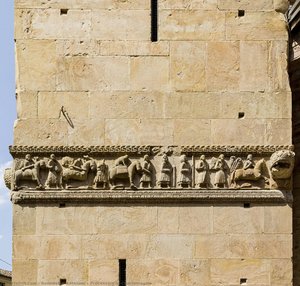
To encounter the History of Saint Donnino is to step into a silent, rhythmic dialogue between the earthly and the divine. This extraordinary sandstone carving, attributed to the masterful hand of Benedetto Antelami, serves as more than mere decoration; it is a frozen chronicle of faith and endurance. The relief work breathes life into the cold medium of stone, presenting a complex tableau where human struggle and spiritual triumph intertwines. As one gazes upon the intricate figures, there is an immediate sense of being transported to the late 12th century, where every chisel mark was intended to instruct the faithful and stir the soul through visual storytelling.
The composition is a masterclass in medieval narrative technique, utilizing a multi-layered arrangement to guide the viewer's eye through a sacred timeline. In the upper reaches of the carving, figures emerge with a delicate grace, while the lower registers ground the scene in the tactile reality of pastoral life. The presence of animals—a sturdy ox positioned centrally and a horse appearing near the base—adds a layer of profound symbolism. These creatures are not merely background elements; they represent the toil, the sustenance, and the very foundation of the world upon which Saint Donnino’s legacy was built. The interplay between the human protagonists and their animal companions creates a sense of cosmic order, suggesting that even the lowliest beast plays a role in the unfolding of divine history.
The Artistry of Antelami: Technique and Texture
The technical prowess displayed in this work reflects the transition from the rigid Romanesque style to a more fluid, proto-Renaissance sensibility. The artist’s ability to manipulate sandstone—a medium that can be both yielding and unforgiving—is nothing short of miraculous. Through varying depths of relief, Antelami creates a play of light and shadow that gives the figures a sculptural weight and presence. This chiaroscuro effect, born from the physical texture of the stone, ensures that the scene remains dynamic regardless of the lighting conditions in which it is viewed.
For the discerning collector or interior designer, a high-quality reproduction of this piece offers a unique opportunity to introduce historical depth and textural richness into a contemporary space. The rugged, organic feel of the sandstone aesthetic provides a grounding element that complements both classical and modern minimalist interiors. It serves as a conversation piece that invites contemplation, offering a window into an era where art was the primary vessel for communal memory and spiritual identity.
A Timeless Legacy for the Modern Collector
Beyond its historical significance, the History of Saint Donnino resonates on an emotional level through its depiction of continuity and devotion. The meticulous detail found in the folds of garments and the expressive postures of the figures evokes a sense of reverence and peace. Owning or displaying a reproduction of such a significant artifact allows one to curate an environment of intellectual and spiritual sophistication.
Whether placed as a focal point in a study, a library, or a grand hallway, this work brings with it the weight of centuries. It is an invitation to slow down, to observe the fine details of the carving, and to reconnect with the ancient art of storytelling. In an age of digital fleetingness, the permanence and tactile beauty of Antelami’s vision offer a much-needed anchor of permanence and profound artistic truth.
Related Artworks
Artist Biography
Oskar Kokoschka: A Life Painted in Shadow and Light
Oskar Kokoschka, born in 1886 in Pochlam, Austria, was a figure of immense complexity and turbulent creativity – an artist whose life mirrored the tumultuous currents of early 20th-century Europe. His journey from a promising young student to a notorious “public terror” and ultimately to a revered Expressionist master is a testament to his relentless pursuit of truth and emotion through art. Kokoschka’s early years were marked by a restless spirit, fueled by the vibrant intellectual atmosphere of Vienna – a city that simultaneously nurtured and challenged him. He was not simply an artist; he was a participant in the city's fervent debates on modernity, psychology, and the very nature of human experience.
Kokoschka’s artistic development began with a fascination for drawing, honed during his time at the Academy of Fine Arts Vienna. However, he quickly rejected the rigid academic traditions, seeking instead to capture the raw, visceral emotions that simmered beneath the surface of reality. His early works, influenced by Klimt and Schiele – masters known for their psychologically charged portraits and unsettling imagery – hinted at a darker, more introspective sensibility. Yet, Kokoschka swiftly forged his own path, developing a distinctive style characterized by distorted forms, jarring colors, and an intense focus on the inner lives of his subjects. This was not merely about representation; it was about revealing the hidden anxieties and vulnerabilities that lay beneath the veneer of social convention.
His controversial outburst at the 1908 Vienna Secession exhibition – a dramatic confrontation with established critics – cemented his reputation as an “enfant terrible.” Fleeing Vienna in 1909, he sought refuge in Berlin, where he encountered German Expressionists like Max Pechstein and Otto Dix. This period proved crucial to his artistic evolution, exposing him to new techniques and perspectives while simultaneously deepening his commitment to expressing the anxieties of the modern age. Kokoschka’s work during this time became increasingly expressive, utilizing bold brushstrokes and unsettling color palettes to convey a sense of unease and psychological turmoil. He wasn't simply reacting to external events; he was delving into the darkest recesses of his own psyche.
The Turbulent Years: War, Exile, and Artistic Transformation
Kokoschka’s life took a dramatic turn during World War I, an experience that profoundly shaped his artistic vision. He served as an ambulance driver on the front lines, witnessing firsthand the horrors of war – not just the physical devastation but also the psychological trauma inflicted upon soldiers and civilians alike. This exposure fueled a surge of intense emotion in his work, leading to a period of intensely personal and often disturbing paintings. The faces he depicted were no longer idealized; they were etched with the scars of conflict, reflecting the profound sense of loss and disillusionment that permeated European society.
Following the war, Kokoschka experienced a period of instability and exile, moving between Vienna, Prague, Paris, and Munich. He struggled with personal demons – including a tumultuous relationship with Alma Kubin, a former student, which ended in tragedy – and faced periods of intense emotional distress. Despite these challenges, he continued to paint prolifically, producing some of his most powerful and emotionally charged works during this time. His style evolved further, incorporating elements of Surrealism and exploring themes of memory, identity, and the fragility of human existence. His art became a deeply personal exploration of the self, often confronting viewers with uncomfortable truths about the human condition.
A Legacy of Expression: Style and Subject Matter
Kokoschka’s artistic style is instantly recognizable – characterized by distorted figures, exaggerated perspectives, and a vibrant, almost hallucinatory use of color. He rejected traditional techniques of perspective and proportion, opting instead to prioritize emotional impact over realistic representation. His portraits are particularly striking, capturing not just the physical likeness of his subjects but also their inner turmoil and psychological state. He employed a technique he called “psychological painting,” aiming to convey the subjective experience of reality rather than simply depicting it objectively.
While known for his emotionally charged portraits, Kokoschka’s oeuvre encompassed a wide range of subject matter – landscapes, genre scenes, still lifes, and even mythological subjects. However, it was his ability to capture the essence of human emotion that truly set him apart. His paintings are not merely beautiful; they are profoundly moving, inviting viewers to confront their own anxieties and vulnerabilities. He frequently depicted figures in moments of intense emotional struggle – isolation, despair, and longing – reflecting a deep understanding of the complexities of the human psyche.
Kokoschka’s Influence and Enduring Significance
Despite facing periods of obscurity during his lifetime, Oskar Kokoschka is now recognized as one of the most important figures in 20th-century Expressionism. His work has had a profound influence on generations of artists, including Francis Bacon and Egon Schiele. Kokoschka’s willingness to explore the darkest corners of the human psyche – his unflinching honesty and emotional intensity – continues to resonate with audiences today.
His paintings are displayed in major museums around the world, testament to their enduring artistic merit. Kokoschka's legacy extends beyond his individual works; he represents a pivotal moment in art history—a shift towards subjective expression and a willingness to confront the uncomfortable truths of human existence. He remains an artist who challenges us to look beneath the surface and to embrace the complexities of our own inner lives.
benedetto antelami
1150 - 1230 , Italy
Quick Facts
- Artistic Movement Or Style: Expressionism
- Artists Or Movements Influenced By This Artist: ['Kokoschka influenced Expressionism']
- Artists Who Influenced This Artist:
- Klimt
- Schiele
- Date Of Death: 1980
- Full Name: Oskar Kokoschka
- Nationality: Austrian/German
- Notable Artworks:
- Case Studies
- The Mannerist
- Place Of Birth: Pochlam, Austria
Related Articles
High Medieval Art: 10 Masterpieces That Shaped an Era | ArtsDot
Journey through High Medieval Art! Explore 10 iconic masterpieces – from Giotto's frescoes to stunning Gothic cathedrals. Discover the stories behind these timeless paintings, sculptures & illuminated manuscripts. Find museum-quality art reproductions at ArtsDot.com.
Late Medieval Masterpieces: 10 Artworks That Defined an Era | ArtsDot
Journey through 10 defining Late Medieval masterpieces – from Giotto's frescoes to Jan van Eyck’s realism. Explore the stories, techniques & vibrant colors of Gothic art. Find museum-quality reproductions and elevate your home decor with ArtsDot.com! Discover all masterpieces on ArtsDot.com

Sculpting with Soul: An Expert Guide to the Tactile Elegance of Plaster Relief Art
Discover the captivating world of plaster relief art. Our expert guide explores the history, techniques, and curation of textured bas-relief, helping collectors bring depth, light, and soulful dimension to their modern interiors through sophisticated sculptural masterpieces.
Sacred Narratives on Canvas: Exploring Religious Painting Through History
Explore the rich history of religious painting with ArtsDot.com! Discover iconic artworks, symbolism & techniques from antiquity to the Renaissance. Enhance your art appreciation today.
Sacred Narratives Embodied: A Comprehensive Exploration of Religious Iconography in Art History
Explore the rich history of religious iconography in art! Discover symbolism, movements & masterpieces from Byzantine to Renaissance periods. Expert insights for collectors and enthusiasts at ArtsDot.