 Preview
 Send
Send Share
Share
 Details

 Download
 Similars
 X-Ray
X-Ray Diaporama
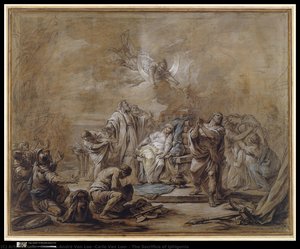
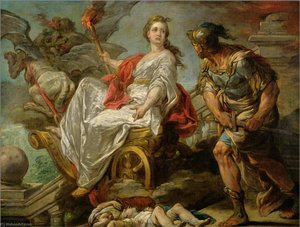
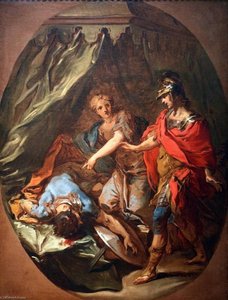
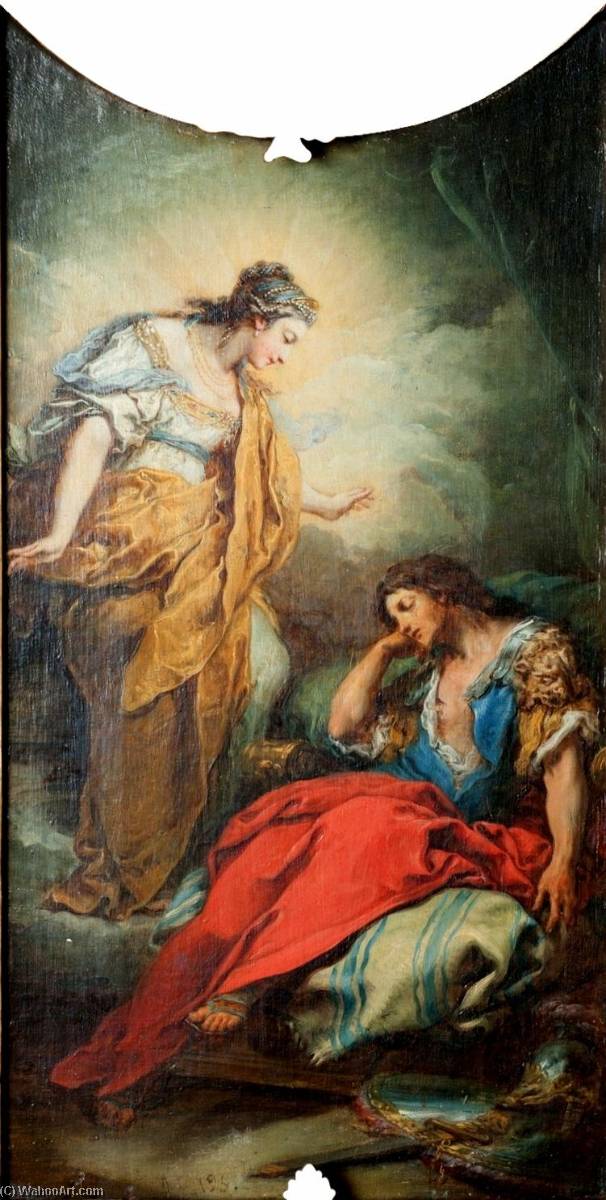
Jerusalem Delivered Clorinda Appearing in a Dream to Tancredi
 Oil
Oil- WallArt
- Rococo
 1733
1733- Early Modern
 50.0 x 25.0 cm
 Palazzo Reale di Torino
 Read More
Hand Made Oil Reproduction
Hand-painted oil on canvas in your size and frame, made to order by our artists. ( Buy Print Buy Image)




P118B $10

P118H $10

P118W $10

P438Z $10

P508JH $12

P508YH $12

P805H $10

P805Z $10

P919BZ $10

P919G $10

P919XJ $10

P959ZH $10

P968JZ $12

W106C $8

W218G $10

W218JH $8

W218Y $10

W307PJ $10

W316G $10

W316PJ $8

W316Y $10

W398PJ $8

W4111J $10

W500HY $15

W500JH $15

W692G $12

W849H $8

W940BG $15

W953PJ $8




Pick from our preset sizes that match the artwork's original proportions.

You may enter your own dimensions to fit a specific frame or space. If your selected size does not match the original image's proportions, we will either crop the artwork or extend the painting with additional hand-painted elements. A digital mockup will be sent for your approval before production begins.
Please note that the on-screen preview does not reflect the actual cropping or extension. Only the mockup will accurately show the final composition.
While custom sizes are available, we recommend selecting a dimension from the predefined list to preserve the original proportions.
After order, ArtsDot.com team will email client for instructions and provide a mockup preview
Worldwide Delivery () in 3/4 weeks instead of standard 5 weeks. (17 August). No compromise on quality.

Free Worldwide Express Shipping

High-Quality Linen Canvas

Full Shipping Insurance

Customs Tax Refund Guarantee

True Color Matching Guarantee

60-Day Return Policy (Defects Only)

100% Money-Back Guarantee

Bulk Discount Offer
 Glass option is only available in size under 110 CM

Jerusalem Delivered Clorinda Appearing in a Dream to Tancredi
Reproduction Medium
Reproduction Size
-


Total Price
$ 263
Artwork Description
A Vision of Rococo Drama: Clorinda’s Ethereal Encounter
In the delicate yet powerful brushwork of Charles-André van Loo, we find ourselves transported to a moment of profound psychological tension and supernatural beauty. Jerusalem Delivered: Clorinda Appearing in a Dream to Tancredi is not merely a depiction of a scene from Torquato Tasso’s epic poetry; it is an immersive experience into the heart of the Rococo era's fascination with the ephemeral and the intense. The painting captures a spectral visitation, where the boundaries between the waking world and the realm of dreams dissolve. As we gaze upon the two central figures—one seated in a rich, crimson gown and the other standing in a striking blue—we are immediately struck by the electric connection shared between them. Their eyes meet with an intensity that transcends the canvas, suggesting a narrative of lost love, tragic destiny, and the haunting persistence of memory.
The composition is masterfully orchestrated to guide the viewer through a landscape of emotion. Van Loo utilizes the characteristic elegance of the 18th-century French style to balance drama with grace. While the subject matter is heavy with the weight of fate, the execution remains light and luminous. The presence of subtle details, such as the watchful figure in the background and the delicate birds positioned within the frame, adds layers of complexity to the scene. These elements serve as silent witnesses to the unfolding drama, heightening the sense of anticipation and the feeling that we are intruding upon a private, sacred moment of revelation.
Mastery of Light and the Rococo Spirit
Technically, this work stands as a testament to Van Loo’s training under the great masters of Rome and Paris. His ability to manipulate light is nothing short of virtuosic; it bathes the figures in a soft, theatrical glow that emphasizes the textures of silk, velvet, and skin. The contrast between the deep reds and the cool blues creates a visual rhythm that keeps the eye moving across the canvas, discovering new nuances in every fold of fabric. This mastery of color and light is quintessential to the Rococo movement, where the goal was often to evoke a sense of enchantment and aristocratic splendor.
For the discerning collector or interior designer, this piece offers more than just aesthetic beauty; it provides a focal point of profound character. The painting’s emotional depth makes it an ideal centerpiece for a room designed for contemplation or sophisticated conversation. Whether placed in a grand salon or a private study, the work invites onlookers to linger, to decode its symbols, and to lose themselves in the tragic romance of Tancredi and Clorinda. It is a timeless acquisition that brings the prestige of 18th-century French history into a contemporary setting, offering a window into an age of unparalleled artistic refinement.
Related Artworks
Artist Biography
Early Life and Training
- Born: February 15, 1705, in Nice, France
- Family Background: Son of Louis-Abraham van Loo and younger brother of Jean-Baptiste van Loo. Member of a successful dynasty of Dutch painters.
- Early Education: Initial training in Turin, followed by studies in Rome (1712) under Benedetto Luti and Pierre Legros.
- Parisian Studies: Attended the Académie royale, winning first prize for drawing in 1723 and historical painting in 1727.
Artistic Career and Notable Works
- Style: Primarily known as a Rococo painter, characterized by elegance, grace, and ornate detail.
- Subject Matter: Diverse range including portraits, mythological scenes, historical paintings, allegories, and genre scenes.
- Significant Works:
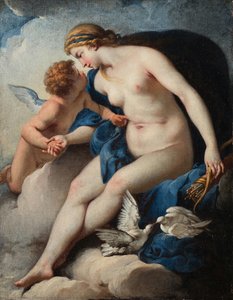
- Venus and Amor (Kunsthalle Bremen) - Demonstrates mastery of the Rococo style.
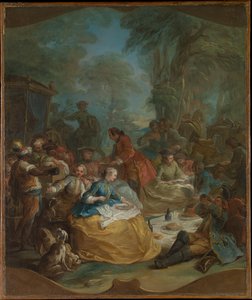
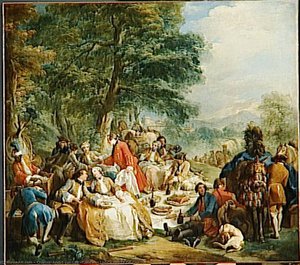
- Halt of the Hunt (The Metropolitan Museum of Art) – Captures aristocratic activities.
- Portrait of Marie Leszczynska, Queen of France – A notable royal portrait.
- Jupiter and Antiope - Showcases mythological themes.
- Self Portrait – Provides insight into the artist's self-perception.
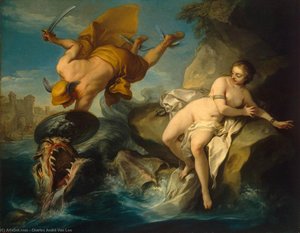
- Perseus and Andromeda (multiple versions) – Illustrates skill in depicting classical mythology.
- Mademoiselle Clairon as Medea (small version) - A captivating Rococo portrait of 1760.
Patronage and Royal Recognition
- Royal Patronage: Enjoyed the patronage of Madame de Pompadour and the French court.
- Appointment to the Court: Became First Painter to King Louis XV in 1762, a prestigious position.
- Order of Saint Michael: Decorated with the Order of Saint Michael, signifying royal favor.
Influences and Legacy
- Family Influence: Heavily influenced by his father and brother, both accomplished painters.
- Rivalry: Competed with François Boucher, another prominent Rococo artist.
- Modern French School: His "simplicity of style and correctness of design" significantly influenced the modern French school of painting.
- Critical Fortune: While his critical standing fluctuated over time, his skill and the breadth of his work command respect.
Museum Collections & Further Exploration
- Museum Presence: Works are featured in prominent museums including the Louvre (The Marriage of the Virgin), Kunsthalle Bremen, and The Metropolitan Museum of Art.
- Further Resources:
- ArtsDot's Charles-André van Loo page: https://www.ArtsDot.com/artists/charles-andre-van-loo/
- ArtsDot's Greatest Artists of All Time page: https://www.ArtsDot.com/greatest-artists
- ArtsDot Virtual Museum: https://www.ArtsDot.com/
- Wikipedia Article: https://en.wikipedia.org/wiki/Charles-Andr%C3%A9_van_Loo
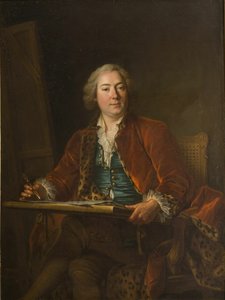
Charles-André van Loo
1705 - 1765 , France
Quick Facts
- Artistic Movement Or Style: Rococo painting
- Artists Or Movements Influenced By This Artist: ['Modern French school']
- Artists Who Influenced This Artist:
- Benedetto Luti
- Pierre Le Gros
- Date Of Birth: February 15, 1705
- Date Of Death: July 15, 1765
- Full Name: Charles-André van Loo
- Nationality: French
- Notable Artworks:
- Venus and Amor
- Halt of the Hunt
- Portrait of Marie Leszczynska
- Jupiter and Antiope
- Self Portrait
- Perseus and Andromeda
- Place Of Birth: Nice, France
Related Articles

Crimson Threads of Narrative: Exploring Symbolism & Representation in Artworks Featuring the Red Dress
Explore the rich symbolism of the red dress in art history! From ancient power displays to iconic portraits like Cézanne’s 'Madame Cezanne', discover the cultural and artistic significance behind this captivating color. Expert analysis & insights.

Rococo's Radiant Legacy: 10 Masterpieces for Your Home |
Indulge in the elegance of Rococo! Explore 10 masterpieces by Fragonard, Boucher & Watteau. Discover the stories behind these iconic paintings and bring timeless art to your home with museum-quality reproductions from .

The Rococo Aesthetic: Opulence, Rebellion & the Pursuit of Pleasure in 18th-Century Art
Explore the opulent world of Rococo art! Discover its origins, key artists like Watteau & Boucher, and lasting influence on design. Expert insights for collectors & enthusiasts.
The Subconscious Canvas: Exploring Dream Imagery in Art History & Contemporary Practice
Explore the captivating world of dream imagery in art history & contemporary practice. Discover key artists, symbolism, investment potential & expert insights for collectors at ArtsDot.
The Allure of Elegance in Art: A Historical & Aesthetic Exploration of Refinement & Grace
Explore the exquisite world of Rococo art! Discover its history, masters (Watteau, Boucher & more), and defining elegance. Expert insights for collectors seeking museum-quality reproductions & custom portraits.