 Preview
 Send
Send Share
Share
 Details

 Download
 Similars
 X-Ray
X-Ray Diaporama
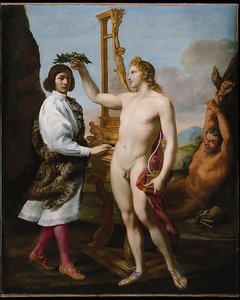
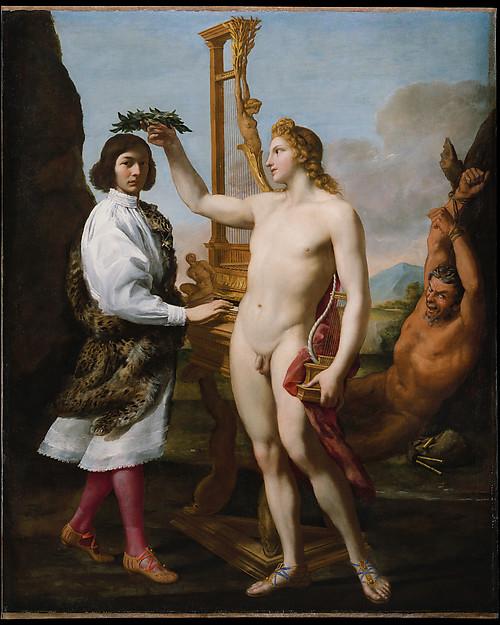
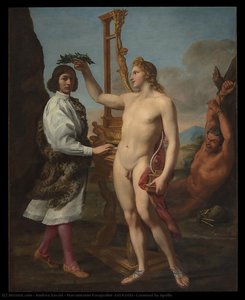
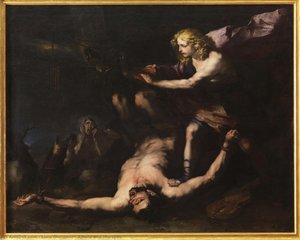
Marcantonio Pasqualini (1614 1691) Crowned by Apollo


 Read More
Hand Made Oil Reproduction
Hand-painted oil on canvas in your size and frame, made to order by our artists. ( Buy Print Buy Image)




































Pick from our preset sizes that match the artwork's original proportions.

You may enter your own dimensions to fit a specific frame or space. If your selected size does not match the original image's proportions, we will either crop the artwork or extend the painting with additional hand-painted elements. A digital mockup will be sent for your approval before production begins.
Please note that the on-screen preview does not reflect the actual cropping or extension. Only the mockup will accurately show the final composition.
While custom sizes are available, we recommend selecting a dimension from the predefined list to preserve the original proportions.
After order, ArtsDot.com team will email client for instructions and provide a mockup preview
Worldwide Delivery () in 3/4 weeks instead of standard 5 weeks. (23 August). No compromise on quality.

Free Worldwide Express Shipping

High-Quality Linen Canvas

Full Shipping Insurance

Customs Tax Refund Guarantee

True Color Matching Guarantee

60-Day Return Policy (Defects Only)

100% Money-Back Guarantee

Bulk Discount Offer
 Glass option is only available in size under 110 CM

Marcantonio Pasqualini (1614 1691) Crowned by Apollo
Reproduction Medium
Reproduction Size
-


Total Price
$ 263
Related Artworks
Artist Biography
The Architect of Baroque Classicism
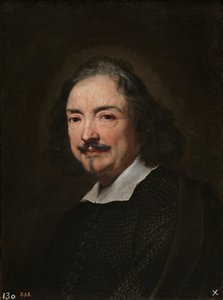
Andrea Sacchi (1599–1661) stands as a pivotal figure in the High Baroque artistic landscape of Rome, embodying a masterful synthesis of classical ideals and dramatic theatricality. Born into a modest family, his early life was shaped by the creative, if unexceptional, influence of his father, Benedetto Sacitti. However, it was the keen eye of Giuseppe D’Arpino that recognized Andrea's prodigious talent, steering him toward a path of greatness. This early mentorship, followed by the profound tutelage of the celebrated sculptor Alessandro Algardi, instilled in Sacchi a lifelong appreciation for sculptural form and anatomical proportion. His training was not merely about technique but about understanding the weight and presence of figures, a quality that would later define his most monumental works.
As his artistry matured, Sacchi’s journey took him through the workshops of Francesco Albani and Pietro da Cortona, exposing him to the vibrant and often conflicting stylistic currents of 17th-century Rome. He became a central figure in the intellectual life of the city, famously engaging in spirited debates at the Accademia di San Luca. These discussions often centered on his opposition to the more exuberant and decorative style of Cortona. Sacchi championed a restrained, intellectually rigorous aesthetic rooted in the harmonious compositions of Raphael and a meticulous observation of nature. He sought to reject excessive ornamentation in favor of a clarity that allowed the emotional truth of the narrative to resonate without distraction.
A Legacy of Grand Narratives and Divine Light
The trajectory of Sacchi’s career was significantly propelled by the prestigious patronage of Cardinal Antonio Barberini. This relationship secured for him some of the most coveted commissions in Rome, including monumental frescoes within the Palazzo Barberini and the Cappella Gavotti at Sant'Andrea della Valle. In these grand undertakings, Sacchi demonstrated an unparalleled ability to weave complex religious and historical narratives into immersive environments. He utilized illusionistic painting techniques to transport viewers into sacred realms, where biblical scenes were rendered with breathtaking realism and a profound sense of emotional depth.
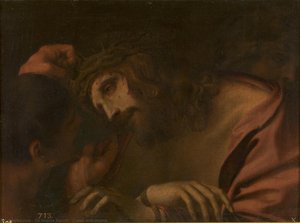
His technical prowess was particularly evident in his ability to manipulate light and shadow to create drama within a classical framework. In works such as "Crown with thorns," one can witness the palpable tension and the heavy, oppressive atmosphere of a dungeon, where the interplay of darkness and illumination focuses the viewer's attention on the harrowing suffering of Christ. This capacity to stage monumental emotional confrontations—balancing the weight of human agony with the grace of divine sacrifice—is what distinguishes his oeuvre from the more purely decorative elements of the Baroque era.
Artistic Exploration and Historical Significance
Beyond the borders of Rome, Sacchi’s artistic curiosity led him to explore the rich traditions of Venice and Parma. During these travels, he studied the works of Correggio, an experience that undoubtedly refined his ability to handle soft transitions and emotive luminosity. This period of exploration allowed him to integrate a broader Italian vocabulary into his already sophisticated style, blending Roman structural rigor with the atmospheric delicacy found in Northern Italian painting.
The historical significance of Andrea Sacchi lies in his role as a guardian of classical dignity during an era of intense artistic experimentation. While contemporaries like Pietro da Cortona pushed toward the heights of Baroque exuberance, Sacchi provided a necessary counterpoint, reminding the art world of the enduring power of balance, proportion, and clarity. His influence extended through generations, impacting painters such as Nicolas Poussin and Giovanni Battista Passeri. Today, his masterpieces, preserved in institutions like the Pinacoteca Vaticana, serve as enduring testaments to a man who could capture both the monumental scale of history and the intimate whispers of the human soul.
da andrea sacchi
1599 - 1661
Quick Facts
- Artistic Movement Or Style: High Baroque Classicism
- Artists Or Movements Influenced By This Artist: ['Nicolas poussin']
- Artists Who Influenced This Artist:
- Raphael
- Correggio
- Date Of Birth: 1599
- Date Of Death: 1661
- Full Name: Andrea Sacchi
- Nationality: Italian
- Notable Artworks:
- Cenacolo di Andrea del Sarto
- San Nicola da Tolentino
- Place Of Birth: Rome
Related Articles
Baroque Classicism: Reconciling Drama & Order in 17th-Century Art
Explore the captivating world of Baroque Classicism! Discover its history, key artists like Caravaggio & Rubens, and defining characteristics. Expert insights & high-quality reproductions at ArtsDot.
Simon Vouet: A Baroque Master's Journey from Italian Influence to French Classicism
Explore the life & art of Simon Vouet, a pivotal French Baroque painter who introduced Italian styles to France. Discover his masterpieces and lasting influence on 17th-century art.
Guido Reni: A Study in Baroque Classicism & Artistic Perfection
Explore the life & work of Guido Reni, a master of Baroque classicism. Discover his iconic religious & mythological paintings, and understand his enduring influence on art history. Expert analysis for collectors.

Baroque Drama: Bringing Opulence & Emotion into Contemporary Interiors
Explore the opulent world of Baroque interior design! Discover key elements, modern applications & how to bring dramatic elegance into your home with 's authentic reproductions.
Echoes of Olympus: Mythological Narratives in Western Art Through the Ages
Explore the captivating history of mythological narratives in Western art! From ancient Greece to modern masterpieces, discover iconic artworks & symbolism. Expert analysis and high-quality reproductions at ArtsDot.