 Preview
 Send
Send Share
Share
 Details

 Download
 Similars
 X-Ray
X-Ray Diaporama
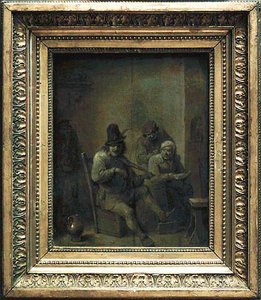
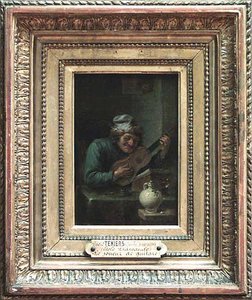
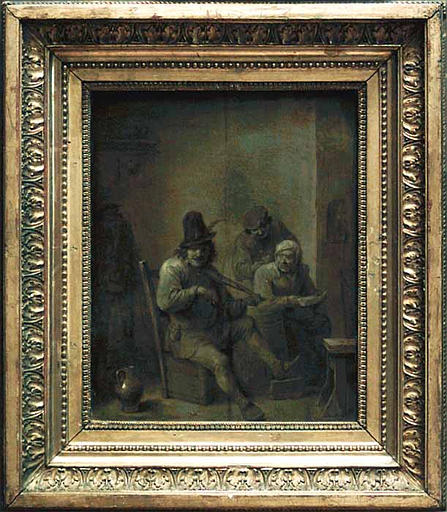
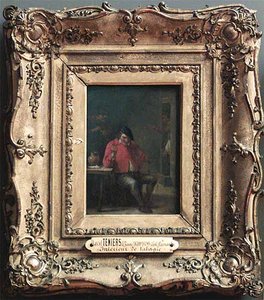
Grand duo joueur de pochette et chanteuse


 Read More
Hand Made Oil Reproduction
Hand-painted oil on canvas in your size and frame, made to order by our artists. ( Buy Print Buy Image)




P118B $10

P118H $10

P118W $10

P438Z $10

P508JH $12

P508YH $12

P805H $10

P805Z $10

P919BZ $10

P919G $10

P919XJ $10

P959ZH $10

P968JZ $12

W106C $8

W218G $10

W218JH $8

W218Y $10

W307PJ $10

W316G $10

W316PJ $8

W316Y $10

W398PJ $8

W4111J $10

W500HY $15

W500JH $15

W692G $12

W849H $8

W940BG $15

W953PJ $8




Pick from our preset sizes that match the artwork's original proportions.

You may enter your own dimensions to fit a specific frame or space. If your selected size does not match the original image's proportions, we will either crop the artwork or extend the painting with additional hand-painted elements. A digital mockup will be sent for your approval before production begins.
Please note that the on-screen preview does not reflect the actual cropping or extension. Only the mockup will accurately show the final composition.
While custom sizes are available, we recommend selecting a dimension from the predefined list to preserve the original proportions.
After order, ArtsDot.com team will email client for instructions and provide a mockup preview
Worldwide Delivery () in 3/4 weeks instead of standard 5 weeks. (31 August). No compromise on quality.

Free Worldwide Express Shipping

High-Quality Linen Canvas

Full Shipping Insurance

Customs Tax Refund Guarantee

True Color Matching Guarantee

60-Day Return Policy (Defects Only)

100% Money-Back Guarantee

Bulk Discount Offer
 Glass option is only available in size under 110 CM

Grand duo joueur de pochette et chanteuse
Reproduction Medium
Reproduction Size
-


Total Price
$ 313
A Window into Flemish Life: David Teniers II’s “Grand Duo”
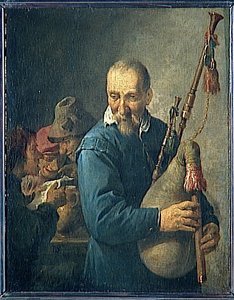
David Teniers II's "Grand Duo: joueur de pochette et chanteuse" isn’t merely a depiction of a tavern scene; it’s a vibrant snapshot of 17th-century Flemish society, brimming with everyday life and subtly layered with social commentary. Painted around 1640-1650, this oil on panel work transports the viewer to a bustling public house – a space central to community interaction and entertainment in a time before widespread domesticity. The scene unfolds within a modestly furnished interior, dominated by a dark, richly textured backdrop that suggests a wooden wall or perhaps even a stage curtain, drawing attention to the figures illuminated by an unseen light source.
The composition is remarkably balanced, anchored by the central trio of musicians and singer. A man, seated on a stool and expertly playing a bagpipe – an instrument associated with both celebration and social status – commands immediate attention. His posture exudes confidence and skill, while his gaze is directed towards the woman who leans in to listen intently. This woman, likely a tavern singer or perhaps simply a local resident, holds a sheet of music, suggesting her role as a performer within this communal setting. A third figure, partially obscured by the central pair, adds depth and hints at the broader social dynamics at play – perhaps a patron observing the entertainment, or another participant drawn into the lively atmosphere.
A Masterclass in Genre Painting
Teniers II was a leading figure in the development of Flemish genre painting, a style characterized by its realistic portrayal of ordinary people engaged in everyday activities. Unlike idealized portraits common at the time, “Grand Duo” offers an unvarnished glimpse into the lives of the lower classes – a deliberate choice that reflects Teniers’ commitment to depicting the realities of his era. The artist's meticulous attention to detail is evident throughout the work; from the folds of the clothing to the textures of the wooden furniture and the intricate patterns on the bagpipe, every element contributes to a sense of palpable authenticity.
Technically, Teniers II demonstrates a remarkable command of oil paint. He employs a technique known as *sfumato*, characterized by soft, hazy outlines and subtle gradations of tone, creating an atmospheric effect that imbues the scene with warmth and depth. The use of *hatching* and *cross-hatching* – techniques involving closely spaced parallel lines to create shading – adds considerable texture to the figures’ clothing and the surrounding environment. Notably, the artist utilizes a muted color palette dominated by browns, grays, and ochres, reflecting the dim lighting of the tavern and lending the scene a sense of quiet intimacy.
Symbolism and Social Commentary
Beyond its technical brilliance, “Grand Duo” is rich in symbolic meaning. The bagpipe itself carries connotations of both merriment and social hierarchy – it was often associated with military bands and celebrations, but also with the rougher elements of society. The woman’s presence as a singer highlights the role of women in 17th-century Flemish culture, where they frequently provided entertainment within public spaces. The scene subtly critiques the rigid social order by presenting a moment of shared enjoyment amongst individuals from different strata of society – a testament to the unifying power of music and communal experience.
Furthermore, the painting’s somber lighting and muted colors evoke a sense of melancholy and nostalgia, suggesting a reflection on the passage of time. The aged appearance of the figures hints at the ephemeral nature of life and the inevitability of change. The scene is not simply a depiction of entertainment; it's an invitation to contemplate the complexities of human relationships and the enduring value of community.
A Timeless Reflection of Flemish Life
“Grand Duo: joueur de pochette et chanteuse” remains a captivating work of art, offering a rare glimpse into the vibrant social fabric of 17th-century Flanders. David Teniers II’s masterful technique, combined with his insightful portrayal of everyday life and subtle symbolic elements, elevates this painting beyond a mere depiction of a tavern scene – it becomes a timeless reflection on human nature, community, and the enduring power of art to capture the essence of a bygone era.
Related Artworks
Artist Biography
Michelangelo Merisi da Caravaggio: A Revolutionary of Light and Shadow
Michelangelo Merisi, more famously known as Caravaggio, remains one of the most intensely debated and profoundly influential figures in art history. Born in Milan in 1571, his life was a whirlwind of dramatic events – marked by both extraordinary artistic talent and a volatile temperament – that mirrored the intensity he brought to his paintings. His brief but explosive career irrevocably altered the course of European painting, establishing techniques and approaches that continue to resonate with artists today. Caravaggio’s legacy rests not just on his innovative style, but also on his willingness to challenge established conventions and depict humanity in all its flawed beauty.Caravaggio's early years were characterized by a struggle for recognition within the bustling artistic landscape of Milan. He initially specialized in still lifes – arrangements of fruits and flowers – earning a modest living through street sales. This period, however, provided him with invaluable experience in observing nature’s subtleties and mastering the delicate handling of paint. It was in 1592 that he moved to Rome, the undisputed heart of artistic innovation at the time, seeking opportunities to hone his skills and immerse himself in the city's rich cultural environment. The vibrant atmosphere of Rome proved both alluring and challenging; it offered a stage for his burgeoning talent but also exposed him to the temptations and pressures of a competitive art world.
The Dramatic Impact of Light and Shadow
Caravaggio’s artistic breakthrough stemmed from a radical departure from the prevailing Renaissance ideals. Unlike the polished, idealized figures favored by many of his contemporaries, Caravaggio depicted his subjects with startling realism – often drawing them directly from the streets as models. More crucially, he revolutionized painting through his masterful manipulation of *chiaroscuro*, the dramatic contrast between light and dark. He employed a single, intense light source, typically originating from an unseen window, to illuminate key figures while plunging the background into deep shadow. This technique created a powerful sense of immediacy, as if the scene were unfolding before the viewer’s very eyes. As Keith Christiansen notes in *Caravaggio (Michelangelo Merisi) (1571–1610) and His Followers*, “Caravaggio pushed the figures up against the picture plane and used light to enhance the dramatic impact and give the figures a quality of immediacy.” This approach broke down the traditional illusionistic space, bringing the viewer into direct engagement with the drama.His use of light wasn’t merely technical; it was deeply symbolic. Caravaggio frequently employed strong directional lighting to highlight moments of intense emotion or spiritual revelation. In works like *The Calling of Saint Matthew*, for example, a beam of light descends from above, illuminating Christ's outstretched hand and drawing the attention of the astonished apostle. This technique transformed religious scenes into intensely personal experiences, inviting viewers to contemplate their own relationship with faith.
Controversy and Rebellion
Caravaggio’s artistic innovations were not universally welcomed. His depictions of ordinary people – often rendered with unflattering features and dressed in contemporary clothing – challenged the established hierarchy of subject matter in art, which typically reserved religious figures for idealized representations. Furthermore, his rough, spontaneous technique was considered unorthodox by some critics who favored a more polished and refined style. His life outside the studio was equally turbulent. Accounts describe him as arrogant, rebellious, and prone to violent outbursts. He was repeatedly arrested for brawls, including one infamous incident involving a slashed cloak and an abusive exchange with the police.The most dramatic episode in his life occurred in 1606 when he fatally stabbed Ranuccio Tomassoni, a young man described variously as a lover or a tennis partner. Rather than face justice, Caravaggio fled Rome, abandoning his reputation and plunging into a period of exile. This act, coupled with his volatile personality, cemented his image as a dangerous and unpredictable artist.
A Turbulent Journey and Legacy
Caravaggio’s travels took him to Naples, Malta, and Sicily, each location marked by further episodes of conflict and upheaval. In Malta, he was granted membership in the Knights of St. John after painting *The Beheading of Saint John the Baptist*, but his temper soon led to another prison sentence. His final years were spent in Naples, where he suffered a severe injury during a bar brawl that left him permanently scarred. Despite these challenges, Caravaggio continued to paint until his death in 1610, likely from fever.Despite the brevity of his career and the darkness surrounding his life, Caravaggio’s influence on subsequent generations of artists is immeasurable. His innovations in *chiaroscuro*, his use of ordinary people as models, and his willingness to depict raw emotion profoundly impacted painters throughout Europe – including Rembrandt, Velázquez, and Gentileschi. His work continues to captivate audiences today, not only for its technical brilliance but also for its profound exploration of human nature, faith, and the power of light and shadow.
Further Resources
- Caravaggio (Michelangelo Merisi) (1571–1610) and His Followers - The Metropolitan Museum of Art: https://www.metmuseum.org/essays/caravaggio-michelangelo-merisi-1571-1610-and-his-followers
- Michelangelo Merisi da Caravaggio - National Gallery: https://www.nationalgallery.org.uk/artists/michelangelo-merisi-da-caravaggio
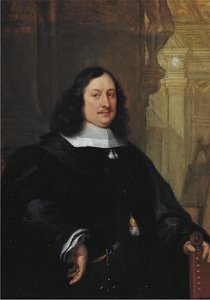
david teniers ii le jeune
1610 - 1690
Quick Facts
- Artistic Movement Or Style: Caravaggism
- Artists Or Movements Influenced By This Artist: ['Baroque']
- Artists Who Influenced This Artist: ['Leonardo da Vinci']
- Date Of Birth: 1571
- Date Of Death: 1610
- Full Name: Michelangelo Merisi da Caravaggio
- Nationality: Italian
- Notable Artworks:
- The Calling of Saint Matthew
- Supper at Emmaus
- David and Goliath
- Death of the Virgin
- Place Of Birth: Milan, Lombardy
Related Articles
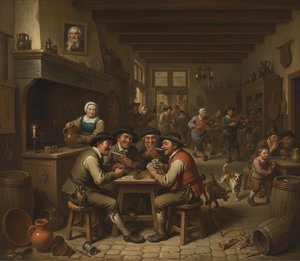
David Teniers II: Master of Flemish Genre & Social Commentary
Explore the captivating world of David Teniers II, a leading Flemish Baroque painter renowned for his lively genre scenes & insightful social commentary. Discover his masterpieces and legacy with ArtsDot.
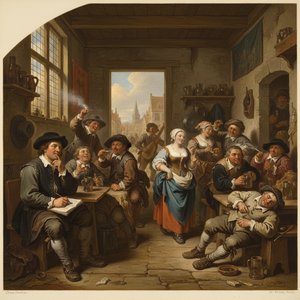
David Teniers the Younger: Genre Painting & Social Commentary in Baroque Flanders
Explore the captivating world of David Teniers the Younger, a leading Flemish Baroque painter. Discover his genre scenes, social commentary, and lasting influence on 17th-century art. Learn about his life, techniques & legacy.
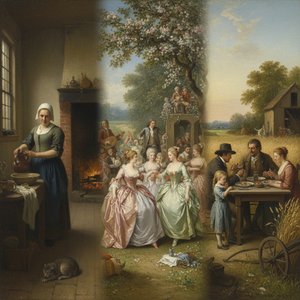
Scenes of Daily Life: A Comprehensive Exploration of Genre Painting Through History
Explore the rich history of genre painting! Discover Dutch Masters & European artists who captured everyday life with stunning realism. Learn about symbolism, techniques & lasting influence.
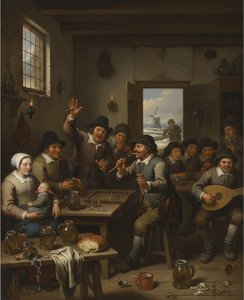
Adriaen Brouwer: Capturing Dutch Life & Social Commentary Through Genre Painting
Explore the captivating world of Adriaen Brouwer, a master of Dutch Golden Age genre painting. Discover his vivid depictions of peasant life, social commentary, and lasting influence on art history. Learn more at ArtsDot.
Sir David Wilkie: Narrative Detail & the Rise of Victorian Genre Painting
Explore the life & work of Sir David Wilkie, a pivotal figure in Victorian genre painting. Discover his narrative detail, social commentary, and lasting influence on 19th-century British art. Learn more at ArtsDot.