 Preview
 Send
Send Share
Share
 Details

 Download
 Similars
 X-Ray
X-Ray Diaporama
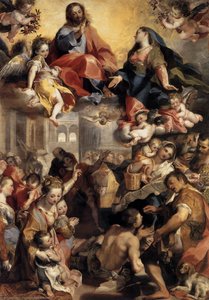
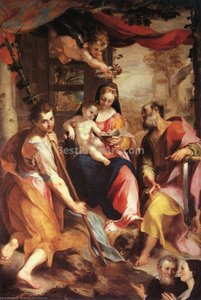
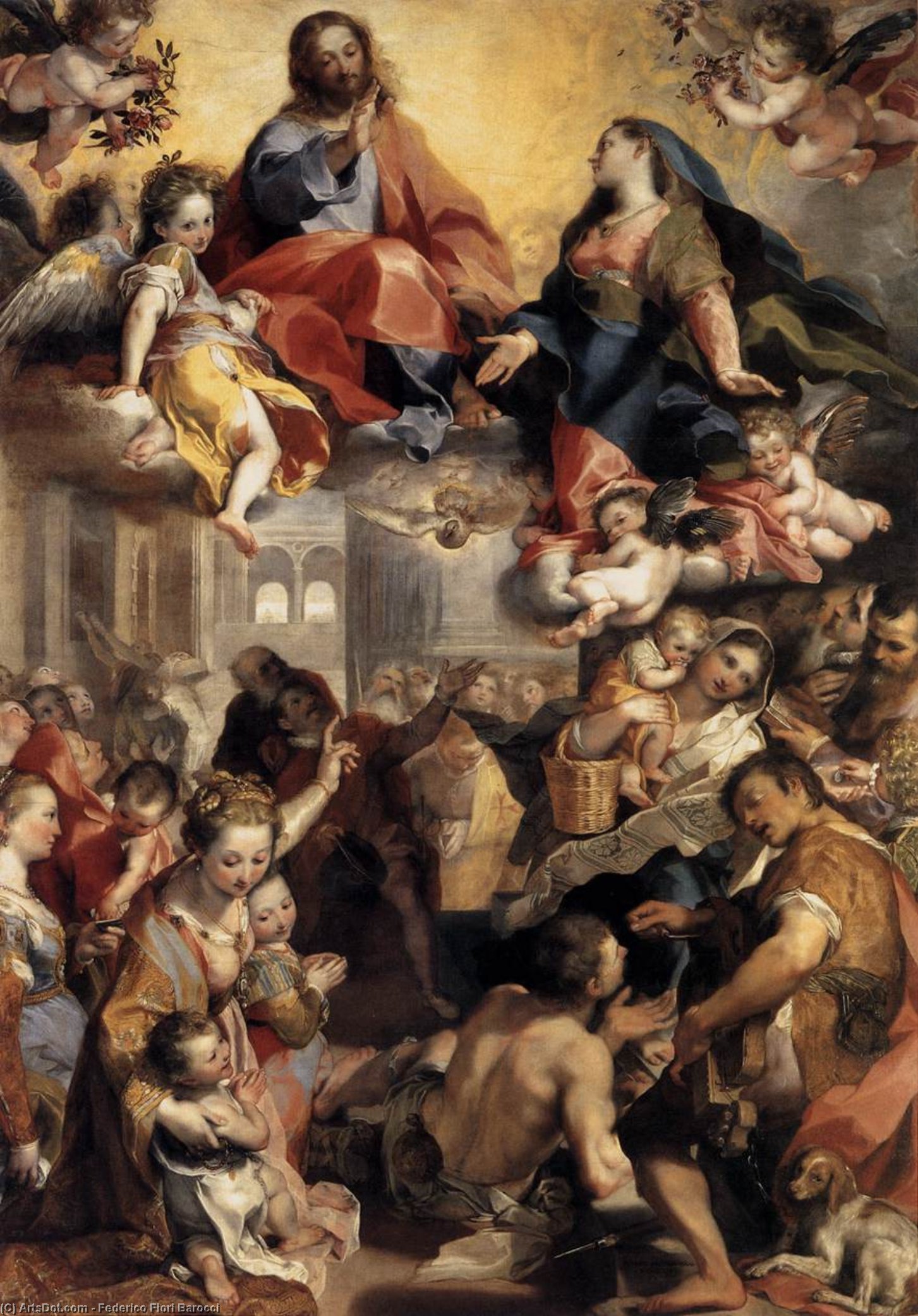
Madonna del Popolo
 Acrylic On Canvas
- WallArt
- Baroque
 1575
1575 360.0 x 250.0 cm
 Galleria degli Uffizi
 Read More
Giclée / Art Print
Museum-quality giclée or canvas print with fast production and flexible finish options. ( Buy Hand Made Painting Buy Image)




P118B $10

P118H $10

P118W $10

P438Z $10

P508JH $12

P508YH $12

P805H $10

P805Z $10

P919BZ $10

P919G $10

P919XJ $10

P959ZH $10

P968JZ $12

W106C $8

W218G $10

W218JH $8

W218Y $10

W307PJ $10

W316G $10

W316PJ $8

W316Y $10

W398PJ $8

W4111J $10

W500HY $15

W500JH $15

W692G $12

W849H $8

W940BG $15

W953PJ $8




Pick from our preset sizes that match the artwork's original proportions.

You may enter your own dimensions to fit a specific frame or space. If your selected size does not match the original image's proportions, we will either crop the artwork or extend the image with a mirrored or solid-fill edge. A digital mockup will be sent for your approval before production begins.
Please note that the on-screen preview does not reflect the actual cropping or extension. Only the mockup will accurately show the final composition.
While custom sizes are available, we recommend selecting a dimension from the predefined list to preserve the original proportions.
Worldwide Delivery () in 2 weeks instead of standard 4/5 weeks. (24 August)

Free Worldwide Express Shipping

High-Quality Linen Canvas

Full Shipping Insurance

Customs Tax Refund Guarantee

True Color Matching Guarantee

60-Day Return Policy (Defects Only)

100% Money-Back Guarantee

Bulk Discount Offer
 Glass option is only available in size under 110 CM

Madonna del Popolo
Giclée / Art Print
Reproduction Size
-


Total Price
$ 63
Collectible Description
Federico Barocci’s “Madonna del Popolo”: A Window into Renaissance Emotion
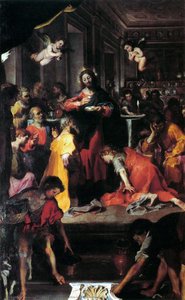
Federico Fiori Barocci's "Madonna del Popolo," painted in 1575-1579, isn’t merely a depiction of the Virgin Mary and child; it’s a vibrant tableau brimming with social commentary, spiritual yearning, and an unprecedented sense of immediacy. Held within the Uffizi Gallery in Florence, this masterpiece stands as a pivotal work bridging the Mannerist elegance of the late 16th century with the burgeoning emotionalism of the Baroque era – a testament to Barocci’s singular artistic vision.
The painting immediately captivates with its dynamic composition. Unlike many religious scenes of the time, which favored static arrangements and idealized forms, Barocci plunges us into a bustling urban scene, rendered in a remarkably naturalistic style. A diverse crowd – wealthy women adorned in jewels, humble laborers, a blind musician, a beggar – converges before the Virgin and Child, creating an intimate yet overwhelmingly human drama. The artist masterfully employs perspective to draw the viewer into this lively space, with figures receding into the distance, suggesting both depth and a sense of shared experience.
A Masterclass in Technique: Pastel’s Delicate Embrace
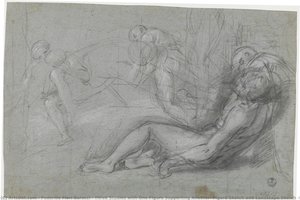
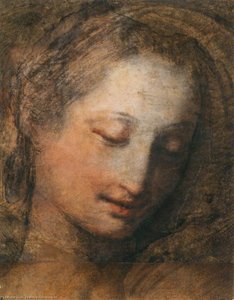
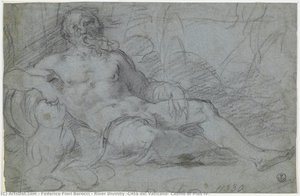
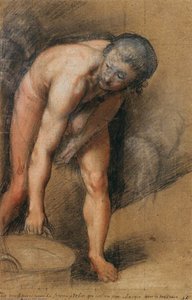
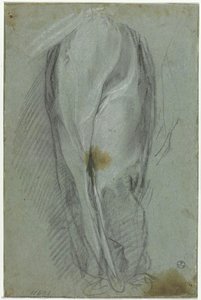
Barocci's innovative use of pastel is central to the painting’s emotive power. He meticulously created hundreds of preparatory sketches – studies of faces, drapery folds, lighting effects, and even individual elements like a dog or a clock – using this technique. These drawings reveal his painstaking process, demonstrating an almost obsessive attention to detail. Pastels allowed him to achieve a luminosity and softness previously unattainable with oil paint, imbuing the figures with a palpable sense of warmth and vulnerability. The subtle gradations of color, particularly in the Virgin’s face and robes, create a mesmerizing effect, as if capturing fleeting moments of light and shadow.
Furthermore, Barocci pioneered the use of pastel for large-scale compositions, pushing the boundaries of this medium and demonstrating its potential for dramatic expression. His technique involved layering multiple colors to achieve rich hues and complex textures – a remarkable feat considering the fragility of pastels. The resulting surface is remarkably luminous, almost shimmering with an ethereal quality.
Symbolism Woven into the Everyday
Beyond its technical brilliance, “Madonna del Popolo” is laden with symbolic meaning. The inclusion of the diverse crowd highlights the Virgin’s role as a compassionate intercessor for all humanity. Each figure represents a segment of society – the wealthy offering alms, the poor seeking assistance, the marginalized pleading for mercy. The clock on the wall serves as a poignant reminder of time's relentless passage and the urgency of spiritual devotion. Even the two dogs, one near the bottom right corner and another closer to the center, add layers of symbolic depth, perhaps representing loyalty or vigilance.
The painting’s setting – a bustling city street – is itself significant. It contrasts sharply with the more traditional depictions of religious scenes in enclosed spaces. By placing the Virgin and Child within this urban context, Barocci suggests that faith isn't confined to sacred rituals but permeates every aspect of daily life.
An Echo of Emotion: Bridging Eras
“Madonna del Popolo” is more than just a beautiful painting; it’s a profound meditation on human compassion and the enduring power of faith. Barocci’s masterful blend of Mannerist elegance and Baroque emotion anticipates the dramatic intensity that would characterize the work of Rubens and other later masters. The painting's vibrant colors, dynamic composition, and deeply felt humanity continue to resonate with viewers today, solidifying its place as a cornerstone of Italian Renaissance art.
Related Artworks
Artist Biography
Early Life and Training
- Born: Urbino, Italy (1535)
- Died: 1612
- Federico Fiori Barocci, an Italian Renaissance painter and printmaker, was born in 1535 in Urbino, Italy.
- His original name was Federico Fiori, and he was nicknamed "il Baroccio," which means a two-wheel cart drawn by oxen in northwestern Italian dialects.
- Barocci received his earliest apprenticeship with his father, Ambrogio Barocci, a sculptor of some local eminence.
- He was then apprenticed with the painter Battista Franco in Urbino. This training laid the foundation for his future success.
Artistic Career and Influences
- Barocci's work was highly esteemed and influential, foreshadowing the Baroque style of Peter Paul Rubens.
- He worked in the pre-eminent studio of Taddeo and Federico Zuccari in Rome, where he was exposed to various artistic influences.
- His first notable work was a "St. Margaret" executed for the confraternity of the Holy Sacrament.
- He was invited by Pope Pius IV to assist in the decoration of the Vatican Belvedere Palace at Rome, where he painted the Virgin Mary and infant, with several saints and a ceiling in fresco, representing the Annunciation.
- Barocci's style was characterized by a mix of Mannerism and Baroque elements.
Notable Works and Legacy
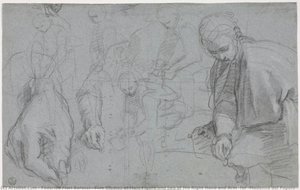
- Five Studies of Male Figure and two of His Right Hand and Arm (Uffizi Gallery, Florence, Italy) - A testament to Barocci’s skill in capturing the human form.
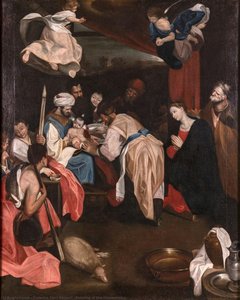
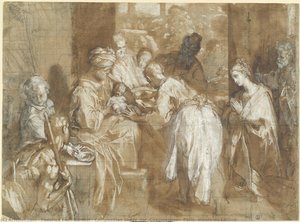
- Composition Study (for “Circumcision”, Paris, Musée du Louvre) – Demonstrates his ability to balance composition and emotion.
- Man’s Head (for “Calling of Saint Andrew”, Bruxelles, Musées Royaux des Beaux-Arts de Belgique) - Showcases Barocci's attention to detail and expression.
- The Nativity (1597 oil painting at the Prado).
- Madonna del Popolo (Uffizi Gallery, Florence, Italy).
- The Madonna of the Cat (La Madonna del Gatto)
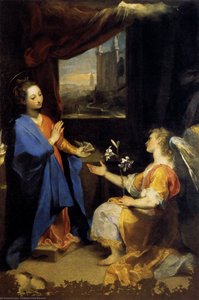
- Annunciation (1582)
Artistic Impact and Followers
- Barocci's influence can be seen in the work of various artists, including Peter Paul Rubens, who was inspired by Barocci’s dramatic and emotive brushwork.
- His legacy continues to be celebrated through his numerous works, now housed in museums such as the Uffizi Gallery (Florence, Italy) and the Musée du Louvre (Paris, France).
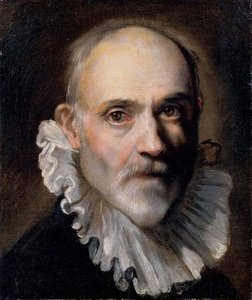
Federico Fiori Barocci
1535 - 1612 , Italy
Quick Facts
- Artistic Movement Or Style: Renaissance, Baroque
- Artists Or Movements Influenced By This Artist: ['Peter Paul Rubens']
- Artists Who Influenced This Artist: ['Battista Franco']
- Date Of Birth: 1535
- Date Of Death: 1612
- Full Name: Federico Fiori Barocci
- Nationality: Italian
- Notable Artworks:
- The Nativity
- Madonna del Popolo
- Annunciation
- Stigmatization of Saint Francis
- Rest on the Flight to Egypt
- Place Of Birth: Urbino, Italy
Related Articles
Mannerism: Bridging Renaissance Harmony & Baroque Drama – A Study of Style & Affectation
Explore the fascinating world of Mannerism! Discover its key characteristics, pioneering artists like Pontormo & Bronzino, and its pivotal role in bridging Renaissance harmony to Baroque drama. A comprehensive guide for art enthusiasts.

Baroque Drama: Bringing Opulence & Emotion into Contemporary Interiors
Explore the opulent world of Baroque interior design! Discover key elements, modern applications & how to bring dramatic elegance into your home with 's authentic reproductions.
The Dramatic Dialogue: Baroque Mannerism & the Synthesis of Emotion, Form, and Artistic Rebellion
Explore the dramatic world of Baroque Mannerism! Discover its history, iconic artists like Rubens & El Greco, and lasting influence on art. Expert insights for collectors & enthusiasts at ArtsDot.

Baroque Masterpieces: 10 Paintings That Defined an Era |
Journey through the drama & grandeur of Baroque art! Explore 10 masterpieces by Caravaggio, Rembrandt, Rubens & more. Discover stunning oil paintings, rich colors & timeless stories. Find museum-quality reproductions at .

Simon Vouet: A Baroque Master's Journey from Italian Influence to French Classicism
Explore the life & art of Simon Vouet, a pivotal French Baroque painter who introduced Italian styles to France. Discover his masterpieces and lasting influence on 17th-century art.