 Preview
 Send
Send Share
Share
 Details

 Download
 Similars
 X-Ray
X-Ray Diaporama
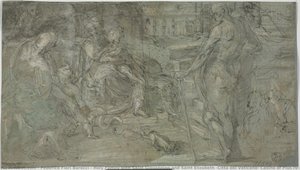
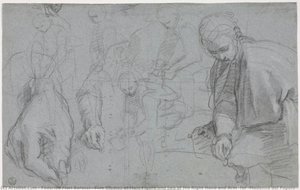
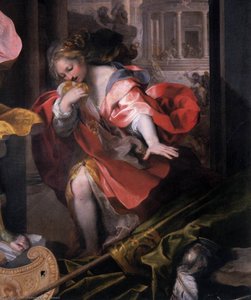
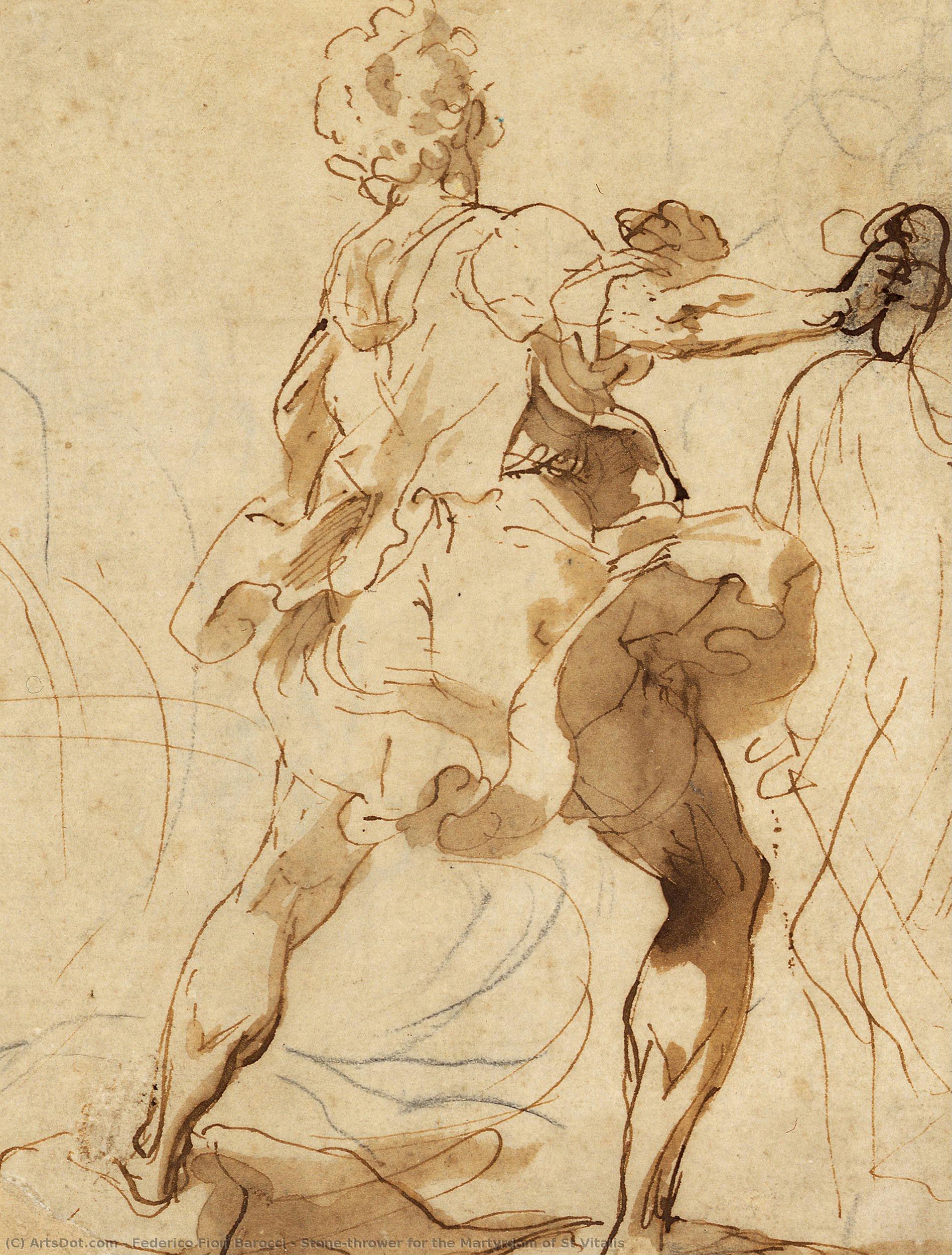
Stone-thrower for the Martyrdom of St Vitalis
 Acrylic
- WallArt
- Italian Baroque
 1582
1582 16.0 x 20.0 cm
 Art Gallery of South Australia
 Read More
Hand Made Oil Reproduction
Hand-painted oil on canvas in your size and frame, made to order by our artists. ( Buy Print Buy Image)




P118B $10

P118H $10

P118W $10

P438Z $10

P508JH $12

P508YH $12

P805H $10

P805Z $10

P919BZ $10

P919G $10

P919XJ $10

P959ZH $10

P968JZ $12

W106C $8

W218G $10

W218JH $8

W218Y $10

W307PJ $10

W316G $10

W316PJ $8

W316Y $10

W398PJ $8

W4111J $10

W500HY $15

W500JH $15

W692G $12

W849H $8

W940BG $15

W953PJ $8




Pick from our preset sizes that match the artwork's original proportions.

You may enter your own dimensions to fit a specific frame or space. If your selected size does not match the original image's proportions, we will either crop the artwork or extend the painting with additional hand-painted elements. A digital mockup will be sent for your approval before production begins.
Please note that the on-screen preview does not reflect the actual cropping or extension. Only the mockup will accurately show the final composition.
While custom sizes are available, we recommend selecting a dimension from the predefined list to preserve the original proportions.
After order, ArtsDot.com team will email client for instructions and provide a mockup preview
Worldwide Delivery () in 3/4 weeks instead of standard 5 weeks. (5 September). No compromise on quality.

Free Worldwide Express Shipping

High-Quality Linen Canvas

Full Shipping Insurance

Customs Tax Refund Guarantee

True Color Matching Guarantee

60-Day Return Policy (Defects Only)

100% Money-Back Guarantee

Bulk Discount Offer
 Glass option is only available in size under 110 CM

Stone-thrower for the Martyrdom of St Vitalis
Reproduction Medium
Reproduction Size
-


Total Price
$ 263
Federico Fiori Barocci’s Stone-Thrower for the Martyrdom of St Vitalis: A Testament to Renaissance Drama
The painting “Stone-thrower for the Martyrdom of St Vitalis,” attributed to Federico Fiori Barocci (1535 – 1612), stands as a striking example of Florentine Mannerism, capturing a moment of intense spiritual fervor and dramatic confrontation. Executed in 1582, this artwork transcends mere depiction; it’s an embodiment of the artistic sensibilities that would soon propel Europe into the Baroque era. Measuring just 16 x 20 cm, its diminutive size belies the profound psychological depth conveyed by Barocci's masterful brushstrokes.Subject Matter and Narrative Tension
The scene portrays a man engaged in hurling a stone at another figure – presumably St Vitalis – commemorating his martyrdom. The composition is deliberately unsettling; the central protagonist isn’t idealized but rendered with palpable anxiety, his gaze fixed upward as he prepares to act. This posture speaks volumes about the artist's preoccupation with conveying inner turmoil and emotional struggle—a hallmark of Mannerist aesthetics. The second man, positioned behind him, represents a silent witness to this dramatic gesture, furthering the tension within the frame.Style and Technique: Embracing Distortion for Emotional Resonance
Barocci’s technique exemplifies the stylistic innovations characteristic of his time. He eschewed the smooth, harmonious surfaces favored by earlier Renaissance artists in favor of a textured surface achieved through meticulous layering of paint—a technique known as impasto—particularly noticeable on the man's robe and facial features. The artist skillfully employs chiaroscuro – dramatic contrasts between light and dark – to heighten the emotional impact of the scene. Shadows engulf much of the background, emphasizing the protagonist’s isolation and intensifying the psychological drama unfolding before the viewer’s eyes. Furthermore, subtle distortions in perspective contribute to an overall sense of unease and disorientation, mirroring the spiritual anxieties prevalent during the Reformation.Historical Context: The Spirit of Renaissance Drama
Painted during a period marked by religious upheaval and artistic experimentation, “Stone-thrower” reflects the broader cultural landscape of 16th-century Italy. The Mannerist movement arose as a reaction against the idealized beauty of High Renaissance art, prioritizing psychological realism and expressive gesture over anatomical accuracy. Artists like Barocci sought to evoke emotion rather than simply represent reality, anticipating the Baroque’s emphasis on theatricality and grandeur. Taddeo Zuccari's studio in Rome served as a crucible for artistic ideas, exposing Barocci to influences that would ultimately shape his distinctive style.Symbolism: Gesture and Spiritual Confrontation
The act of throwing the stone symbolizes defiance against injustice and embodies the fervent devotion demanded by religious faith. The upward gaze of the protagonist signifies contemplation and prayer—a gesture intended to elevate him beyond earthly concerns. The positioning of St Vitalis, though obscured, reinforces the narrative’s core theme: a confrontation between human will and divine authority. Barocci's deliberate use of visual cues communicates not just what is seen but also what is felt – a profound meditation on faith, suffering, and righteous indignation.Emotional Impact: Capturing Intense Psychological Drama
Ultimately, “Stone-thrower for the Martyrdom of St Vitalis” succeeds in capturing the essence of Renaissance drama—a preoccupation with portraying human emotion with unflinching honesty. Barocci’s masterful manipulation of light, texture, and perspective compels viewers to confront uncomfortable truths about faith and morality. It remains a testament to the artist's ability to transform visual representation into a conduit for profound psychological experience – an enduring legacy that foreshadows the transformative power of Baroque art.Related Artworks
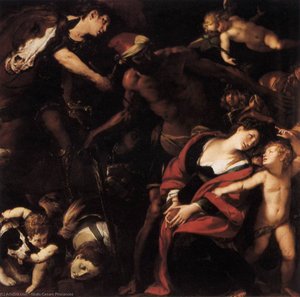
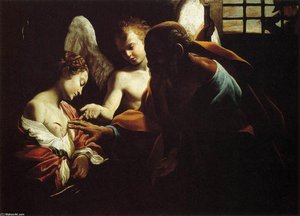
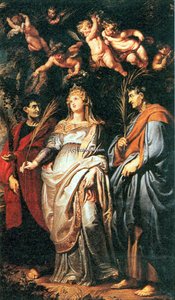
Artist Biography
Early Life and Training
- Born: Urbino, Italy (1535)
- Died: 1612
- Federico Fiori Barocci, an Italian Renaissance painter and printmaker, was born in 1535 in Urbino, Italy.
- His original name was Federico Fiori, and he was nicknamed "il Baroccio," which means a two-wheel cart drawn by oxen in northwestern Italian dialects.
- Barocci received his earliest apprenticeship with his father, Ambrogio Barocci, a sculptor of some local eminence.
- He was then apprenticed with the painter Battista Franco in Urbino. This training laid the foundation for his future success.
Artistic Career and Influences
- Barocci's work was highly esteemed and influential, foreshadowing the Baroque style of Peter Paul Rubens.
- He worked in the pre-eminent studio of Taddeo and Federico Zuccari in Rome, where he was exposed to various artistic influences.
- His first notable work was a "St. Margaret" executed for the confraternity of the Holy Sacrament.
- He was invited by Pope Pius IV to assist in the decoration of the Vatican Belvedere Palace at Rome, where he painted the Virgin Mary and infant, with several saints and a ceiling in fresco, representing the Annunciation.
- Barocci's style was characterized by a mix of Mannerism and Baroque elements.
Notable Works and Legacy
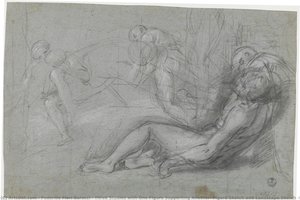
- Five Studies of Male Figure and two of His Right Hand and Arm (Uffizi Gallery, Florence, Italy) - A testament to Barocci’s skill in capturing the human form.
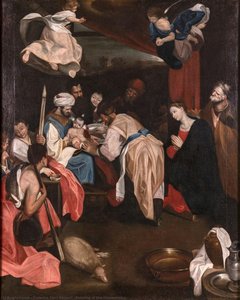
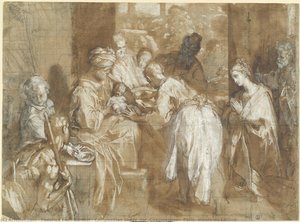
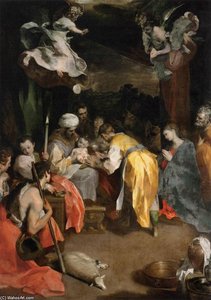
- Composition Study (for “Circumcision”, Paris, Musée du Louvre) – Demonstrates his ability to balance composition and emotion.
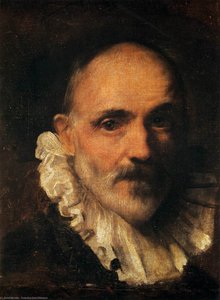
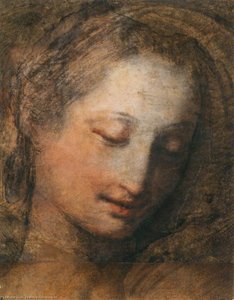
- Man’s Head (for “Calling of Saint Andrew”, Bruxelles, Musées Royaux des Beaux-Arts de Belgique) - Showcases Barocci's attention to detail and expression.
- The Nativity (1597 oil painting at the Prado).
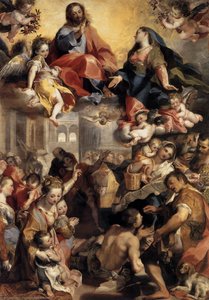
- Madonna del Popolo (Uffizi Gallery, Florence, Italy).
- The Madonna of the Cat (La Madonna del Gatto)
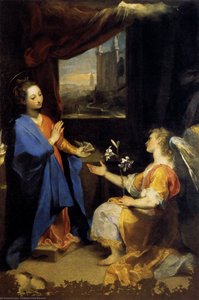
- Annunciation (1582)
Artistic Impact and Followers
- Barocci's influence can be seen in the work of various artists, including Peter Paul Rubens, who was inspired by Barocci’s dramatic and emotive brushwork.
- His legacy continues to be celebrated through his numerous works, now housed in museums such as the Uffizi Gallery (Florence, Italy) and the Musée du Louvre (Paris, France).
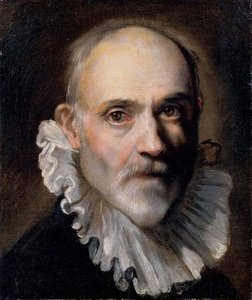
Federico Fiori Barocci
1535 - 1612 , Italy
Quick Facts
- Artistic Movement Or Style: Renaissance, Baroque
- Artists Or Movements Influenced By This Artist: ['Peter Paul Rubens']
- Artists Who Influenced This Artist: ['Battista Franco']
- Date Of Birth: 1535
- Date Of Death: 1612
- Full Name: Federico Fiori Barocci
- Nationality: Italian
- Notable Artworks:
- The Nativity
- Madonna del Popolo
- Annunciation
- Stigmatization of Saint Francis
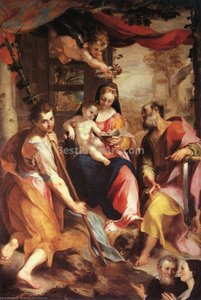
- Rest on the Flight to Egypt
- Place Of Birth: Urbino, Italy
Related Articles

Baroque Drama: Bringing Opulence & Emotion into Contemporary Interiors
Explore the opulent world of Baroque interior design! Discover key elements, modern applications & how to bring dramatic elegance into your home with 's authentic reproductions.
Simon Vouet: A Baroque Master's Journey from Italian Influence to French Classicism
Explore the life & art of Simon Vouet, a pivotal French Baroque painter who introduced Italian styles to France. Discover his masterpieces and lasting influence on 17th-century art.

Baroque Masterpieces: 10 Paintings That Defined an Era |
Journey through the drama & grandeur of Baroque art! Explore 10 masterpieces by Caravaggio, Rembrandt, Rubens & more. Discover stunning oil paintings, rich colors & timeless stories. Find museum-quality reproductions at .

The Visceral Stage: Exploring Dramatic Narratives & Emotional Intensity in Baroque Art
Explore the dramatic world of Baroque art! Discover iconic masters like Caravaggio & Rembrandt, their techniques, and the movement's lasting impact. Expert insights for collectors & enthusiasts at ArtsDot.

The Dramatic Flourish: Exploring the Baroque Movement's Enduring Legacy in Art History
Explore the dramatic world of Baroque art! Discover iconic artists like Caravaggio & Rubens, defining techniques, and its lasting impact on art history. Expert insights for collectors & enthusiasts at ArtsDot.