 Send
Send Share
Share
 Details

 Download
 Similars
 Diaporama
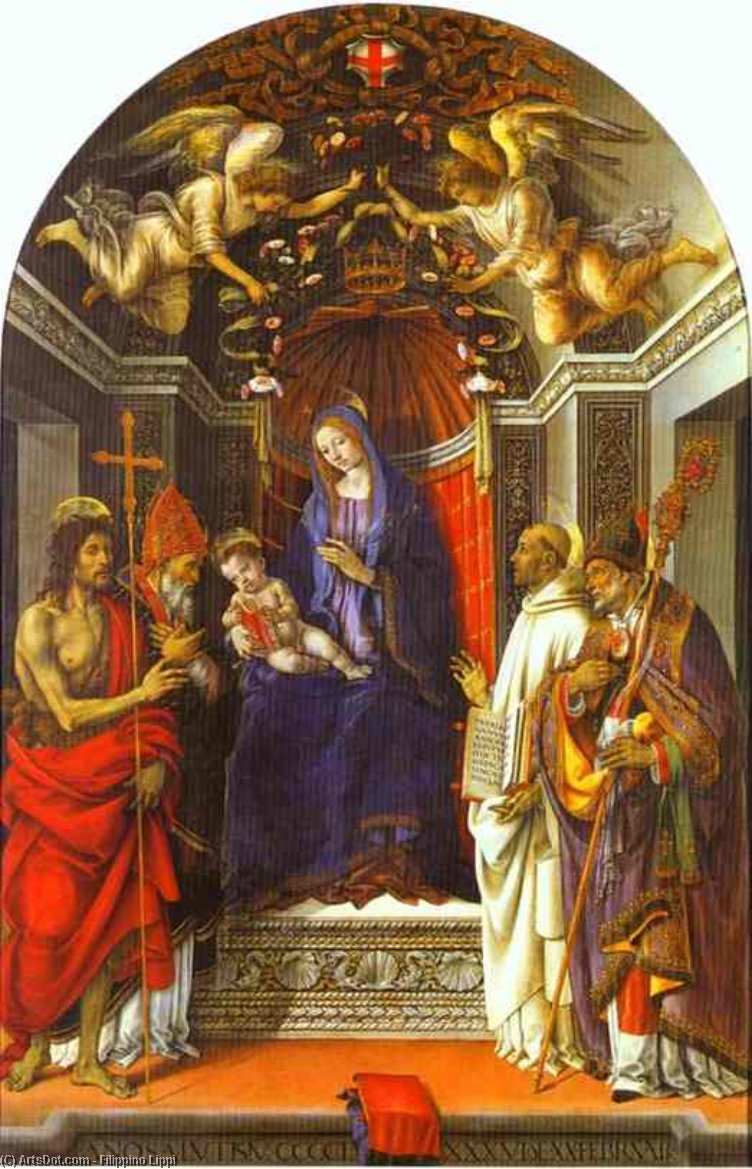
Madonna and Child Enthroned with St John the Baptist, St Victor, St Bernard and St Zenobius


 Read More
Giclée / Art Print
Museum-quality giclée or canvas print with fast production and flexible finish options. ( Buy Hand Made Painting Buy Image)




































Pick from our preset sizes that match the artwork's original proportions.

You may enter your own dimensions to fit a specific frame or space. If your selected size does not match the original image's proportions, we will either crop the artwork or extend the image with a mirrored or solid-fill edge. A digital mockup will be sent for your approval before production begins.
Please note that the on-screen preview does not reflect the actual cropping or extension. Only the mockup will accurately show the final composition.
While custom sizes are available, we recommend selecting a dimension from the predefined list to preserve the original proportions.
Worldwide Delivery () in 2 weeks instead of standard 4/5 weeks. (23 August)

Free Worldwide Express Shipping

High-Quality Linen Canvas

Full Shipping Insurance

Customs Tax Refund Guarantee

True Color Matching Guarantee

60-Day Return Policy (Defects Only)

100% Money-Back Guarantee

Bulk Discount Offer
 Glass option is only available in size under 110 CM

Madonna and Child Enthroned with St John the Baptist, St Victor, St Bernard and St Zenobius
Giclée / Art Print
Reproduction Size
-


Total Price
$ 63
Collectible Description
A Celestial Gathering in the Brancacci Chapel
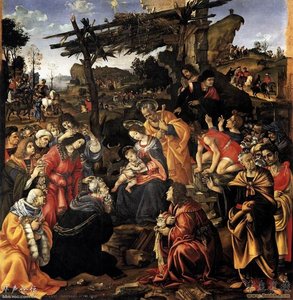
In the heart of Florence, where the echoes of the Renaissance still resonate through the stone corridors of history, lies a masterpiece that captures the very essence of divine grace. Filippino Lippi’s Madonna and Child Enthroned with St John the Baptist, St Victor, St Bernard and St Zenobius is not merely a painting; it is a profound theological vision rendered in pigment and plaster. Created around 1486, this monumental work serves as a breathtaking window into a period where art and faith were inextricably linked. As the eye wanders across the composition, one is immediately struck by the pyramidal stability of the figures—a hallmark of High Renaissance design that directs all devotion toward the central, luminous figure of the Virgin Mary. Held tenderly by her, the Christ Child becomes the focal point of a sacred assembly, surrounded by saints whose presence bridges the gap between the earthly and the divine.
The emotional resonance of this piece lies in its ability to balance monumental grandeur with intimate tenderness. There is a palpable sense of quiet conversation occurring among the surrounding saints; their gazes and gestures suggest a shared moment of holy contemplation. To behold this work is to feel the weight of centuries of devotion. For the collector or the designer, this artwork offers more than just aesthetic beauty; it provides a centerpiece of profound spiritual depth. The way the light seems to emanate from the figures themselves creates an atmosphere of serenity that can transform any space, turning a room into a sanctuary of peace and classical elegance.
Mastery of Technique and Renaissance Splendor
To understand the brilliance of Lippi’s execution, one must appreciate the formidable challenge of the fresco technique. Unlike the slow-drying nature of oil, fresco requires the artist to work with incredible speed and precision, applying pigments directly onto wet plaster so that the color becomes an integral part of the wall itself. This method demands a certain decisiveness, a mastery over the medium that Lippi achieved through his lineage and rigorous training under his father, Fra Filippo Lippi. The result is a surface of exceptional durability and a luminosity that has survived the passage of half a millennium. Notice the meticulous rendering of the drapery; the folds of the garments are not merely shapes but tactile experiences, conveying the heavy, sumptuous textures of Renaissance textiles.
Lippi’s stylistic language is a sophisticated dialogue with the masters of his era. Drawing inspiration from the clarity of Perugino and the rhythmic grace of Botticelli, he weaves together a tapestry of classical harmony and humanistic detail. The architectural elements surrounding the enthroned Madonna are sculpted with such precision that they seem to possess their own weight and volume. This careful attention to geometric principles and proportion serves to elevate the subject matter, ensuring that every line and shadow contributes to the overall sense of divine order. For those seeking a high-quality reproduction, these fine details—the subtle gradations of light on skin and the intricate patterns of sacred vestments—are what make a hand-painted version of this masterpiece so captivating for modern interiors.
A Legacy of Patronage and Devotion
The historical context of this work is as rich as its visual splendor. Commissioned during an era of immense cultural flourishing under the patronage of Lorenzo de' Medici, the painting reflects the complex social and religious fabric of 15th-century Florence. The inclusion of specific saints like St Zenobius, the patron saint of Florence, anchors the celestial scene to a specific time and place, making the divine feel accessible to the Florentine people. This intersection of local pride and universal religious truth is what gives the work its enduring power.
Integrating a reproduction of such significance into a curated collection allows for a continuous connection to the High Renaissance. Whether placed in a grand hall or a quiet study, the Madonna and Child Enthroned acts as an anchor of sophistication. It invites the viewer to pause, to reflect on the mastery of the human hand, and to find inspiration in the timeless pursuit of beauty and truth. Owning a piece that echoes the grandeur of the Brancacci Chapel is an opportunity to surround oneself with the very soul of Italian art history.
Related Artworks
Artist Biography
Early Life and Training
- Born: April 1457, Prato, Italy
- Died: April 1504
- Parents: Fra Filippo Lippi (painter) and Lucrezia Buti
- Filippino was the illegitimate son of a renowned painter.
- Early training under his father laid the foundation for his artistic career.
Artistic Career and Development
- Early Period (1475-1480): Initial works, such as Madonnas, showed a less refined style. These were initially attributed to an anonymous artist known as "amico di Sandro."
- Evolution (1480-1485): Development of a more personal and effective approach in works like the *Journeys of Tobias*.
- Maturity (1485-1504): Mastery of the High Renaissance style, exemplified by *The Apparition of Christ to the Virgin*.
Major Works and Collaborations
- Collaboration with Perugino, Ghirlandaio, and Botticelli on frescoes at Lorenzo de' Medici’s villa.
- Completion of Masaccio's unfinished decoration in the Brancacci Chapel alongside Masolino.
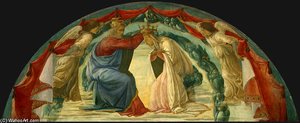
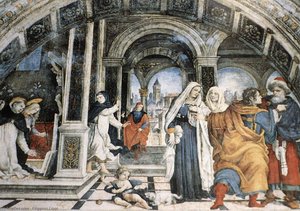
- Notable works include: *The Coronation of the Virgin*, *Tobias and the Angel*, *St Jerome*, and *Scene from the Life of St Thomas Aquinas*.
Influences and Artistic Style
- Early Influences: Sandro Botticelli, Fra Filippo Lippi.
- Style Characteristics: Animated form and line, warm colorism, detailed landscapes, expressive figures, and a blend of perspective geometry with intimate interiors.
- Roman Antiquities: Studies after Roman antiquities during his time in Rome influenced his work, incorporating an antique vocabulary into his art.
Historical Significance and Legacy
- A leading Florentine exponent of the tradition of great fresco cycles.
- His influence on the High Renaissance is undeniable.
- Works are found in museums worldwide, including the Uffizi Gallery in Florence.
- Known for bridging the gap between earlier Renaissance styles and the emerging High Renaissance aesthetic.
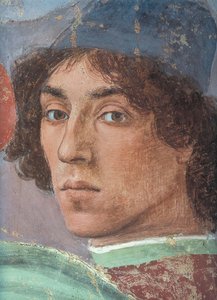
Filippino Lippi
1457 - 1504 , Italy
Quick Facts
- Artistic Movement Or Style: High Renaissance
- Artists Or Movements Influenced By This Artist: ['Raffaellino del Garbo']
- Artists Who Influenced This Artist:
- Fra Filippo Lippi
- Sandro Botticelli
- Date Of Birth: April 1457
- Date Of Death: April 1504
- Full Name: Filippino Lippi
- Nationality: Italian
- Notable Artworks:
- The Coronation of the Virgin
- Tobias and the Angel
- Scene from the Life of St Thomas Aquinas
- St Jerome
- Place Of Birth: Prato, Italy
Related Articles

The Fresco as Family Legacy: Preserving Heritage Through Wall Art
Explore the rich history & enduring legacy of fresco painting. Discover how to preserve family heritage through stunning wall art. Expert insights & restoration guidance.

Giclée Prints: Archival Quality & Aesthetic Nuances for the Discerning Collector
Explore the world of giclée prints with ArtsDot. Learn about archival quality, aesthetic nuances & investment potential. Expert guidance for discerning art collectors seeking museum-quality reproductions and lasting value.
Filippino Lippi: Renaissance Innovation Bridging Faith & Humanism
Explore the captivating world of Filippino Lippi, a Renaissance master bridging faith & humanism through innovative art. Discover his key works, influences, and lasting legacy with ArtsDot.

The Enduring Legacy of Fresco Painting: Techniques, History & Contemporary Relevance
Explore the rich history & enduring artistry of fresco painting – from Giotto to Michelangelo! Discover techniques, conservation efforts, & modern applications. Learn how ArtsDot brings this timeless art form to your home.

The Enduring Legacy of Fresco: Technique, History & Artistic Expression Across Cultures
Explore the rich history & enduring legacy of fresco painting! Discover ancient techniques, Giotto's masterpieces, and modern applications. Expert insights for art lovers & professionals.