 Preview
 Send
Send Share
Share
 Details

 Download
 Similars
 X-Ray
X-Ray Diaporama
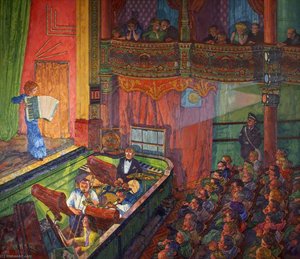
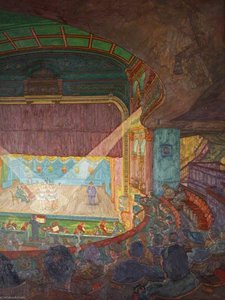
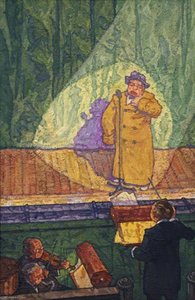
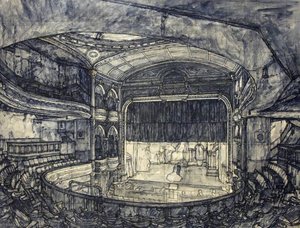
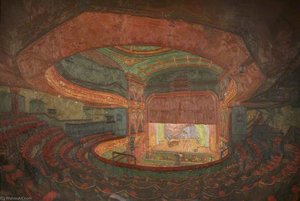
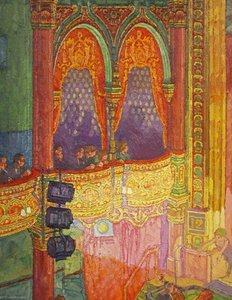
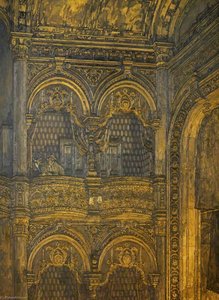
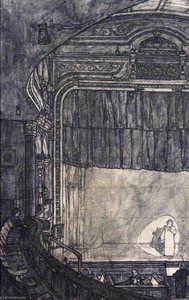
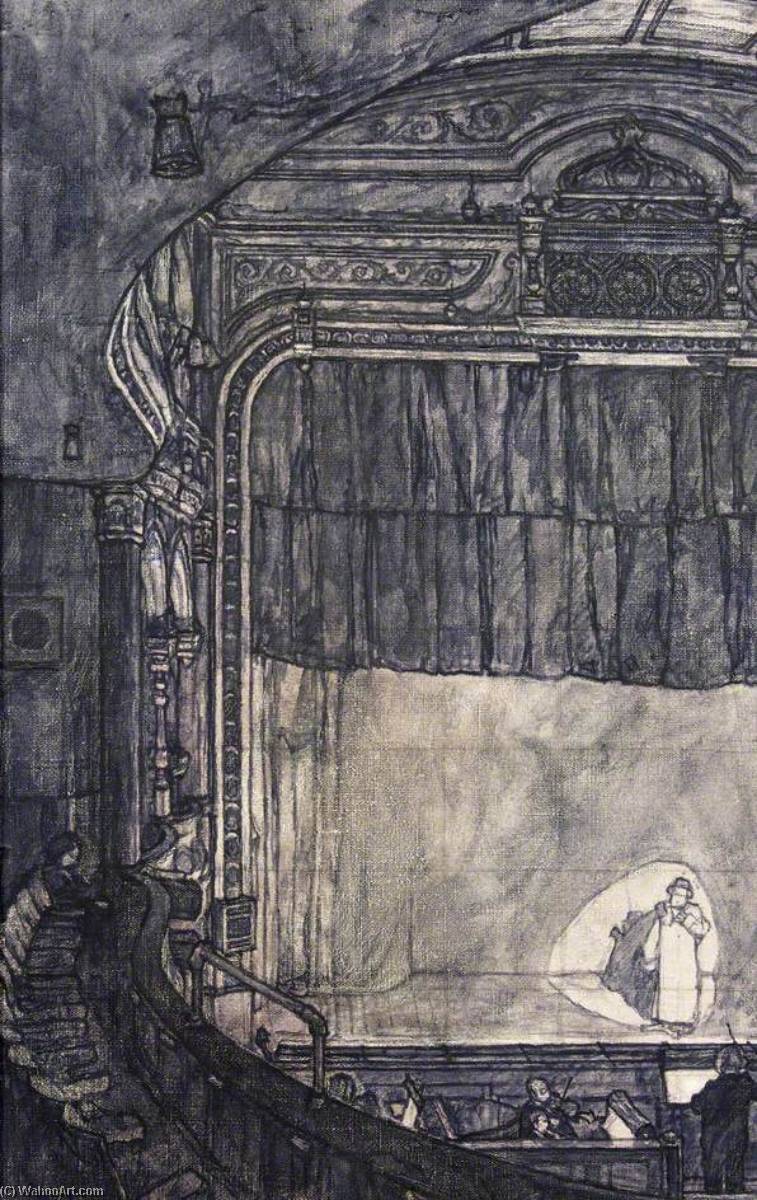
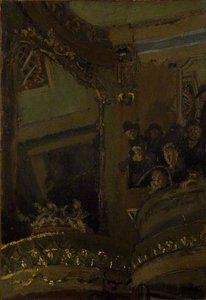
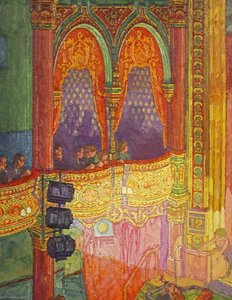
Spotlit, Interior Scene of the Bristol Empire and Music Hall in the 1940s
 Contemporary Realism
 1997
1997 60.0 x 39.0 cm
 University of Bristol Theatre Collection
 Read More
Giclée / Art Print
Museum-quality giclée or canvas print with fast production and flexible finish options. ( Buy Hand Made Painting Buy Image)




































Pick from our preset sizes that match the artwork's original proportions.

You may enter your own dimensions to fit a specific frame or space. If your selected size does not match the original image's proportions, we will either crop the artwork or extend the image with a mirrored or solid-fill edge. A digital mockup will be sent for your approval before production begins.
Please note that the on-screen preview does not reflect the actual cropping or extension. Only the mockup will accurately show the final composition.
While custom sizes are available, we recommend selecting a dimension from the predefined list to preserve the original proportions.
Worldwide Delivery () in 2 weeks instead of standard 4/5 weeks. (26 August)

Free Worldwide Express Shipping

High-Quality Linen Canvas

Full Shipping Insurance

Customs Tax Refund Guarantee

True Color Matching Guarantee

60-Day Return Policy (Defects Only)

100% Money-Back Guarantee

Bulk Discount Offer
 Glass option is only available in size under 110 CM

Spotlit, Interior Scene of the Bristol Empire and Music Hall in the 1940s
Giclée / Art Print
Reproduction Size
-


Total Price
$ 63
Related Artworks
![Legend Of St Francis - [24] - Canonization Of St Francis — Giotto Di Bondone, Gothic](/media/artworks/images-thumb/81/9b/819b5f0656848eb5cb3fcd40fd5756aa.jpg)
![Life Of Saint Francis - [04] - Death And Ascension Of St Francis — Giotto Di Bondone, Italian Renaissance](/media/artworks/images-thumb/08/8b/088b102b13c1a379233690905590f156.jpg)
Artist Biography
The Chronicler of Bristol’s Theatrical Soul
In the vibrant, flickering shadows of Bristol’s mid-century music hall era, few artists captured the ephemeral magic of the stage quite like Francis Hewlett. Born in Bristol in 1930, Hewlett was a man whose artistic vision was inextricably linked to the pulse of his home city. His life and work served as a bridge between the tangible architecture of the theater and the intangible emotions of the performances held within them. To look upon a Hewlett painting is not merely to view a depiction of a building, but to step into a living, breathing moment of British social history, where the scent of greasepaint and the murmur of an expectant crowd seem almost palpable through the layers of pigment.
Hewlett’s journey as an artist was marked by a profound dedication to observation. Though he would later become a respected figure in the academic art world—serving as the Head of Painting at the Falmouth School of Art from 1958 to 1981—his roots remained firmly planted in the observational traditions of his youth. After receiving a scholarship to the West of England College of Art, he continued his rigorous training at the prestigious Slade School of Art in London under masters such as William Coldstream. This formal training provided him with a formidable technical foundation, yet it was his self-taught fascination with the subjective experience that truly defined his voice. Influenced by the lingering echoes of Surrealism and Expressionism, he sought to move beyond mere objective reality, aiming instead to capture the psychological atmosphere of his subjects.
A Mastery of Light, Texture, and Atmosphere
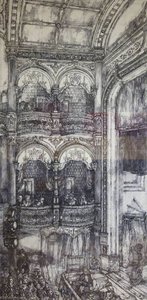
The technical brilliance of Hewlett’s oeuvre lies in his ability to manipulate medium to evoke mood. While his work spanned various forms, including portraits, still lifes, and landscapes, he is perhaps most celebrated for his meticulous watercolor paintings and detailed pen-and-ink illustrations of Bristol’s music halls. He approached the canvas with the precision of an architect and the soul of a storyteller. Through the painstaking application of watercolor washes and delicate glazing techniques, Hewlett built up a sense of luminosity that mimicked the dramatic spotlighting of a theater stage. He did not simply paint walls and ceilings; he painted the way light fell upon velvet curtains and how shadows pooled in the corners of an empty auditorium.
His process was one of deep immersion. In his early years, he would sit obsessively in the audience of the Bristol Empire, sketching the architecture and the ebb and flow of the crowds. This habit of "drawing from life" allowed him to populate his scenes with a sense of authentic movement. His works often feature:
- Architectural Realism: A profound respect for the structural grandeur of Edwardian and wartime venues.
- Human Narrative: The inclusion of performers, staff, and patrons, transforming static buildings into social ecosystems.
- Symbolic Depth: The use of light and shadow to convey themes of nostalgia, mystery, and the fleeting nature of performance.
Legacy and Historical Significance
As the decades progressed, Hewlett’s focus shifted and expanded, yet his ability to find the extraordinary within the ordinary remained constant. During his time in Paris, the majestic architecture of Notre Dame became a new obsession, much like the Bristol Empire had been in his youth. He even experimented with more avant-garde approaches, famously describing some of his early 1960s creations as "thick pop," a nod to a style that blended bold, almost sculptural elements with popular sensibility. This period of experimentation, which included large-scale ceramic sculptures, demonstrated an artist who refused to be confined by a single genre.
Today, the work of Francis Hewlett stands as an invaluable cultural archive. As the physical music halls of the 1940s faded into history, his paintings remained—vivid, detailed, and emotionally resonant. He captured a specific slice of British identity: a time of wartime resilience and theatrical grandeur that has since vanished. Through his meticulous rendering of the Bristol Empire and surrounding venues, Hewlett ensured that the spirit of the music hall era would never truly fade, leaving behind a legacy that continues to enchant collectors and historians alike with its profound sense of place and time.
francis hewlett
1930 - 2012
Quick Facts
- Artistic Movement Or Style: Realism
- Artists Who Influenced This Artist:
- Gustav Klimt
- Edward Hopper
- Date Of Birth: 1930
- Date Of Death: 2012
- Full Name: Francis Hewlett
- Nationality: British
- Notable Artworks: ['The Rehearsal']
- Place Of Birth: Bristol, England
Related Articles
Francis Bacon's Masterpieces: Exploring 25 Iconic Paintings | ArtsDot
Delve into the haunting world of Francis Bacon with ArtsDot. Explore 25 iconic paintings, from his visceral portraits to powerful triptychs. Discover the stories behind these masterpieces & find museum-quality art reproductions for your home. Explore the full collection online!
Harmonies on Canvas: Exploring the Visual Representation of Music in Art History
Explore the fascinating history of music's visual representation in art! From ancient symbolism to modern abstraction, discover how artists have captured sound and emotion on canvas. Expert insights & stunning examples.

Ephemeral Expressions: Exploring the Nuances of Ink on Paper Through History & Contemporary Art
Explore the captivating world of ink wash painting – from its ancient origins to contemporary masters. Discover techniques, symbolism & conservation insights with ArtsDot.com.
Ephemeral Lines: Exploring Emotional Resonance in Ink Sketching Traditions
Explore the profound art of ink sketching! Discover techniques to express emotion, master line work, and cultivate artistic sensitivity. Learn from historical masters & unlock your creative potential.
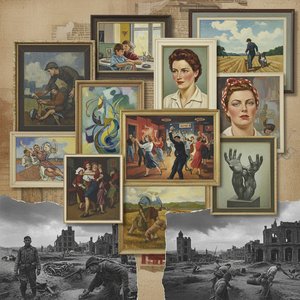
Echoes of War & Hope: Top 10 Artworks Reflecting the 1940s | ArtsDot
Journey through a decade of resilience & change with our Top 10 artworks of the 1940s. Explore iconic paintings by Rockwell, Hopper & more—reflecting WWII's impact and post-war hope. Find museum-quality reproductions at ArtsDot.com