 Preview
 Send
Send Share
Share
 Details

 Download
 Similars
 X-Ray
X-Ray Diaporama
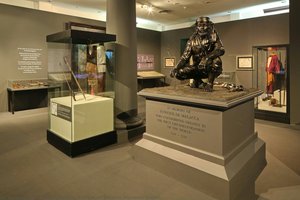
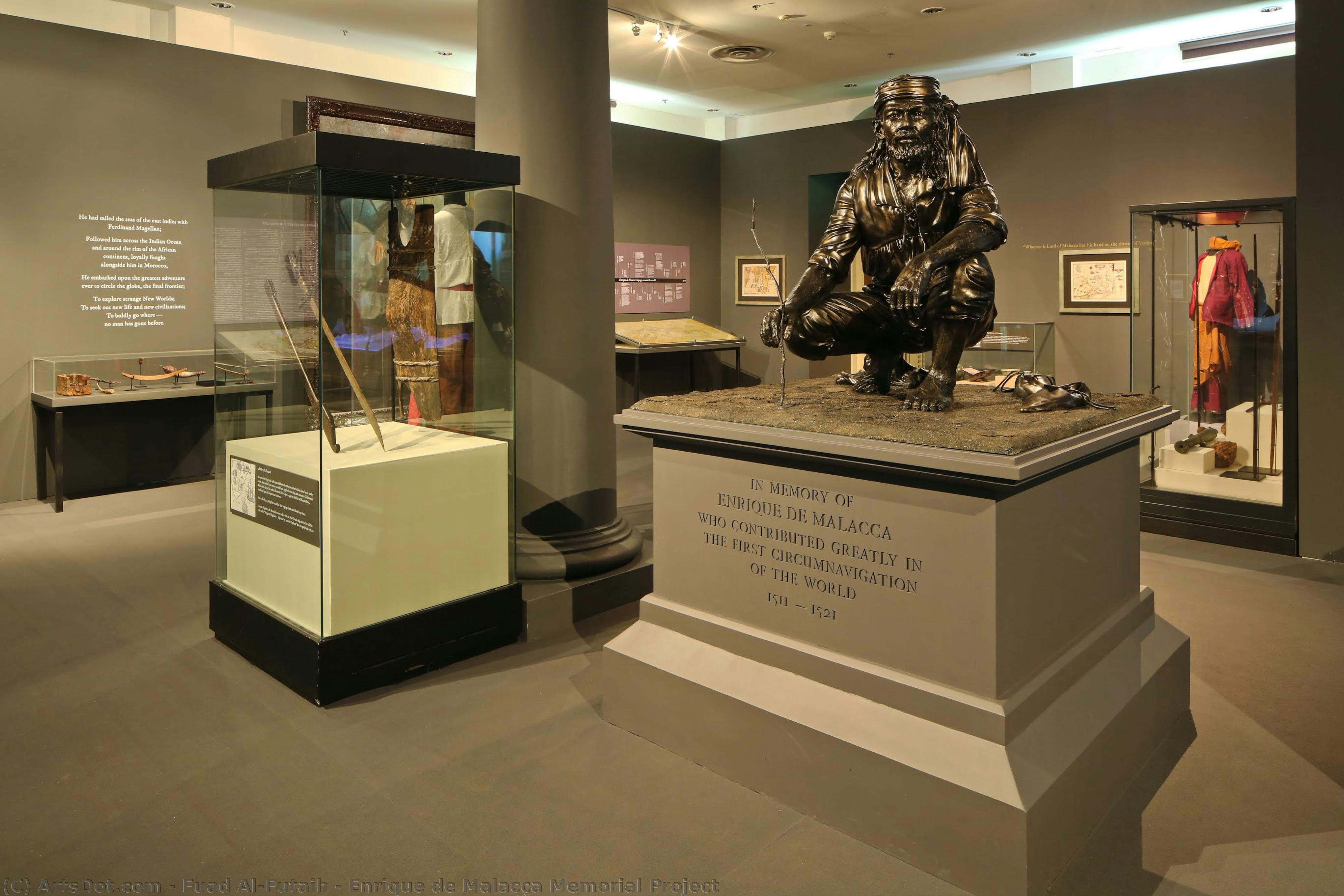
Enrique de Malacca Memorial Project


 Read More
Giclée / Art Print
Museum-quality giclée or canvas print with fast production and flexible finish options. ( Buy Hand Made Painting Buy Image)




































Pick from our preset sizes that match the artwork's original proportions.

You may enter your own dimensions to fit a specific frame or space. If your selected size does not match the original image's proportions, we will either crop the artwork or extend the image with a mirrored or solid-fill edge. A digital mockup will be sent for your approval before production begins.
Please note that the on-screen preview does not reflect the actual cropping or extension. Only the mockup will accurately show the final composition.
While custom sizes are available, we recommend selecting a dimension from the predefined list to preserve the original proportions.
Worldwide Delivery () in 2 weeks instead of standard 4/5 weeks. (25 August)

Free Worldwide Express Shipping

High-Quality Linen Canvas

Full Shipping Insurance

Customs Tax Refund Guarantee

True Color Matching Guarantee

60-Day Return Policy (Defects Only)

100% Money-Back Guarantee

Bulk Discount Offer
 Glass option is only available in size under 110 CM

Enrique de Malacca Memorial Project
Giclée / Art Print
Reproduction Size
-


Total Price
$ 63
Collectible Description
Related Artworks
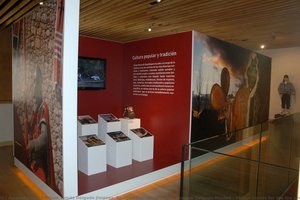
Artist Biography
Peter Sculthorpe: A Sculptural Visionary
Born in Ontario, Canada in 1948, Peter Sculthorpe’s artistic journey began with a quiet intensity that blossomed fully during his final year of high school. This early spark ignited a lifelong exploration of form, process, and the very nature of perception – a trajectory that ultimately led him to develop a uniquely innovative approach to art, one characterized by an almost playful engagement with materials and a profound desire to expand the boundaries of visual experience. Sculthorpe’s work, often described as “tools for vision,” moved beyond traditional notions of painting and sculpture, seeking instead to create objects that invited viewers into a new way of seeing and imagining space.
Sculthorpe's artistic development was deeply influenced by a fascination with the mechanics of everyday objects. He wasn’t interested in replicating reality but rather in deconstructing it, examining how simple tools – wrenches, pliers, wire, even discarded household items – could be transformed into instruments for exploring spatial relationships and generating unexpected visual effects. This interest stemmed from a desire to move beyond representational art and delve into the underlying structures of perception itself. His early experiments with drawing, particularly his series of “wire instruments,” demonstrated this inclination towards dissecting and reassembling familiar forms.
The Evolution of "Wire Instruments"
Sculthorpe’s breakthrough came with his “Wire Instruments” series in the late 1980s. These intricate constructions, meticulously crafted from wire, began as a purely exploratory endeavor – a way to map out and visualize the complex geometries that existed within simple tools. Initially, these drawings were purely representational, faithfully replicating the shapes of wrenches, pliers, and other implements. However, Sculthorpe quickly realized that the act of drawing itself was transforming these objects, revealing hidden angles and creating new perspectives.
The shift from two-dimensional drawings to three-dimensional sculptures marked a pivotal moment in his career. He began to build physical models of his wire diagrams, using materials like wood, metal, and plastic to create objects that echoed the intricate lines and spatial relationships of their predecessors. These sculptures weren’t intended as static representations but rather as dynamic tools for “seeing,” encouraging viewers to navigate the forms and discover new visual pathways.
Expanding the Palette: Pet Stain Removal Devices and Beyond
Following the success of the "Wire Instruments" series, Sculthorpe continued to experiment with unconventional materials and processes. In the 1990s, he created a series of sculptures known as “Pet Stain Removal Devices,” utilizing discarded household items like plastic bottles, sponges, and rubber gloves. These works, often humorous in their juxtaposition of mundane objects and complex geometries, further demonstrated his commitment to challenging conventional notions of art and exploring the potential for beauty within the everyday.
Sculthorpe’s later work continued to push the boundaries of his practice, incorporating elements of performance and installation. He frequently used found objects and recycled materials, reflecting a deep concern for environmental sustainability and a desire to engage with contemporary social issues. His final body of work, “Six Panels: Al Taylor’s Bat Parts and Endcuts,” presented a collection of drawings that explored the relationship between form, function, and perception – a testament to his lifelong fascination with the mechanics of vision.
Legacy and Recognition
Al Sculthorpe (1948-1999) left behind a remarkably diverse and influential body of work. His sculptures are represented in prominent public collections across North America and Europe, including the British Museum, Musée National d’Art Moderne, Centre Georges Pompidou, and The Whitney Museum of American Art. A retrospective exhibition at the High Museum of Art in Atlanta in 2017-2018 provided a comprehensive overview of his career, solidifying his place as a significant figure in contemporary art. His work continues to be studied and admired for its innovative approach to process, materials, and the exploration of visual perception.
Sculthorpe’s legacy extends beyond his individual creations; he fundamentally altered our understanding of what sculpture could be – moving it away from traditional notions of representation and towards a more conceptual and experiential form of art. His “tools for vision” remain a powerful reminder that even the most humble objects can hold profound artistic potential.
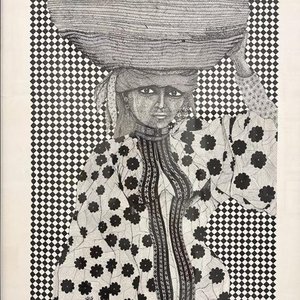
fuad al-futaih
1948 - 2018 , Yemen
Quick Facts
- Artistic Movement Or Style: Abstract Expressionism
- Date Of Birth: 1948
- Full Name: Peter Sculthorpe
- Nationality: Canadian
- Place Of Birth: Ontario, Canada
Related Articles
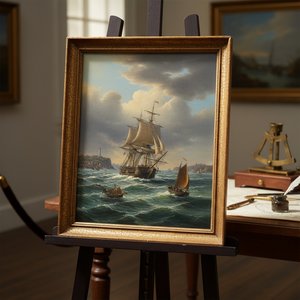
Samuel Walters: Capturing Victorian Maritime Life with Precision & Artistry
Explore the exquisite maritime paintings of Samuel Walters (1811-1882). Discover his mastery of detail, historical scenes & influence on Victorian art. Learn about collecting his works and find high-quality reproductions at ArtsDot.
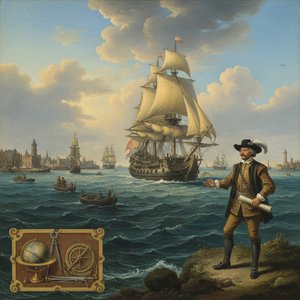
Abraham Hulk Senior: Pioneering Maritime Topography of the Dutch Golden Age
Explore the captivating seascapes of Abraham Hulk Senior, a leading Anglo-Dutch marine painter of the 19th century. Discover his signature style, family legacy & collectable artworks at ArtsDot.
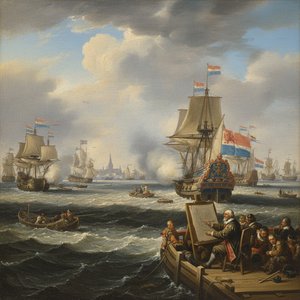
Willem van de Velde the Elder: Master of Maritime Painting & Chronicler of the Dutch Golden Age
Discover the captivating maritime paintings of Willem van de Velde the Elder, a master chronicler of the Dutch Golden Age. Explore his unparalleled realism and lasting influence on naval art history.
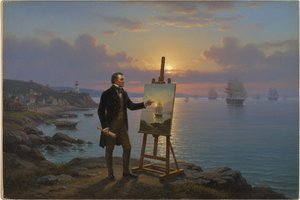
Fitz Henry Lane: Luminosity, Landscape & the American Maritime Tradition – A Collector’s Insight
Explore the luminous world of Fitz Henry Lane, a master of American maritime painting & Luminism. Discover his legacy, techniques, and investment potential for discerning art collectors. Expert insights at ArtsDot.
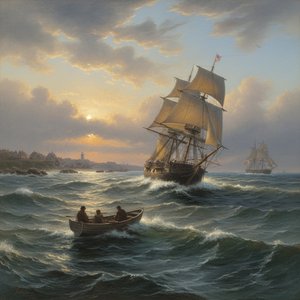
Robert W. Salmon: Navigating the Currents of Maritime Painting & American Realism
Explore the captivating maritime paintings of Robert W. Salmon, a pioneer of American Luminism. Discover his Boston Harbor scenes, legacy, and collecting guide at ArtsDot.