 Preview
 Send
Send Share
Share
 Details

 Download
 Similars
 X-Ray
X-Ray Diaporama
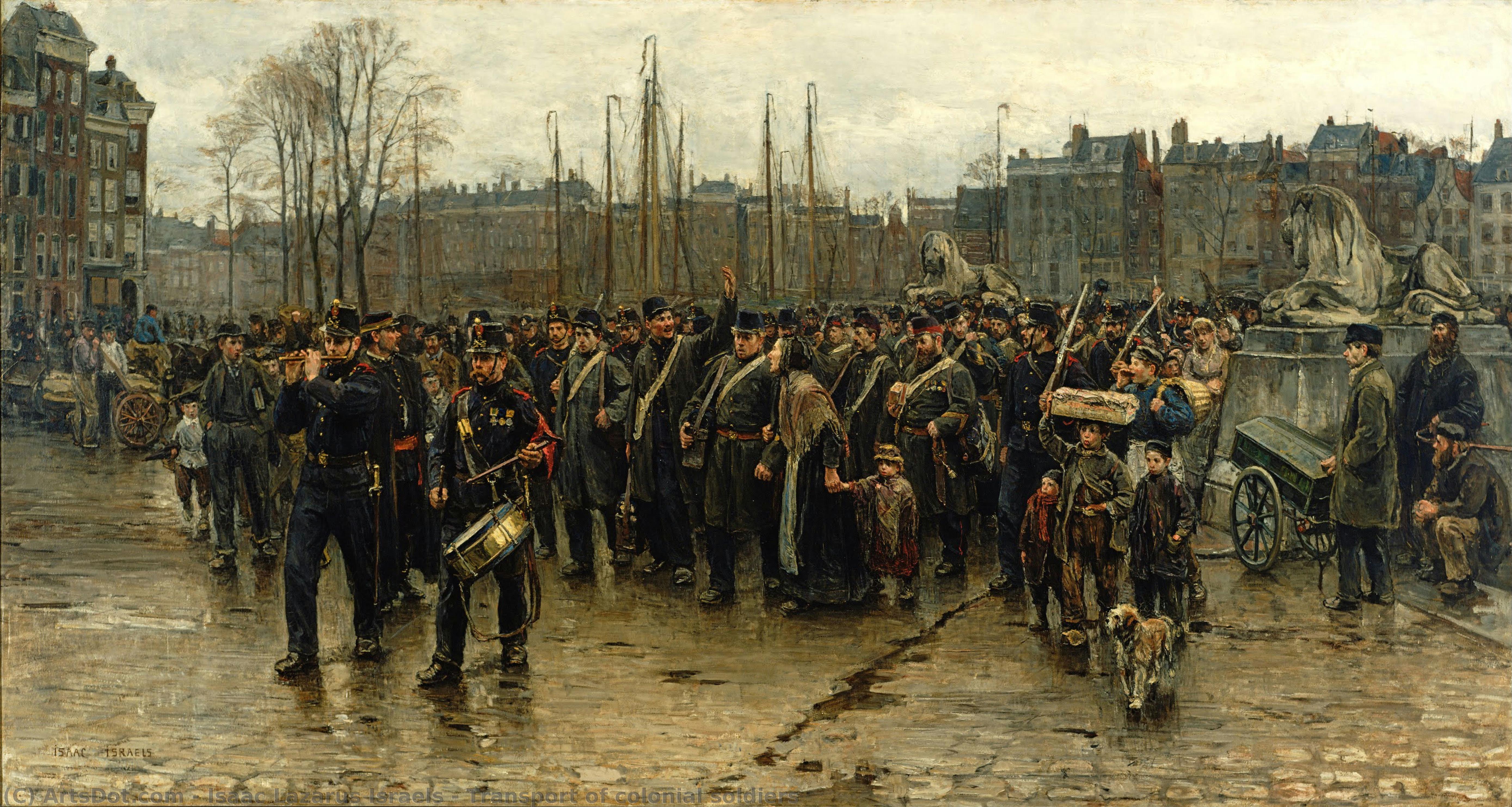
Transport of colonial soldiers
 Oil On Canvas
- WallArt
- Impressionistic Realism
 1884
1884- 19th Century
 300.0 x 160.0 cm
 Kröller-Müller Museum
 Read More
Hand Made Oil Reproduction
Hand-painted oil on canvas in your size and frame, made to order by our artists. ( Buy Print Buy Image)




P118B $10

P118H $10

P118W $10

P438Z $10

P508JH $12

P508YH $12

P805H $10

P805Z $10

P919BZ $10

P919G $10

P919XJ $10

P959ZH $10

P968JZ $12

W106C $8

W218G $10

W218JH $8

W218Y $10

W307PJ $10

W316G $10

W316PJ $8

W316Y $10

W398PJ $8

W4111J $10

W500HY $15

W500JH $15

W692G $12

W849H $8

W940BG $15

W953PJ $8




Pick from our preset sizes that match the artwork's original proportions.

You may enter your own dimensions to fit a specific frame or space. If your selected size does not match the original image's proportions, we will either crop the artwork or extend the painting with additional hand-painted elements. A digital mockup will be sent for your approval before production begins.
Please note that the on-screen preview does not reflect the actual cropping or extension. Only the mockup will accurately show the final composition.
While custom sizes are available, we recommend selecting a dimension from the predefined list to preserve the original proportions.
After order, ArtsDot.com team will email client for instructions and provide a mockup preview
Worldwide Delivery () in 3/4 weeks instead of standard 5 weeks. (27 August). No compromise on quality.

Free Worldwide Express Shipping

High-Quality Linen Canvas

Full Shipping Insurance

Customs Tax Refund Guarantee

True Color Matching Guarantee

60-Day Return Policy (Defects Only)

100% Money-Back Guarantee

Bulk Discount Offer
 Glass option is only available in size under 110 CM

Transport of colonial soldiers
Reproduction Medium
Reproduction Size
-


Total Price
$ 263
A Solemn Procession in Tonal Grey
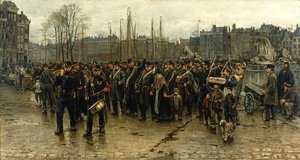
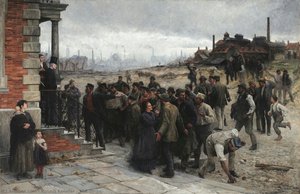
In the vast, commanding expanse of Isaac Israëls’s 1884 masterpiece, "Transport of Colonial Soldiers," viewers are transported to a moment of quiet, heavy stillness on a cobblestone street in Charleroi, Belgium. This monumental canvas, measuring an impressive 300 by 160 cm, serves as a profound window into the late nineteenth century, capturing a group of colonial troops gathered in what feels like a pause between duties. The scene is not one of frantic movement or battlefield glory, but rather a somber tableau of men, horses, and the weight of imperial reality. As they stand amidst the urban textures of the Belgian landscape, there is an undeniable sense of gravity; some soldiers lean against stone walls with weary grace, while others maintain a rigid, disciplined posture, their hands resting near swords that hint at the latent power and potential violence of their era.
The atmosphere is thick with a muted, atmospheric haze, achieved through Israë s’s masterful command of the Hague School aesthetic. Eschewing the vibrant, sun-drenched palettes often associated with later Impressionism, the artist utilizes a sophisticated range of sombre grey tones and earthy neutrals to create a sense of depth and melancholy. This deliberate flattening of perspective allows the viewer to focus on the subtle interplay of light and shadow across the cobblestones and the textured uniforms of the men. The technique is remarkably nuanced; through delicate tonal variations, Israëls suggests the rough grain of stone, the heavy fabric of military garb, and the muscular presence of the horses, all without the need for jarring or aggressive brushstrokes.
The Human Cost of Empire
Beyond its formal brilliance, "Transport of Colonial Soldiers" functions as a poignant historical document. While the inclusion of horses and the disciplined formation of troops might initially evoke images of grandeur and colonial authority, a closer inspection reveals a much more complex narrative. Israëls does not seek to glorify conquest; instead, he employs a realist lens to capture the mundane, often exhausting reality of military life. The faces of the soldiers, rendered with meticulous attention to detail, betray a spectrum of human emotion—from stoic determination to a profound, bone-deep fatigue. This focus on the individual experience invites the observer to look past the uniform and contemplate the human cost inherent in the machinery of imperial ambition.
For the discerning collector or interior designer, this painting offers more than just visual prestige; it provides an emotional anchor for a space. The understated palette and the sense of quiet contemplation make it an ideal centerpiece for sophisticated environments that value depth and historical resonance. Whether placed in a gallery-style study or as a commanding feature in a contemporary living space, the work’s ability to evoke both strength and vulnerability ensures it remains a captivating subject of conversation. It is a piece that does not merely decorate a wall but enriches the very soul of a room, offering a timeless reflection on duty, history, and the quiet dignity found within the shadows of the past.
Related Artworks

Artist Biography
Isaac Lazarus Israëls: A Life in Amsterdam Impressionism
- Born: Amsterdam, Netherlands (February 3, 1865)
- Died: The Hague, Netherlands (October 7, 1934)
Early Life and Artistic Beginnings
Isaac Lazarus Israëls was born into a family deeply rooted in the Dutch art world. He was the son of Jozef Israëls, a prominent painter associated with the Hague School, and Aleida Schaap. This artistic heritage fostered an early appreciation for painting within Isaac, who displayed remarkable talent from a young age. Between 1880 and 1882, he studied at the Royal Academy of Art in The Hague, where he met George Hendrik Breitner, forming a lifelong friendship that would significantly influence his artistic trajectory. At just sixteen years old, Israëls achieved early recognition when he sold "Bugle Practice" to artist and collector Hendrik Willem Mesdag even before it was fully completed. Portraits of his grandmother and a family friend, created in the same year, demonstrated his already considerable technical skill.
The Amsterdam Impressionist
Israëls became a leading figure within the Amsterdam Impressionism movement. Influenced by the philosophy of the Tachtigers—a group of writers and artists advocating for style to reflect content and emotionally charged subjects represented through intense technique—he shifted his focus towards capturing the vibrant scenes of everyday life in Amsterdam. He frequently spent summers with his father in Scheveningen, painting colorful seaside landscapes. His work reflected a desire to portray the bustling streets, cafes, and cabarets of Amsterdam, moving away from the more traditional subject matter favored by earlier Dutch masters.
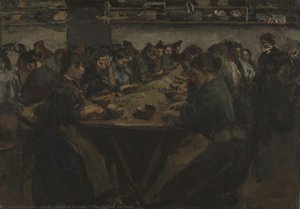
- Key Works: "Transport of Colonial Soldiers" (Kröller-Müller Museum), "The Coffee Sorters" (Museum Boijmans Van Beuningen), Portrait of Mata Hari (Kröller-Müller Museum)
Travels and Artistic Evolution
In 1904, Israëls relocated to Paris, establishing a studio and embracing the city's unique motifs. He further explored his interest in fashion by studying at Paquin and Drecoll fashion houses. The outbreak of World War I prompted his return to Holland, where he primarily focused on portraiture. Following the war, he embarked on extensive travels throughout Europe and Asia, including two years spent sketching and painting in India and the Dutch East Indies. These experiences broadened his artistic horizons, introducing him to new subjects and perspectives that enriched his later work.
Legacy and Recognition
Isaac Lazarus Israëls left behind a significant body of work celebrated for its vibrant colors, loose brushwork, and insightful portrayals of everyday life. His paintings are now housed in prestigious museums worldwide, including the Van Gogh Museum and the Mauritshuis. He achieved international recognition, notably winning a Gold Medal at the 1928 Olympic Games for his painting "Red Rider." Israëls' legacy lies not only in his artistic achievements but also in his contribution to the development of Amsterdam Impressionism, solidifying his place as one of the most important Dutch painters of his era.
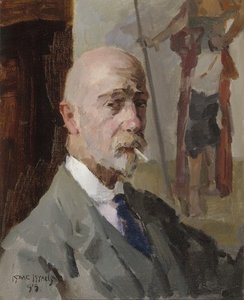
Isaac Lazarus Israels
1865 - 1934 , Netherlands
Quick Facts
- Artistic Movement Or Style: Amsterdam Impressionism
- Artists Who Influenced This Artist: ['Émile Zola']
- Date Of Birth: February 3, 1865
- Date Of Death: October 7, 1934
- Full Name: Isaac Lazarus Israëls
- Nationality: Dutch
- Notable Artworks:
- Transport of Colonial Soldiers
- The Coffee Sorters
- Portrait of Mata Hari
- Ippy and Gertie at Hirsch
- A Lady in Front of Van Gogh's Sunflowers
- Dancer La Cocette Sun
- Cafe dansant, Moulin de la Galette
- The Drummer
- Place Of Birth (City And Country): Amsterdam, Netherlands
Related Articles
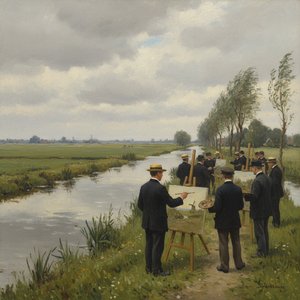
The Hague School: Realism, Atmosphere & the Dawn of Dutch Impressionism
Explore the Hague School's pivotal role in Dutch art history. Discover realism, atmospheric landscapes & its influence on Impressionism. Learn about key artists like Mauve & Maris with ArtsDot.
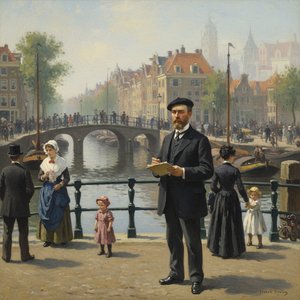
Isaac Lazarus Israëls: A Chronicle of Dutch Life & the Evolution of Impressionistic Realism
Explore the captivating world of Isaac Lazarus Israëls (1865-1934), a leading Dutch Amsterdam Impressionist. Discover his city scenes, portraits & travels through Asia – a chronicle of Dutch life and artistic evolution.
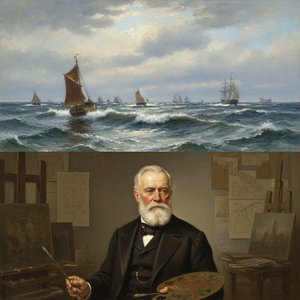
Hendrik Willem Mesdag: Pioneering Impressionism & the Dutch Maritime Tradition
Explore the life & work of Hendrik Willem Mesdag, a pioneer of Dutch Impressionism and leading figure of the Hague School. Discover his captivating seascapes and the immersive Panorama Mesdag – a true masterpiece.
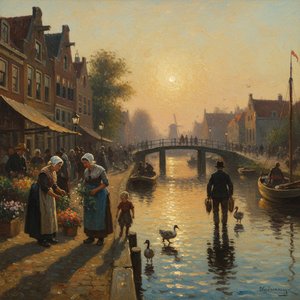
Wilhelmus de Zwart: Capturing Dutch Life Through the Lens of Realism & Impressionism
Explore the captivating world of Wilhelmus de Zwart, a Dutch master bridging Realism & Impressionism. Discover his landscapes, cityscapes, and unique technique – a compelling study for art enthusiasts and collectors.
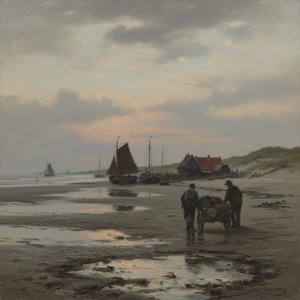
Jan Hendrik Weissenbruch: A Master of Dutch Realism & Atmospheric Light
Explore the captivating world of Jan Hendrik Weissenbruch, a master of Dutch Realism. Discover his atmospheric landscapes, influences, and legacy within the Hague School. Learn about this 19th-century artist's unique style & enduring impact.