 Preview
 Send
Send Share
Share
 Details

 Download
 Similars
 X-Ray
X-Ray Diaporama
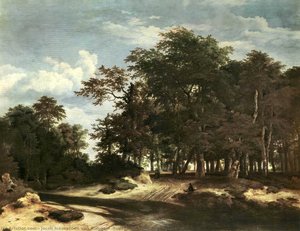
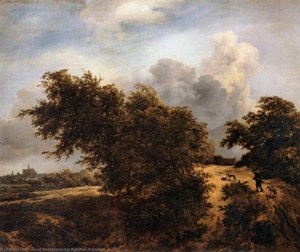
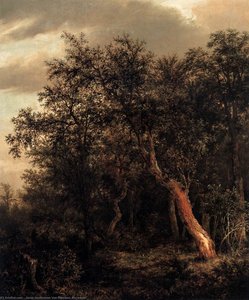
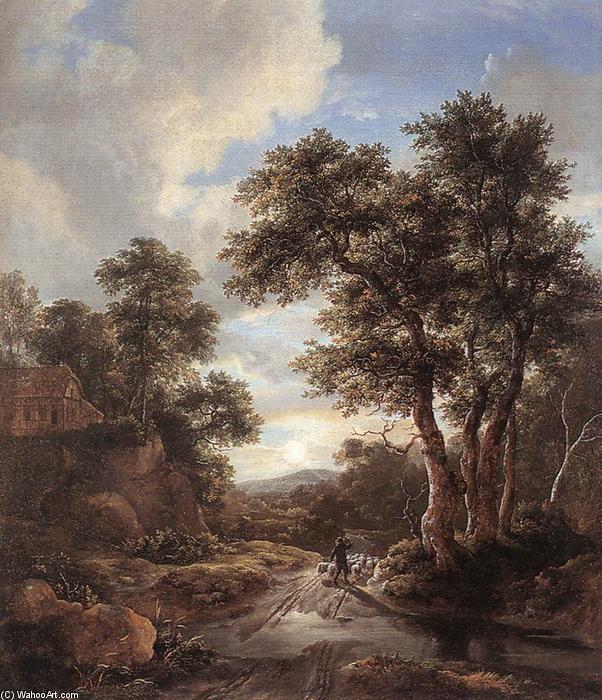
Sunrise in a Wood
 Oil
Oil- WallArt
- Dutch Golden Age Landscape
 90.0 x 77.0 cm
 Wallace Collection
 Read More
Giclée / Art Print
Museum-quality giclée or canvas print with fast production and flexible finish options. ( Buy Hand Made Painting Buy Image)




P118B $10

P118H $10

P118W $10

P438Z $10

P508JH $12

P508YH $12

P805H $10

P805Z $10

P919BZ $10

P919G $10

P919XJ $10

P959ZH $10

P968JZ $12

W106C $8

W218G $10

W218JH $8

W218Y $10

W307PJ $10

W316G $10

W316PJ $8

W316Y $10

W398PJ $8

W4111J $10

W500HY $15

W500JH $15

W692G $12

W849H $8

W940BG $15

W953PJ $8




Pick from our preset sizes that match the artwork's original proportions.

You may enter your own dimensions to fit a specific frame or space. If your selected size does not match the original image's proportions, we will either crop the artwork or extend the image with a mirrored or solid-fill edge. A digital mockup will be sent for your approval before production begins.
Please note that the on-screen preview does not reflect the actual cropping or extension. Only the mockup will accurately show the final composition.
While custom sizes are available, we recommend selecting a dimension from the predefined list to preserve the original proportions.
Worldwide Delivery () in 2 weeks instead of standard 4/5 weeks. (22 August)

Free Worldwide Express Shipping

High-Quality Linen Canvas

Full Shipping Insurance

Customs Tax Refund Guarantee

True Color Matching Guarantee

60-Day Return Policy (Defects Only)

100% Money-Back Guarantee

Bulk Discount Offer
 Glass option is only available in size under 110 CM

Sunrise in a Wood
Giclée / Art Print
Reproduction Size
-


Total Price
$ 63
Collectible Description
A Dawn of Woodland Serenity: Ruisdael’s “Sunrise in a Wood”
Jacob Isaackszoon van Ruisdael's "Sunrise in a Wood," painted circa 1670-1682, isn’t merely a landscape; it’s an immersion into the quiet majesty of the Dutch countryside. This oil painting, now residing within the esteemed collection of the Wallace Collection in London, transcends simple representation to become a profound meditation on light, atmosphere, and the harmonious relationship between humanity and nature. Ruisdael, already recognized as a master of his craft by this period, had begun to refine his signature style – characterized by an almost palpable sense of depth and a masterful manipulation of color and texture – and “Sunrise in a Wood” exemplifies this evolution perfectly.
The scene unfolds within a densely wooded area, dominated by towering oaks and birches. These aren’t the idealized, geometrically perfect trees of earlier Dutch landscape painting; instead, they possess a ruggedness, an inherent vitality that speaks to Ruisdael's deep understanding of the natural world. The artist eschews dramatic diagonals or heroic scale, opting for a composition that feels remarkably intimate and grounded. Two figures, rendered with subtle detail and almost ghostly presence, are depicted riding horses through this tranquil space. Their forms are deliberately understated, serving primarily as anchors within the vastness of the landscape rather than dominating it. They represent not an active pursuit of nature, but a quiet observation of its beauty – a fleeting moment of connection within a timeless scene.
The Language of Light and Shadow
Ruisdael’s genius lies in his ability to capture the ephemeral quality of light. The sunrise isn't depicted as a burst of intense color, but rather as a gradual diffusion of warmth that permeates the entire canvas. He achieves this through an incredibly delicate layering of glazes – thin washes of paint applied over time – creating a luminous effect that seems to emanate from within the painting itself. Notice how the light catches the edges of the leaves, transforming them into shimmering ribbons of gold and amber. The shadows are equally nuanced, suggesting depth and volume without resorting to stark contrasts. This masterful control of light is not simply decorative; it’s integral to the painting's emotional impact, evoking a sense of peace, serenity, and perhaps even melancholy.
The technique employed by Ruisdael is deeply rooted in the Dutch Golden Age tradition of *alla prima* painting – working directly onto the canvas without extensive underpainting. This approach allows for spontaneity and immediacy, capturing the fleeting effects of light and atmosphere with remarkable precision. The brushstrokes are visible, yet blended seamlessly to create a cohesive whole. The artist’s meticulous attention to detail is evident in every element of the composition, from the texture of the bark on the trees to the subtle reflections in the water below.
Symbolism and Context
“Sunrise in a Wood” can be interpreted as more than just a picturesque landscape. It reflects the prevailing philosophical currents of the 17th century Dutch Republic – a period marked by burgeoning scientific inquiry, religious introspection, and a growing appreciation for the beauty of the natural world. The painting aligns with the *hortus pictus* tradition, which celebrated the virtues of rural life and emphasized the restorative power of nature. The inclusion of the two riders adds another layer of meaning, suggesting a connection between humanity and the land – a reminder of our place within the larger ecosystem.
Furthermore, Ruisdael’s work was influenced by the burgeoning interest in atmospheric perspective, a technique that simulates the way objects appear to fade into the distance. He masterfully employs this principle, creating an illusion of depth and space that draws the viewer into the heart of the scene. The painting's composition also subtly references biblical themes – the sunrise itself is often associated with rebirth and renewal, mirroring the spiritual aspirations of the Dutch Golden Age.
A Timeless Resonance
“Sunrise in a Wood” continues to resonate with viewers today because it captures something profoundly universal: the quiet beauty of nature and the enduring human desire for connection. It’s a painting that invites contemplation, offering a moment of respite from the complexities of modern life. Reproductions of this iconic work offer an accessible way to bring this serene landscape into any space, allowing its evocative atmosphere to enrich your surroundings. Its subtle power lies not in grand gestures but in the quiet poetry of light, shadow, and form – a testament to Jacob van Ruisdael’s enduring legacy as one of the greatest landscape painters of all time.
Related Artworks

Artist Biography
early life and career
jacob isaackszoon van ruisdael, a prominent dutch painter, draughtsman, and etcher, was born in 1628 in the netherlands. he is widely regarded as the pre-eminent landscape painter of the dutch golden age, a period marked by great wealth and cultural achievement.
artistic style and contributions
van ruisdael's work is characterized by its versatility and prolific nature, depicting a wide variety of landscape subjects. from 1646, he painted remarkable dutch countryside scenes, which later took on a more heroic character after his trip to germany in 1650. his late work, produced while living and working in amsterdam, featured city panoramas and seascapes, often with the sky occupying two-thirds of the canvas.
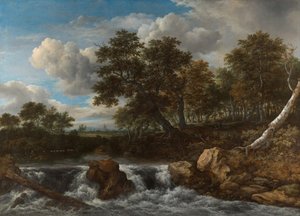
- waterfall in a rocky and mountainous landscape, showcasing his mastery of light and composition.
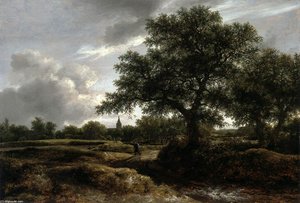
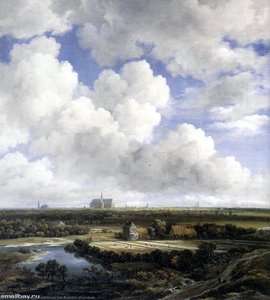
- view of haarlem with bleaching grounds, exemplifying his ability to capture the essence of the dutch landscape.
- view of the dam and the damrak in amsterdam, highlighting his skill in cityscape painting.
museums and collections
van ruisdael's work is spread across private and institutional collections worldwide, with notable holdings at:
- the national gallery in london
- the rijksmuseum in amsterdam
- the hermitage museum in st. petersburg
influence and legacy
van ruisdael's influence on landscape painting traditions is profound, shaping the english romantics, the barbizon school in france, and the hudson river school in the us. he also inspired generations of dutch landscape artists. notable works:
- view of haarlem with bleaching grounds
- waterfall in a rocky and mountainous landscape
- view of the dam and the damrak in amsterdam
artist's profile on ArtsDot: jacob isaackszoon van ruisdael
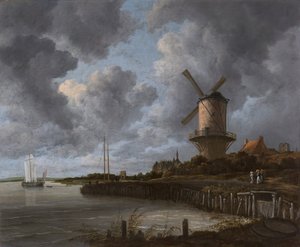
jacob isaackszoon van ruisdael
1628 - 1682 , Netherlands
Quick Facts
- Artistic Movement Or Style: Dutch Golden Age, Baroque
- Artists Or Movements Influenced By This Artist:
- English Romantics
- Barbizon School
- Artists Who Influenced This Artist: ['Hendrick Vroom']
- Date Of Birth: 1628/1629, Haarlem
- Date Of Death: 1682, Amsterdam
- Full Name: Jacob Isaackszoon van Ruisdael
- Nationality: Dutch
- Notable Artworks:
- View of Haarlem
- Waterfall landscape
- Amsterdam cityscape
- Place Of Birth: Haarlem, Netherlands
Related Articles
Golden Light & Dutch Skies: Bringing the Magic of Dutch Golden Age Landscapes into Your Home
Transform your home with the breathtaking light of Dutch Golden Age landscapes. Discover how hand-painted oil reproductions of masterworks like Ruisdael and Vermeer bring timeless elegance, atmosphere, and soulful texture to modern interiors. Elevate your space with museum-quality art.

Dutch Masters: 10 Golden Age Paintings That Still Inspire |
Journey into the Dutch Golden Age! Explore 10 iconic paintings by Rembrandt, Vermeer & Hals. Discover the stories behind these Baroque masterpieces and find museum-quality art reproductions to elevate your home decor on .
Jacob van Ruisdael: Master of Dutch Landscape & the Evocation of National Identity
Explore the life & work of Jacob van Ruisdael, the preeminent Dutch landscape painter. Discover his technical brilliance, symbolic depth, and lasting influence on art history. Learn about collecting Ruisdael's masterpieces.
Charles Leickert: Capturing the Dutch Golden Age Light – A Comprehensive Study of Technique, Context, and Legacy
Explore the captivating winter landscapes of Charles Leickert, a master of Dutch Golden Age light & atmosphere. Discover his techniques, symbolism, and lasting legacy – a comprehensive study for art enthusiasts and collectors.
Nicolaes Berchem: Dutch Golden Age Pastoralism & the Evolution of Landscape Painting
Explore the captivating world of Nicolaes Berchem, a leading Dutch Golden Age painter. Discover his idyllic landscapes, masterful technique & lasting influence on art history. Learn more at ArtsDot.